Between 2011 and 2020, two different criteria were used in our gynaecologic oncology department to guide adjuvant radiation decisions in patients with non-high-risk cervical cancer following radical hysterectomy. This retrospective study aimed to compare oncological outcomes associated with these criteria and to assess adherence to them.
Methods: Non-high-risk patients (no lymph node, parametrial or vaginal involvement) were identified from 197 patients who underwent radical surgery between January 2011 and December 2020. Two groups were analysed: Cohort A (2011–2015), in which the Sedlis criteria were applied, and Cohort B (2016–2020), where the Pretoria Gynaecologic Oncology criteria were used. Statistical analysis included chi-square/Fisher’s exact test, ANOVA and multivariate regression.
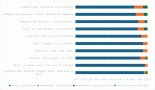
Results: Fifty patients were included in Cohort A and 105 were included in Cohort B. The adjuvant treatment rate was insignificantly higher in Cohort A (48% versus 37.1%, p = 0.16), with better adherence to the guideline in Cohort B (87.6% versus 82%, p = 0.43), although this difference was also insignificant. A substantial agreement was observed between the two criteria (κ = 0.75).
Over a median follow-up period of 60 months (0–156 months), the recurrence rates were 14% and 21% in Cohorts A and B, respectively (p = 0.8).
The 5-year overall survival rate was 94% in the 2011–2015 group and 90% in the 2016–2020 group (p = 0.45). The 5-year recurrence-free rates were 90% and 80% (p = 0.089).
Vaginal margins or involvement with carcinoma in situ (CIS) were significant recurrence predictors; vaginal involvement with CIS remained significant on multivariate analysis (OR: 3.39 and CI: 1.02–11.28).
Conclusion: Objective, structured criteria improve treatment adherence. Vaginal CIS should be considered a high-risk factor for recurrence.