Reducing acute haematological toxicity in cervical cancer: a comparative study of bone marrow-sparing VMAT and 3DCRT
Smriti Srivastava, Sunil Kumar, Rashmi Yadav, Mohammad Ali and Vijay Kumar
Department of Radiation Oncology, Hind Institute of Medical Science, Barabanki 225003, India
Abstract
Background: Concurrent chemoradiotherapy (CCRT) is the standard of care in locally advanced cervical carcinoma, but due to irradiation of pelvic bone marrow (BM), it is associated with dose-limiting haematological toxicity (HT). Advanced radiotherapy (RT) techniques such as bone marrow-sparing volumetric modulated arc therapy (BMS-VMAT) may reduce BM dose and hence decrease treatment-related toxicities.
Aims and objectives: To compare dosimetric parameters and HTs between BMS-VMAT and three-dimensional conformal radiotherapy (3DCRT) in cervical cancer patients undergoing CCRT.
Methods: This retrospective single-institutional study included 60 patients (30 each in BMS-VMAT and 3DCRT arms), who had received external beam radiotherapy with a dose of 50 gray (Gy) in 25 fractions with concurrent weekly cisplatin 40 mg/m2. BM was contoured anatomically and dosimetric parameters BM Dmean, V10, V20, V30, V40 and Dmax were analysed. HTs were recorded weekly using CTCAE v5.0 criteria. Statistical analysis was performed using independent t-test, Mann–Whitney U test and chi-square test, p-value ≤0.05 was considered significant.
Results: BMS-VMAT significantly reduced BM Dmean (26.73 versus 36.09 Gy, p < 0.001); Dmax (51.96 versus 52.72 Gy, p = 0.004); V30 (36.25% versus 56.69%, p <0.001) and V40 (17.37% versus 44.39%, p < 0.001) in comparison to 3DCRT. V10 and V20 were not significantly different. Planning target volume coverage was comparable in both arms. Grade ≥2 anaemia (26% versus 53%, p = 0.035), leukopenia (16.7% versus 46.7%, p = 0.025) and neutropenia (16.7% versus 40%, p = 0.008) were significantly lower in the BMS-VMAT arm.
Conclusion: BMS-VMAT reduces clinically relevant dose parameters and HTs without compromising target coverage, supporting its role in cervical cancer radiotherapy.
Keywords: bone marrow-sparing VMAT, 3DCRT, cervical cancer, haematological toxicities, VMAT, concurrent chemoradiotherapy
Correspondence to: Smriti Srivastava
Email: drsmritisrivastava2017@gmail.com
Published: 07/09/2026
Received: 06/05/2026
Publication costs for this article were supported by ecancer (UK Charity number 1176307).
Copyright: © the authors; licensee ecancermedicalscience. This is an Open Access article distributed under the terms of the Creative Commons Attribution License (http://creativecommons.org/licenses/by/4.0), which permits unrestricted use, distribution, and reproduction in any medium, provided the original work is properly cited.
Introduction
Cervical cancer is one of the leading causes of cancer-related morbidity and mortality among women worldwide. According to GLOBOCAN 2022 estimates, it accounts for over 662,301 new cases and more than 348,000 deaths annually, with major occurrences in low- and middle-income countries, especially Southeast Asia [1]. Concurrent chemoradiotherapy (CCRT), which is established as the standard of care, significantly improves overall survival and locoregional control in comparison to radiotherapy (RT) alone [2,3]. However, it substantially increases treatment-related toxicities, particularly acute haematological toxicity (HT), gastrointestinal and genitourinary toxicities, resulting in chemotherapy dose reductions and treatment interruptions, potentially compromising clinical outcomes [4–11]. The tumour proximity to organs at risk (OAR) contributes to this toxicity profile [12].
The pelvic bone marrow (BM) comprises approximately 40%–50% of total active haematopoietic marrow in adults and is highly radiosensitive [13, 14]. During external beam radiation, a significant proportion of active BM is exposed to low- and intermediate-dose radiation, leading to myelosuppression presenting as leukopenia, neutropenia, anaemia and thrombocytopenia. Dosimetric parameters such as V10, V20, V30 and mean BM dose correlate significantly with grade ≥2 HTs in patients receiving CCRT [15, 16].
Three-dimensional conformal radiation therapy (3DCRT) has long been utilised for pelvic irradiation in cervical cancer but has limited ability to spare surrounding normal tissues, including BM. In contrast, volumetric modulated arc therapy (VMAT) provides highly conformal dose distribution via continuous gantry rotation and intensity modulation, improving OAR sparing without compromising coverage of the planning target volume (PTV) [17, 22].
Various studies have evaluated the efficiency of bone marrow-sparing IMRT (BMS-IMRT) and bone marrow-sparing volumetric modulated arc therapy (BMS-VMAT) planning strategies in reducing radiation dose to active pelvic BM compartments. Incorporating BM dose constraints during IMRT planning is associated with reduced rates of acute grade ≥2 leukopenia and neutropenia [16, 17]. Nevertheless, the extent of dosimetric advantages of BMS-VMAT translating into clinically meaningful reductions in HT in comparison to conventional 3DCRT remains an area of ongoing research. Furthermore, the relationship between specific BM dose–volume parameters and acute haematological outcomes requires further validation in different clinical settings. In this context, this study was conducted to evaluate the dosimetric and clinical impact of BMS-VMAT compared to 3DCRT in patients with carcinoma cervix undergoing CCRT. By analysing bone marrow dose parameters alongside haematological outcomes, this study aims to assess whether dosimetric advantages result in a meaningful reduction in treatment-related toxicities, thereby improving treatment tolerability and compliance while maintaining oncologic efficacy.
Materials and methods
This is a retrospective single-centre study conducted in a tertiary care hospital in North India. It was approved by the institutional ethics committee. Requirement for informed consent was waived due to the retrospective nature of the study. The patients with biopsy-proven squamous cell carcinoma of the cervix from International Federation of Gynecology and Obstetrics stage IB to IV A, aged from 18 to 70 years and with a Karnofsky performance score >70%, were included in the study. Patients with a history of previous pelvic irradiation, surgery, metastatic disease and haematological derangement before starting treatment were excluded. In addition, patients with para-aortic lymph nodes or any contraindications to concurrent chemotherapy were excluded. The dosimetric parameters were recorded from the Eclipse treatment planning system (TPS) records and haematological parameters were obtained from the patient records treated in the Department of Radiation Oncology during the period from May 2023 to December 2025.
Intervention
The patients were planned for definitive treatment with external beam radiation therapy (EBRT) either with BMS-VMAT or 3DCRT, along with concurrent cisplatin 40 mg/m² for 5 weeks after assessment of renal profile, followed by high-dose rate brachytherapy. Patients were immobilised in the supine position using a four-point thermoplastic cast and knee–foot supports with arms overhead. Bladder protocol was followed as per the institutional protocol; patients were asked to urinate and then 300 mL of water was given 30 min before the scan. computed tomography (CT) simulation was performed with 3 mm slices from L1 to 5 cm below the ischial tuberosities. Intravenous contrast was administered as per the patient’s body weight. This protocol was followed daily during treatment. Target volume delineation was done according to consensus guidelines. Gross tumour volume comprised the primary cervical tumour and gross nodes. Clinical target volume (CTV) involved the cervix, uterus, parametria, upper vagina and pelvic nodal basins, while the PTV was delineated by a 7 mm expansion of the CTV. OAR delineation was also done as per consensus guidelines [18]. Bladder, rectum, small bowel and femoral heads were contoured. BM was delineated as whole pelvic bones, lumbar spine and bilateral proximal femur contoured in the bone window.
Planning was done using box fields for 3DCRT patients with gantry angles of 0°, 90°, 180° and 270°, using 15 MV energy and prescription at the isocentre kept at the centre of the PTV. For the BMS-VMAT group, three arcs (i.e. 181°–179°, 179°–181°, 181°–179°) were used. All plans were generated on
Eclipse TPS with 6 MV photons. The dose prescribed was 50 Gray (Gy) in 25 fractions. Dose constraints were given as per radiation therapy oncology group (RTOG) guidelines.
For bladder, V40 < 65% and for rectum, V40 < 55%; bowel V45 < 195 cc; femoral heads Dmean <45 Gy. For BM, dose constraints were BM: V10 < 90%, V20 < 75%, V30 < 50%, V40 < 45% and BM Dmean < 44 Gy [19–21]. Weekly cone beam CT scans were done in VMAT patients to ensure proper target coverage. The assessment of toxicities was done during EBRT as per the National Cancer Institute Common Terminology Criteria for Adverse Events version 5.0. Patients were evaluated for acute HTs by performing complete blood count tests every week before concurrent chemotherapy cycles. Filgrastim (5 mcg /kg/day) was administered to patients with an absolute neutrophil count <1,000/ mm³ until count recovery. Blood transfusions were given to patients with grade 3 anaemia.
Statistical analysis
Statistical analysis was conducted using the Statistical Package for Social Sciences software (version 23.0, IBM Corp). Mean and standard deviation were estimates of quantitative data using the independent t-test and Mann–Whitney U test, as appropriate. Categorical variables were analysed using the chi-square test or Fisher’s exact test. Differences in grades of HTs between the two techniques were evaluated using the Mann–Whitney U test. Grade ≥2 toxicities were correlated to techniques using the chi-square test. All reported p-values were two-sided and a p-value of ≤ 0.05 was considered significant.
Results
Sixty patients with histopathologically confirmed cervical cancer were included in the study, having received BMS-VMAT or 3DCRT (30 in each arm). The baseline characteristics of the patients in both arms are depicted in Table 1. All patients received EBRT with a dose of 50 Gy in 25 fractions, along with concurrent chemotherapy with Inj. cisplatin 40 mg/m2 weekly. The median number of cycles was 5 (range 3–5) in both arms. Nineteen (63%) patients in the BMS-VMAT arm and 17 (56%) patients in the 3DCRT arm received five cycles of chemotherapy. The mean treatment duration in the BMS-VMAT arm was 53.1 days (range 48–60) and 53.4 days (range 49–62) in the 3DCRT arm.
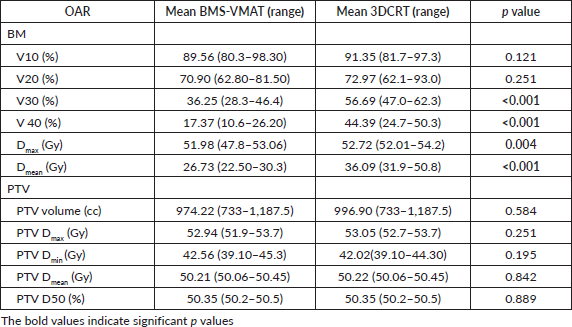
Figure 1 shows the dose colour wash for BMS-VMAT and 3DCRT plans. The mean PTV volume was 974.22 cc (range 733–1,187.5) in the BMS-VMAT arm and 996.9 cc (733–1,187.5) in the 3DCRT arm, respectively. PTV coverage was comparable, with Dmean of 50.6–50.45 Gy in both arms.
BM dosimetric values showed statistically significant differences between the arms. Figure 2 shows differences in the dose volume histograms (DVH) of both techniques for the PTV and BM volumes. The Dmean was 26.73 Gy (22.50–30.3) for the BMS-VMAT arm and 36.09 Gy (31.9–50.8) for the 3DCRT arm (p-value < 0.001). Similarly, BM Dmax was 51.96 Gy in BMS-VMAT arm and 52.72 Gy in 3DCRT arm, with statistically significant p-value of 0.004. BM V30 and BM V40 were 36.25% and 17.37% for the BMS-VMAT arm and 56.69% and 44.39% for the 3DCRT arm (p-value <0.001). BM V10 and V20 were 89.56% and 70.9% for BMS-VMAT and 91.35% and 72.97% for the 3DCRT arm (p-value of 0.121 and 0.251) (Table 2).
The baseline blood counts were comparable in both arms (Table 1). Higher HTs were observed in patients treated with 3DCRT compared to those with BMS-VMAT. The difference was statistically significant between the two arms concerning the highest grade of leukopenia and neutropenia (p-value = 0.039 and 0.001). The difference between the highest grade of anaemia between the two groups was not statistically significant (p-value = 0.17); however, grade 3 anaemia was seen in 6.6% of patients in the BMS-VMAT arm versus 10% in the 3DCRT arm. Grade 2 leukopenia was observed in 16.7% of patients in the BMS-VMAT arm versus 36.6% in the 3DCRT arm. Similarly, grade 2 neutropenia was present in 13.3% in the BMS-VMAT arm versus 36.6% in the 3DCRT arm. However, no significant difference was found in terms of thrombocytopenia (Table 3).
Table 1. Baseline characteristics of patients included in the study.
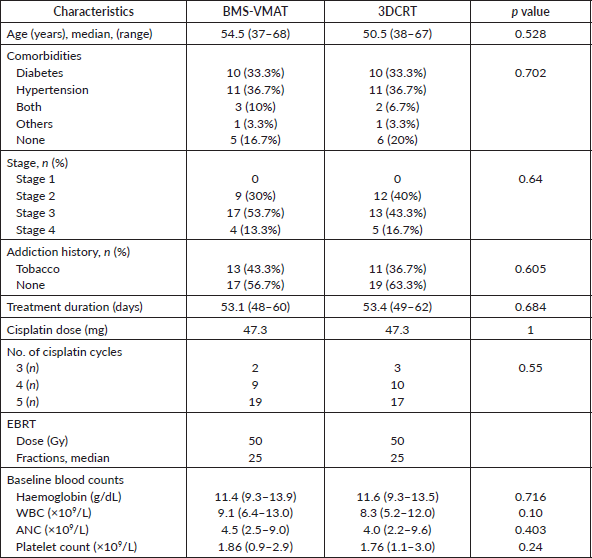
Figure 1. Colour wash for VMAT (a) and 3DCRT (b).
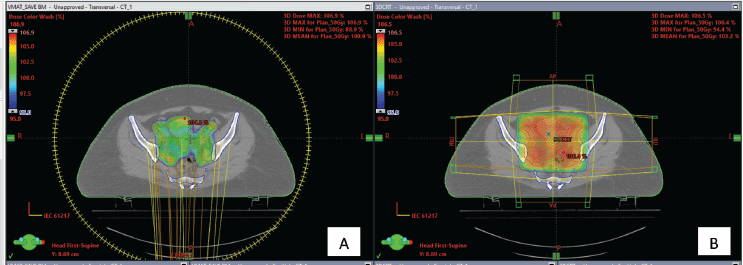
Figure 2. DVH for PTV (red) and BM (blue); triangle indicates 3DCRT, while square represents BMS-VMAT.
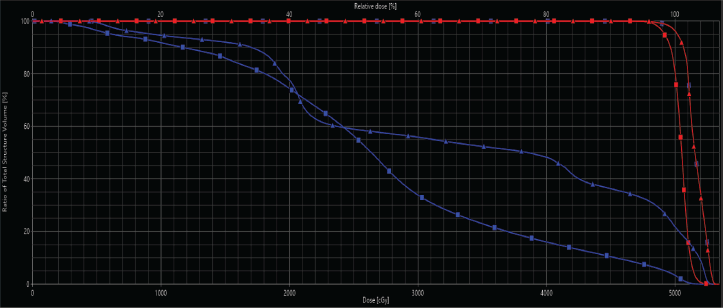
Table 2. Dosimetric profile (BM and target) of patients receiving BMS-VMAT versus 3DCRT.
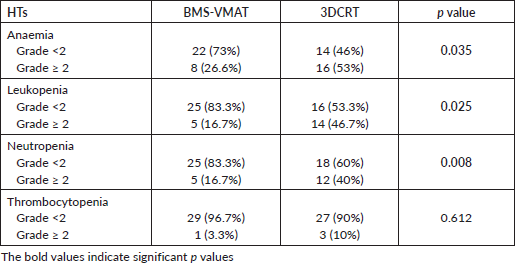
Grade ≥2 anaemia was observed in 26% of patients in the BMS-VMAT arm and 53% of patients in the 3DCRT arm (p-value = 0.035). Grade ≥ 2 leukopenia and neutropenia were both 16.7% in the BMS-VMAT arm and 46.7% & 40% in the 3DCRT arm (p-value = 0.025 and 0.008). However, a similar pattern was seen for thrombocytopenia, although the values were not statistically significant (p = 0.612) (Table 4).
Table 3. Grades of HTs in BMS-VMAT versus 3DCRT arms.
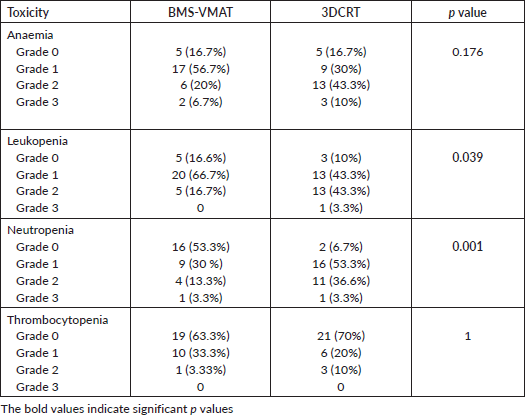
Table 4. Comparison of grade ≥2 HTs between patients receiving BMS-VMAT and 3DCRT.
Discussion
Improved tumour control is obtained by using combined therapeutic strategies, i.e. combining chemotherapy and RT; however, concomitant treatment increases toxicity. A key dose-limiting side effect is BM suppression. Adult BM incorporates red BM, which is haematopoietically active and inactive yellow marrow [17]. As revealed by magnetic resonance imaging, positron emission tomography (PET) and single photon emission CT, red BM is concentrated in specific sub-regions of the pelvis, such as the vertebrae and ilium [12, 23, 24]. Radiation exposure depletes haematopoietic stem and progenitor cells, suppressing circulating blood components. Leukocytes and neutrophils are most affected due to rapid turnover rates. Concurrent cisplatin-based chemotherapy further increases the incidence and severity of HT. Hence, minimising radiation dose to pelvic BM is important to preserve haematopoietic function and maintain treatment continuity. Studies evaluating acute HT of pelvic RT and concomitant cisplatin in cervical cancer patients are limited [6, 7, 13, 15, 25].
This study evaluated the advantage of BMS-VMAT over 3DCRT in reducing pelvic BM dose and its clinical impact on haematological parameters in patients receiving CCRT. BMS-VMAT significantly reduced pelvic BM dose parameters, resulting in a clinically meaningful reduction in HT in comparison to 3DCRT. This dosimetric advantage was accomplished without compromising target coverage, emphasising the therapeutic benefit of advanced RT techniques.
Mell et al [13] demonstrated the association between BM dose and HT, showing significant reduction in V5, V10, V20, V30 and V40 in comparison to the four-field box technique. The acute HT was also reduced with decreased grade 3–4 toxicity with decreased BM dose [13]. This landmark study laid the foundation for incorporating BM constraints in RT planning. Similarly, the RTOG 0418 trial demonstrated V30, V40 and BM Dmean as strong predictors of grade ≥ 2 toxicity [26]. Wang et al [27] demonstrated that BMS-IMRT significantly reduced V10, V20, V30 and V40 without affecting PTV coverage, augmenting the dosimetric supremacy of optimised planning strategies.
In our study, significant reductions in BM Dmean, V30 and V40 correlated with lower HT in the BMS-VMAT group. However, V10 and V20 showed no significant difference, endorsing the view that intermediate and high volumes may be more decisive factors influencing toxicity, consistent with Konnerth et al [28].
Our findings align with Kapoor et al [29] who demonstrated significantly reduced BM V20, V30 and V40 with IMRT in comparison to 3DCRT, resulting in reduced HT with a lower incidence of grade ≥2 leukopenia and neutropenia. They concluded that BMS-IMRT improves treatment tolerance without compromising PTV coverage [29]. Similarly, Erpolat et al [30] compared IMRT and 3DCRT and indicated that reduced irradiation to pelvic BM resulted in lower rates of HT in the IMRT group, and the INTERTECC-2 trial demonstrated that BMS-IMRT significantly reduced acute HT and improved chemotherapy compliance, resulting in optimal clinical outcomes [31], while Gandhi et al [32] demonstrated a significant reduction in grade ≥2 HT with IMRT compared to conventional techniques.
We observed significantly lower rates of grade ≥2 anaemia, leukopenia and neutropenia in the BMS-VMAT arm. However, no significant difference was observed in thrombocytopenia between the two arms. This may be attributed to differences in dose-response relationships and relatively lower radiosensitivity of megakaryocytes or among various haematopoietic cell lines. Similar findings were observed by Bazan et al [33] where platelet counts were less affected in comparison to leukocyte and neutrophil counts. These findings support routine incorporation of BM dose constraints in RT planning. Based on available literature, recommended constraints include V10 <90%, V20 <65%–80% and V40 <35%–40% [21, 28].
Our results particularly emphasise the importance of limiting intermediate- and high-dose volumes (V30 and V40), which showed significant differences between techniques and stronger correlation with toxicity outcomes. This is instrumental in resource-limited settings and developing countries where functional imaging for active BM delineation may be challenging.
The strengths of our study include a well-balanced cohort, uniform treatment protocol with comprehensive evaluation of dosimetric as well as clinical outcomes. Inclusion of concurrent chemotherapy in all patients enhances the clinical relevance of the findings. However, there are certain limitations also, such as relatively lower sample size and the single-institutional nature of the study. Along with this, BM delineation was based on anatomical contours instead of functional imaging; hence, active haematopoietic regions may not be fully delineated.
Future directions should be focused on the analysis of BM dose constraints and inclusion of functional imaging techniques such as fluorothymidine PET for identification of active BM [34].
Conclusion
BMS-VMAT significantly reduces clinically relevant pelvic BM parameters, particularly BM Dmean, V40 and V30 in comparison to 3DCRT without compromising target coverage. This dosimetric advantage results in a lower incidence of grade ≥2 HTs, especially anaemia, leukopenia and neutropenia, strengthening the clinical importance of limiting intermediate and high dose BM volumes during treatment planning. These findings support the integration of BM-sparing strategies into routine RT planning for carcinoma cervix to improve treatment tolerability and outcome.
Conflicts of interest
The authors have no conflicts of interest to declare.
Funding
We have not received any funding for the present study from any source.
Author contributions
Concept and design: Smriti Srivastava, Sunil Kumar, Rashmi Yadav and Vijay Kumar.
Acquisition, analysis or interpretation of data: Smriti Srivastava, Sunil Kumar, Rashmi Yadav and Vijay Kumar.
Drafting of the manuscript: Smriti Srivastava, Sunil Kumar, Rashmi Yadav and Mohammad Ali.
Critical review of the manuscript for important intellectual content: Smriti Srivastava, Sunil Kumar, Rashmi Yadav and Mohammad Ali.
References
1. Bray F, Laversanne M, and Sung H, et al (2022) Global cancer statistics 2022: GLOBOCAN estimates of incidence and mortality worldwide for 36 cancers in 185 countries CA Cancer J Clin 74 229–263 [https://doi.org/10.3322/caac.21834]
2. Chemoradiotherapy for Cervical Cancer Meta-Analysis Collaboration (2010) Reducing uncertainties about the effects of chemoradiotherapy for cervical cancer: individual patient data meta-analysis Cochrane Database Syst Rev (1) [https://doi.org/10.1002/14651858.CD008285]
3. Rose PG, Bundy BN, and Watkins EB, et al (1999) Concurrent cisplatin-based radiotherapy and chemotherapy for locally advanced cervical cancer N Engl J Med 340(15) 1144–1153 https://doi.org/10.1056/NEJM199904153401502 PMID: 10202165
4. Keys HM, Bundy BN, and Stehman FB, et al (1999) Cisplatin, radiation, and adjuvant hysterectomy compared with radiation therapy and adjuvant hysterectomy for bulky stage IB cervical carcinoma N Engl J Med 340(15) 1154–1161 https://doi.org/10.1056/NEJM199904153401503 PMID: 10202166
5. Pedersen D, Bentzen SM, and Overgaard J (1994) Early and late radiotherapeutic morbidity in locally advanced carcinoma cervix Int J Radiat Oncol Biol Phys 29(5) 941–952 https://doi.org/10.1016/0360-3016(94)90387-5 PMID: 8083095
6. Eifel PJ, Winter K, and Morris M, et al (2004) Pelvic irradiation with concurrent chemotherapy versus pelvic and para-aortic irradiation J Clin Oncol 22(5) 872–880 https://doi.org/10.1200/JCO.2004.07.197 PMID: 14990643
7. Peters WA 3rd, Liu PY, and Barrett RJ 2nd, et al (2000) Concurrent chemotherapy and pelvic radiation therapy as adjuvant therapy J Clin Oncol 18(8) 1606–1613 https://doi.org/10.1200/JCO.2000.18.8.1606 PMID: 10764420
8. Stehman FB, Ali S, and Keys HM, et al (2007) Radiation therapy with or without weekly cisplatin for bulky stage IB cervical carcinoma Am J Obstet Gynecol 197(5) 503.e1–503.e6 https://doi.org/10.1016/j.ajog.2007.08.003 PMID: 17980189 PMCID: 2112746
9. Datta NR, Stutz E, and Liu M, et al (2017) Concurrent chemoradiotherapy vs radiotherapy alone in cervical cancer Gynecol Oncol 145(2) 374–385 https://doi.org/10.1016/j.ygyno.2017.01.033 PMID: 28188016
10. Green JA, Kirwan JM, and Tierney JF, et al (2001) Survival after concomitant chemoradiotherapy Lancet 358 781–786 https://doi.org/10.1016/S0140-6736(01)05965-7 PMID: 11564482
11. Green J, Kirwan J, and Tierney J, et al (2005) Concomitant chemotherapy and radiotherapy Cochrane Database Syst Rev (3) CD002225 [https://doi.org/10.1002/14651858.CD002225.pub2]
12. Hayman JA, Callahan JW, and Herschtal A, et al (2011) Distribution of proliferating bone marrow using FLT-PET Int J Radiat Oncol Biol Phys 79(3) 847–852 https://doi.org/10.1016/j.ijrobp.2009.11.040
13. Mell LK, Kochanski JD, and Roeske JC, et al (2006) Dosimetric predictors of acute hematologic toxicity Int J Radiat Oncol Biol Phys 66(5) 1356–1365 https://doi.org/10.1016/j.ijrobp.2006.03.018 PMID: 16757127
14. Rubin P, Landman S, and Mayer E, et al (1973) Bone marrow regeneration after irradiation Cancer 32(3) 699–711 https://doi.org/10.1002/1097-0142(197309)32:3<699::AID-CNCR2820320324>3.0.CO;2-V PMID: 4726969
15. Albuquerque K, Giangreco D, and Morrison C, et al (2011) Predictors of hematologic toxicity in cervical cancer Int J Radiat Oncol Biol Phys 79(4) 1043–1047 https://doi.org/10.1016/j.ijrobp.2009.12.025
16. Otto K (2008) Volumetric modulated arc therapy Med Phys 35(1) 310–317 https://doi.org/10.1118/1.2818738 PMID: 18293586
17. Vogler JB and Murphy WA (1988) Bone marrow imaging Radiology 168(3) 679–693 https://doi.org/10.1148/radiology.168.3.3043546 PMID: 3043546
18. Bansal A, Patel FD, and Rai B, et al (2013) CTV delineation in cervical cancer J Cancer Res Ther 9(4) 574–582 [10.4103/0973-1482.126450]
19. Mell LK, Tiryaki H, and Ahn KH, et al (2008) BM-sparing IMRT vs conventional techniques Int J Radiat Oncol Biol Phys 71(5) 1504–1510 [10.1016/j.ijrobp.2008.04.046] https://doi.org/10.1016/j.ijrobp.2008.04.046 PMID: 18640499
20. Zhou YM, Freese C, and Meier T, et al (2018) PET-defined marrow sparing predicts toxicity Clin Transl Oncol 20(6) 713–718 https://doi.org/10.1007/s12094-017-1771-6
21. Kumar T, Schernberg A, and Busato F, et al (2019) Pelvic BM dose and hematologic toxicity Cancer Manag Res 11 6285–6297 https://doi.org/10.2147/CMAR.S195989
22. Roeske JC, Lujan A, and Rotmensch J, et al (2000) Whole pelvic IMRT in gynecologic malignancies Int J Radiat Oncol Biol Phys 48(5) 1613–1621 https://doi.org/10.1016/S0360-3016(00)00771-9 PMID: 11121668
23. Basu S, Houseni M, and Bural G, et al (2007) MRI-based bone marrow segmentation Mol Imag Biol 9(6) 361–365 https://doi.org/10.1007/s11307-007-0112-5
24. Roeske JC, Lujan A, and Reba RC, et al (2005) SPECT-guided IMRT planning Radiother Oncol 77(1) 11–17 https://doi.org/10.1016/j.radonc.2005.06.017 PMID: 16024116
25. Brixey CJ, Roeske JC, and Lujan AE, et al (2002) IMRT impact on hematologic toxicity Int J Radiat Oncol Biol Phys 54(5) 1388–1396 https://doi.org/10.1016/S0360-3016(02)03801-4 PMID: 12459361
26. Klopp AH, Moughan J, and Portelance L, et al (2013) Hematologic toxicity in RTOG 0418 Int J Radiat Oncol Biol Phys 86(1) 83–90 https://doi.org/10.1016/j.ijrobp.2013.01.017 PMID: 23582248 PMCID: 4572833
27. Wang JN, Yu X, and Gu LN, et al (2025) BM-sparing IMRT toxicity analysis Precis Radiat Oncol 9(2) 96–107 https://doi.org/10.1002/pro6.70019 PMID: 41164422 PMCID: 12559915
28. Konnerth D, Gaasch A, and Zinn A, et al (2024) Bone marrow sparing strategies systematic review Cancers (Basel) 16(10) 1842 https://doi.org/10.3390/cancers16101842 PMID: 38791920 PMCID: 11120218
29. Kapoor AR, Bhalavat RL, and Chandra M, et al (2022) BM-sparing IMRT vs 3DCRT randomized study J Cancer Res Ther 18(6) 1490–1497 https://doi.org/10.4103/jcrt.JCRT_1242_20 PMID: 36412399
30. Erpolat OP, Alco G, and Caglar HB, et al (2014) 3DCRT vs IMRT hematologic toxicity Eur J Gynaecol Oncol 35(1) 62–66 PMID: 24654465
31. Williamson CW, Sirák I, and Xu R, et al (2022) INTERTECC trial results Int J Radiat Oncol Biol Phys 112(1) 169–178 https://doi.org/10.1016/j.ijrobp.2021.08.019
32. Gandhi AK, Sharma DN, and Rath GK, et al (2013) IMRT vs conventional RT outcomes Int J Radiat Oncol Biol Phys 87(3) 542–548 https://doi.org/10.1016/j.ijrobp.2013.06.2059 PMID: 24074927
33. Bazan JG, Luxton G, and Kozak MM, et al (2013) Chemotherapy impact on HT models Int J Radiat Oncol Biol Phys 87(5) 983–991 https://doi.org/10.1016/j.ijrobp.2013.09.017 PMID: 24161422
34. McGuire SM, Menda Y, and Ponto LLB, et al (2014) FLT PET marrow mapping J Appl Clin Med Phys 15(4) 129–136 https://doi.org/10.1120/jacmp.v15i4.4780 PMID: 25207403 PMCID: 4161980