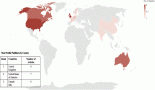
Glioblastoma (GBM) is the most common and aggressive malignant brain tumour in adults, characterised by rapid growth, infiltration and a high rate of recurrence. Despite therapeutic advances, median survival remains between 12 and 18 months. Standard treatment (surgery followed by radiotherapy and temozolomide) offers limited benefits, while targeted therapies and immunotherapies face challenges linked to tumour heterogeneity and the blood–brain barrier. In Latin America and the Caribbean (LAC), inequalities in access and evidence generation hinder the development of regional recommendations. This scoping review mapped the available evidence on therapeutic strategies applied to non-recurrent GBM in LAC, identifying treatments under investigation, geographical distribution, clinical outcomes and methodological quality. Systematic searches were conducted in PubMed, the Cochrane Library, Virtual Health Library, SciELO and Redalyc (2015–2025), supplemented by a manual review. Quantitative studies and scoping or systematic reviews (SRs) evaluating therapeutic interventions in patients with non-recurrent GBM were included. Methodological quality was assessed using the risk of bias in non-randomised studies of interventions, Joanna Briggs Institute, and a measurement tool to assess SRs-2 tools. Of the 283 records identified, 34 studies met the inclusion criteria, with retrospective designs predominating; 14 comparative studies, three reviews and one qualitative study were identified. The studies originated from seven countries, with a predominance of Brazil. The median of medians for overall survival reported was 12.2 months (IQR, 9.48), and progression-free survival ranged from 7 to 22 months. Gaps remain in molecular characterisation, quality of life and the standardisation of the extent of resection and adjuvant protocols. The overall methodological quality was low to moderate. There is a need to strengthen multicentre networks, standardise definitions and promote the integration of biomarkers, functional and economic variables to improve the comparability and applicability of regional evidence on GBM in LAC.

Supporting oncology professionals through education
The content on this site is intended for healthcare professionals only