Background: Local recurrence of gynaecological malignancies after prior pelvic radiotherapy presents a complex therapeutic dilemma. Pelvic exenteration is curative in select cases but carries high morbidity and profound quality-of-life impact. Salvage reirradiation with image-guided brachytherapy (BT) offers a highly conformal alternative; however, data remain fragmented and practical organ-at-risk (OAR) constraints are not standardised.
Objectives: 1) To describe in detail two contemporary cases of high-dose-rate (HDR) BT reirradiation – one vulvar and one vaginal vault recurrence – highlighting planning strategy, catheter implantation, dosimetry and clinical outcome; 2) to synthesise current evidence on efficacy, toxicity, dose–fractionation and technique of BT reirradiation in cervical, endometrial and vulvar cancers; and 3) to propose pragmatic cumulative EQD2 OAR limits for rectum, bladder, small bowel and urethra based on published series.
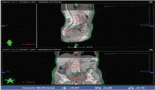
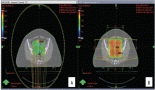
Methods: Both patients underwent computed tomography/magnetic resonance imaging-based contouring with hybrid interstitial or surface mould applicators. Total doses were 45.6 Gy in 8 fractions (EQD210 ≈ 60 Gy) for the vulvar recurrence and 24.6 Gy in 3 fractions (EQD24.5 ≈ 48 Gy) for the vaginal vault recurrence, with cumulative OAR doses referenced against literature-derived thresholds. A narrative review (1993–2024) identified 35 key studies involving >600 reirradiated patients.
Results: The vulvar case achieved complete response at 6 months without Grade ≥3 toxicity; the vaginal vault case showed initial partial response, remained ECOG 0 and required systemic therapy for later progression. Across the literature, 1- to 3-year local control ranged 40%–80% and overall survival 40%–60%, with severe late toxicity generally ≤30% when cumulative doses respected D2cc ≈ 70–100 Gy3 (rectum), 90–120 Gy3 (bladder) and D0.5cc ≤ 110 Gy3(urethra). Fractionation of 4–6 Gy BID for 5–10 fractions (EQD210 ≈ 40–50 Gy) was most common.
Conclusion: HDR BT reirradiation can achieve meaningful, sometimes durable, local control in carefully selected gynaecologic-cancer recurrences while preserving pelvic organs. Adhering to proposed cumulative EQD2 OAR constraints and employing image-guided interstitial techniques are paramount to curtail severe complications. Multidisciplinary assessment and treatment at experienced centres are strongly recommended to optimise outcomes.