Building equitable AI capacity: lessons from continuous education on artificial intelligence as a catalyst for global health and oncology
Dulguun Myagmarsuren1, Saif Pasha1, Heng Li2, Akila Viswanathan2 and Wilfred Ngwa2,3
1Virginia Tech Carilion School of Medicine, Roanoke, VA 24016, USA
2Johns Hopkins University School of Medicine, Baltimore, MD 21287, USA
3Harvard Radiation Oncology Program, Boston, MA 02115, USA
Abstract
Artificial intelligence (AI) is transforming healthcare; however, equitable access to AI training remains limited, particularly in low- and middle-income countries, where digital infrastructure and technical training opportunities are limited. The AI Catalyst for Global Health course was developed as a free, easily accessible, virtual course to provide foundational AI literacy and ethical awareness for a globally diverse audience, with an emphasis on underserved settings. We collected baseline participant demographics using a pre-course survey and evaluated participation, engagement and educational impact using weekly post-lecture surveys and a final post-course survey incorporating a retrospective pre–post design. Survey items assessed confidence in explaining core AI concepts and evaluating ethical implications, as well as the perceived feasibility of applying AI approaches, likelihood of future application, perceived barriers and open-ended reflections on course content and impact. A total of 63 participants from 12 countries completed the survey, including healthcare providers (41%), students (24%), researchers or academics (22%) and professionals in technology, policy or other roles (13%). Confidence in explaining AI concepts increased from 2.68 ± 1.22 (retrospective pre-course) to 4.22 ± 0.75 (post-course) (t(62) = 9.84; p < 0.001; dp = 1.24), while confidence in evaluating ethical implications increased from 2.68 ± 1.28 to 4.27 ± 0.70 (t(62) = 9.58; p < 0.001; dp = 1.21). Participants rated the feasibility of applying AI as 3.86 ± 0.93 and the likelihood of applying AI insights within the next 12 months as 4.29 ± 0.87, with strong agreement that AI has the potential to reduce global health inequities (4.40 ± 0.64). The most reported barriers to AI adoption were funding limitations (43%), limited technical capacity (21%) and lack of stakeholder awareness (16%). Qualitative analysis highlighted collaboration, efficiency and the importance of sustained AI education. These findings suggest that accessible virtual education can meaningfully strengthen self-reported AI literacy and ethical awareness, supporting capacity building for global health and oncology in resource-limited settings.
Keywords: artificial intelligence, global health, medical education, health workforce, oncology, developing countries, digital health, ethics
Correspondence to: Dulguun Myagmarsuren
Email: dulguun@vt.edu
Published: 12/10/2026
Received: 27/01/2026
Publication costs for this article were supported by ecancer (UK Charity number 1176307).
Copyright: © the authors; licensee ecancermedicalscience. This is an Open Access article distributed under the terms of the Creative Commons Attribution License (http://creativecommons.org/licenses/by/4.0), which permits unrestricted use, distribution, and reproduction in any medium, provided the original work is properly cited.
Introduction
Artificial intelligence (AI) is rapidly integrating into healthcare holds promise for improving diagnosis, treatment planning and health system management [1]. AI is changing how health services are delivered in many high-income settings, particularly in specialties such as radiology and pathology, enabled by the availability of large datasets and advanced analytical methods [2–4]. These developments have raised hopes that AI might also address health challenges in low- and middle-income countries (LMICs), including workforce shortages and weak public health surveillance systems that are exacerbating morbidity and mortality in these countries [5–9].
Despite its promise, equitable access to AI education and training remains a major global challenge, particularly in LMICs where digital infrastructure, technical expertise and institutional capacity are often limited [10–13]. Most AI health applications are developed in high-income countries, resulting in curricula and tools that may not address local needs and disease burdens [10]. As a result, professionals in LMICs may be excluded from participating fully in the global digital transformation of healthcare, potentially widening existing disparities. The risk of algorithmic bias and structural inequities further underscores the need for culturally sensitive, context-aware and equity-focused educational approaches [13–15].
Recognising these disparities, the global health community, including major donor agencies and international organisations, has emphasised the importance of inclusive digital transformation. Both the World Health Assembly and the United Nations have called for universal access to digital networks and digitally enabled health services by 2030 [9]. Achieving these goals will depend not only on technology transfer but also on equitable and globally accessible education in AI and digital health.
Properly implemented, AI can play a transformative role in global health by supporting diagnostic decision-making, improving early disease detection and optimising resource allocation in resource-constrained settings. However, deploying AI responsibly requires more than technological readiness. It requires educational capacity building, ethical literacy and local ownership of AI resources. Without these factors, AI risks reinforcing, rather than reducing, existing health inequities [9,13].
The Global Oncology University (GO-U) has established a collaborative education model designed to provide free, high-quality medical education to learners worldwide. Building on this foundation, the AI Catalyst for Global Health course was created to empower participants across diverse regions with a foundational understanding of AI principles and their practical applications in healthcare. The course focused initially on core AI concepts and later expanded to address disparities in healthcare access and outcomes, particularly in oncology and other areas where inequities remain most pronounced.
Although interest in AI for health has surged globally, few studies have evaluated the implementation and educational impact of AI-focused training programs tailored to LMIC contexts. There remains a gap in understanding how such programmes influence learner engagement, confidence and perceived utility [11,16]. Therefore, this study aims to evaluate the feasibility, effectiveness and participant perceptions of the AI Catalyst for Global Health course, providing insights into how AI education can be effectively integrated into global health capacity-building efforts for a globally diverse audience, with an emphasis on LMIC learners.
Methods
Study design and course overview
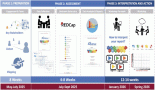
This was an educational evaluation using quantitative and qualitative survey analysis to assess participation metrics, learner feedback and perceived outcomes from the AI Catalyst for Global Health course. The course was delivered virtually between July and September 2025 as an 8-week, 12-hour webinar series, followed by one concluding session. Each session included expert-led lectures, case-based discussions and interactive question-and-answer components.
Course objectives and curriculum
The course was developed by the GO-U as part of its mission to provide access to free, high-quality medical and technological education globally. The course objectives were to (1) introduce fundamental concepts of artificial intelligence and machine learning in healthcare; (2) demonstrate practical examples of AI applications in diagnostics, oncology and health-system management; (3) promote understanding of ethical and equity considerations in AI deployment; and (4) encourage participants to conceptualise AI-driven solutions aimed at improving healthcare access and outcomes within their local settings.
Weekly sessions focused on key themes such as AI foundations, data ethics, AI in cancer care, AI for global health systems and community-centred innovation. The final session included a post-course survey incorporating a retrospective pre–post design, in which participants rated their confidence before and after course completion.
Participants, recruitment and requirements
The course was open to students, healthcare professionals, researchers and policymakers from any country. Recruitment was conducted through GO-U’s global education network, professional associations and social media platforms, with targeted outreach to LMIC regions.
Eligibility for inclusion in the final analysis required participation in at least 70% of course sessions, attendance at the final session and completion of the post-course survey. To promote equitable participation across time zones and geographic regions, attendance was defined as either live participation in virtual sessions or asynchronous viewing of recorded lectures accompanied by completion of a short post-lecture survey, which served as a mechanism for attendance verification.
In total, 168 participants attended at least one live session, and 64 of these participants met the criteria and completed the final survey; one response was excluded due to incomplete data, resulting in a final analytic sample of 63 participants. This study was designed as an exploratory educational programme evaluation and utilised a convenience sample of course participants. Therefore, a formal a priori sample size calculation was not performed. The final analytic sample consisted of all eligible participants who completed the course requirements and post-course survey.
Data collection
Participant data were collected using multiple survey instruments administered throughout the course.
a. A brief pre-course survey was administered prior to the first session to collect baseline demographic information, including participant name, email address, country of residence and professional role. These data were collected for administrative and descriptive purposes only and were not used in outcome analyses.
b. Brief post-lecture surveys consisting of open-ended questions were distributed after each session to verify attendance and to collect formative feedback regarding participants’ interest and key learning points from each lecture.
c. A structured post-course survey was administered during the final session. This survey incorporated a retrospective design in which participants rated their confidence before and after course completion. Survey items assessed demographic characteristics, self-reported prior exposure to AI or machine learning training, confidence in explaining core AI concepts and evaluating ethical implications, perceived feasibility of applying AI approaches, likelihood of applying AI-related insights, attitudes towards AI’s potential to reduce health inequities, perceived barriers to adoption and open-ended reflections on course impact.
Data analysis
Quantitative survey data were analysed using descriptive and inferential statistics in Python (version 3.12), and qualitative open-ended responses were analysed to contextualise quantitative findings. Paired t tests were conducted to compare the mean confidence scores before and after the course for both learning outcomes (AI concepts and ethics). Effect sizes were calculated via Cohen’s d for paired samples, and 95% confidence intervals (CIs) were reported for mean differences. For all tests, a p value <0.05 (two-tailed) was considered statistically significant.
Single-item variables (feasibility, likelihood of applying AI and agreement that AI can reduce health inequities) were summarised using means, standard deviations (SDs), medians, interquartile ranges and 95% CIs. Categorical variables (country of residence, professional role and barriers) were summarised as frequencies and percentages.
Open-ended responses were analysed a qualitative approach. Two independent reviewers identified and grouped responses into major themes, which were refined through consensus. Recurring ideas and concepts were identified directly from the data without the use of a predefined coding framework. Representative quotes were selected to represent key insights related to opportunities, challenges and perceived impact.
Ethical considerations
This evaluation was conducted as part of GO-U’s educational improvement initiative and did not require formal institutional review board approval. Participation was voluntary, and informed consent was obtained from all respondents prior to survey completion. Identifying information collected for administrative purposes was not linked to outcome analyses, and all analyses were conducted on de-identified data. The study was conducted in accordance with the principles of the Declaration of Helsinki.
Results
Participant characteristics
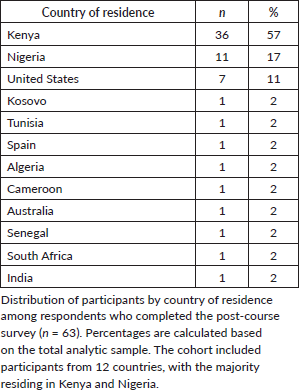
A total of 63 participants who met course attendance requirements completed the final post-course survey and were included in the analysis. The respondents represented a geographically diverse cohort spanning 12 countries, with the largest representation from Kenya, followed by Nigeria and the United States. Smaller numbers of participants were from Kosovo, Tunisia, Spain, Algeria, Cameroon, Australia, Senegal, South Africa and India (Table 1).
Table 1. Country of residence of participants (n = 63).
Most respondents identified as healthcare providers (26 of 63, 41%), followed by students (15, 24%) and researchers or academics (14, 22%). A smaller proportion were engaged in technology or engineering fields (3, 5%), policy or government roles (1, 2%) or other roles (4, 6%). These data indicate that participation was driven primarily by individuals in the clinical and academic sectors, with additional engagement from technical and policy professionals (Table 2).
Across regions, professional engagement patterns varied. In Kenya, which contributed the largest proportion of participants, healthcare providers and students accounted for most respondents. The participants from Nigeria showed a more balanced distribution among students, researchers and clinicians, whereas the respondents from the United States were primarily researchers or academics. The smaller cohorts from other countries were predominantly healthcare professionals and trainees (Figure 1).
Table 2. Professional roles of participants (n = 63).
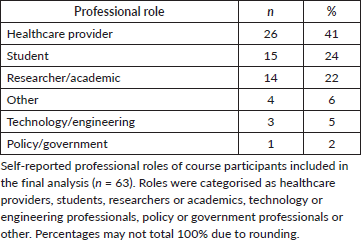
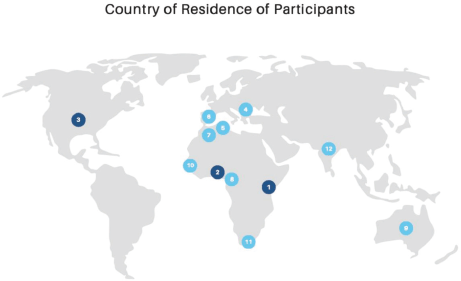
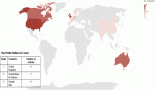
Figure 1. Map of country of residence of participants. World map depicting the countries of residence of participants who completed the AI Catalyst for Global Health course and post-course survey (n = 63). The distribution demonstrates broad international participation, with the majority of participants residing in LMICs. Countries are labelled numerically as follows: 1, Kenya; 2, Nigeria; 3, United States; 4, Kosovo; 5, Tunisia; 6, Spain; 7, Algeria; 8, Cameroon; 9, Australia; 10, Senegal; 11, South Africa; and 12, India.
Changes in confidence
The participants demonstrated statistically significant increases in self-reported confidence based on retrospective pre–post assessments following course completion. The mean self-reported confidence in explaining core AI concepts increased from 2.68 ± 1.22 before the course to 4.22 ± 0.75 after completion, a mean change of +1.54 points (95% CI, 1.23–1.85; t(62) = 9.84; p < 0.001; Cohen’s dp = 1.24). Similarly, the mean confidence in evaluating the ethical implications of AI tools increased from 2.68 ± 1.28 to 4.27 ± 0.70, a mean change of +1.59 points (95% CI, 1.26–1.92; t(62) = 9.58; p < 0.001; Cohen’s d = 1.21) (Table 3).
Feasibility, application and perceived impact
The participants reported that applying AI approaches in their work or community settings was feasible, with a mean rating of 3.86 ± 0.93 (95% CI, 3.62–4.09). The likelihood of applying AI-related insights within the next 12 months was even greater (4.29 ± 0.87; 95% CI, 4.07–4.50), with most respondents selecting 5 (‘very likely’). The participants overwhelmingly agreed that AI has the potential to reduce global health inequities, with a mean rating of 4.40 ± 0.64 (95% CI, 4.24–4.56).
Barriers to AI adoption
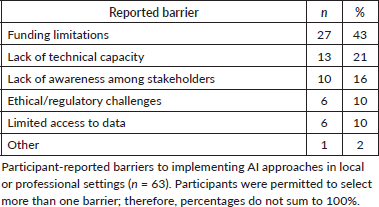
Funding limitations were the most frequently reported barrier to implementing AI initiatives, cited by 27 participants (43%). Other common obstacles included limited technical capacity (13, 21%) and insufficient stakeholder awareness (10, 16%). Ethical and regulatory concerns (6, 10%) and restricted access to data (6, 10%) were less common but still notable (Table 4).
Table 3. Changes in self-reported confidence in AI knowledge and ethics.
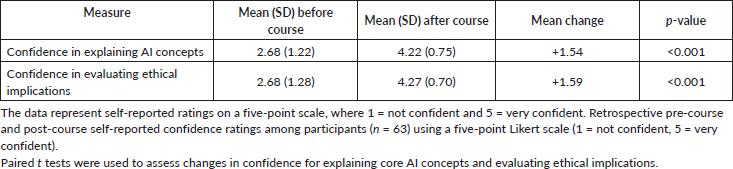
Table 4. Reported barriers to adoption of AI (n = 63).
Perceived opportunities for AI
The participants identified multiple areas where AI could strengthen healthcare systems and service delivery. Frequently mentioned opportunities include disease-outbreak prediction, early cancer detection, improved diagnostics for chronic disease and genomics-based precision medicine. The respondents also emphasised AI’s potential to enhance health-data management and to enable smartphone-based diagnostic and referral tools tailored to resource-limited environments.
Qualitative reflections
Thematic analysis of open-ended responses identified three recurrent themes: (1) the importance of collaboration and knowledge exchange across disciplines and regions for responsible AI implementation; (2) recognition of AI as a catalyst for efficiency and equity, particularly in supporting clinical decision-making and reducing workload; and (3) the need for ongoing education and capacity building to sustain progress and mitigate ethical risks. Participants consistently emphasised the value of collaboration, practical applications of AI in healthcare and continued workforce development. Representative quotations and frequencies of the themes are presented in Table 5
Post-lecture qualitative feedback across course sessions
Across the 8-week course, ~430 open-ended responses were collected through weekly post-lecture surveys, which were used both to track attendance and to gather formative feedback on the content and engagement. Responses were reviewed and grouped into categories aligned with course objectives. Percentages represent how often a given theme appeared in the open-ended responses.
Table 5. Major themes identified from participant reflections on opportunities for AI in healthcare.
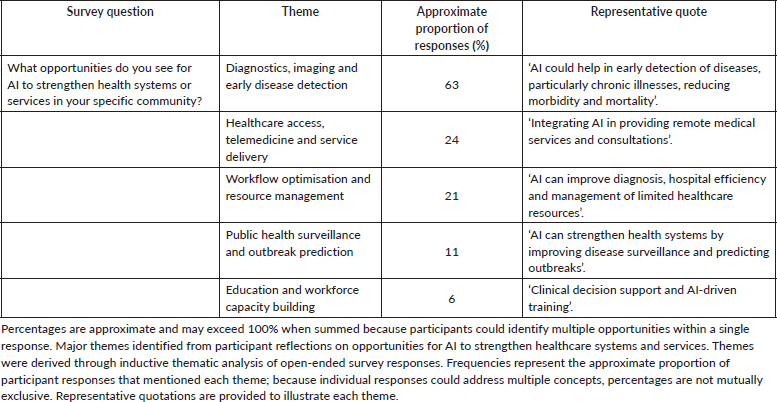
Following the introductory sessions (weeks 1–2), ~76% of respondents reported improved understanding of foundational AI concepts, including distinctions between AI, machine learning and deep learning, as well as supervised and unsupervised learning paradigms. Many participants emphasised that AI was best understood as a tool or catalyst to enhance clinical and public health workflows rather than replace human expertise, consistent with the broader themes summarised in Table 5.
Across applied sessions (weeks 3–6), ~75% of respondents highlighted real-world case studies as the most valuable aspect of the course. Frequently cited examples included AI-assisted radiotherapy contouring and treatment planning in oncology, mobile microscopy for malaria diagnosis and AI-enabled public health surveillance. About 70% of respondents explicitly noted the relevance of these applications to LMIC settings, emphasising feasibility and the importance of locally representative data.
Sessions focused on genomics, precision medicine and ethics (weeks 5 and 7) prompted participants’ reflections on responsible AI use. Over 80% of respondents raised ethical concerns most related to data privacy, algorithmic bias and accountability for AI-related errors.
In later sessions addressing implementation challenges (weeks 6–8), more than 90% of respondents identified at least one barrier to AI adoption. The most frequently noted challenges included limited infrastructure, lack of trained personnel, funding constraints, data quality or availability and gaps in regulatory or policy frameworks, particularly in resource-limited settings.
Overall engagement was high throughout the course, with over 90% of responses expressing positive or strongly positive feedback regarding course content and delivery. Suggestions for improvement focused primarily on logistical enhancements such as increased interactivity, access to lecture slides and longer discussion periods.
Discussion
This educational evaluation demonstrated that the AI Catalyst for Global Health course effectively improved participants’ self-reported confidence and readiness to apply AI principles. Significant gains were observed across both core learning domains, i.e. confidence in understanding AI concepts and evaluating ethical implications with large effect sizes. These findings highlight the potential of virtual, equity-focused education to increase global capacity for AI literacy and responsible technology adoption.
Educational impact
The improvement in confidence among participants suggests that structured, interactive online learning can improve foundational understanding of AI concepts and related ethical considerations, even among learners with limited prior exposure. Both primary outcomes, confidence in explaining AI and evaluating ethics, showed large and statistically significant increases (Cohen’s d > 1.2).These findings are consistent with prior literature suggesting that structured AI education can improve learner confidence, engagement and preparedness for the responsible use of AI in healthcare settings, although direct comparisons across studies should be interpreted cautiously because of differences in educational formats, outcome measures and participant populations [16]. Prior work has shown that short, focused training programs can substantially improve digital competencies and technology adoption among healthcare workers in LMICs [10,11]. The course’s integration of case-based examples and ethical discussions aligns with recommendations from recent AI education frameworks emphasising contextual learning and ethical reflection as key components of competency development [14,15].
Global engagement and equity
The geographic and professional diversity of participants supports the course’s reach. Although the participant cohort included individuals from both low-, middle- and high-income countries, the majority of respondents were from LMIC settings, particularly Kenya and Nigeria. Therefore, the findings should be interpreted as reflecting the overall study cohort while recognising the predominance of LMIC representation. Previous studies have reported that online, globally networked learning can bridge access gaps in digital and AI-related education across resource-limited settings [12].
Barriers and implementation challenges
Despite high levels of engagement and perceived feasibility, participants identified several persistent barriers to AI adoption, including funding constraints, limited technical capacity and a lack of stakeholder awareness. These findings mirror those of previous analyses highlighting infrastructural, policy and data governance challenges as key impediments to equitable AI implementation in LMICs [10,13]. Addressing these barriers will require technological investment alongside sustained efforts in workforce training and institutional support for digital readiness [13]. The recognition of ethical and regulatory concerns in participant feedback reinforces recent calls to integrate ethics, transparency and equity frameworks into AI capacity-building efforts [14,15].
Sustaining learning and capacity building
The participants’ high ratings for feasibility (3.86/5) and likelihood of applying AI insights (4.29/5) suggest that the course not only improved confidence but also fostered motivation to translate learning into practice. Qualitative reflections emphasise the importance of collaboration, efficiency and continuous education, echoing principles from existing models of sustainable digital transformation [17]. The AI Catalyst for Global Health course aligns with broader efforts to link education, implementation and policy in AI for health [18].
Limitations
This study has several limitations. First, outcomes were based on self-reported measures, which may not fully capture objective learning gains or long-term retention. Second, the retrospective pre–post course design may be subject to recall or response-shift bias; however, this approach is commonly used in educational evaluations [19]. Third, participation was voluntary and conducted online, which may introduce selection bias towards individuals already interested in AI. Fourth, the lack of a control group limits causal inference. Finally, while the sample was geographically diverse, the overall size was modest. Future research should incorporate objective knowledge assessments, longitudinal follow-up and evaluations of how training influences real-world practice, innovation and policy outcomes.
Implications and future directions
Despite these limitations, the AI Catalyst for Global Health course represent a scalable and replicable model for broadening access to foundational AI education globally. These findings demonstrate the feasibility of delivering effective AI training through accessible, low-cost online platforms to a globally distributed audience, including substantial participation from LMIC settings. Expanding this model with multilingual content, localised case studies and regional mentorship networks could further strengthen capacity building and promote equitable participation in the global digital health ecosystem.
Conclusion
The AI Catalyst for Global Health course improved participants’ confidence in understanding and ethically evaluating AI applications in global health contexts, demonstrating the feasibility and impact of accessible online education for diverse international cohorts. While participants were predominantly from LMICs, the findings reflect the overall study population and should be interpreted accordingly. These findings illustrate the importance of equitable, context-aware educational models that integrate ethics, collaboration and practical application to prepare the global health workforce for responsible AI integration. Scaling such initiatives through partnerships, multilingual content and sustained mentorship can further advance health equity and digital capacity worldwide.
Acknowledgments
We thank all participants and speakers of the AI Catalyst for Global Health course and the Global Oncology University team for supporting the development and delivery of this course.
Conflicts of interest
The authors declare no competing interests.
Funding
Selected students who participated in this course were funded through NIH R25 CA288263.
Ethics approval
This study was conducted as an educational quality-improvement initiative through Global Oncology University and did not require institutional review board approval under institutional policy. Participation was voluntary, and informed consent was obtained from all respondents. All analyses were conducted on de-identified data.
Data availability statement
De-identified participant data, survey instruments and analytic code are available from the corresponding author upon reasonable request.
Contributors (CRediT taxonomy )
Dulguun Myagmarsuren: Conceptualization, Methodology, Investigation, Data curation, Validation, Visualization, Writing – original draft.
Saif Pasha: Conceptualization, Methodology, Investigation, Data curation, Formal analysis.
Heng Li: Methodology, Writing – review & editing.
Akila Viswanathan: Supervision, Writing – review & editing.
Wilfred Ngwa: Conceptualization, Supervision, Resources, Funding acquisition, Writing – review & editing.
All authors read and approved the final manuscript.
References
1. Fahim YA, Hasani IW, and Kabba S, et al (2025) Artificial intelligence in healthcare and medicine: clinical applications, therapeutic advances, and future perspectives Eur J Med Res 30(1) 848 https://doi.org/10.1186/s40001-025-03196-w PMID: 40988064 PMCID: 12455834
2. Hosny A, Parmar C, and Quackenbush J, et al (2018) Artificial intelligence in radiology Nat Rev Cancer 18(8) 500–510 https://doi.org/10.1038/s41568-018-0016-5 PMID: 29777175 PMCID: 6268174
3. Chang HY, Jung CK, and Woo JI, et al (2019) Artificial Intelligence in Pathology J Pathol Transl Med 53(1) 1–12 https://doi.org/10.4132/jptm.2018.12.16 PMID: 30599506 PMCID: 6344799
4. Jha S and Topol EJ (2016) Adapting to Artificial Intelligence: radiologists and Pathologists as Information Specialists JAMA 316(22) 2353–2354 https://doi.org/10.1001/jama.2016.17438 PMID: 27898975
5. Alkire BC, Peters AW, and Shrime MG, et al (2018) The Economic Consequences Of Mortality Amenable To High-Quality Health Care In Low-And Middle-Income Countries Health Aff (Millwood) 37(6) 988–996 https://doi.org/10.1377/hlthaff.2017.1233 PMID: 29863936
6. Bartolomeos KK (2018) The case for investing in public health surveillance in low- and middle-income countries Afr J Emerg Med 8(4) 127–128 https://doi.org/10.1016/j.afjem.2018.07.005 PMID: 30534514 PMCID: 6277530
7. GBD 2017 SDG Collaborators (2018) Measuring progress from 1990 to 2017 and projecting attainment to 2030 of the health-related Sustainable Development Goals for 195 countries and territories: a systematic analysis for the Global Burden of Disease Study 2017 Lancet 392(10159) 2091–2138 https://doi.org/10.1016/S0140-6736(18)32281-5
8. Kruk ME, Gage AD, and Joseph NT, et al (2018) Mortality due to low-quality health systems in the universal health coverage era: a systematic analysis of amenable deaths in 137 countries Lancet 392(10160) 2203–2212 https://doi.org/10.1016/S0140-6736(18)31668-4 PMID: 30195398 PMCID: 6238021
9. Schwalbe N and Wahl B (2020) Artificial intelligence and the future of global health Lancet 395(10236) 1579–1586 https://doi.org/10.1016/S0140-6736(20)30226-9 PMID: 32416782 PMCID: 7255280
10. Alami H, Rivard L, and Lehoux P, et al (2020) Artificial intelligence in health care: laying the Foundation for Responsible, sustainable, and inclusive innovation in low- and middle-income countries Global Health 16(1) 52 https://doi.org/10.1186/s12992-020-00584-1 PMID: 32580741 PMCID: 7315549
11. Ciecierski-Holmes T, Singh R, and Axt M, et al (2022) Artificial intelligence for strengthening healthcare systems in low- and middle-income countries: a systematic scoping review NPJ Digit Med 5(1) 162 https://doi.org/10.1038/s41746-022-00700-y PMID: 36307479 PMCID: 9614192
12. Lee J, Lynch CA, and Hashiguchi LO, et al (2021) Interventions to improve district-level routine health data in low-income and middle-income countries: a systematic review BMJ Glob Health 6(6) e004223 https://doi.org/10.1136/bmjgh-2020-004223
13. Lopez DM, Rico-Olarte C, and Blobel B, et al (2022) Challenges and solutions for transforming health ecosystems in low- and middle-income countries through artificial intelligence Front Med (Lausanne) 9 958097 https://doi.org/10.3389/fmed.2022.958097 PMID: 36530888 PMCID: 9755337
14. Belfort BDW, Mohan VC, and Hollier LH Jr (2026) Ethics of Global Health Missions and the Role of Artificial Intelligence in the Facilitation of Care and Medical Education in Low and Middle-Income Countries J Craniofac Surg 37(3–4) 802–806 [https://doi.org/10.1097/SCS.0000000000011978] PMID: 40965361
15. Frehywot S and Vovides Y (2023) An equitable and sustainable community of practice framework to address the use of artificial intelligence for global health workforce training Hum Resour Health 21(1) 45 https://doi.org/10.1186/s12960-023-00833-5 PMID: 37312214 PMCID: 10262492
16. Ahsan Z (2025) Integrating artificial intelligence into medical education: a narrative systematic review of current applications, challenges, and future directions BMC Med Educ 25(1) 1187 https://doi.org/10.1186/s12909-025-07744-0 PMID: 40849650 PMCID: 12374307
17. Topol EJ (2019) High-performance medicine: the convergence of human and artificial intelligence Nat Med 25(1) 44–56 https://doi.org/10.1038/s41591-018-0300-7 PMID: 30617339
18. Leslie D, Mazumder A, Peppin A, Wolters MK, and Hagerty A (2021) Does “AI” stand for augmenting inequality in the era of covid-19 healthcare? BMJ 372 n304. https://doi.org/10.1136/bmj.n304 PMID: 33722847 PMCID: 7958301
19. Bhanji F, Gottesman R, and de Grave W, et al (2012) The retrospective pre-post: a practical method to evaluate learning from an educational program Acad Emerg Med 19(2) 189–94 [https://doi.org/10.1111/j.1553-2712.2011.01270.x] PMID: 22320369