Risk behaviours and level of knowledge as contributing factors to cervical screening among tertiary institutions in North Central Nigeria
Eniola R Kadir1, Kikelomo T Adesina1, Olatunde Oyebanjo K Ibrahim2, Beatrice O Owolabi1, Olaniyi O Fatai1, Tomilola M Olaseinde3, Azeezat D Yakub3, Hafsat A Ameen4, Suleiman O Agodirin5 and Adegboyega A Fawole1
1Department of Obstetrics and Gynecology, University of Ilorin Teaching Hospital, Ilorin 240001, Nigeria
2Department of Pathology/Morbid Anatomy, University of Ilorin Teaching Hospital, Ilorin 240001, Nigeria
3Department of Anatomy, Faculty of Basic Medical Sciences, University of Ilorin, Ilorin 240001, Nigeria
4Department of Community Medicine, University of Ilorin Teaching Hospital, Ilorin 240001, Nigeria
5Department of Surgery, University of Ilorin Teaching Hospital, Ilorin 240001, Nigeria
Abstract
Despite growing awareness of cervical cancer across sub-Saharan Africa, screening uptake remains disproportionately low. This study examined the interplay between information sources, knowledge levels and cervical cancer screening behaviour among female academic and non-academic staff in two Nigerian tertiary institutions. A cross-sectional survey was conducted using structured, pre-tested questionnaires. Data were collected on sociodemographics, risk-associated behaviours, awareness, information exposure and knowledge of cervical cancer. Composite scores were calculated for the knowledge domains (risk factors, prevention and screening methods). Bivariate associations with screening behaviour were assessed using chi-square tests, and risk estimates with 95% confidence intervals (CI) were reported. Among 1,311 respondents, awareness of cervical cancer was high, with 1,154 respondents (88%; 95% CI: 86%–90%) affirming prior knowledge. However, only 352 participants (27%; 95% CI: 24%–29%) had ever undergone cervical cancer screening. Screening uptake was significantly higher among women exposed to more than three information sources (42%) compared to those with one or two (27%) (p < 0.001). High knowledge of risk factors was associated with a fourfold increase in screening probability (OR: 4.1; 95% CI: 3.0–5.9), while overall knowledge level showed a transparent gradient across all domains (p < 0.0001). No statistically significant association was observed between information exposure and risky sexual behaviours (p = 0.09). Knowledge and diversity of information sources are strong predictors of screening uptake, yet structural and psychosocial barriers persist. Interventions must integrate community-based education, culturally sensitive service delivery and innovative screening models, such as human papillomavirus self-sampling and flexible clinic hours, to improve uptake. A holistic, multi-level approach is essential for Nigeria to meet the World Health Organisation’s 2030 targets for cervical cancer elimination.
Keywords: cervical cancer screening, health information sources, knowledge–behaviour gap, preventive health uptake, Nigeria
Correspondence to: Eniola R Kadir
Email: kadir.re@unilorin.edu.ng
Published: 24/07/2026
Received: 07/12/2025
Publication costs for this article were supported by ecancer (UK Charity number 1176307).
Copyright: © the authors; licensee ecancermedicalscience. This is an Open Access article distributed under the terms of the Creative Commons Attribution License (http://creativecommons.org/licenses/by/4.0), which permits unrestricted use, distribution, and reproduction in any medium, provided the original work is properly cited.
Introduction
Cervical cancer is a significant public health issue, being the fourth most common cause of cancer incidence worldwide, and with equal implications on morbidity and mortality. In 2022, the World Health Organisation (WHO) recorded 660,000 newly registered cases and 350,000 deaths [1, 2]. Low- and middle-income countries (LMICs), including Sub-Saharan African countries, have the highest incidence and mortality, which are reflective of significant inequalities in access to human papillomavirus (HPV) vaccination and cervical screening. Even though it is now reducing in most regions globally, it remains a significant cause of cancer mortality in West African women, as the cases hover around 84% and deaths are 88% [3].
Cervical cancer develops as a result of persistent infection with HPV on the cervix. HPV is a sexually transmitted virus and has been reported to cause the majority of identified cases of cervical cancer. Persistent HPV infection of the cervix causes approximately 95% of cervical cancers, with abnormal cells often taking 15–20 years to turn into cancer [4]. This is followed by integration of the viral DNA into the host genome, resulting in loss of genomic stability, inactivation of tumour suppressor genes and a long-term course to malignant transformation [5].
Cervical cancer poses a global public health problem, especially in LMICs, where risk-taking behaviours like unprotected intercourse and early sexual debuts are more prevalent [6]. Other risk factors include smoking, multiple sex partners and long-term use of oral contraceptives, which enhance the chance of acquiring cervical malignancies [7]. HPV persistence and cervical cancer are also increased by the immunosuppression that occurs, particularly among persons living with HIV [8].
Regardless of prevention, awareness of cervical cancer and HPV has been relatively low in most parts of the world, especially in low-income countries. A substantial proportion of women do not know that HPV causes cervical cancer and this causes a low rate of uptake of preventive measures (such as Pap smears and HPV vaccination) due to the combination of lack of knowledge and cultural stigmatisation associated with sexually transmitted infections [9]. The occurrence of misunderstandings about the safety of the HPV vaccine and logistical obstacles, such as cost and access, also lowers vaccination rates [10]. They have been found to enhance awareness, screening and vaccination rates and to increase awareness through public health campaigns, community-based outreach and school vaccination programs, particularly in underserved areas [11].
Knowing the risk factors and their preventive measures, which are HPV vaccination and routine cervical screening, are the major cost-effective strategies in preventing this cancer. Although this disease is associated with grave consequences if left untreated, it is highly preventable and treatable and curable if detected in its premalignant or very early stages [2, 12]. More importantly, it is best prevented by detecting the preinvasive (precancerous) stage of the disease, which should culminate in prompt intervention and management before its progression to full-blown cervical cancer.
The burden of cervical cancer is still high in LMICs like Nigeria. Current Nigerian estimates indicate 12,075 annual diagnoses and 7,968 deaths from the disease, constituting about a 66% annual death rate. In addition, 60.9 million women aged 15 years and above are at risk of developing the disease in Nigeria [13]. With an increasing trend noticed in our daily gynaecologic practice, there is a need to reiterate the campaign against cervical cancer further and institute preventive measures.
Earlier studies have identified poor knowledge and awareness, inadequate screening programmes and poor use of available facilities as contributors to the unacceptable trends [14–16]. In addition, the unequal burden of the disease and deaths due to cervical cancer is directly proportional to the unequal access to secondary prevention, since there is objective evidence of countries around the world that have well-developed screening programs to reduce deaths from cervical cancer by 50% [10]. Evidence-based interventions can play a vital role in addressing this burning issue, particularly in Nigeria. The University of Ilorin and Teaching Hospital community consists of a group of like-minded intellectuals who ought to utilise this experience and high-impact knowledge intervention to form accurate perceptions and develop preventive measures.
Since most work is usually done among the general public and students, we decided to do this at the apex of educational institutions and health centres in North Central Nigeria. By examining the contextual factors influencing the knowledge acquisition and uptake of screening, successful implementation of cervical cancer prevention programs can be developed, thereby playing a role in reducing the burden of cervical malignancy and improving women’s health outcomes in Nigeria. This study, therefore, seeks to assess staff baseline knowledge of cervical cancer risk behaviours and screening uptake in tertiary institutions in North Central Nigeria.
Methodology
Study location
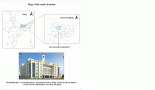
This study was conducted in the University of Ilorin and the University of Ilorin Teaching Hospital (UITH) communities. The UITH is located at Oke-Ose, in Ilorin East Local Government Area of Kwara State, North Central Nigeria. It is connected to the University of Ilorin by a linkage road. Both communities are tertiary institutions, with the Teaching Hospital being an affiliate of the University, both being in Ilorin, Nigeria.
Study design
This was a cross-sectional questionnaire-based study. This research was a questionnaire-based survey in the UITH and the University of Ilorin Communities tertiary hospitals in North-central Nigeria.
Study population
The study involved all female staff of the University of Ilorin and the UITH.
The inclusion criteria were eligible and consenting female staff of the University of Ilorin and the UITH. Females already diagnosed with cervical malignancy or other genital tract malignancies were excluded from the study, which was obtained by asking the staff individually in private before administering the questionnaire.
Instrument development and data collection
The researchers and trained research assistants collected data using a semi-structured, pilot-tested questionnaire in Google Forms. The questionnaire items were selected following a critical review of the literature by the study team, comprising an obstetrician and gynaecologist, a community health physician, a pathologist and a data analyst.
The questionnaire was administered to respondents/staff present in the vicinity of the institutions during working hours, 9 am to 4 pm. The questionnaire and data collection were in English, with some explanations and interpretations in the native language for those who needed them. The data collection period was between 12 April 2024 and 31 May 2024.
The questionnaire requested information on socio-demographics, including job description or designation, marital status and religious affiliation, type of marriage, awareness of cervical cancer, knowledge of risk factors and preventive measures, knowledge of screening modalities and source of cervical cancer information. A free, unstructured section was provided for comments and recommendations.
We assessed reliability through triangulation and excluded doubtful responses by identifying discrepancies, such that patients who responded that they had never heard of the entity were excluded from knowledge of the disease and screening. Knowledge about cervical cancer, prevention, risk factors, screening and information sources was analysed only if the response was ‘yes’ to ‘have you heard of cervical cancer?’
Sampling method and statistical analysis
We used convenience sampling to obtain the desired sample size and calculated the minimum sample size. Sample size was determined using n = Z2P(1-P) /d2 [17] (n = sample size for each community; Z = 1.96 for 95% confidence interval (CI); p = prevalence from previous study 0.15 [18] and d = precision, taken as 0.04), and a minimum sample size of 306 was obtained.
In this analysis, awareness of cervical cancer disease entity was defined as having heard of the cervical cancer entity. Risk behaviour was defined as having multiple sex partners or being less than 17 years old at first sex or not engaging in cervical cancer screening. Risk-associated behaviour was defined as being in a polygamous relationship.
Scoring and grouping for analysis
The variables were scored and grouped to facilitate data understanding and statistical analysis.
Diversity of information source
Grouped as none-never heard, one to two sources, three sources and more than three sources
Risk behaviour
Risk behaviour was assessed using a composite index based on established indicators such as early sexual debut, number of sexual partners and relationship type, which have been used in previous studies [19–21]. The score for risk behaviour and risk-associated behaviour was as follows: score of zero for monogamy and 1 for polygamy; early sex before 17 years was one and after 17 years, zero. The number of sex partners ever had was scored zero for one partner, 0.5 points for two partners, 1.0 points for three partners and 2 points for more than three partners. The maximum score for risk behaviour and risk-associated behaviour was 5 points (a higher score means engaging in more risky behaviour). The risk subgrouping was low (score of 0 to 1), intermediate (score of 1.5 to 2) and high (more than 2 points).
Knowledge
Knowledge of cervical cancer was analysed under three domains: knowledge of risk (six items with a maximum score of six and a minimum of zero), knowledge of prevention (three items with a maximum score of three points and minimum of zero) and knowledge of screening methods (three items with a maximum score of three points and minimum of zero). The respondents were further sub-grouped based on the knowledge scores. In the risk behaviour domain, scores of 1–2 were categorised as low risk, 3–4 as intermediate risk and 4–5 as high risk.
The inferential statistics for a single proportion used the binomial test. Comparison of two or more proportions uses the chi-square test of independence/Fisher’s exact test or the goodness-of-fit test. The risks (event probabilities) were compared using either binary logistic regression for odds ratios or risk ratios. We presented the results using descriptive statistics, including the 95% CI. We set the statistical significance threshold at 5% for all analyses. The analysis was conducted in Excel, the R statistical package and EasyR.
Those variables that had a significant association with screening uptake at Bivariate levels (χ2 analysis) were selected for multivariate Regression analysis. Check for multicollinearity and Cronbach’s alpha were analysed.
Self-report bias was minimised by ensuring the anonymity of the respondents. We also used neutral, non-judgemental language in the questionnaire. Non-response bias was minimised through the use of follow-up reminders and by keeping the survey concise to encourage participation. The sample was homogenous, which helped to focus on a specific uniform group rather than generalisability. However, participants included academic staff, non-teaching staff, doctors, nurses and some lecturers. Therefore, participants were diverse, while some groups were homogenous. Social desirability bias was reduced in this study by allowing confidentiality and anonymity of the respondents. In addition, neutral wordings or forced choice were used to reduce social desirability bias.
Ethical considerations
Ethical clearance was obtained from the University of Ilorin Teaching Hospital Health Research Ethics Committee (UITH HREC) and University of Ilorin Ethical Review Committee, with approval numbers NHREC 02/05/2010 and UERC/ASN/2024/2748, respectively. Written informed consent was obtained from each of the study participants before commencement of the study. All candidates who did not give a positive response were excluded from the study.
Results
The results are presented under four domains: A) sociodemographic characteristics; B) awareness and information sources related to screening behaviour; C) prevalence and correlates of risk-associated behaviours and D) knowledge of cervical cancer and its association with screening uptake.
Sociodemographic characteristics of respondents
A total of 1,311 eligible female staff responded to the survey. Their ages ranged from 18 to 73 years, with a mean age of 43 ± 11 years. In terms of professional roles, nurses comprised the largest group, accounting for 31.3% of respondents, followed by administrative officers at 23.3% and lecturers at 13%. Most respondents (84.3%) were married and among them, 85% were in monogamous unions. Religious affiliation was almost evenly split, with 52% identifying as Muslim and 47.8% as Christian.
Awareness and information sources in relation to screening behaviour
Awareness of cervical cancer among the study population was high, with 1,154 respondents (88%; 95% CI: 86%–90%) affirming that they had heard about the condition. In contrast, 157 participants (12%) reported no awareness. This awareness level was statistically significant (p < 0.001, binomial test), indicating a substantial level of disease recognition within this academic cohort.
Among those who were aware, the primary source of cervical cancer information was health facilities, followed by school-based programs, online platforms, family discussions, religious centres and the media. A majority (62%) of informed respondents reported having learned about cervical cancer from only one source, while others received information from two or more channels. The distribution of these sources is illustrated in Figure 1.

Figure 1. Frequency of sources of cervical cancer information.
Chi-square tests were used to assess associations between categorical variables, such as source diversity and screening uptake. The diversity of information sources was significantly associated with screening behaviour. As the number of information sources increased, so did the likelihood of having undergone cervical cancer screening (p < 0.001, χ² goodness-of-fit). Only 352 participants (27%; 95% CI: 24%–29%) had ever been screened for cervical cancer, while 959 (73%; 95% CI: 71%–76%) had never undergone screening. The overall distribution of screening status is shown in Figure 2.
Notably, the proportion of participants who had screened was highest among those who received information from religious institutions (42%), followed by those informed via hospitals (35%), schools (34%) and family members (34%). Further analysis demonstrated a progressive relationship between the diversity of information sources and screening uptake. Participants exposed to one or two sources had a 27% screening rate (95% CI: 25–38); those informed by three sources had a 35% rate (95% CI: 27–44); and those with exposure to more than three sources had the highest screening rate at 42% (95% CI: 33–51). This gradient was statistically significant (p < 0.001, χ² test). The corresponding risk difference in screening rates increased with information source diversity: from 1.0 for one to two sources, to 7.4 (95% CI: 1.1–1.6) for three sources and up to 14 (95% CI: 5.0–23) for more than three sources. These findings are further visualised in Figure 3.

Figure 2. Proportion of respondents who had ever undergone cervical cancer screening.

Figure 3. Cervical cancer screening uptake by the number of information sources.
Awareness also varied slightly with relationship type. Participants in monogamous unions had higher awareness (89%) compared to those in polygamous relationships (81%), a statistically significant difference (p = 0.003, χ² test). However, awareness levels did not significantly differ by age or marital status.
Prevalence and correlates of risk-associated behaviours
Risk-associated behaviours were measured using both individual items and a composite score. The overall prevalence of specific behaviours was relatively low. Only 1.7% of participants reported early sexual debut (defined as first intercourse before age 17), 15% reported being in polygamous unions and 25% had more than one lifetime sexual partner. The most striking finding was that 73% of all respondents had never undergone cervical screening, further highlighting a behavioural gap in preventive health engagement.
To evaluate cumulative behavioural risk, a composite risk score was calculated using responses across multiple risk items. A score of 0–1 was categorised as ‘low risk,’ while scores of 1.5–5 were considered ‘intermediate or high risk.’ In total, 77.6% of respondents were classified as low risk and 22.4% as intermediate or high risk. Awareness of cervical cancer was significantly associated with lower risk scores. Among those who had never heard of cervical cancer, 31.8% had elevated risk scores, compared to 21.1% among those who were aware (p = 0.003, χ² test). This association is summarised in Table 1.
Interestingly, neither the type of information source nor the diversity of sources showed a significant association with risk-behaviour scores. Chi-square analysis indicated no significant difference in risk scores across groups defined by their information access patterns (p = 0.09). This finding suggests that while diverse information channels improve screening behaviour, they do not necessarily influence sexual or relationship risk behaviours.
Knowledge of cervical cancer and its association with screening uptake
Knowledge of cervical cancer was evaluated across three core domains: risk factors, prevention strategies and screening modalities. Most respondents scored low across all domains. Only 11% demonstrated high knowledge of risk factors, 23% of those surveyed had high knowledge of prevention methods and 27% were knowledgeable about screening techniques. Chi-square tests were applied to assess associations between knowledge scores and both the source of information and screening uptake.
There was a strong association between knowledge level and type of information source. Table 2 displays the distribution of total knowledge levels by source. Respondents who received information from schools and online platforms were more likely to be in the high- or intermediate-knowledge groups. In contrast, those whose primary sources were family or religious centres were overrepresented in the low- and no-knowledge categories. This is a multiple-response question, with participants giving more than 1 response; hence, the denominator being more than the number of participants.
Table 1. Risk behaviour score distribution by cervical cancer awareness.

Table 2. Knowledge level by source of cervical cancer information (N = 2,017).

Diversity of information sources also predicted knowledge outcomes. As shown in Table 3, participants exposed to more than three sources had the highest proportions of high (36%) and intermediate (39%) knowledge, compared with those exposed to one or two sources (8% and 25%, respectively). The association was highly significant (p < 0.001).
Table 4 presents the analysis of the knowledge level according to the type of job. The findings indicate that doctors, followed by nurses and lecturers, have higher knowledge levels compared to other staff. The table also shows that there is a statistically significant relationship between the type of job and the level of knowledge.
Knowledge level was also significantly associated with screening uptake. Table 5 presents the relationship between knowledge scores across all three domains and the probability of having ever screened. For example, within the risk factor domain, only 11.1% of those with no knowledge had ever been screened, compared to 45.8% among those with high knowledge. Similar gradients were observed across prevention and screening knowledge domains. The probability of screening was approximately four times higher among respondents with high knowledge than those with low knowledge (OR = 4.1; 95% CI: 3.0–5.9; p < 0.001).
Table 6 below shows a multivariate logistic regression analysis adjusting for variables. Those variables that had a significant association with screening uptake at the bivariate levels (χ2 goodness of fit analysis) were selected for Multivariate Regression Analysis.
Parameters having an odds ratio of >1 have a positive association with screening uptake, with those variables not including one in their CI showing statistical significance.
Multicollinearity was assessed using regression analysis (Table 7) and the variance inflation factor (VIF) (Table 8). The regression model was statistically significant (F = 42.40, p < 0.001) and explained 31.41% of the variance in cervical cancer screening. The VIF values showed that most variables were within acceptable limits, with a mean VIF of 7.89, indicating no serious multicollinearity among the study variables.
Table 9 presents the reliability analysis of the knowledge domain. A Cronbach’s alpha of 0.6611 was obtained, approaching the acceptable threshold of 0.7, indicating that the instrument demonstrates satisfactory internal consistency for assessing knowledge in this study.
The reliability analysis produced a Cronbach’s alpha value of 0.8235, suggesting that the instrument has good internal reliability and consistency. Similarly, the individual risk, prevention and screening scores had values greater than 0.71, suggesting acceptable Cronbach’s alpha values.
Table 3. Knowledge level by number of information sources (N = 1,126).

Table 4. Knowledge level by type of job.

Table 5. Cervical cancer screening uptake by knowledge domain and level (N = 1,311).

Table 6. Adjusted OR.

Table 7. Test for multicollinearity (regression analysis).

Table 8. Test for multicollinearity (VIF).

Table 9. Report of Cronbach’s alpha for the knowledge domains.

Discussion
Cervical cancer is a preventable condition because a prolonged phase of premalignant lesion usually precedes it. Awareness and screening have significantly reduced morbidity and mortality from cervical cancer. The present study provides important insights into the interrelated pathways connecting information exposure, knowledge acquisition and cervical cancer screening behaviour among female staff in North-central Nigerian tertiary institutions. Persistent gaps between awareness and screening uptake for cervical cancer are prevalent across Nigeria and other LMICs, a pattern that mirrors global trends. Although participants in this study demonstrated high awareness (88%), screening prevalence remained low (27%), reinforcing observations from recent reviews that knowledge does not necessarily convert to action [15, 22]. This high level of awareness observed in urban settings is in contrast to the very poor and low knowledge and perception of cervical cancer among women in rural areas of Nigeria [23]. Respondents who were not aware of cervical cancer exhibited a higher risk behaviour score compared to those who were aware, consistent with findings by Olubodun et al [24]. This implies that awareness of the disease can reduce risk behaviour.
The complexity of health information environments, specifically the source and multiplicity of messaging, has emerged as a crucial determinant of behavioural uptake. Our study found similar results, with 36% of respondents in the high-knowledge group having at least three sources of information, compared with 8% in the 1- or 2-source group. Systematic reviews from sub-Saharan Africa demonstrate that women exposed to diverse, credible sources, mainly institutional, community and religious channels, exhibit significantly higher screening rates than those who rely solely on mass media [14, 15]. These findings suggest that awareness programs must move beyond information dissemination to strategically orchestrate messaging through trusted networks that reinforce both knowledge and normative behaviour.
Eighty percent (89%) of respondents in monogamous relationships were more aware of cervical cancer when compared to those in polygamous relationships (p = 0.003). This is similar to findings in a study at a rural tertiary hospital in Nigeria [24] and in Ghana [25], where women in polygamous relationships were less aware of their increased risk of cervical cancer compared to those in monogamous relationships. These findings show that knowledge of having multiple sexual partners as a risk behaviour for cervical cancer is poorly understood. Our study further showed a reliability analysis producing a Cronbach’s alpha value of 0.8235, suggesting that the instrument has good internal reliability and consistency. Similarly, the individual risk, prevention and screening scores had values greater than 0.71, suggesting acceptable Cronbach’s alpha values (Table 10).
Table 10. Cronbach’s alpha - reliability estimates for knowledge of risk, prevention and screening.

Furthermore, our data demonstrate that the depth of content matters. Higher knowledge of cervical cancer risk factors, prevention strategies and screening modalities was associated with substantially higher screening rates, with odds ratios approximating a four-fold increase for high versus low knowledge tiers. This robust association aligns closely with findings from Nigerian cross-sectional and interventional studies, including those by Ayamolowo et al [26] and Chukwuka et al [27], as well as with the knowledge-attitudes-behaviours frameworks in campus settings [28]. These results reaffirm that mere exposure to information is insufficient; it is the internalisation and retention of factual details that empower individuals to act. However, this relationship is often moderated by psychosocial and systemic factors, which, if unaddressed, limit the effectiveness of education-focused interventions.
Our study also reinforces the limited impact of knowledge on risk behaviour modification. Responses echo patterns seen in behaviour-focused interventions in Nigeria and Uganda, where awareness and risk-reduction knowledge did not translate into reduced prevalence of early sexual debut, polygamy or multiple partners [29, 30]. These findings are consistent with psycho-behavioural models, which highlight the more decisive influence of socio-cultural norms, economic pressures and relationship power dynamics on sexual decision-making, compared to rational health information alone. Achieving meaningful, sustained behavioural shifts will therefore require gender-transformative interventions, empowerment programs and community-level engagement that challenge structural norms and reconfigure incentive systems.
A key strength of this study lies in its large, well-characterised sample, drawn from two major tertiary institutions in Nigeria, which provided a diverse pool of female academic and non-academic staff. The study’s multidimensional design, which captured sociodemographic factors, behavioural risks, awareness, information source diversity and domain-specific knowledge, enabled a robust examination of the layered influences on screening behaviour. The use of composite scoring to quantify risk behaviours and disaggregate knowledge into three distinct domains (risk factors, prevention and screening methods) enhanced analytical precision and theory-driven interpretation. Furthermore, by mapping screening uptake not only to awareness but also to the diversity and types of information sources, the study goes beyond surface-level associations. It contributes to a more nuanced understanding of health communication and decision-making pathways in the Nigerian context.
Nevertheless, limitations such as self-report bias, a cross-sectional design that precludes causality and a homogeneous sample of tertiary staff must be acknowledged. Future research should prioritise longitudinal and interventional designs with objective screening verification and inclusive recruitment of underserved and rural populations to enhance generalisability. Only then can Nigeria align with the WHO’s 2030 target of screening 70% of women aged 35–45 and reduce cervical cancer incidence sustainably.
Strengths and limitations
A key strength of this study is its large sample size and multicentre design, which enhance the robustness of the findings and improve their generalisability across different settings.
A limitation of this study is the heterogeneity in participants’ knowledge levels, which may have introduced variability, potentially affecting the interpretation of the findings across the board. In addition, the cross-sectional design of the study limits the ability to establish causal relationships between the variables examined. The use of convenience sampling may have introduced selection bias, potentially overrepresenting health-conscious individuals and limiting generalisability beyond tertiary institutional settings.
Conclusion
This study highlights the paradox that while awareness of cervical cancer is relatively high among educated Nigerian women, screening uptake remains markedly low. The findings underscore the critical role of both the quality and diversity of information sources in influencing preventive behaviour. Multichannel credible communication, primarily through health institutions, schools and religious organisations, was associated with higher knowledge levels and greater screening participation. The finding of a significant link between information exposure sources and risk-related sexual behaviours further emphasizes the complexity of the need for robust information, which will further enhance screening uptake.
To move closer to the WHO’s cervical cancer elimination targets, public health strategies must go beyond awareness campaigns, with interventions being multidimensional, incorporating health education with accessible, culturally responsive screening services to reach diverse female populations and reduce cervical cancer disparities effectively.
Acknowledgments
The authors acknowledge the cooperation of the staff and students of the University of Ilorin and the University of Ilorin Teaching Hospital communities for their support during data collection. The authors also appreciate the assistance of colleagues who contributed to questionnaire administration and data entry. This study received no external funding.
Conflicts of interest
The authors declare that they have no conflicts of interest related to this study.
Funding
This study received no external funding.
Ethical approval
The study obtained ethical approval from the University of Ilorin’s Ethical Review Committee (UERC/ASN/2024/2748).
Author contributions
Eniola R Kadir conceived and designed the study and served as the lead author, while Tomilola M Olaseinde, Azeezat D Yakub, Hafsat A Ameen, Beatrice O Owolabi and Olaniyi O Fatai assisted in questionnaire administration and data collection and Kikelomo T Adesina, Ibrahim O O K, Suleiman O Agodirin and Adegboyega A Fawole contributed to data analysis, interpretation, manuscript preparation and critical revision. All authors read and approved the final manuscript.
References
1. Fowler JR, Maani EV, and Dunton CJ, et al (2023) Cervical Cancer (Nursing) [Internet] (Treasure Island: StatPearls Publishing)
2. World Health Organization (2024) Cervical Cancer [Internet] (Geneva: World Health Organization) [https://www.who.int/news-room/fact-sheets/detail/cervical-cancer] Date accessed: 24/06/25
3. Ngwa W, Addai BW, and Adewole I, et al (2022) Cancer in sub-Saharan Africa: a Lancet Oncology Commission [Internet] Lancet Oncol 23 e251–e312
4. World Health Organization (2025) Cervical Cancer [Internet] (Geneva: WHO) [https://www.who.int/news-room/fact-sheets/detail/cervical-cancer] Date accessed: 24/03/26
5. Serrano B, Brotons M, and Bosch FX (2022) Human papillomavirus and cervical cancer: pathogenesis and clinical implications [Internet] Cancers (Basel) 14(2) 345
6. Jouya S, Shahabinia Z, and Mazidimoradi A, et al (2026) Cervical cancer epidemiology: global incidence, mortality, survival, risk factors, and equity in HPV screening and vaccination [Internet] J Clin Med 15(3) 1079 [https://pubmed.ncbi.nlm.nih.gov/41682759]
7. Luvián Morales J, Gutiérrez Enríquez S, and Granados García V, et al (2024) Risk factors for the development of cervical cancer: analysis of the evidence [Internet] Front Oncol 14 1378549 [https://www.ncbi.nlm.nih.gov/pmc/articles/PMC11153748]
8. Uusküla A, Tisler A, and DeHovitz J, et al (2025) Prevention and control of HPV-related cancers in people living with HIV [Internet] Lancet HIV 12 e293–e302
9. Ken-Amoah S, Blay Mensah LB, and Eliason S, et al (2022) Poor knowledge and awareness of human papillomavirus and cervical cancer among adult females in rural Ghana [Internet] Front Trop Dis 3 971266
10. Bruni L, Serrano B, and Roura E, et al (2022) Cervical cancer screening programmes and age-specific coverage estimates for 202 countries and territories worldwide: a review and synthetic analysis [Internet] Lancet Glob Health 10 e1115–e1127
11. Bruni L, Albero G, and Serrano B, et al (2023) Human Papillomavirus and Related Diseases in the World: Summary Report 2023 [Internet] Barcelona: (ICO/IARC Information Centre on HPV and Cancer) [https://www.hpvcentre.net/statistics/reports/XWX.pdf]
12. John-Akinola YO, Ndikom CM, and Oluwasanu MM, et al (2022) Cervical cancer and human papillomavirus vaccine knowledge, utilisation, prevention educational interventions and policy response in Nigeria: a scoping review [Internet] Cancer Control 29 10732748221130180
13. Adigun MO, Esan DT, and Adeyanju BT, et al (2023) The role of nurses in the prevention of cervical cancer: cervical screening—an unkept promise by the majority of women in Nigeria [Internet] J Integr Nurs 5 311–316
14. Mantula F, Toefy Y, and Sewram V (2024) Barriers to cervical cancer screening in Africa: a systematic review [Internet] BMC Public Health 24 525
15. J Mafiana J, Dhital S, and Halabia M, et al (2022) Barriers to uptake of cervical cancer screening among women in Nigeria: a systematic review [Internet] Afr Health Sci 22 295
16. Musa J, Achenbach CJ, and O’Dwyer LC, et al (2023) Barriers to cervical cancer screening in Nigeria: a systematic review [Internet] PLoS One 18(2) 281235
17. Sullivan LM (2023) Essentials of Biostatistics in Public Health [Internet] 4th edn (Burlington: Jones & Bartlett Learning)
18. Ikyernum JA and Agbecha A (2019) Cervical intra-epithelial neoplasia (CIN) among young women in Jos Metropolis, Nigeria [Internet] Basic Sci Med 8 12–17
19. Fatusi AO and Blum RW (2008) Predictors of early sexual initiation among a nationally representative sample of Nigerian adolescents [Internet] BMC Public Health 8 136
20. Magnusson BM, Nield JA, and Lapane KL (2015) Age at first intercourse and subsequent sexual partnering among adult women in the United States: a cross-sectional study [Internet] BMC Public Health 15 98
21. Odimegwu C and Somefun OD (2017) Ethnicity, gender and risky sexual behaviour among Nigerian youth: an alternative explanation [Internet] Reprod Health 14(1) 16
22. Iluno AC, Oshiname FO, and Adekunle AO, et al (2024) Cervical cancer screening adoption behaviours among Nigerian women in academics: using a health belief model [Internet] BMC Womens Health 24 534
23. Okunowo AA, Daramola ES, and Soibi-Harry AP, et al (2022) Women’s knowledge of cervical cancer and uptake of screening services in Nigeria: a comparative study of rural and urban populations [Internet] BMC Public Health 22 1985
24. Olubodun T, Ogundele O, and Salisu ZA, et al (2023) Cervical cancer awareness and risk factors among women residing in an urban slum in Lagos, Southwest Nigeria [Internet] Afr Health Sci 23(3) 269–279
25. Tettey C, Adjei FA, and Kwadwo EA (2024) Knowledge and determinants of cervical cancer awareness among women in the Central Region of Ghana [Internet] BMC Women‘s Health 24 145
26. Ayamolowo SJ, Akinrinde LF, and Oginni MO, et al (2020) The influence of health literacy on knowledge of cervical cancer prevention and screening practices among female undergraduates at a university in southwest Nigeria [Internet] Afr J Nurs Midwifery 22
27. Chukwuka LO, Olorunfemi O, and Okanlawon F, et al (2021) Information, education, and communication as a strategy for enhancing women’s knowledge of cervical cancer in Benin City, Nigeria [Internet] J Cancer Res Pract 8 54–67
28. Adigun MO, Esan DT, and Oyinloye BE, et al (2025) Knowledge and practice of health promotive lifestyle toward cervical cancer prevention among women in Africa: a scoping review [Internet] Cancer Treat Res Commun 43 100877
29. Chepkorir J, Guillaume D, and Lee J, et al (2024) The role of health information sources on cervical cancer literacy, knowledge, attitudes and screening practices in Sub-Saharan African women: a systematic review [Internet] Int J Environ Res Public Health 21 872
30. Olubodun T, Balogun MR, and Odeyemi AK, et al (2022) Barriers and recommendations for a cervical cancer screening program among women in low-resource settings in Lagos, Nigeria: a qualitative study [Internet] BMC Public Health 22(1) 1–10