Prevalence of tobacco use among middle and high school students in the high cancer incident and under-resourced tribal state of Northeast India
Elizabeth Hatzaw1, Jane Ralte2, Vignesh Krishnasamy3, Lalengkimi Ralte3, Rajendra Bose Muthukumaran4, Kasi Marimuthu5 and Nachimuthu Senthil Kumar3
1Department of Social Work, Mizoram University, Aizawl, Mizoram 796004, India
2Mizoram State AIDS Control Society, Aizawl, Mizoram 796001, India
3Department of Biotechnology, Mizoram University, Aizawl, Mizoram 796004, India
4Department of Chemistry, Mizoram University, Aizawl, Mizoram 796004, India
5Department of Environmental Science, Tezpur University, Tezpur, Assam 784028, India
Abstract
Background: Adolescent tobacco use remains a significant public-health concern in India, particularly in Mizoram, a predominantly tribal Northeastern state with one of the highest tobacco consumption and cancer incidence rates in the country. Early initiation of tobacco use increases the risk of nicotine dependence and tobacco-related chronic diseases later in life. Despite national tobacco-control initiatives, limited evidence exists on how demographic and school-related factors influence tobacco-use behaviours among tribal adolescents.
Objective: To assess the prevalence of smoked and smokeless tobacco use and examine behavioural patterns related to initiation, continuation and cessation intentions among school-going adolescents in Mizoram.
Methods: A cross-sectional study was conducted among 6,626 students aged 12–20 years from government and private schools in Mizoram. Data were collected using a validated structured questionnaire capturing demographic characteristics and tobacco-use behaviours. Descriptive and logistic regression analyses were performed to examine differences by age, gender and school type.
Results: Among the participants, 48.5% were male and 51.5% were female, with most students aged 16–19 years. Smoking prevalence was higher among boys, whereas smokeless tobacco use, particularly chewing tobacco, was more common among girls. Tobacco use increased with advancing grade level and was highest among students in classes 11 and 12. Boys were more likely to discontinue smokeless tobacco use with age, while girls tended to continue. Overall tobacco use was higher among students attending private schools. Cigarette smoking and chewing tobacco were considerably more prevalent than liquid tobacco products.
Conclusion: Tobacco use is highly prevalent among tribal adolescents in Mizoram, with clear gender- and school-type differences. These findings highlight the need for culturally appropriate, school-based prevention strategies and gender-responsive interventions to reduce early tobacco initiation and long-term health risks.
Keywords: tobacco use, smokeless tobacco, school children, hilly tribal-state, survey
Correspondence to: Nachimuthu Senthil Kumar
Email: nskmzu@gmail.com
Published: 06/10/2026
Received: 28/04/2026
Publication costs for this article were supported by ecancer (UK Charity number 1176307).
Copyright: © the authors; licensee ecancermedicalscience. This is an Open Access article distributed under the terms of the Creative Commons Attribution License (http://creativecommons.org/licenses/by/4.0), which permits unrestricted use, distribution, and reproduction in any medium, provided the original work is properly cited.
Background
Tobacco usage can lead to nicotine addiction and concomitant oral diseases, reproductive and development-related diseases, heart disease and stroke and cancer [1–5]. Smokeless tobacco (SLT) can cause nicotine addiction, and it is associated with several other health conditions, including oral pain, cardiovascular diseases, oral cancer, hypertension, diabetes, loss of bone density, besides pregnancy-related disorders and the subsequent childbirth complications [6–14]. The onset of the problem occurs during adolescent years when the majority of smokers have their first experience with cigarettes due to experimental behaviour. The existing data have indicated that 88% of adult smokers initiate smoking even before attaining the age of 18 years [15]. Simultaneously, those who have not smoked during adolescence are less likely to start smoking later in their life. It is also worth noting that people who started smoking at a much younger age usually smoke more cigarettes per day, are more strongly addicted to nicotine and are less likely to attempt to quit smoking or if they do so, they have less chance to quit comparing to those who start smoking as adults [16]. Studies have also indicated that adolescents who smoke are more prone to additional exploratory behaviours, including the use of alcohol, cannabis and other illicit drugs causing to co-morbidity and premature death [17]. A review of the literature on the prevalence of tobacco use in India was made by Rani et al [18]. Nevertheless, the World Health Organization predicts that tobacco deaths in India may exceed 1.5 million annually [19].
Globally, over the past several decades, there have been substantial achievements in tobacco control [2]. However, though cigarette smoking has decreased, the use of other tobacco products, including combustible (e.g. cigars, cigarillos and little cigars), noncombustible (e.g. chewing tobacco and snus) and emerging products (e.g. electronic nicotine delivery systems, including electronic cigarettes [e-cigarettes]) has remained unchanged or increased [20]. This diversification of the tobacco product landscape presents complex and widespread challenges to public health and makes it increasingly important to shape tobacco prevention and control efforts in the context of all forms of tobacco use [20].
A high percentage (around 70%) of smokers live in low- and middle-income countries. Among the total smoker population, two-thirds live in China, India, Indonesia, the Russian Federation, USA, Japan, Brazil, Bangladesh, Germany and Turkey [15]. It is estimated that tobacco use could lead to morbidity and mortality in the developed and developing countries of the world [16]. Manifold of tobacco products use as smoke and/or smokeless forms, among the younger generation, especially school and college students, is quite high in the South East Asian region, including India. Mizoram, endowed with a relatively pristine environment and a hilly terrain, is a tribal state of Northeast India, bordering Burma and Bangladesh, with a small population size of 12 lakhs. However, for generations, smoking has evolved as a cultural habit to evade mosquitoes and insects during agricultural practices. Alarmingly, cancer and other tobacco-related diseases are very highly prevalent in this population and rank high in the whole country [21]. Establishing smoke-free home rules can help reduce second-hand smoke (SHS) exposure among nonsmokers, prevent smoking initiation among youth and adults, support tobacco cessation efforts among current smokers and reduce the social acceptability of smoking [22–24].
Despite studies at the national level consistently showing Mizoram as one of the Indian states with high prevalence of tobacco, these studies mainly provide estimates of prevalence at the state level. Besides, they provide limited information on behavioural factors associated with tobacco use among school-going tribal adolescents. There is a lack of information on age of initiation, intensity of consumption, gender-wise pattern of smoked and SLT use, availability of tobacco products, peer and family influence and intentions to quit. Mizoram also has unique sociocultural practices and region-specific tobacco products, such as Tuibur, which have not been well documented by national surveillance studies. Understanding these behavioural patterns is crucial for developing evidence-based, culturally appropriate tobacco control strategies targeting adolescents. Hence, this study aims to evaluate tobacco-use behaviours, determinants for initiation and continuation and intentions to quit tobacco among middle and high school students of Mizoram, a state in Northeast India. This study will be helpful for implications for research, prevention, clinical practice and policy in a high-risk cancer-incident state of Northeast India.
Methods
Study population
A cross-sectional questionnaire study was conducted among school children from both the government and private schools of Mizoram, India. Ten schools were selected using a stratified random sampling approach, comprising four government schools and six private schools. This study included students aged 12–20 years, studying in classes IX–XII. Students who met the age and grade criteria and provided written consent were eligible; students under 12 years of age, those studying below 9th grade or above 12th grade and those who did not provide consent were excluded from the study. A structured questionnaire adapted from World Health Organization global school-based student health survey (WHO-GSHS) and modified to the sociocultural context of Mizoram was utilised for data collection. The questionnaire included 50 questions in sections on demographic characteristics, cigarette smoking, use of SLT, use of other tobacco products, tobacco accessibility, exposure to tobacco advertisements and warning labels, cessation behaviour, perceptions and attitudes about tobacco use, peer influence and family tobacco use. Additional questions were incorporated to capture region-specific tobacco products commonly used in Mizoram, including Tuibur, gutkha, khaini and other locally available SLT products, enabling a comprehensive assessment of the initiation, frequency, intensity, accessibility, behavioural determinants and cessation intentions related to tobacco use among school-going adolescents (Supplementary File 1).
The questionnaire was developed in English, which is the medium of instruction in the participating schools; therefore, translation into the local language was not required. Content validity was established through expert review by public health experts, who evaluated the questionnaire for its relevance, clarity, comprehensiveness and appropriateness for the study objectives. The revised questionnaire was subsequently pilot-tested among school students who were not included in the final study, and minor modifications were incorporated based on participant feedback to improve clarity and comprehension before administration in the main survey. During questionnaire administration, students completed the survey independently under the supervision of the investigators and were not permitted to discuss their responses with one another. Whenever clarification was required, the investigators explained the questions verbally in the local Mizo language without altering the wording or meaning of the questionnaire. To maintain confidentiality, no personal identifiers were collected, and all responses were anonymised prior to data analysis.
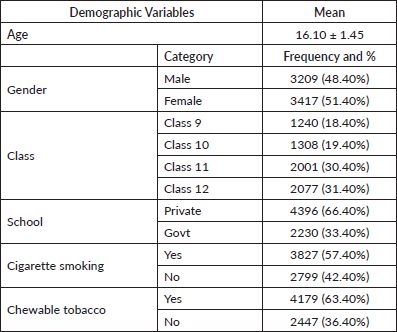
A structured questionnaire was administered to students in the selected grades, and a total of 7,999 students were approached (2,809 from government schools and 5,190 from private schools). The completed questionnaires were checked for validity and completeness, and incomplete or inconsistent responses were excluded from the analysis. In government schools, 2,230 questionnaires were found to be valid and 579 invalid, while in private schools, 4,396 questionnaires were found to be valid and 794 invalid. The final analysis sample included 6,626 students (Figure 1; Supplementary Table 1).
Statistical analysis
The collected data were taken for the analysis using an MS Windows Excel spreadsheet as codes, and the concomitant statistical analyses were carried out using the Statistical Package for Social Sciences SPSS version 20 (SPSS Inc., Chicago, IL, USA). Descriptive statistics involved frequencies and proportions for categorical variables, including cross-tabulations. Univariate associations between tobacco use and sociodemographic variables were assessed using the chi-squared test. Values of p < 0.05 were considered statistically significant.
Ethical concerns
The study protocols were reviewed and approved by the Human Ethics Committee of Mizoram University. Prior permissions were obtained from the heads of the respective institutions before conducting the survey. The objectives of the study were clearly explained to the students and only those participants who agreed were taken into the study so as to reduce dropouts due to incomplete questionnaires. Written informed consent was obtained for the same too. No study subject was forced to complete the questionnaire.
Results
Characteristics of the respondents
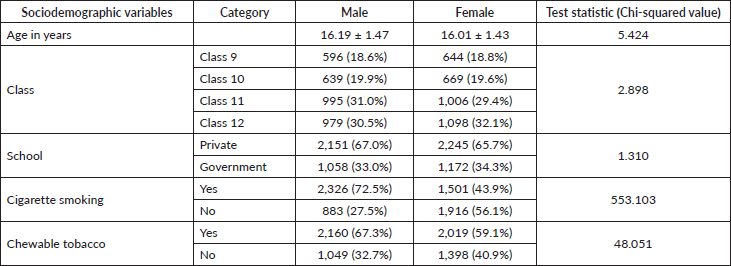
A total of 6,626 students participated in the study, including 3,209 males (48.5%) and 3,417 females (51.5%). The majority belonged to the 15–18-year age group (classes 11 and 12). Most students attended private schools, comprising 67% of boys and 65.7% of girls (Table 1). Nearly all respondents (99%) reported prior awareness of tobacco and its products, while only about 1% indicated no prior knowledge.
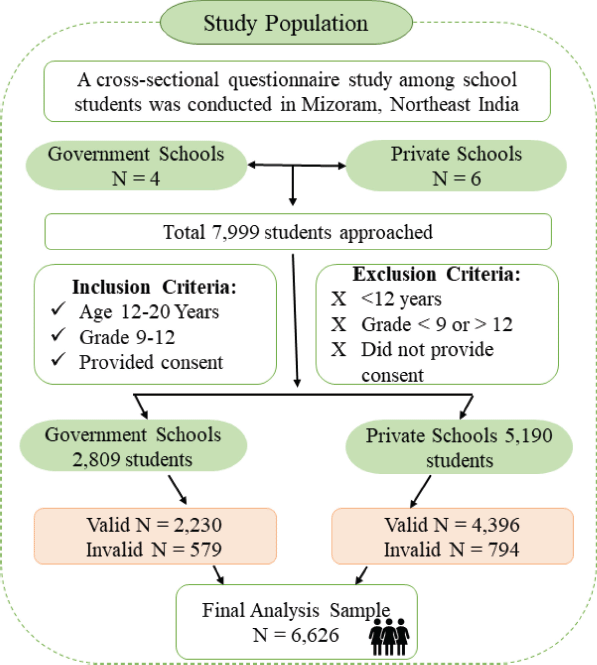
Figure 1. Consolidated flow chart of study design and analysis. The flow chart illustrates step-wise design from enrolment, inclusion and exclusion criteria.
Smoking habits
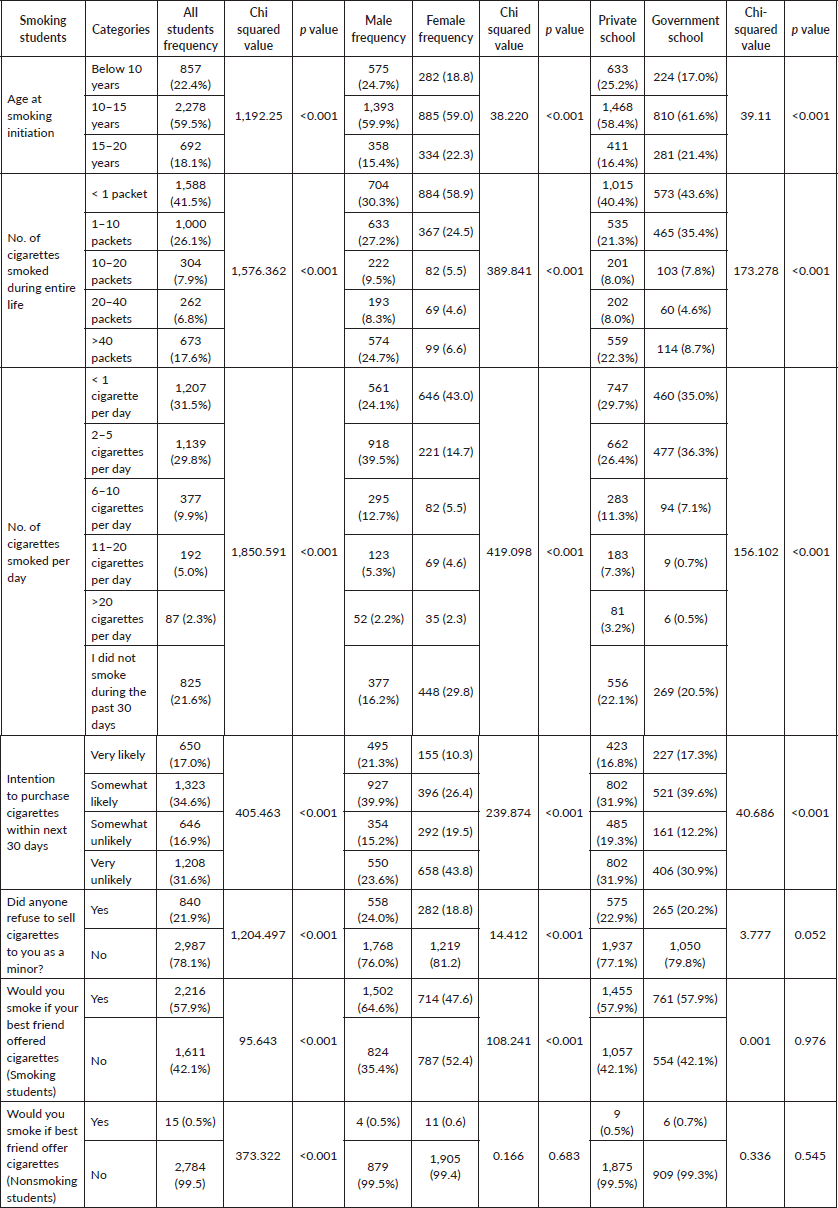
The initiation of smoking generally occurred between the ages of 10 and 15 years (59.5%), followed by initiation before the age of 10 (22.4%) and between 15 and 20 years (18.1%). The age of smoking initiation differed significantly depending on gender and school type (p < 0.001). Early initiation of smoking (<10 years) was more prevalent among males than females, while later initiation (15–20 years) was more common among females. Students from private schools reported earlier initiation of smoking compared to students from government schools.
Table 1. Demographic details of smoking status of students.
The number of cigarettes smoked over a lifetime was generally higher among males. While 41.5% of students reported smoking less than one pack in their lifetime, 17.6% reported smoking more than 40 packs; heavy smoking was significantly more prevalent among males than females (p < 0.001). The intensity of daily smoking also differed significantly depending on gender and school type (p < 0.001); males were more likely to smoke two to five or more cigarettes per day, while females more frequently reported smoking less than one cigarette per day or not having smoked in the past 30 days.
Nearly half of the students reported being likely to buy cigarettes within the next 30 days, with the intention to buy being higher among males (p < 0.001). Only 21.9% reported being refused cigarette sales due to their age. Peer influence was strong, with 57.9% of smoking students reporting that they would be willing to smoke if a close friend offered them a cigarette; this rate was significantly higher among males than females (p < 0.001) (Table 2).
Smokeless tobacco habits
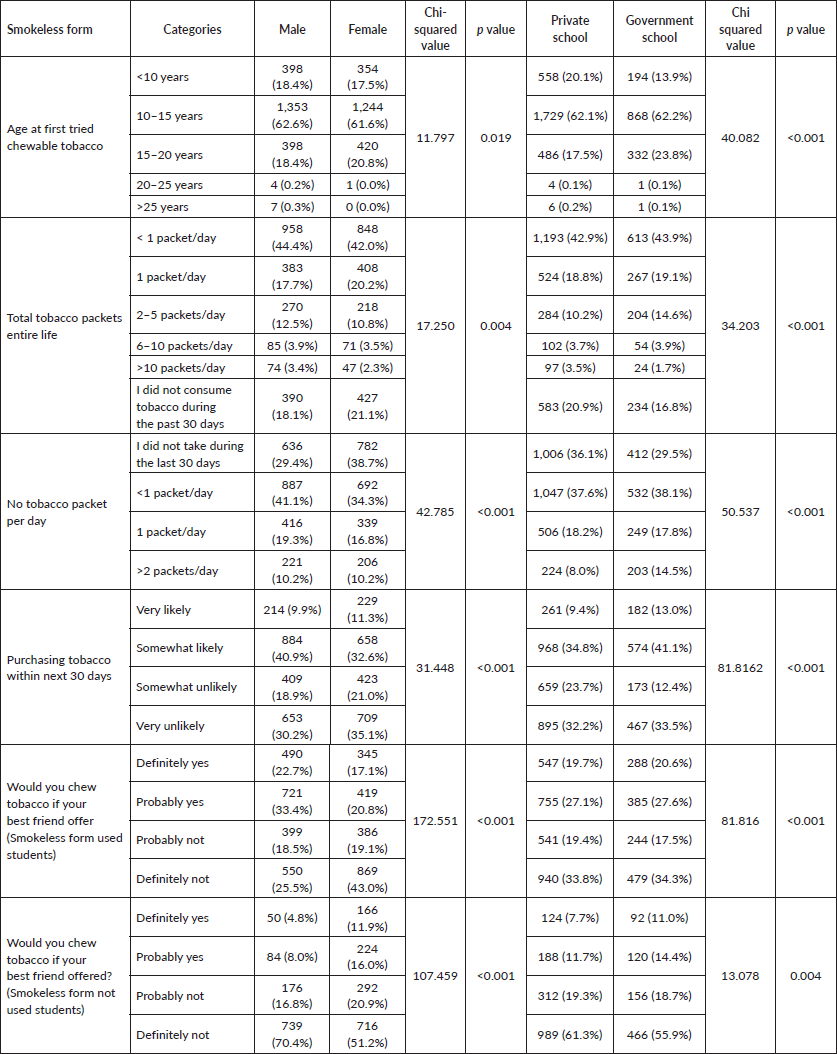
The initiation of smokeless (chewing) tobacco use commonly occurred between the ages of 10 and 15 years in both boys (62.6%) and girls (61.6%). About 18.4% of boys and 17.5% of girls reported starting the habit before the age of 10 years, while initiation between the ages of 15 and 20 years was slightly more common among girls than boys (20.8% versus 18.4%). The patterns of initiation differed significantly depending on gender (p = 0.019) and school type (p < 0.001). The proportion of those who started the habit before the age of 10 was higher among private school students (20.1%) compared to government school students (13.9%).
Regarding lifetime consumption, 44.4% of boys and 42.0% of girls reported using less than one packet per day. Those with high lifetime consumption (>10 packets per day) were more prevalent among boys (3.4%) than girls (2.3%) (p = 0.004). Furthermore, 18.1% of boys and 21.1% of girls reported not using SLT in the 30 days preceding the survey.
According to current usage patterns, 29.4% of boys and 38.7% of girls had not consumed SLT in the past 30 days. About 41.1% of boys and 34.3% of girls reported using less than one packet per day, while 10.2% in both genders reported using more than two packets per day. These differences were statistically significant (p < 0.001). Regarding the intention to purchase SLT within the next 30 days, 9.9% of boys and 11.3% of girls reported it as ‘very likely’, and 40.9% of boys and 32.6% of girls reported it as ‘somewhat likely’ (p < 0.001).
Peer influence played a significant role. Among current SLT users, 22.7% of boys and 17.1% of girls reported that they would ‘definitely’ accept tobacco if offered by a close friend, while 33.4% of boys and 20.8% of girls reported that they would ‘perhaps’ accept it (p < 0.001). Among nonusers of tobacco, acceptance was generally lower, but higher among girls; 11.9% of girls reported ‘definitely yes’ compared to 4.8% of boys (p < 0.001) (Table 3).
Table 2. Frequency analysis of smoking habits (smoke form) of school students.
Tobacco cessation intentions
When asked about cessation, 16.4% of boys and 8% of girls reported no desire to quit. Approximately, 30% of boys and 25% of girls had attempted to quit in the previous year, though abstinence usually lasted less than a week. The majority expressed a desire to quit within a year.
Sources of tobacco use
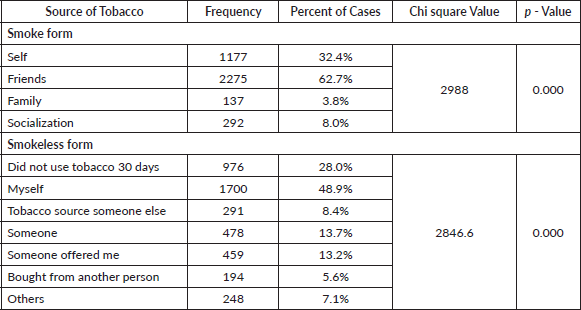
Among students who reported smoking, friends were the most common source for initiating the habit, accounting for 62.7% of cases (n = 2,275). About 32.4% of students (n = 1,177) reported initiating smoking on their own, indicating a considerable degree of self-experimentation. Family members played a minor role in initiating smoking (3.8%, n = 137), while socialisation contexts such as gatherings or social interactions contributed to 8.0% of cases (n = 292).
Regarding SLT use, 28.0% of students (n = 976) reported not using any SLT in the 30 days prior to the survey. Among current users, selfinitiation was the most common source, reported by 48.9% of students (n = 1,700). Obtaining tobacco through other individuals constituted a significant portion of tobacco use, including being offered tobacco by someone (13.2%, n = 459), receiving it from someone else (13.7%, n = 478) or obtaining it from another person (8.4%, n = 291). Additionally, 5.6% of students (n = 194) reported purchasing SLT from another person, while 7.1% (n = 248) specified other sources (Supplementary Table 2).
Table 3. Frequency analysis of habits of use of SLT of school students.
Factors associated with smoking
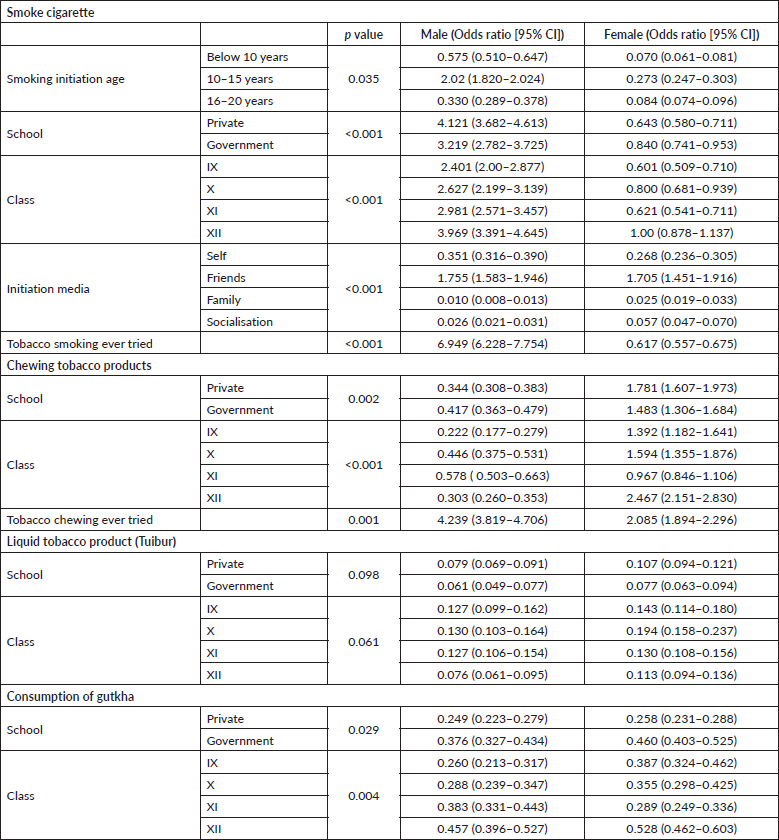
Smoking prevalence increased with age among students aged 10–15 years. Prevalence was higher in males (35.1%) than females (22.65%). Smoking was significantly higher among classes 11 and 12 (Tables 1 and 2). Class 12 students had the highest odds of smoking (males OR = 3.969, 95% CI: 3.391–4.645; females OR = 1.00, 95% CI: 0.878–1.137). Peer influence was strongly associated with smoking for both sexes. Smoking was significantly associated with private schools for males and government schools for females. Initiation age of 10–15 years was significant for both sexes (Table 4).
Factors associated with SLT use
SLT use was significantly higher in girls than boys. Among females, SLT use was significantly associated with private schools (OR = 1.781, 95% CI: 1.607–1.973). Chewing tobacco increased significantly in classes 10 and 12, especially among girls (class 12 OR = 2.467, 95% CI: 2.151–2.830). Among boys, ‘ever tried chewing’ was strongly associated with current chewing (OR = 4.239, 95% CI: 3.819–4.706). Tuibur (liquid tobacco) was not significantly associated with school type or class level, likely due to limited availability and strong odour. Gutkha consumption was significantly higher among government school students of both sexes and increased with class level, peaking in class 12 (male OR = 0.457; female OR = 0.528) (Table 4).
Discussion
This large school-based study provides one of the most comprehensive evaluations of tobacco use among tribal adolescents in Mizoram, Northeast India. Although Mizoram has consistently shown high prevalence of tobacco use in India, our study further provides estimates of prevalence but additionally provides information on age of initiation, gender-specific pattern of use, behavioural factors, accessibility, intention to quit and source of tobacco among school-going adolescents. While national surveillance systems such as the Global Youth Tobacco Survey (GYTS) and the Global Adult Tobacco Survey primarily provide state-level prevalence data, this study provides behavioural evidence to inform culturally appropriate tobacco control interventions for this unique tribal population. The results show that tobacco use initiates at a very young age, is strongly influenced by peers and the social environment, and varies significantly by gender and type of tobacco product used.
Table 4. Bivariate analysis of tobacco usage among the school students.
One of the most concerning findings of this study is the early age of initiation of tobacco use. Nearly 60% of those who start smoking do so between the ages of 10 and 15 years, and more than one-fifth of users start before the age of 10 years. The onset of tobacco use in adolescence is a major public-health concern. Adolescence is a time of rapid neurological development, and nicotine exposure during this period leads to increased susceptibility to addiction due to changes in neuroplasticity pathways. People who begin tobacco use during childhood or adolescence are more likely to become long-term users, demonstrate higher levels of nicotine dependence, and have less success in quitting than those who begin tobacco use in adulthood. These biological processes underscore the importance of preventing the initiation of tobacco use before adolescence, which is one of the most effective tobacco control strategies worldwide [25,26].
Our findings are comparable to national surveys in India. The GYTS-4 (2019) report mentions that approximately 8.5% of Indian school students aged 13–15 years are currently using tobacco, with much higher rates in the northeastern states, particularly in Mizoram [27,28]. Globally, early initiation has been identified as a major factor contributing to the future burden of tobacco-related diseases. The Global Burden of Disease 2019 estimates show that tobacco use continues to be a leading cause of preventable deaths worldwide and that initiation during adolescence contributes significantly to overall exposure and lifetime risk [29]. These studies reveal that there is a continuity of tobacco use from adolescence to adulthood, indicating that the initiation of tobacco use at school age is an important factor for the high burden of tobacco use among adults in Mizoram.
Similar findings have been reported from neighbouring South Asian countries. Studies in Bangladesh and Nepal show that tobacco use generally begins at the age between 11 and 15 years, and peer pressure and easy availability are important factors in early experimentation [30,31]. Similarly, Chinese studies show that the start of tobacco use, particularly among boys, often begins in early middle school, when tobacco use is often viewed as a sign of social acceptance and maturity [32]. However, our results are opposite to the reports of many high-income countries. Data from the Youth Risk Behavior Surveillance System and the National Youth Tobacco Survey reveal that cigarette smoking among adolescents in the United States has declined substantially over the past two decades as a result of comprehensive tobacco control policies, increased taxation, restrictions on advertising, smoke-free laws and ongoing school-based prevention programs [33,34]. Similar declines have been observed in many European countries after the implementation of the World Health Organization Framework Convention on Tobacco Control, although the advent of electronic cigarettes has created new challenges with regard to youth exposure to nicotine [35,36]. On the other hand, the predominant forms of tobacco use in Mizoram are traditional smoking and SLT products, indicating that the pattern of tobacco use prevalence in the country is very different from many high-income countries. The initiation age seen in our study group may be due to the peculiar sociocultural environment of the state of Mizoram. Tobacco use is prevalent in many communities in Northeast India where smoking and SLT products are readily available, socially acceptable and commonly used by adults. As a result, children are exposed to tobacco in their homes and social environments from an early age, making experimentation with tobacco appear normal. In addition, the easy availability of tobacco products, in spite of the existing legal constraints, encourages early initiation of the habit. These contextual factors may explain the higher prevalence and age of initiation found in our study compared to national averages.
A key finding of the current study is the distinct gender trend in tobacco consumption. The prevalence and intensity of smoking were significantly higher among male students, while the use of SLT, particularly chewing tobacco, was more common and persistent among females. This gender difference has been documented in several Indian and South Asian studies and is often attributed to sociocultural norms that stigmatise smoking among women while tolerating or normalising SLT use [37–39]. Similar findings have been reported from Bangladesh, Nepal, Sri Lanka, Pakistan and China. In these countries, tobacco use among young women has been increasing, but smoking is still mainly a male habit [30,31]. Our results, however, differ from those found in many high-income countries. Recent surveillance studies in the United States, Canada, Australia and parts of Western Europe suggest that the traditional gender gap in cigarette smoking among adolescents has narrowed substantially. The reduction in smoking prevalence in both sexes, and the increase in electronic nicotine delivery system use in males and females, are contributing to this [40–42].
This pattern is particularly evident in Northeast India. Haobijam et al [43] have reported that the rate of SLT use among women in the northeastern states, including Mizoram, is among the highest in the country. In our study, the continued use of SLT among older female students indicates that these habits are established early in adolescence. Importantly, SLT is not a safe alternative to smoking. The International Agency for Research on Cancer has classified SLT as a human carcinogen, and there is strong evidence linking it to oral, throat and oesophageal cancers [44]. Global analyses have shown significant associations between chewing tobacco and cardiovascular diseases and adverse reproductive outcomes [45]. Therefore, while male adolescents may face higher risks of respiratory and cardiovascular diseases related to smoking, female adolescents in Mizoram may be disproportionately susceptible to oral and upper digestive tract cancers through continued SLT use. This gender-based risk profile highlights the need for tailored prevention strategies rather than generic messages.
Mizoram has a unique tobacco landscape due to the presence of ‘Tuibur’, a region-specific tobacco-infused water product traditionally consumed in the state. Although Tuibur use is less prevalent among school students compared to smoking and chewing tobacco, its cultural entrenchment and biochemical composition warrant attention. Studies have detected tobacco-specific nitrosamines in Tuibur, raising concerns about its carcinogenic potential [46,47]. Epidemiological studies have suggested associations between SLT consumption and digestive disorders among adult populations [48]. The relatively low usage observed among adolescents in this study may reflect lower availability, strong taste characteristics or generational shifts in product preferences. However, the existence of such products underscores the importance of region-specific surveillance and regulation as national tobacco control frameworks often focus solely on cigarettes and commercially packaged SLT products.
Peer influence emerged as one of the strongest determinants of tobacco use in this study. More than half of the students who smoked indicated that they would accept a cigarette if offered by a close friend and similar patterns were observed for SLT use. These findings align with extensive global literature demonstrating the crucial role of peer networks in initiating and perpetuating tobacco use among adolescents [49,50]. Similar associations have been reported in India, Bangladesh, Nepal, China and Malaysia, where peer smoking increases two- to five-fold the likelihood to experiment with tobacco [51,52]. Furthermore, longitudinal studies conducted in the United States and Europe have shown that peer smoking is predictive of tobacco initiation, smoking frequency, nicotine dependence and the likelihood of successful quitting during adolescence [49,53].
Social learning theory and social norms frameworks suggest that adolescents are particularly susceptible to peer approval and modelling, especially in contexts where tobacco use is visible and socially acceptable. In Mizoram, where adult tobacco use is high, adolescents may face fewer social barriers to experimentation. Studies from several countries show that peer-based interventions and social norms correction can effectively reduce tobacco use when implemented early [49].
Family tobacco use was commonly reported by participants, and the presence of family members who use tobacco was associated with both smoking and SLT use. This intergenerational transmission of tobacco habits has been consistently documented in global research. The impact of the family environment is also supported by international evidence. Adolescents with parents who smoke have been shown in prospective cohort studies from the United Kingdom, Canada and the United States to be more likely to initiate tobacco use at an earlier age and less likely to quit than those from tobacco-free households [49,54]. The reasons for this association are behavioural modelling, easy access to tobacco products at home, reduced perception of risk related to smoking and more social acceptance of tobacco use in the family.
Parental smoking behaviour increases the likelihood of adolescent initiation through modelling, increasing the home availability of tobacco products and reducing the perception of harm [50]. In the context of Mizoram, where tobacco use is deeply embedded in social and cultural practices, family influence may be particularly strong. Interventions that fail to address household norms may therefore be less effective. Evidence from other settings suggests that family-based interventions, including parental tobacco cessation support and communication strategies, can reduce youth initiation [50].
Despite the law in India prohibiting the sale of tobacco products to minors, most students in this study reported purchasing tobacco products themselves, with only a small proportion reporting being denied sales due to age. This finding mirrors national data from GYTS-4, which documented widespread violations of sales age laws [27,55]. Globally, weak enforcement of youth access restrictions has been identified as a major barrier to effective tobacco control in low- and middle-income countries. Comparative policy analyses show that countries with strong enforcement mechanisms, including retailer licensing, compliance checks and meaningful penalties, have achieved greater reductions in youth tobacco use [56,57]. The findings from Mizoram highlight the need to strengthen the implementation of the Cigarettes and Other Tobacco Products Act at the local level, particularly in and around schools and public places. Many high-income countries have experienced a significant decline in adolescent cigarette smoking over the past two decades. Data from the United States, Europe and other regions show sharp reductions due to comprehensive tobacco control strategies, including taxation, advertising bans, smoke-free policies and sustained mass media campaigns [58–60].
However, the global tobacco landscape is evolving. There is a growing focus on electronic cigarettes and other novel nicotine products in high-income settings, which have introduced new complexities to youth nicotine exposure [61,62]. While such products were not the focus of the current study, the continued dominance of conventional smoking and smokeless products in Mizoram suggests that the region is in the early stages of the tobacco epidemic. Lessons from high-income countries indicate that strong, comprehensive policies can reverse adolescent tobacco trends but delayed action risks entrenching use across generations.
Although a significant proportion of students reported attempting to quit tobacco, abstinence was generally short-lived, often lasting less than a week. This pattern reflects the addictive nature of nicotine and the limited availability of specific cessation support for adolescents. Evidence suggests that adolescents experience addiction symptoms even at low levels of consumption and often underestimate their addiction [63]. However, countries such as New Zealand, Australia, the United Kingdom and Canada have shown that youth access to tobacco products can be reduced substantially through strict enforcement of minimum age laws, retailer licensing procedures, compliance checks, severe penalties and comprehensive controls at points of sale [64–66].
Formal reviews and policy statements emphasise the need for developmentally appropriate interventions, incorporating behavioural counselling, motivational interviewing and where appropriate, pharmacological support under supervision [67] to help young people quit. However, such services are rarely integrated into school health programs in low-resource settings. The low motivation to quit smoking observed in a subgroup of students further underscores the importance of prevention before addiction is established.
In this group, gutkha consumption was significant, particularly among older students and those attending government schools. Despite bans in several Indian states, gutkha remains widely available through informal markets and product substitutions. Studies show that bans, when poorly enforced, can lead to a shift towards other SLT products rather than actual cessation [53]. The continued use of gutkha among adolescents is particularly dangerous due to its strong association with oral cancer and precancerous lesions. Monitoring compliance with bans and addressing supply chain loopholes are essential components of effective tobacco control.
The results of the present study emphasise the need for comprehensive, culturally appropriate and gender-sensitive tobacco control strategies in Mizoram. Prevention efforts should start before adolescence, life skills education should be improved and misconceptions about SLT, especially among women, should be addressed. Equally important is to rigorously enforce existing tobacco control laws. These include bans on sales to minors, bans on tobacco sales near educational institutions and strict monitoring of informal tobacco markets. In addition to these legislative actions, family-centred interventions, peer-led education programs and school-based cessation counselling should be implemented to reduce initiation of tobacco use among adolescents and facilitate cessation.
Conclusions
In conclusion, this study demonstrates that tobacco use among adolescents begins early, is shaped by strong social influences and involves gender-specific product preferences. These trends expose individuals to a significant risk of future tobacco-related morbidity and mortality. In contrast to evidence from many high-income countries where adolescent cigarette smoking has declined substantially, the persistence of both smoked and SLT use in Mizoram indicates that conventional tobacco products continue to dominate the regional tobacco epidemic. Without early and sustained intervention, these behavioural trends could further exacerbate the already high burden of tobacco-related cancers and other noncommunicable diseases in Northeast India. Addressing this challenge requires culturally sensitive, evidence-based strategies that integrate prevention, regulation and cessation efforts within a broader framework of adolescent health and disease prevention, including cancer control.
Limitations
The present study has few limitations. Firstly, this tobacco use survey is a cross-sectional survey, which could introduce recall bias, that is, all associations are correlational and causation and temporal ordering cannot be inferred. Secondly, not all student respondents answered every question, resulting in some amounts of missing data (uncertainty), but those were excluded from the analysis. Finally, the breadth and depth of the analyses were limited by the specific tobacco and other substance-related variables included in (or excluded from) each data set.
Acknowledgments
The authors are thankful to the Department of Biotechnology (DBT), New Delhi, India, for the establishment of the DBT-Advanced Level State Biotech Hub at Mizoram University, which supported the manpower and infrastructural requirements. The authors are also thankful to all the participant volunteers and to Dr Kalibulla Syed Ibrahim, Dr Souvik Ghatak, Department of Biotechnology, Mizoram University, for their help in interpretation of the questionnaire and to Mr David Rosangliana for his help during data collection.
Author contributions
EH, JR and NSK–Conceptualisation, methodology, investigation, supervision, writing-review and editing; EH–Data collection, methodology, formal analysis, investigation, writing-editing; KM–Data analysis and interpretation; LR–Data analysis and interpretation; RMB–Data collection; VK–Writing-original and draft.
Conflicts of interest
The authors have no conflicts of interest to disclose.
Funding
The research did not receive any specific grant from funding agencies in the public, commercial or not-for-profit sectors.
Declaration of AI and AI-assisted technologies in the writing process
During the preparation of this manuscript, the authors used ChatGPT (OpenAI) to assist with English language editing and improvement of clarity and readability. The authors reviewed and edited the content generated by the tool and take full responsibility for the integrity of the work, including the accuracy of the data, interpretations and referenced literature.
References
1. World Health Organization (2017) WHO report on the global tobacco epidemic, 2017: warning about the dangers of tobacco (Geneva: World Health Organization)
2. U.S. DHHS. Office on Smoking and Health (2006) The health consequences of involuntary exposure to tobacco smoke: a report of the Surgeon General (Atlanta: U.S. Department of Health and Human Services, Centers for Disease Control and Prevention)
3. California Environmental Protection Agency (2014) Safe drinking water and toxic enforcement act of 1986: chemicals known to the state to cause cancer or reproductive toxicity (Sacramento: Office of Environmental Health Hazard Assessment, California Environmental Protection Agency)
4. Gordon P and Flanagan P (2016) Smoking: a risk factor for vascular disease J Vasc Nurs 34(3) 79–86 https://doi.org/10.1016/j.jvn.2016.04.001 PMID: 27568314
5. Piano MR, Benowitz NL, and Fitzgerald GA, et al (2010) Impact of smokeless tobacco products on cardiovascular disease: implications for policy, prevention, and treatment: a policy statement from the American Heart Association Circulation 122(15) 1520–1544 https://doi.org/10.1161/CIR.0b013e3181f432c3 PMID: 20837898
6. Office on Smoking and Health (1988) The health consequences of smoking: nicotine addiction. A report of the Surgeon General (Rockville: U.S. Department of Health and Human Services, Public Health Service, Office on Smoking and Health)
7. Pau AKH, Croucher R, and Marcenes W, et al (2003) Tobacco cessation, oral pain, and psychological distress in Bangladeshi women Nicotine Tob Res 5(3) 419–423 https://doi.org/10.1080/1462220031000094204 PMID: 12791538
8. Bolinder G, Alfredsson L, and Englund A, et al (1994) Smokeless tobacco use and increased cardiovascular mortality among Swedish construction workers Am J Public Health 84(3) 399–404 https://doi.org/10.2105/AJPH.84.3.399 PMID: 8129055 PMCID: 1614817
9. Department of Health and Human Services (1986) The health consequences of using smokeless tobacco: a report of the Advisory Committee to the Surgeon General (Bethesda: U.S. Department of Health and Human Services, Public Health Service)
10. International Agency for Research on Cancer (1985) Tobacco habits other than smoking: betel quid and areca nut chewing and some related nitrosamines (Lyon France: International Agency for Research on Cancer)
11. Hergens MP, Lambe M, and Pershagen G, et al (2008) Risk of hypertension amongst Swedish male snuff users: a prospective study J Intern Med 264(2) 187–194 https://doi.org/10.1111/j.1365-2796.2008.01939.x PMID: 18393959
12. Persson PG, Carlsson S, and Svanström L, et al (2000) Cigarette smoking, oral moist snuff use and glucose intolerance J Intern Med 248(2) 103–110 https://doi.org/10.1046/j.1365-2796.2000.00708.x PMID: 10947888
13. Quandt SA, Spangler JG, and Case LD, et al (2005) Smokeless tobacco use accelerates age-related loss of bone mineral density among older women in a multi-ethnic rural community J Cross Cult Gerontol 20(2) 109–125 https://doi.org/10.1007/s10823-005-9086-4
14. England LJ, Kim SY, and Tomar SL, et al (2010) Non-cigarette tobacco use among women and adverse pregnancy outcomes Acta Obstet Gynecol Scand 89(4) 454–464 https://doi.org/10.3109/00016341003605719 PMID: 20225987 PMCID: 5881107
15. Global Youth Tobacco Survey Collaborative Group (2012) Preventing tobacco use among youth and young adults: a report of the Surgeon General (Atlanta: U.S. Department of Health and Human Services, Centers for Disease Control and Prevention)
16. Pierce JP and Gilpin E (1996) How long will today’s new adolescent smoker be addicted to cigarettes? Am J Public Health 86(2) 253–256 https://doi.org/10.2105/AJPH.86.2.253 PMID: 8633747 PMCID: 1380339
17. Kandel DB (1996) The parental and peer contexts of adolescent deviance: an algebra of interpersonal influences J Drug Issues 26(2) 289–315 https://doi.org/10.1177/002204269602600202
18. Rani M, Bonu S, and Jha P, et al (2003) Tobacco use in India: prevalence and predictors of smoking and chewing in a national cross sectional household survey Tob Control 12(4) e4 https://doi.org/10.1136/tc.12.4.e4 PMID: 14660785 PMCID: 1747786
19. Murray, Christopher JL, and Lopez, et al (1996) The global burden of disease: a comprehensive assessment of mortality and disability from diseases, injuries, and risk factors in 1990 and projected to 2020 (Geneva: World Health Organization)
20. U.S. DHHS. National Center for Chronic Disease Prevention and Health Promotion (US) Office on Smoking and Health (2014) The health consequences of smoking—50 years of progress: a report of the Surgeon General (Atlanta: U.S. Department of Health and Human Services, Centers for Disease Control and Prevention)
21. Vanlaltluangi, Ralte L, and Zothanzama J, et al (2025) Cancer knowledge and awareness among the university students in a high cancer incidence and under-resourced state in northeast India Ecancermedicalscience 19 1975 https://doi.org/10.3332/ecancer.2025.1975
22. Hyland A, Higbee C, and Travers MJ, et al (2009) Smoke-free homes and smoking cessation and relapse in a longitudinal population of adults Nicotine Tob Res 11(6) 614–618 https://doi.org/10.1093/ntr/ntp022 PMID: 19346505 PMCID: 2722236
23. Messer K, Mills AL, and White MM, et al (2008) The effect of smoke-free homes on smoking behavior in the U.S Am J Prev Med 35(3) 210–216 https://doi.org/10.1016/j.amepre.2008.05.023 PMID: 18620837
24. Albers AB, Biener L, and Siegel M, et al (2008) Household smoking bans and adolescent anti-smoking attitudes and smoking initiation: findings from a longitudinal study of a Massachusetts youth cohort Am J Public Health 98(10) 1886–1893 https://doi.org/10.2105/AJPH.2007.129320 PMID: 18703438 PMCID: 2636471
25. U.S. Department of Health and Human Services (2012) Preventing tobacco use among youth and young adults: a report of the Surgeon General Atlanta
26. Chen J and Millar WJ (1998) Age of smoking initiation: implications for quitting Health Rep 9(4) 39–46 PMID: 9836879
27. World Health Organization (2019) Global Youth Tobacco Survey (GYTS-4): India final report New Delhi: Ministry of Health and Family Welfare
28. Press Information Bureau (2021) GYTS-4 highlights—India New Delhi: Government of India
29. GBD 2019 Tobacco Collaborators (2021) Spatial, temporal, and demographic patterns in prevalence of smoking tobacco use and attributable disease burden in 204 countries and territories, 1990-2019: a systematic analysis from the Global Burden of Disease Study 2019 Lancet 397(10292) 2337–2360 https://doi.org/10.1016/S0140-6736(21)01169-7
30. Sreeramareddy CT, Pradhan PMS, and Mir IA, et al (2014) Smoking and smokeless tobacco use in nine South and Southeast Asian countries: prevalence estimates and social determinants from demographic and health surveys Popul Health Metr 12 22 https://doi.org/10.1186/s12963-014-0022-0 PMID: 25183954 PMCID: 4151025
31. Gupta P, Sinha D, and Pednekar M (2003) Tobacco use among students in the eight North-eastern states of India Indian J Cancer 40(2) 43–59 https://doi.org/10.4103/0019-509X.13056
32. Lin B, Liu X, and Lu W, et al (2023) Prevalence and associated factors of smoking among Chinese adolescents: a school-based cross-sectional study BMC Public Health 23(1) 669 https://doi.org/10.1186/s12889-023-15565-3 PMID: 37041548 PMCID: 10088254
33. Mpofu JJ, Underwood JM, and Thornton JE, et al (2023) Overview and methods for the youth risk behavior surveillance system - United States, 2021 MMWR Suppl 72(1) 1–12 https://doi.org/10.15585/mmwr.su7201a1 PMID: 37104281 PMCID: 10156160
34. Park-Lee E, Ren C, and Cooper M, et al (2022) Tobacco product use among middle and high school students - United States, 2022 Morb Mortal Wkly Rep 71(45) 1429–1435 https://doi.org/10.15585/mmwr.mm7145a1
35. World Health Organization (2003) WHO framework convention on tobacco control (Geneva :World Health Organization)
36. World Health Organization (2021) WHO report on the global tobacco epidemic 2021 (Geneva :World Health Organization)
37. Gupta PC and Ray CS (2003) Smokeless tobacco and health in India and South Asia Respirology 8(4) 419–431 https://doi.org/10.1046/j.1440-1843.2003.00507.x
38. Sinha D, Gupta P, and Ray C, et al (2012) Prevalence of smokeless tobacco use among adults in WHO South-East Asia Indian J Cancer 49(4) 342–346 https://doi.org/10.4103/0019-509X.107726
39. Thakur JS and Paika R (2018) Determinants of smokeless tobacco use in India Indian J Med Res 148(1) 41–45 https://doi.org/10.4103/ijmr.IJMR_27_18 PMID: 30264753 PMCID: 6172920
40. Cullen KA, Gentzke AS, and Sawdey MD, et al (2019) E-cigarette use among youth in the United States, 2019 JAMA 322(21) 2095–2103 https://doi.org/10.1001/jama.2019.18387 PMID: 31688912 PMCID: 6865299
41. Hammond D, Reid JL, and Rynard VL, et al (2019) Prevalence of vaping and smoking among adolescents in Canada, England, and the United States: repeat national cross-sectional surveys BMJ 365 l2219 https://doi.org/10.1136/bmj.l2219
42. Australian Institute of Health and Welfare (2020) National drug strategy household survey (Canberra :Australian Institute of Health and Welfare)
43. Haobijam N, Tsering D, and Longkumer M, et al (2021) Smokeless tobacco use among women in northeastern India: prevalence and hotspots Lancet Reg Health Southeast Asia 1 100003
44. IARC Working Group on the Evaluation of Carcinogenic Risks to Humans (2007) Smokeless tobacco and some tobacco-specific n-nitrosamines (Lyon (FR) :International Agency for Research on Cancer)
45. GBD 2019 Chewing Tobacco Collaborators (2019) Spatial, temporal, and demographic patterns in prevalence of chewing tobacco use in 204 countries and territories, 1990-2019: a systematic analysis from the Global Burden of Disease Study 2019 Lancet Public Health 6(7) e482–e499
46. Madathil S, Senthil Kumar N, and Zodinpuii D, et al (2018) Tuibur: tobacco in a bottle-commercial production of tobacco smoke-saturated aqueous concentrate Addiction 113(3) 577–580 https://doi.org/10.1111/add.14117 PMID: 29314330
47. Muthukumaran RB (2016) Tobacco-specific nitrosamines in tuibur Sci Vision 16 (3) 95-105
48. Mukherjee S, Madathil SA, and Ghatak S, et al (2020) Association of tobacco smoke-infused water (tuibur) use by Mizo people and risk of Helicobacter pylori infection Environ Sci Pollut Res Int 27(8) 8580–8585 https://doi.org/10.1007/s11356-019-07543-3
49. Simons-Morton BG and Farhat T (2010) Recent findings on peer group influences on adolescent smoking J Prim Prev 31(4) 191–208 https://doi.org/10.1007/s10935-010-0220-x PMID: 20614184 PMCID: 3313483
50. Gilman SE, Rende R, and Boergers J, et al (2009) Parental smoking and adolescent smoking initiation: an intergenerational perspective on tobacco control Pediatrics 123(2) e274–e281 https://doi.org/10.1542/peds.2008-2251 PMID: 19171580 PMCID: 2632764
51. Sinha D, Palipudi K, and Gupta P, et al (2014) Smokeless tobacco use: a meta-analysis of risk and attributable mortality estimates for India Indian J Cancer 51 S73–SS7 https://doi.org/10.4103/0019-509X.147477 PMID: 25526253
52. Palipudi KM, Gupta PC, and Sinha DN, et al (2012) Social determinants of health and tobacco use in thirteen low and middle income countries: evidence from Global Adult Tobacco Survey PLoS One 7(3) e33466 https://doi.org/10.1371/journal.pone.0033466 PMID: 22438937 PMCID: 3306395
53. Kobus K (2003) Peers and adolescent smoking Addiction 1 37–55 https://doi.org/10.1046/j.1360-0443.98.s1.4.x
54. Leonardi-Bee J, Jere ML, and Britton J (2011) Exposure to parental and sibling smoking and the risk of smoking uptake in childhood and adolescence: a systematic review and meta-analysis Thorax 66(10) 847–855 https://doi.org/10.1136/thx.2010.153379 PMID: 21325144
55. World Health Organization (2019) GYTS-4 India fact sheet: youth access and exposure to tobacco advertising (Geneva :World Health Organization)
56. Teshima A, Feliu A, and Gallus S, et al (2025) Impact of cigarette prices and age-of-sale policies on smoking prevalence among youth in 26 European Member States (2012-2023): a longitudinal ecological study using repeated cross-sectional data Lancet Reg Health 60 101511
57. World Health Organization (2019) WHO global report on trends in prevalence of tobacco use 2000–2025 (Geneva :World Health Organization)
58. Creamer MR, Everett Jones S, and Gentzke AS, et al (2020) Tobacco product use among high school students - youth risk behavior survey, United States 2019 MMWR Suppl 69(1) 56–63 https://doi.org/10.15585/mmwr.su6901a7 PMID: 32817607 PMCID: 7440197
59. Mejia MC, Adele A, and Levine RS, et al (2023) Trends in cigarette smoking among United States adolescents Ochsner J 23(4) 289–295 https://doi.org/10.31486/toj.23.0113 PMID: 38143546 PMCID: 10741819
60. World Health Organization Regional Office for Europe (2022) European tobacco use trends among adolescents (Copenhagen :WHO Regional Office for Europe)
61. U.S. Department of Health and Human Services (2016) E-cigarette use among youth and young adults: a report of the Surgeon General (Atlanta :U.S. Department of Health and Human Services, Centers for Disease Control and Prevention)
62. Soneji S, Barrington-Trimis JL, and Wills TA, et al (2017) Association between initial use of e-cigarettes and subsequent cigarette smoking among adolescents and young adults: a systematic review and meta-analysis JAMA Pediatr 171(8) 788–797 https://doi.org/10.1001/jamapediatrics.2017.1488 PMID: 28654986 PMCID: 5656237
63. Sussman S and Sun P (2009) Youth tobacco use cessation: 2008 update Tob Induc Dis 5(1) 3 https://doi.org/10.1186/1617-9625-5-3 PMCID: 2644896
64. Wakefield MA, Loken B, and Hornik RC (2010) Use of mass media campaigns to change health behavior Lancet 376(9748) 1261–1271 https://doi.org/10.1016/S0140-6736(10)60809-4 PMID: 20933263 PMCID: 4248563
65. Difranza JR (2012) Which interventions against the sale of tobacco to minors can be expected to reduce smoking? Tob Control 21(4) 436–442 https://doi.org/10.1136/tobaccocontrol-2011-050145
66. Hawkins SS, Bach N, and Baum CF (2016) Impact of tobacco control policies on adolescent smoking J Adolesc Health 58(6) 679–685 https://doi.org/10.1016/j.jadohealth.2016.02.014 PMID: 27151762 PMCID: 4877221
67. U.S. Department of Health and Human Services (2020) Smoking cessation: a report of the Surgeon General (Atlanta :U.S. Department of Health and Human Services, Centers for Disease Control and Prevention)
Supplementary File 1
Questionnaire for tobacco use survey among high and higher secondary school students of Aizawl, Mizoram
--------------------------------------------------------------------------------------------------------------------------
Age: Gender: Class/Grade:
---------------------------------------------------------------------------------------------------------------------------
The next six sections ask about your use of different kinds of tobacco products cigarettes and chewing tobacco
Smoked form
-
Have you ever tried cigarette smoking, even one or two puffs? (If no, go to Q.9)
A. Yes
B. No
-
How old were you when you first tried cigarette smoking, even one or two puffs?
A. Below 10 years
B. 10–15 years
C. 15–20 years
D. 20–25 years
E. 25 years and above
-
About how many cigarettes have you smoked in your entire life?
A. Less than a packet
B. 1–10 packets
C. 10–20 packets
D. 20–40 packets
E. More than 40 packets
-
How many cigarettes do you smoke per day?
A. Less than 1 cigarette per day
B. 1 cigarette per day
C. 2–5 cigarettes per day
D. 6–10 cigarettes per day
E. 11–20 cigarettes per day
F. More than 20 cigarettes per day
G. I did not smoke during the past 30 days
-
How likely is it that you will try to purchase cigarettes within the next 30 days?
A. Very likely
B. Somewhat likely
C. Somewhat unlikely
D. Very unlikely
-
How did you get your own cigarettes? (Choose all that apply)
A. I did not get cigarettes during the past 30 days
B. I bought a pack of cigarettes myself
C. I had someone else buy a pack of cigarettes for me
D. I asked someone to give me a cigarette
E. Someone offered me a cigarette
F. I bought cigarettes from another person
G. I got cigarettes some other way
-
Did anyone refuse to sell you cigarettes because of your age?
A. Yes
B. No
-
What is the name of your favourite cigarette brand?
-
If one of your best friends were to offer you a cigarette, would you smoke it?
A. Definitely yes
B. Probably yes
C. Probably not
D. Definitely not
Smokeless form (Smokeless tobacco/Chewable tobacco)
-
Have you ever been curious about chewable tobacco/smokeless tobacco?
A. Definitely yes
B. Probably yes
C. Probably not
D. Definitely not
-
Have you ever tried chewable tobacco, even one or two times? (If no, go to Q. 18)
A Yes
B. No
-
How old were you when you first tried chewable/smokeless tobacco?
A. Below 10 years
B.10–15 years
C. 15–20 years
D. 20–25 years
E. 25 years and above
-
About how many packets of tobacco have you taken in your entire life?
A. Less than 1 packet per day
B. 1packet per day
C. 2–5 packets per day
D. 6–10 packets per day
E. More than 10 packets per day
F. I did not consume tobacco during the past 30 days
-
How many packets of tobacco do you take per day?
A. I did not take during the past 30 days
B. Less than 1 packet per day
C. 1 packet per day
D. More than 2 packets per day
-
How likely is it that you will try to purchase tobacco within the next 30 days?
A. Very likely
B. Somewhat likely
C. Somewhat unlikely
D. Very unlikely
-
How did you get your own tobacco? (Choose all that apply)
A. I did not get tobacco during the past 30 days
B. I bought a tobacco pack myself
C. I had someone else buy a pack of tobacco for me
D. I asked someone to give me tobacco
E. Someone offered me tobacco
F. I bought tobacco from another person
G. I got tobacco some other way
-
What is the name of your favourite tobacco brand?
-
If one of your best friends were to offer you tobacco to chew, would you accept it?
A. Definitely yes
B. Probably yes
C. Probably not
D. Definitely not
Use of other tobacco products
(Not applic able i f y ou ha ve n’t us ed or smoked tobacco, go to Q.25)
-
Which of the following tobacco products have you ever tried, even just one time?
(Choose all that apply)
A. Roll-your-own cigarettes (e.g.: Zozial)
B. Bidis (small brown cigarettes wrapped in a leaf)
C. Liquid Tobacco (e.g.: Tuibur)
D. Manufactured cigarettes (e.g.: Wills Flake, Gold Flake, Moments, etc.)
E. Smoking tobacco from a hookah, waterpipe or vaibel
F. Electronic cigarettes or E-cigarettes
G. Chewable tobacco e.g.: Sahdah, Khaini, Raja
H. Gutkha products e.g.: Tiranga, Shikhar, Talab
I. Some other new tobacco products not listed here
-
During the past 30 days, which of the following products have you used on at least one day?
(Choose all that apply)
A. Roll-your-own cigarettes (e.g.: Zozial)
B. Bidis (small brown cigarettes wrapped in a leaf)
C. Liquid Tobacco (e.g.: Tuibur)
D. Manufactured cigarettes (e.g.: Wills Flake, Gold Flake, Moments, etc.)
E. Smoking tobacco from a hookah, water pipe or vaibel
F. Electronic cigarettes or E-cigarettes
G. Chewable tobacco e.g.: Sahdah, Khaini, Raja
H. Gutkha products e.g.: Tiranga, Shikhar, Talab
I. Some other new tobacco products not listed here
-
During the past 30 days, have you had a strong craving or felt like you really needed to use a tobacco product of any kind (such as smoking a cigarette or using chewing tobacco, snuff, dip or snus)?
A. Yes
B. No
-
During the past 30 days, was there a time when you wanted to use a tobacco product so much that you found it difficult to think of anything else?
A. Yes
B. No
-
How soon after you wake up do you want to use a tobacco product?
A. Within 5 minutes
B. From 6 to 30 minutes
C. From more than 30 minutes to 1 hour
D. After more than 1 hour, but less than 24 hours
E. I rarely want to use tobacco
-
How true is this statement for you? ‘I feel restless and irritable when I don’t use tobacco for a while.’
A. Not at all true
B. Sometimes true
C. Often true
D. Always true
Different issues related to tobacco
-
How easy do you think it is for kids of your age to buy tobacco products in a store?
A. Easy
B. Somewhat easy
C. Not easy at all
-
Have you ever seen any ads or promotions for cigarettes or other tobacco products? If yes, where?
A. Yes.
B. No.
-
During the past 30 days, did you see any ads or promotions for cigarettes or other tobacco products that were outdoors on a billboard, posters or hoardings that could be seen from outside a store? If yes, where and what?
A. I did not see an ad for cigarettes or other tobacco products during the past 30 days.
Yes.
Different issues related to tobacco warning labels
-
A warning label tells you if a product is harmful to you and can be either a picture or words. During the past 30 days, how often did you see a warning label on a cigarette pack?
A. I did not see a cigarette pack during the past 30 days
B. Never
C. Rarely
D. Sometimes
E. Most of the time
F. Always
-
During the past 30 days, to what extent did warning labels on cigarette packs and Smokeless tobacco products, such as chewing tobacco, gutkha, and manufactured cigarettes, make you think about the health risks of smoking and smokeless tobacco?
A. I did not see a warning label on a tobacco product packet in the past 30 days.
B. Never
C. Rarely
D. Sometimes
E. Most of the time
F. Always
About quitting tobacco products
(Not applicable for nonsmokers, go to Q.34)
-
Are you seriously thinking about quitting cigarettes? (Please choose the best answer)
A. Yes, within the next 30 days
B. Yes, within the next 6 months
C. Yes, within the year
D. Yes, but not within the year
E. No, I am not thinking about quitting cigarettes
-
During the past 12 months, how many times have you stopped smoking/ using tobacco products for one day or longer because you were trying to quit smoking cigarettes/ using tobacco products for good?
A. I did not try to quit during the past 12 months
B. 1 time
C. 2 times
D. 3–5 times
E. 6–9 times
F. 10 or more times
-
When you last tried to quit, how long did you stay off cigarettes/ using tobacco products? (Please choose the best answer)
A. Less than a day
B. 1–7 days
C. More than 7 days but less than 30 days
D. More than 30 days but less than 6 months
E. More than 6 months but less than 1 year
F. 1 year or more
-
Are you seriously thinking about quitting the use of all tobacco products?
A. Yes, within the next 30 days
B. Yes, within the next 6 months
C. Yes, within the year
D. Yes, but not within the year
E. No, I am not thinking about quitting the use of all tobacco products
About your thoughts on tobacco
-
Do you think smoking cigarettes and using tobacco products makes young people look cool or fit in?
A. Definitely yes
B. Probably yes
C. Probably not
D. Definitely not
-
Do you think young people who smoke cigarettes have more friends?
A. Definitely yes
B. Probably yes
C. Probably not
D. Definitely not
-
When do you think people smoke?
A. During any stress
B. Family tensions
C. After food
D. Feeling lonely E. Any other reasons
-
How long do you think someone has to smoke before it harms their health?
A. Less than a year
B. 1 year C. 5 years
D. 10 years
E. 20 years or more
-
How much do you think people harm themselves when they smoke a few cigarettes every day?
A. No harm
B. Little harm
C. Some harm
D. A lot of harm
E. I don’t think smoking is harmful
-
How harmful do you think electronic cigarettes or e-cigarettes, such as Ruyan or NJOY, are compared to regular cigarettes?
A. Less harmful
B. Equally harmful
C. More harmful
D. I have never heard of electronic cigarettes or e-cigarettes
E. I don’t know enough about these products
-
How much do you think people harm themselves when they use smokeless tobacco, such as chewing tobacco, gutkha, khaini, tuibur, raja, etc., every day?
A. No harm
B. Little harm
C. Some harm
D. A lot of harm
-
How do you agree with the statement ‘All tobacco products are dangerous’?
A. Strongly agree
B. Agree
C. Disagree
D. Strongly disagree
-
In the past 30 days, how often have you thought about the harmful chemicals in tobacco products?
A. Never
B. Rarely
C. Sometimes
D. Often
E. Very Often
-
Do you think that inhaling smoke from other people’s cigarettes or other tobacco products causes?
A. No harm
B. Little harm
C. Some harm
D. A lot of harm
About smoking and other tobacco use by students in your grade
-
Out of every 10 students in your grade at school, how many do you think smoke cigarettes?
-
Out of every 10 students in your grade at school, how many do you think use tobacco products other than cigarettes?
About smoking and other tobacco use by your family
-
Does anyone in your house (Choose all that apply)
A. Smoke cigarettes
B. Use smokeless tobacco, such as chewing tobacco, khaini, raja, etc.
C. Smoke cigars,
D. Use any other form of tobacco
E. Liquid Tobacco (e.g.: tuibur)
F. Gutkha products (e.g. Shikhar, Rajni Ganda, Tiranga, etc.)
G. No one who lives with me now uses any form of tobacco
-
After you become a parent, will you allow your children to smoke cigarettes or use other tobacco products.
A. Yes
B. No
-
Do your parents or family members know about your smoking?
A. Yes
B. No, I do not smoke at home
-
During the past 12 months, have your parents or guardians talked with you, even once, about not using any type of tobacco product?
A. Yes
B. No
Please give your opinion about this tobacco use survey.
Supplementary Table 1. Demographic Details of students participated in the study.
Supplementary Table 2. Who has initiated you to smoke? (Smoke form) Source of smokeless form of tobacco among students.