Background: India bears a disproportionate burden of oral cancer globally. We aimed to provide an updated epidemiological assessment of oral cancer incidence, mortality and prevalence in India using GLOBOCAN 2022 data, contextualised within the WHO South-East Asia Region (SEARO).
Methods: A descriptive cross-sectional analysis was done using GLOBOCAN 2022 data from the International Agency for Research on Cancer. India was compared with other SEARO countries and temporal trends (1992–2017) were analysed using cancer in five continents data and Indian National Cancer Registry Programme data. Age-standardised rates (ASRs) were calculated per 100,000 population using the World Standard Population and 5-year prevalence and cumulative lifetime risk before age 75 were estimated.
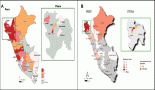
Results: In 2022, India reported 143,759 new oral cancer cases (10.2% of all cancers) with an ASR of 10.1 per 100,000 population. Males accounted for 75% of cases (ASR: 15.6 versus 5.0 per 100,000 in females). India recorded 79,979 deaths (8.7% of all cancer deaths) with mortality ASR of 6.4 per 100,000. The cumulative lifetime risk was 1.1%. India accounted for 81% of SEARO’s oral cancer burden despite representing 68% of the population. India’s incidence rates were 33% higher than the regional average (10.1 versus 7.5 per 100,000). Long-term trends (1992–2017) showed stabilising ASRs but increasing absolute numbers due to population growth. Tobacco and areca nut use account for approximately 70%–80% of cases.
Conclusion: India has the highest oral cancer incidence globally, with persistent age and gender disparities. The disproportionate burden relative to population size reflects entrenched behavioural risk factors and systemic gaps in prevention, screening and treatment. Urgent priorities include enhanced tobacco control legislation, targeted risk-based screening expansion and leveraging digital health innovations to reduce oral cancer morbidity and mortality.