ASCO GU 2026: Updates in renal cancer
17 Mar 2026

The content on this site is intended for healthcare professionals only
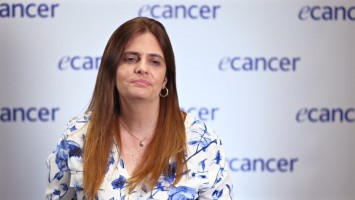
Dr María Natalia Gandur Quiroga speaks to ecancer at ASCO GU 2026 regarding the latest advances in localised and biochemically recurrent prostate cancer.
She says this is a field rapidly evolving towards smarter, more personalised treatment strategies.
This year’s data highlights a critical shift in oncology: moving beyond simply intensifying treatment to carefully selecting who truly benefits.
Dr Gandur highlights that in 2026, prostate cancer care is no longer just about doing more, it’s about doing what’s right for the right patient.
| Fifteen-year survival analysis from the ASCENDE-RT randomized trial of external beam boost versus brachytherapy boost in localized prostate cancer | |
| Hormone therapy use and duration with post-operative radiotherapy for recurrent prostate cancer: An individual patient data meta-analysis | |
| A randomized phase 2 study of enhanced AR blockade with enzalutamide in high-risk patients with biochemical relapse undergoing salvage radiation: Final results from RTOG 3506 (STEEL) | |
| Efficacy and safety of darolutamide monotherapy in patients with castration-sensitive prostate cancer (CSPC) after biochemical recurrence (BCR): 52-week results from ARAMON | |
| Are long-term remissions possible with hormonal therapy only? Post hoc analysis of EMBARK | |
| COACTION: A Randomized Trial of Neoadjuvant Leuprorelin, Darolutamide, or Both Prior to Radical Prostatectomy for Intermediate- or High-Risk Prostate Cancer |
I am here in San Francisco at the ASCO Genitourinary Cancer Symposium 2026 and today I would like to focus on what we have learned in localised and biochemically recurrent prostate cancer. This year the meeting clearly shows that we are entering an era of intensification, personalisation and also reflection – reflection about whether more treatment always translates into better long-term outcomes.
One of the most important long-term datasets presented was the 15-year survival analysis of the ASCENDE-RT trial presented by Dr Scott Tyldesley from the BC Cancer Center. As we know, the ASCENDE study previously demonstrated a significant improvement in biochemical control with brachytherapy boost compared to external beam radiotherapy boost. At ten years freedom from biochemical failure was 85% versus 67%, strongly favouring brachytherapy. However, at 15 years the picture becomes more nuanced: overall survival was 55% in the external beam arm and almost 61% in the brachytherapy arm with no statistically significant difference. While prostate cancer specific mortality appears lower in the brachytherapy group, almost 9% versus 16.4%, this result was sensitive to cause of death uncertainty and the study was not powered for a survival endpoint. This is very important. The key message here is that large improvements in biochemical control do not necessarily translate into major gains in overall survival, particularly in an older population with competing cause of death. This forces us to reconsider how much weight we assign to PSA-based endpoints in localised disease.
Moving to the postoperative setting, Dr Amar Kishan presented the POSEIDON individual patient data meta-analysis evaluating the role of all hormone therapy added to postoperative radiotherapy in recurrent prostate cancer. This analysis included over 6,000 patients from six randomised phase III trials. Overall, adding hormonal therapy to post-operative radiotherapy did not significantly improve overall survival although it did improve metastatic free survival. The most important finding, however, was the interconnection with PSA levels prior to salvage radiotherapy. The survival benefit appeared to be limited to patients with higher base values; this is very important because particularly above 0.5ng/mL, and, more convincingly, above 1.6ng/mL in those receiving long-term hormone therapy.
Now, for patients with lower PSA levels the benefit of adding hormone therapy was minimal. This is clinically very relevant and it is very important to take in mind. It suggests that not every patient with biochemical recurrence requires androgen deprivation in addition to salvage radiotherapy. In 2026 PSA at the time of salvage maybe be one of the most practical and powerful stratification tools that we have.
In a related intensification strategy, Dr Edwin Posadas presented the final results of RTOG 3506, also known as the STEEL study. This is a randomised phase II trial evaluating enhanced androgen receptor blockade with enzalutamide added to standard ADT in high-risk patients undergoing salvage radiotherapy. These were patients with multiple adverse pathological features, many with Gleason 9 disease, pT3 tumour or nodal involvement. The addition of enzalutamide improved progression free survival with a hazard ratio of 0.62 and a meaningful reduction in 2-year biochemical failure rates from 19% to 11%. However, toxicity was increased and nearly one in five patients discontinued enzalutamide due to adverse events. While these results are promising and support further phase III investigation, we must remain cautious. Intensification in the salvage setting may be beneficial for selected high-risk patients but the metabolic and cardiovascular costs are not negligible.
Another particularly interesting study was ARAMON, presented by Dr Andrew Laccetti, evaluating darolutamide monotherapy in patients with castration-sensitive prostate cancer after biochemical recurrence. These patients had oligometastatic disease and were treated with darolutamide without concurrent androgen deprivation therapy. At 52 weeks 65% achieve deep PSA responses below 0.2ng/mL and testosterone levels actually increase and remain stable. The quality of life was preserved and metabolic parameters showed minimal changes. This raises an intriguing biological question – could we control disease in selected patients with androgen receptor inhibition without full castration? While this is a small phase II trial, it opens the door to potentially more tailored strategies that preserve quality of life while maintaining disease control.
Now, in the EMBARK post hoc analysis presented by Dr Neal Shore we saw another important dimension of treatment personalisation. In EMBARK patients with high-risk biochemical recurrence received finite therapy with enzalutamide plus leuprolide and treatment was suspended after achieving deep PSA responses. Approximately 4% of patients in the combination arm maintained PSA suppression below 0.2ng/mL three years after treatment suspension, despite full testosterone recovery. Although this represents a minority, it demonstrates that durable treatment-free remissions are possible in a subset of patients. The challenge now is to identify who these patients are – now, again, precision medicine.
Finally, in the neoadjuvant setting, Dr Fernando de Moura presented the COACTION trial evaluating leuprorelin, darolutamide or the combination prior to radical prostatectomy in intermediate- and high-risk localised prostate cancer. The primary endpoint is minimal residual disease at surgery; the hypothesis is that a combination therapy may significantly increase the proportion of patients achieving near-complete pathological responses. While we await mature results, this study reflects a broader trend. We are beginning to treat high-risk localised prostate cancer more like a systemic disease from the outset. However, we must remember that pathological response is not always a surrogate for long-term survival.
Taken together, ASCO GU 2026 highlights a clear theme in localised and recurrent prostate cancer: intensification strategies are expanding but selection is becoming even more critical. Not all patients benefit equally from additional hormonal therapy, deeper androgen receptor blockade or extended duration of treatment. pCR at recurrence, biological risk features and patient comorbidities must guide our decisions. In 2026 the question is no longer whether we can intensify therapy, the real question is whether we can identify precisely who truly needs it and avoid over-treatment in those who do not.
Thank you for following this update from ASCO GU 2026.
ASCO GU 2026: Updates in renal cancer
ASCO GU 2026: Updates in bladder cancer
ASCO GU 2026: Updates in metastatic prostate cancer
Best practice in precision medicine for prostate cancer
WCLC 2025: Latest in EGFR positive NSCLC
Transforming cancer care in India: The Access Cancer Care Initiative
Key insights from lung cancer research at ASCO 2025

ESMO 2024: Optimising the personalisation of prostate cancer treatment

EAU 2024: Bladder cancer latest
