ASCO GU 2026: Updates in metastatic prostate cancer
17 Mar 2026

The content on this site is intended for healthcare professionals only
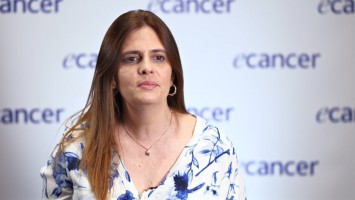
Dr María Natalia Gandur Quiroga speaks to ecancer about the major breakthroughs in urothelial (bladder) carcinoma.
She says the recent data signals a true turning point in the field, moving beyond incremental progress toward a complete transformation of treatment strategies.
In this expert update, she explores how perioperative care is being redefined, antibody drug conjugates (ADCs) are expanding rapidly, and molecular biomarkers are beginning to guide real clinical decisions.
| Neoadjuvant and adjuvant enfortumab vedotin (EV) plus pembrolizumab (pembro) for participants with muscle-invasive bladder cancer (MIBC) who are eligible for cisplatin: Randomized, open-label, phase 3 KEYNOTE-B15 study) | |
| Circulating tumor (ct)DNA-guided adjuvant atezolizumab (atezo) in muscle-invasive bladder cancer (MIBC): Exploratory analysis of ctDNA dynamics in the IMvigor011 trial | |
| Urinary Tumor DNA and ctDNA in Patients with MIBC Who Received Perioperative Durvalumab in NIAGARA | |
| RC48G001: A phase 2 study of disitamab vedotin in HER2-expressing previously treated advanced UC | |
| KEYMAKER-U04 Substudy 04B: First-Line Enfortumab Vedotin + Pembrolizumab-Based Immune Checkpoint Inhibitor Combinations for Advanced Urothelial Carcinoma | |
| Gemcitabine intravesical system (Gem-iDRS) in combination with cetrelimab (CET) versus chemoradiotherapy (CRT) in muscle-invasive bladder cancer (MIBC): SunRISe-2 final results |
In this opportunity I will review the most important and impactful urothelial carcinoma data presented at ASCO GU 2026. This year’s meeting represents a structural turning point in bladder cancer. The field is no longer debating whether immunotherapy works, it is redefining perioperative standards, expanding the antibody-drug conjugate landscape and beginning to integrate molecular response as a decision-making tool. What we are witnessing is not incremental evolution, it is architectural remodelling.
The perioperative space was the most transformative area of the meeting. Dr Matthew Galsky from Mount Sinai presented the phase III KEYNOTE-B15, also known as EV-304, evaluating neoadjuvant and adjuvant enfortumab vedotin plus pembrolizumab in cisplatin eligible muscle-invasive bladder cancer. This is a crucial shift: until recently EV plus pembrolizumab in the perioperative setting was largely discussed in cisplatin ineligible patients. Now this combination directly challenges gemcitabine/cisplatin in patients who are fit for standard chemotherapy. With over 800 patients randomised, EV plus pembrolizumab significantly improved event free survival compared with cisplatin-based chemotherapy with a hazard ratio close to 0.53.
The 24-month event free survival rate approaches 70% and the pathologic complete response rate reached nearly 56% compared with approximately 32% with chemotherapy alone. This is not a marginal gain, it potentially redefines perioperative therapy, even in cisplatin eligible populations, challenging a backbone that has been in place for decades.
At the same time the adjuvant landscape is becoming molecularly redefined. Dr Tom Powles presented data from IMvigor011, a ctDNA-guided adjuvant study. This trial evaluated atezolizumab versus placebo in patients with muscle-invasive or urothelial carcinoma who were ctDNA positive following surgery. The key concept is minimal residual disease detection. ctDNA positivity strongly predicted recurrence risk and atezolizumab significantly reduced ctDNA levels compared with placebo. More importantly, ctDNA clearance correlated with improved disease free and overall survival. This introduces a paradigm shift – treatment decisions in the adjuvant setting may increasingly depend on dynamic molecular response rather than starting pathologic situation alone. Instead of treating all high-risk patients uniformly we are moving forward biologically-defined residual disease interventions.
Complementing this, Dr Michiel van der Heijden presented translation analysis from the NIAGARA trial focussing on urinary tumour DNA dynamics in the perioperative settings. The addition of durvalumab to neoadjuvant chemotherapy increases rates of utDNA clearance and dual negativity. Absence of ctDNA and utDNA identified patients with remarkably favourable two-year event-free survival. Molecular responses are beginning to function as a surrogate marker of long-term benefit. Together, IMvigor011 and NIAGARA signal that perioperative bladder cancer management is emerging as a biomarker-adapted era.
Beyond perioperative disease, the antibody-drug conjugate field expanded significantly at ASCO GU 2026. Dr Tom Powles presented the global phase II RC48G001 study evaluating disitamab vedotin in HER2-expressing advanced urothelial carcinoma. Historically, HER2 in bladder cancer has been biologically intriguing but clinically elusive. In this study confirmed response rates exceeded 50% across cohorts with complete responses approaching 70-80% in HER2 high populations. Median overall survival reaches approximately 20 months in these heavily pre-treated patients. This is very important and importantly activity was observed not only in immunohistochemical 3+ tumours or intensity immunohistochemistry tumours but also in low-expression groups, furthering the potential applicability of HER2 targeting. This represents diversification of the ADC landscape beyond nectin-4 and suggests that biomarker-defined ADC strategies may become increasingly relevant in advanced disease.
The question of whether further immune intensification improves outcomes was addressed in the KEYMAKER-U04 sub-study presented by Dr van der Heijden again. This phase I/II randomised analysis evaluated first-line enfortumab vedotin plus pembrolizumab with or without additional checkpoint inhibitors targeting LAG-3 or TIGIT. The biological rationale was clear: deeper immune activation may enhance response durability, however, objective response rates were similar across arms, approximately in the range of 57% to 66% and progression free survival median range between roughly 11 and 14 months. The addition of LAG-3 or TIGIT inhibition did not demonstrate clinically meaningfully superiority over EV plus pembrolizumab alone. This is an important negative signal, it suggests that EV plus pembrolizumab may already represent a maximally effective immune ADC platform and that adding additional immune layers does not necessarily translate into incremental clinical gain.
Finally, Dr Andrea Necchi presented the final results of SunRISe-2 evaluating intravesical gemcitabine drug delivery combined with cetrelimab versus chemotherapy in patients with muscle-invasive bladder cancer who declined or were ineligible for cystectomy. The trial did not meet its primary endpoint. Bladder intact event free survival was not superior to chemotherapy with outcomes numerically favouring the standard CRT arm. This negative result is scientifically important, it reinforces that bladder preservation strategies must demonstrate clear superiority over established multimodal therapy and that immunotherapy integration cannot be assumed to enhance efficacy without rigorous validation.
When integrating all these studies, several structural conclusions emerge. First, enfortumab vedotin plus pembrolizumab is no longer confined to metastatic disease. It now challenges cisplatin-based chemotherapy in the perioperative setting, even among cisplatin eligible patients. Second, minimal residual disease detection through ctDNA and utDNA is transforming from exploratory biomarker research into a clinically actionable framework.
Third, the ADC field is diversifying with HER2-targeted approaches demonstrating substantial activity in advanced disease. Fourth, immune intensification beyond PD-1 inhibition in combination with EV has not yet shown clear additive benefit. And fifth, bladder preservation strategies must compete against strong chemotherapy standards.
ASCO GU 2026 demonstrates that urothelial carcinoma has entered a precision ADC era where immunotherapy’s foundational antibody drug conjugates are expanding across disease states and molecular response is beginning to inform therapeutic decisions. The next phase of progress will depend less on additional agents and more on rationale sequencing, biomarker integration and avoiding biologically redundant combinations.
Thank you again for the opportunity to analyse these transformative developments in urothelial carcinoma presented here in San Francisco ASCO GU 2026.
ASCO GU 2026: Updates in metastatic prostate cancer
ASCO GU 2026: Updates in localised prostate cancer
Best practice in precision medicine for prostate cancer
WCLC 2025: Latest in EGFR positive NSCLC

Key insights from lung cancer research at ASCO 2025

ESMO 2024: Optimising the personalisation of prostate cancer treatment

EAU 2024: Bladder cancer latest

ELCC 2024: Latest in EGFR mutant lung cancer; exon 20 mutation focus
