ASCO 2026: Latest updates in mRCC
30 May 2026

The content on this site is intended for healthcare professionals only
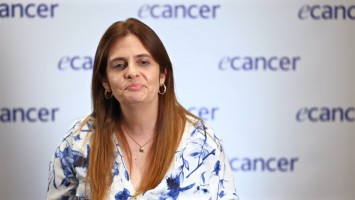
Dr María Natalia Gandur Quiroga at ASCO GU 2026 gives a comprehensive update exploring the evolving landscape of advanced prostate cancer, with a global perspective that emphasises both scientific progress and real-world accessibility.
In this discussion, she breaks down three defining themes shaping modern care: smarter treatment intensification, optimal sequencing of radioligand therapies, and the growing role of biomarker-driven decision-making.
| Comparison of docetaxel triplet therapy with androgen receptor pathway inhibitor (ARPI) doublet in US veterans with metastatic hormone sensitive prostate cancer (mHSPC) | |
| Hormone therapy use and duration with post-operative radiotherapy for recurrent prostate cancer: An individual patient data meta-analysis | |
| Impact of age, number of cycles of chemotherapy and presence of visceral metastases on PSA response in patients on triplet therapy (ADT + darolutamide + docetaxel) for mHSPC: UK real world data from the RECOMMEND study | |
| Saruparib + androgen receptor pathway inhibitor (ARPI) + androgen deprivation therapy (ADT) in patients (pts) with metastatic hormone-sensitive prostate cancer (mHSPC): The phase 1/2 PETRANHA trial | |
| Treatment utilization among patients (pts) with metastatic hormone-sensitive prostate cancer (mHSPC) in real-world US settings: A prostate cancer disease observation (PRECISION) data platform analysis | |
| Final overall survival results from the EORTC 1333/PEACE-3 trial: Enzalutamide with or without radium-223 in metastatic castration-resistant prostate cancer | |
| ProTACT: A First-in-Human, Phase 1 Study Evaluating the Safety, Tolerability, and Anti-Tumor Activity of 225Ac-FL-020, an Anti-PSMA Radioconjugate in Patients with mCRPC | |
| Gaps in BRCA mutation testing among mCRPC patients: Insights from US cancer practices (2018–2024) | |
| Circulating tumor DNA (ctDNA) dynamics in bone-dominant metastatic castration resistant prostate cancer (mCRPC) treated with radium-223 with or without olaparib: Biomarker analyses from the multicenter, randomized, phase 2, investigator-initiated COMRADE trial | |
| Development and Validation of CHAI-Powered Prognostic and Predictive Biomarkers in mHSPC Using ENZAMET and CHAARTED Prospective Randomized Phase 3 Trials |
It’s truly a pleasure to share with you some of the most relevant prostate cancer updates from ASCO GU 2026. As part of the global GU oncology community and a physician working in Latin America, I always try to interpret this data not only from a scientific perspective but also from a practical and access-oriented point of view. Today I would like to focus on three major themes that, in my opinion, define where we are going in advanced prostate cancer: intelligent intensification in metastatic hormone-sensitive disease, strategic sequencing of radioligand therapies in castration-resistant disease and the real implementation of biomarker-driven care.
Let me start with metastatic hormone-sensitive prostate cancer. One of the most clinically relevant presentations was delivered by Abigail Chu who presented real-world data comparing docetaxel-based triplet therapy versus AR pathway inhibitor doublet therapy in US veterans. This was a retrospective propensity match analysis including even 600 patients with a median follow-up of approximately 24 months. Triplet therapy was associated with a significant reduction in mortality with a hazard ratio of 0.6. However, what I find most important is not only the hazard ratio but where the benefit was concentrated. The survival advantage was clearly observed in patients with de novo metastatic disease and in those with high-volume disease. In contrast, no significant benefit was observed in patients with low-volume or metachronous disease. This reinforces an important concept: triplet therapy is not for everyone, the key is biological aggressiveness. In many Latin American countries we still see a high proportion of de novo metastatic presentation, often with high tumour burden. For these patterns intensification may have a particularly strong impact.
Moving to the RECOMMEND study from the United Kingdom, presented by Amit Bahl, we saw prospective real-world data evaluating ADT plus darolutamide plus docetaxel. The PSA responses were remarkable – at 6 months 94% of patients achieved at least a 50% PSA decline and a large proportion achieved deep PSA responses. Importantly, these responses were consistent regardless of age, number of chemotherapy cycles and the presence of visceral metastases. This is clinically reassuring, it challenges the common intensification that other patients or those with visceral disease may not benefit as much. Again, biological seems to be more important than chronological age.
Then we move into a very exciting area: early use of PARP inhibition. Arun Azad presented updated results from the PETRANHA trial evaluating saruparib combined with an AR pathway inhibitor and ADT in metastatic hormone-sensitive prostate cancer. The objective response rate was over 80% and approximately 70% of patients achieved undetectable PSA at some point, regardless of homologous recombination repair mutation status. This is conceptually important, we are not only treating BRCA-mutated disease, we are exploring whether introducing PARP inhibition earlier may modify disease trajectory. It is still early but it represents a shift forward in biological-driven combination strategies.
Now let us transition to metastatic castration-resistant prostate cancer and radioligand therapy. Daniel George presented real-world data from the PRECISION platform evaluating 177Lu-PSMA-617 in taxane naïve patients. In this cohort of 500 patients the PSA50 response rate was 63% and the median progression free survival was 13.5 months. Interestingly, patients who received lutetium after only a prior AR pathway inhibitor had better outcomes than those who had received multiple AR targeted therapies. This sends a very clear message – timing matters. It is not only whether we use radioligand therapy but when we will use it. Delaying effective therapies may reduce their impact.
In a related analysis using the Flatiron database, survival outcomes were examined according to taxane exposure relative to lutetium. Radioligand therapy demonstrated activity regardless of prior taxane use, however, patients who were taxane naïve tended to have a longer time to next therapy. While this may partly reflect selection bias, it again raises the question of optimal sequencing.
We also saw the final overall survival results of the PEACE-3 trial presented by Enrique Gallardo. This study evaluated enzalutamide with or without radium-223 in patients with bone metastatic castration-resistant prostate cancer. The combination improved overall survival from 32.6 to 38.2 months with a hazard ratio of 0.76. Radiographic progression free survival was also improved. However, the survival curves cross around 18 months, this reminds us that benefit is not uniform. Patient selection remains critical, especially when combining systemic therapies with radiopharmaceuticals.
Looking to the future, the ProTACT study presented by Giuseppe Cardaci and also by Aaron Hansen in the prostate poster session evaluated a next-generation PSMA alpha therapy using actinium-225. Early data suggests manageable toxicity with limited severe xerostomia and early PSA responses across dose levels. While this is still phase I, it signals the next wave of radioligand innovation. Radioligand therapy is no longer a late-line rescue strategy, it is becoming part of the structured treatment algorithm.
Finally, I want to address biomarkers and implementation gaps. Rana McKay presented an important real-world analysis of BRCA testing patterns in US patients with metastatic castration-resistant prostate cancer. Despite clear guidance recommendations, only about 56% of patients had documented BRCA testing in recent years. Testing rates improved over time but this will be plateauing after 2021. This is shrinking even in a highly resourced healthcare system nearly half of patients may not be fully evaluated for biomarker-driven therapy. This highlights that the gap today is not necessarily driven by availability but implementation. In Latin America, for example, this challenge is even more pronounced and we must advocate strongly for broader genomic access.
In another presentation, also by Rana McKay, biomarker analysis from the COMRADE trial evaluated early circulating tumour DNA dynamics in patients treated with radium-223 with or without olaparib. Early ctDNA clearance at cycle 2 was strongly associated with improved progression free and overall survival. Interestingly, early PSA decline was not observed at that timepoint. This is extremely elegant, it suggests that dynamic biomarkers might provide earlier and more accurate insight than PSA alone. Moreover, molecular response appears to identify patients who derive a major benefit from the addition of olaparib.
Finally, Neeraj Agarwal presented the development and validation of a CHAI-powered histology-based biomarker using data from the ENZAMET and CHAARTED trials. One biomarker was prognostic and two were predictive, one for docetaxel benefit and one for AR pathway inhibitor benefit. These tools were externally validated in a phase III database. This represents a step towards truly personalised treatment selection – no more drugs for everyone but the right drug for the right patient.
To conclude, ASCO GU 2026 leaves us with three strong messages. First, intensification in metastatic hormone-sensitive prostate cancer must be intelligent and biologically guided. The second, radioligand therapies are moving earlier and sequencing decisions will shape survival outcomes. Third, the future is not simply adding therapies but redefining patient selection through better biomarkers and better implementation. As physicians in Latin America and globally, our responsibility is not only to understand this data but to translate them into equitable access and helpful clinical decision making. Innovation only changes outcomes when it reaches patients.
Thank you very much for your attention.
ASCO 2026: Latest updates in mRCC
ASCO GU 2026: Updates in bladder cancer
ASCO GU 2026: Updates in localised prostate cancer

Best practice in precision medicine for prostate cancer

WCLC 2025: Latest in EGFR positive NSCLC

Key insights from lung cancer research at ASCO 2025

Made to measure: Choosing the optimal regimen in transplant-eligible NDMM

ESMO 2024: Optimising the personalisation of prostate cancer treatment

EAU 2024: Bladder cancer latest
