Retrospective analysis of patients with locally advanced or metastatic urothelial carcinoma treated in Argentina (2018–2025): results from the GUIA 2 study in real-world clinical practice
Pablo Companys1a, Tomas Soule2b, Mariano Aymar3c, María Natalia Gandur Quiroga4d, Rosalía Hinojosa Altamirano4e, Marcelo Fogtman5f, Augusto Ferreyra Camacho6g, Rodrigo Sánchez7h, Gonzalo Taetti8i, Gabriela Gatica9j, Natalia Soto10k, María Elisa Arroyo11l, Nicolas Mainardi12m, Carolina Passarella13n, Andrea Marchioni9o, Ignacio Jerez14p, María Pía Domínguez15q, Emiliano Menna15r, Harold Somerville16s, Ernesto Korbenfeld17t, Florencia Sarru18u, Karina Peters19v, Iván Macharashvili3w, Federico Losco2x, Laura Pelagatti Santoni10y, Mauricio Fernández Lazaro10z, José Zarba11aa, Mabel Gill1bb, Juan Pablo Sade2cc and Federico Cayol3dd
1Hospital de Alta Complejidad ‘Pte. Juan Domingo Perón’, Formosa 3600, Argentina
2Instituto Alexander Fleming, Buenos Aires C1426ANZ, Argentina
3Hospital Italiano de Buenos Aires, Buenos Aires C1199ABB, Argentina
4Instituto de Oncología Ángel Roffo, Buenos Aires C1406, Argentina
5Sanatorio de la Cañada, Córdoba X5000, Argentina
6Clínica San Camilo, Buenos Aires C1406, Argentina
7Hospital Militar Central, Buenos Aires C1426, Argentina
8Instituto de investigaciones médicas, Alfredo Lanari (UBA), Buenos Aires C1427, Argentina
9Hospital Alemán Buenos Aires, Buenos Aires C1118, Argentina
10Fundación COIR, Mendoza M5500, Argentina
11Hospital Zenón Santillan, Tucumán T4000, Argentina
12Instituto de Oncología de Rosario, Santa Fe S2000, Argentina
13Hospital Universitario Austral, Buenos Aires B1629, Argentina
14Sanatorio Allende, Córdoba X5000, Argentina
15Centro oncológico integral La Plata, Buenos Aires B1900, Argentina
16Centro oncológico Riojano integral, La Rioja F5300, Argentina
17Hospital Británico de Buenos Aires, Ciudad De Buenos Aires C1280, Argentina
18Clínica San Jorge, Ushuaia, Tierra del Fuego V9410, Argentina
19Hospital Bernardo Houssay - Vicente López, Buenos Aires B1602, Argentina
ahttps://orcid.org/0009-0005-5195-8037
bhttps://orcid.org/0000-0001-6914-4932
chttps://orcid.org/0009-0006-9675-254X
dhttps://orcid.org/0000-0001-7034-0842
ehttps://orcid.org/0009-0001-0519-5658
fhttps://orcid.org/0009-0005-9855-6959
ghttps://orcid.org/0000-0003-3385-9826
hhttps://orcid.org/0009-0008-8657-0173
ihttps://orcid.org/0009-0001-6525-9633
jhttps://orcid.org/0009-0006-4677-5428
khttps://orcid.org/0009-0007-4619-4962
lhttps://orcid.org/0009-0006-1117-6257
mhttps://orcid.org/0009-0007-0278-8830
nhttps://orcid.org/0009-0009-3121-7986
ohttps://orcid.org/0009-0000-4634-7403
phttps://orcid.org/0009-0004-7418-2713
qhttps://orcid.org/0009-0001-4094-8280
rhttps://orcid.org/0009-0002-3506-6563
shttps://orcid.org/0009-0009-8911-4090
thttp://orcid.org/0000-0002-5390-5482
uhttps://orcid.org/0009-0007-3348-4848
vhttps://orcid.org/0009-0005-9084-6265
whttps://orcid.org/0009-0000-5210-3499
xhttps://orcid.org/0000-0001-5084-3012
yhttps://orcid.org/0009-0007-8841-9736
zhttps://orcid.org/0009-0004-6013-1288
aahttps://orcid.org/0000-0003-1013-3993
bbhttps://orcid.org/0009-0000-0657-6359
cchttps://orcid.org/0000-0001-9312-5280
ddhttps://orcid.org/0000-0001-9794-2173
Abstract
Purpose: Urothelial carcinoma (UC) is the most common histological subtype of bladder cancer and a major public health concern. Patients from Latin America are often underrepresented in pivotal clinical trials, highlighting the importance of regional real-world evidence (RWE). This study aimed to characterise the clinical profile, treatment patterns and survival outcomes of patients with locally advanced or metastatic UC (la/mUC) in Argentina.
Methods: We conducted a retrospective multicentre study across 19 public and private institutions in Argentina. Eligible patients were ≥18 years with confirmed la/mUC diagnosis between January 2018 and March 2025. Demographic, clinical and therapeutic data were collected. Progression-free survival (PFS) and overall survival (OS) were estimated by Kaplan–Meier analysis, with subgroup comparisons by log-rank test. Multivariable analysis identified prognostic factors for OS.
Results: A total of 421 patients were included; the median age was 70 years, 76.4% were male and 70.8% had a history of tobacco use. First-line systemic therapy was administered in 89.8% of cases, predominantly carboplatin–gemcitabine (40.1%) or cisplatin–gemcitabine (33.9%). Maintenance therapy was received by 37.8%, mainly avelumab. Median PFS for first-line therapy was 9 months, improving from 6.2 to 13.3 months with maintenance (p < 0.001). Median OS was 11.1 months without maintenance versus 24.6 months with maintenance (p < 0.001). Median OS for the entire cohort was 16 months. Visceral metastases and poor performance status independently predicted worse OS.
Conclusion: This first multicentre RWE study of la/mUC in Argentina shows treatment patterns and outcomes comparable to international cohorts. Findings confirm the survival benefit of maintenance therapy and underscore the importance of regional data to optimise urothelial cancer care in Latin America.
Keywords: urothelial carcinoma, bladder cancer, real-world evidence, Argentina, metastatic urothelial carcinoma, systemic therapy, retrospective study
Correspondence to: Tomas Soule and Federico Cayol
Email: tomassoule@Gmail.com and federico.cayol@hospitalitaliano.org.ar
Published: 21/10/2026
Received: 20/04/2026
Publication costs for this article were supported by ecancer (UK Charity number 1176307).
Copyright: © the authors; licensee ecancermedicalscience. This is an Open Access article distributed under the terms of the Creative Commons Attribution License (http://creativecommons.org/licenses/by/4.0), which permits unrestricted use, distribution, and reproduction in any medium, provided the original work is properly cited.
Introduction
Urothelial carcinoma (UC) represents the most common histological subtype of bladder cancer and poses a significant public health challenge worldwide. Epidemiological data from Argentina highlight a pronounced gender disparity in bladder cancer incidence and mortality. Among males, incidence rates are significantly higher than in females, fluctuating between approximately 10 and 15 cases per 100,000; while a slight decline has been observed since 2005, rates remain elevated. In contrast, females exhibit much lower incidence, with rates steadily declining from about 4 per 100,000 in the early 2000s to roughly 1.5 to 2 per 100,000 by 2020. Mortality trends follow a similar pattern: in men, mortality decreased gradually from around 3.3 per 100,000 individuals at risk in 1993 to 2 per 100,000 individuals at risk by 2020, whereas women maintained persistently low and stable mortality, hovering near 0.6 per 100,000 throughout this period [1]. However, this sex difference does not imply a better prognosis once metastatic disease is documented.
In Latin America, where healthcare systems vary widely in terms of access, infrastructure and treatment availability, understanding how patients with locally advanced or metastatic UC (la/mUC) are managed in routine clinical practice is essential for improving outcomes and guiding policy.
While randomised controlled trials remain the gold standard for evaluating therapeutic efficacy, they often exclude patients with comorbidities, socioeconomic barriers, or limited access to specialised care, factors that are particularly relevant in the Latin American context. For instance, recent landmark first-line treatment trials, such as EV-302 and CheckMate 901, included few participants from Latin American countries, highlighting the region’s underrepresentation in clinical research [2, 3, 10].
Real-world evidence (RWE) fills this gap by capturing the complexity and diversity of patient populations and treatment pathways outside the controlled environment of clinical trials.
This RWE study aims to characterise the clinical profile, treatment patterns and survival outcomes of Argentinian patients diagnosed with metastatic UC, based on data from participants in the GUIA-2 research group.
Materials and methods
A retrospective multicentre study was conducted across 19 public and private healthcare institutions distributed throughout Argentina (Supplementary Figure 1). The study included patients aged 18 years and older with a confirmed diagnosis of la/mUC, diagnosed between 1 January 2018 and 31 March 2025. Patients without follow-up data were excluded.
For each patient included, comprehensive clinical and demographic data were systematically collected, including age, sex, comorbidities and performance status (PS) at baseline. Detailed oncologic history was documented, enabling characterisation of disease progression, prior therapies and relevant prognostic factors. Treatment regimens were recorded for every line of systemic therapy, from first-line through subsequent interventions, with particular attention to the use of maintenance strategies. Treatment allocation was based on physician discretion, standard guidelines [5,6] and/or drug availability/reimbursement at the time. No biomarker-based selection was performed, as PD-L1 testing was not routinely available.
The primary endpoints were progression-free survival (PFS) and overall survival (OS) across systemic treatment lines. PFS was defined as the time from initiation of each systemic treatment line to the first documented radiologic or clinical progression or death from any cause, whichever occurred first. Patients without an event were censored at the date of last follow-up.
OS was defined as the time from initiation of systemic therapy to death from any cause, with censoring at the last known follow-up for living patients.
In the multivariable analysis, adjustments were made for the presence of visceral metastatic disease and baseline PS.
Survival distributions were estimated using the Kaplan–Meier method. Group comparisons were performed using the log-rank test, and multivariable analyses were conducted using Cox proportional hazards models. All statistical analyses were performed using STATA version 14.
This study received approval from the local ethics committee at each institution.
This retrospective cohort study was conducted and reported in accordance with the Strengthening the Reporting of Observational Studies in Epidemiology Statement [4].
Results
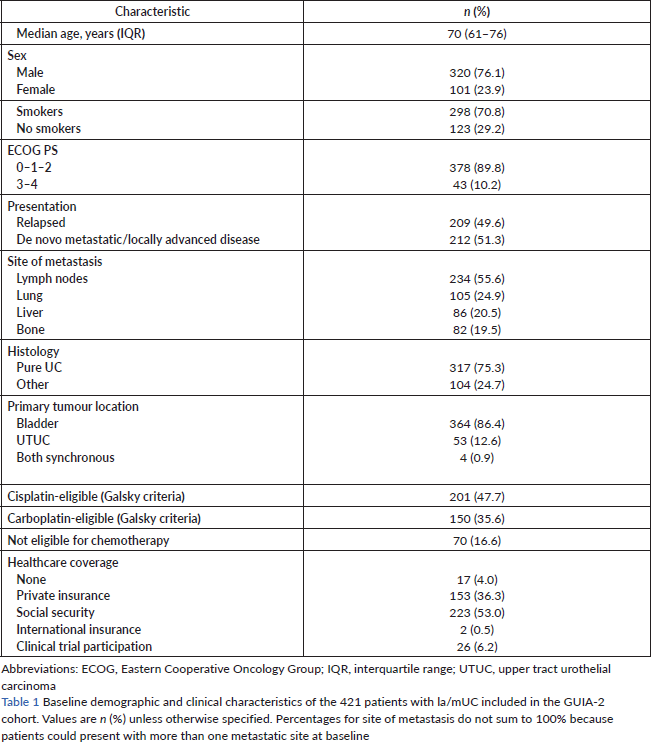
A total of 421 patients were evaluated, with a median age of 70 years (interquartile range (IQR): 61–76), and 76.4% of the cohort were male. Tobacco use was documented in 70.8% of individuals. The bladder represented the most frequent primary site (86.43%), followed by upper tract urothelial carcinoma (UTUC) (12.58%). Pure UC was observed in 75.3% of cases. Of those analysed, 89.47% had access to private healthcare coverage. Patient characteristics are detailed in Table 1. A higher prevalence of smoking was observed in men than in women (78% versus 48%; chi-square test, p = 0.0001).
Table 1. Baseline characteristics of the study population (N = 421).
Systemic first-line treatment was administered to 89.79% (378) of patients, with carboplatin–gemcitabine (40.1%) and cisplatin–gemcitabine (33.93%) being the most frequently used regimens, irrespective of cisplatin eligibility per Galsky criteria. Maintenance therapy was received by 37.8% (143) of patients, predominantly with avelumab (94.12%) [8]. In the second-line setting, 28.82% (122) of patients underwent treatment, of whom 48% received an anti-PD-1 agent (mostly pembrolizumab) [7] and 34% received paclitaxel. Third-line therapy was administered to 6.1% (25) of patients, with enfortumab vedotin being the most used agent (45.83%) [9]. Treatment sequencing and patient flow across lines of therapy are shown in Figure 1.
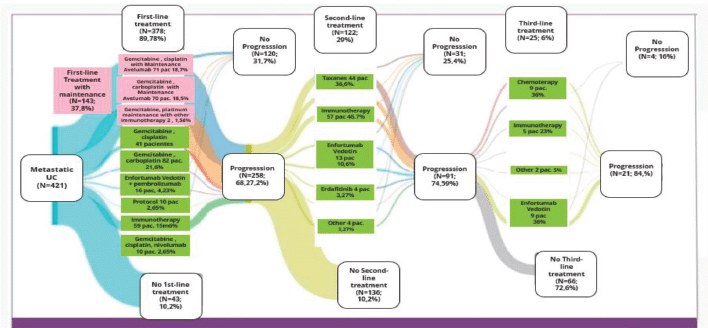
Figure 1. Treatment trends for patients with mUC in Argentina. Treatment percentages correspond to 421 patients analysed. Figure 1 Sankey diagram showing treatment sequencing among the 421 patients with mUC, from first- through third-line systemic therapy. The width of each pathway is proportional to the number of patients following that route, including transitions to progression or to no further treatment at each line.
PFS among all patients who received first-line systemic therapy was 9 months (95% CI: 7.6–10.7) (Figure 2a). Among those who did not receive maintenance therapy, first-line PFS was 6.2 months compared with 13.3 months in those who did, with a statistically significant difference (log-rank p = 0.00001) (Figure 2b). In the second-line treatment setting, PFS for all treated patients was 5.2 months (95% CI: 3.9–6.2), as shown in Figure 3a. For third-line therapy, PFS was 4.53 months (95% CI: 3.0–5.53) (Figure 3b).
Median OS for the entire cohort of 421 patients was 16 months (95% CI: 13.6–18.3) (Figure 4a). OS from first-line treatment was 11.06 months in patients without maintenance versus 24.6 months with avelumab maintenance [8] (log-rank p = 0.00001) (Figure 4b).
OS in patients with lymph-node non-visceral disease was 36.9 months compared with 18.3 months in those with visceral involvement (log-rank test, p = 0.00001). OS in patients with a PS <80 was 12.9 months versus 34.2 months in those with better PS (p = 0.0001).
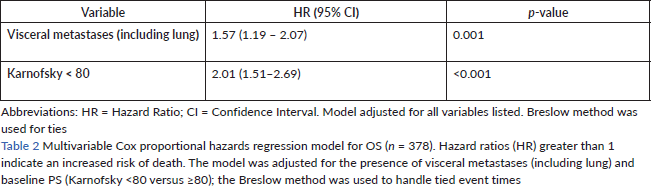
A multivariable analysis was performed to evaluate prognostic factors associated with OS in patients with la/mUC . Among the variables assessed, the presence of visceral metastases and poor PS emerged as independent predictors of worse OS (Table 2).
Discussion
The findings of this study align with international RWE, notably the EBANO [13] study conducted across 16 centres in northern Spain, which highlighted treatment patterns and survival outcomes in patients with la/mUC. Similarly, the ALEBRIJE [14] study from Mexico, involving eight oncology centres, provided valuable insights into treatment access, progression and survival in a Latin American context, underscoring the challenges of equitable care and the impact of PS and visceral disease on prognosis. Compared to the Spanish cohort, in which 53% of patients received second-line treatment, our study shows a notably lower proportion of patients in Argentina undergoing second-line therapy (28.8%), a figure more closely aligned with the Mexican population (24.6%). This discrepancy may reflect differences in healthcare access, referral patterns or institutional practices across regions and highlights the importance of contextualizing real-world data within each country’s clinical landscape. Notably, 26 of the 421 patients (6.18%) in our cohort were enrolled in clinical research protocols, reflecting the contribution of investigational studies to treatment access and outcomes. The therapeutic landscape for advanced UC has also expanded with the development of antibody–drug conjugates such as sacituzumab govitecan, particularly in previously treated disease [11].
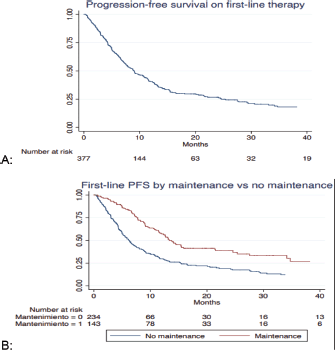
Figure 2. (a): PFS on first-line therapy (378 patients out of 421 total). (b): First-line PFS by avelumab maintenance versus no maintenance. (143 patients with avelumab maintenance versus 235 patients with no maintenance, out of 378 patients). PFS: 9 months (95% CI: 7.6–10.7). PFS: 13.3 months versus 6.2 months. Log-rank p 0.00001. Figure 2 Kaplan–Meier estimates of PFS with first-line systemic therapy. (a): PFS for all patients who received first-line therapy (n = 378); median PFS was 9.0 months (95% CI: 7.6–10.7). (b): PFS stratified by receipt of avelumab maintenance therapy after first-line treatment (143 patients with avelumab maintenance versus 235 without maintenance); median PFS was 13.3 months with avelumab maintenance versus 6.2 months without maintenance (log-rank p < 0.00001).
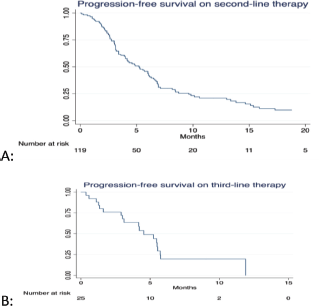
Figure 3. (a): PFS in second-line therapy (b): PFS in third-line therapy; 5.2 months (95% CI: 3.9–6.2). 4.53 months (95% CI: 3.0–5.53). Figure 3 Kaplan–Meier estimates of PFS beyond first-line therapy. (a): PFS among patients who received second-line therapy; median PFS was 5.2 months (95% CI: 3.9–6.2). (b): PFS among patients who received third-line therapy; median PFS was 4.53 months (95% CI: 3.0–5.53).
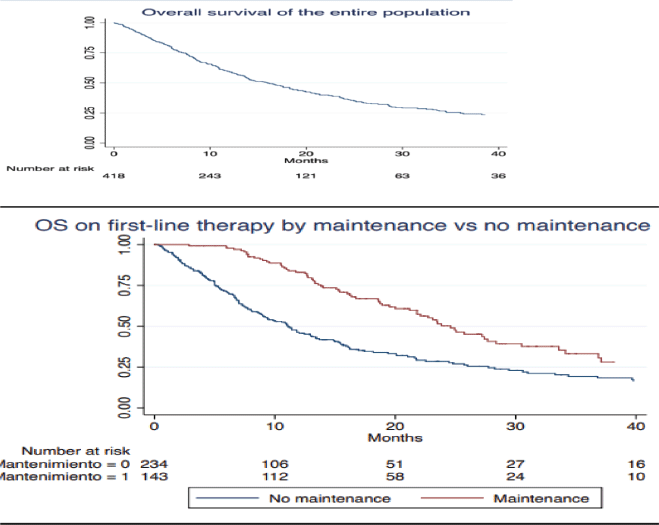
Figure 4. OS (a): entire cohort of 421 patients (b): from first-line treatment, stratified by avelumab maintenance versus no maintenance. OS from first-line treatment was 11.06 months in patients without maintenance versus 24.6 months with avelumab maintenance (log-rank p = 0.00001). Figure 4 Kaplan–Meier estimates of OS. (a): OS for the entire cohort (N = 421); median OS was 16.0 months (95% CI: 13.6–18.3). (b): OS from first-line treatment stratified by receipt of avelumab maintenance therapy; median OS was 24.6 months with avelumab maintenance versus 11.06 months without maintenance (log-rank p < 0.00001).
Table 2. Multivariable cox proportional hazards regression analysis (n = 378).
Therapeutic decisions were based on the treating physician’s preference and the availability of treatments within each patient’s healthcare system. PD-L1 status was not routinely assessed. The therapeutic landscape has also expanded to include molecularly targeted therapies, such as erdafitinib for patients with la/mUC harbouring susceptible FGFR alterations [12]. This approach may introduce several sources of bias. First, physician-driven treatment selection can lead to confounding by indication, as clinicians may preferentially choose certain therapies for patients with specific clinical characteristics that are not fully captured in the dataset. Second, variability in healthcare system access can result in selection bias, whereby patients with greater resource availability receive different treatments than those with more limited access. Finally, the lack of routine PD-L1 testing limits the ability to account for potential biological differences that could influence treatment allocation and outcomes, thereby increasing the risk of residual confounding.
Several potential sources of bias were identified and warrant consideration. The study population showed a predominance of patients with private insurance or social security coverage, which may limit the applicability of findings to uninsured individuals. This imbalance likely reflects the nature of the participating institutions, which tend to have greater access to specialised oncology services. A notably high proportion of patients (>80%) received first-line systemic therapy, exceeding the global average reported in established studies (50%–60%) [15, 16]. This discrepancy may be partially explained by underreporting of patients who were referred directly to palliative care without receiving disease-specific oncologic treatment, potentially inflating the observed treatment initiation rates. As with most retrospective real-world studies, the lack of controlled conditions, standardised follow-up and comprehensive stratification limits direct comparability with prospective pivotal trials. These methodological differences may account for the observed variations in survival outcomes and underscore the need for cautious interpretation when benchmarking real-world data against clinical trial results.
An additional limitation of this study is the absence of formal assessment of toxicity and quality of life, patient-reported outcomes or detailed longitudinal tracking of PS changes during treatment. These measures are increasingly recognised as essential for understanding the real-world impact of therapies on patients’ daily functioning and overall well-being. Future studies should prioritise the systematic collection of these outcomes to provide a more comprehensive evaluation of treatment effectiveness and to inform patient-centred care decisions in routine oncology practice.
A further methodological limitation concerns the comparison between patients who received maintenance therapy and those who did not. Eligibility for maintenance requires that a patient survive first-line induction chemotherapy without disease progression; consequently, the maintenance group is structurally guaranteed a minimum period of PFS and OS before maintenance can even be initiated. This introduces immortal time bias: unlike classical lead-time bias, which arises from differing starting points of observation (e.g. earlier diagnosis through screening), immortal time bias arises here because time elapsed during induction was systematically misclassified as ‘exposed’ (maintenance) time for patients who could, by definition, not have died or progressed during that interval. This structural advantage likely inflates the magnitude of the survival benefit attributed to maintenance therapy in the present analysis. An unbiased estimate would require a landmark analysis or a Cox model incorporating maintenance status as a time-dependent covariate, updated at the actual date of maintenance initiation rather than fixed from the start of first-line therapy. Until such analyses are performed, the survival differences reported here between patients with and without maintenance should be interpreted as hypothesis-generating rather than as definitive evidence of a causal treatment effect.
Nevertheless, in this study, we observed that patients who received maintenance avelumab achieved an OS of 24 months, which is comparable to the 21.3 months reported in the French AVENANCE [17] study.
Beyond these clinical comparisons, contextual factors specific to Argentina’s healthcare system are also relevant. Argentina has a highly fragmented healthcare system composed of three major sectors: the public system, the social security system (‘obras sociales’), and private insurance (‘prepagas’), which coexist with a private provider network [18–20]. Although these sectors often share healthcare institutions, patient access to specialists, diagnostic procedures and high-cost therapies is largely determined by contractual agreements between payers and providers, as well as by the specific coverage plan [18–20]. Consequently, access to innovative oncologic treatments may vary substantially among patients, potentially influencing treatment selection and timing in routine clinical practice. This healthcare fragmentation may partly explain the differences in treatment patterns and access to subsequent lines of therapy observed in our cohort and should be taken into account when comparing these results with data from countries with more integrated healthcare systems [19, 20].
Conclusion
In conclusion, this study provides a comprehensive characterisation of the clinical and demographic features of Argentinian patients with la/mUC, offering valuable insights into real-world treatment practices across multiple lines of therapy. By documenting the use of first-line regimens, maintenance strategies and subsequent lines of treatment, the findings contribute to a deeper understanding of therapeutic decision-making and patient outcomes in routine clinical settings. These results underscore the relevance of regional data in complementing global evidence and highlight the importance of continued research to inform and optimise urothelial cancer care in Latin America.
Conflicts of interest
The authors declared no conflicts of interest in conducting this study. Each author completed and signed an individual ICMJE Disclosure Form. All disclosures were reviewed by the corresponding author, who retains the signed forms as documentary records. The authors declare that they have no financial or non-financial conflicts of interest relevant to this manuscript.
Funding
This study used no funding sources.
Author contributions
Pablo Exequiel Companys, Federico Cayol, Tomas Soule and María Natalia Gandur Quiroga. Investigation, formal analysis, data collection and conceptualisation.
Mariano Aymar, María Natalia Gandur Quiroga, Rosalía Hinojosa Altamirano, Marcelo Fogtman, Augusto Ferreyra Camacho, Rodrigo Sánchez, Gonzalo Taetti, Gabriela Gatica, Natalia Soto, María Elisa Arroyo, Nicolas Mainardi, Carolina Passarella, Andrea Marchioni, Ignacio Jerez, María Pía Domínguez, Emiliano Menna, Harold Somerville, Ernesto Korbenfeld, Florencia Sarru, Karina Peters, Iván Macharashvili, Federico Losco, Laura Pelagatti Santoni, Mauricio Fernández Lazaro, José Zarba, Mabel Gill, Juan Pablo Sade. Investigation and Data collection.
Pablo Exequiel Companys, Federico Cayol, Tomas Soule. Conceptualisation, methodology and supervision
Key objective
This study aimed to characterise the clinical profile, treatment patterns and survival outcomes of patients with la/mUC in Argentina.
Knowledge generated
This study provides the first comprehensive RWE on the clinical profile, treatment patterns and survival outcomes of patients with la/mUC in Argentina, offering valuable insight from an underrepresented region.
Relevance
This first multicentre RWE study in Argentina on advanced UC confirms the benefits of different lines of therapy and provides key regional data to optimise bladder cancer management in Latin America.
References
1. International Agency for Research on Cancer (2025) GLOBOCAN: Cancer Trends Over Time [Internet] (Lyon: IARC) [https://gco.iarc.fr/overtime/en/dataviz/trends?years=1993_2023&mode=cancer&group_populations=1&multiple_populations=1&key=crude_rate&sexes=1_2&populations=32&multiple_cancers=1&age_end=14&cancers=22&types=0_1] Date accessed: 21/09/25
2. Van Der Heijden MS, Sonpavde G, and Powles T, et al (2023) Nivolumab plus gemcitabine–cisplatin in advanced urothelial carcinoma N Engl J Med 389(19) 1778–1789 https://doi.org/10.1056/NEJMoa2309863 PMID: 37870949 PMCID: 12314471
3. Powles T, Valderrama BP, and Gupta S, et al (2024) Enfortumab vedotin and pembrolizumab in untreated advanced urothelial cancer N Engl J Med 390(10) 875–888 https://doi.org/10.1056/NEJMoa2312117 PMID: 38446675
4. Vandenbroucke JP, Elm EH, and Egger M, et al (2007) The STROBE statement: checklist for reporting observational studies BMJ 335(7622) 783–787 https://doi.org/10.1136/bmj.39351.581366.BE
5. Babjuk M (2024) European Association of Urology Guidelines (Arnhem: EAU)
6. National Cancer Institute (US) (2023) Bladder Cancer Treatment (PDQ®) – Health Professional Version [Internet] (Bethesda: NCI) [https://www.cancer.gov/types/bladder/hp] Date accessed: 21/09/25
7. Bellmunt J, De Wit R, and Vaughn DJ, et al (2017) Pembrolizumab as second-line therapy for advanced urothelial carcinoma N Engl J Med 376(11) 1015–1026 https://doi.org/10.1056/NEJMoa1613683 PMID: 28212060 PMCID: 5635424
8. Powles T, Park SH, and Voog E, et al (2020) Avelumab maintenance therapy for advanced urothelial carcinoma N Engl J Med 383(13) 1218–1230 https://doi.org/10.1056/NEJMoa2002788 PMID: 32945632
9. Powles T, Rosenberg JE, and Sonpavde GP, et al (2021) Enfortumab vedotin in previously treated advanced urothelial carcinoma N Engl J Med 384(12) 1125–1135 https://doi.org/10.1056/NEJMoa2035807 PMID: 33577729 PMCID: 8450892
10. Rosenberg JE, Flaig TW, and Friedlander TW, et al (2023) Enfortumab vedotin and pembrolizumab in untreated advanced urothelial carcinoma N Engl J Med 389(2) 121–133 [https://doi.org/10.1056/NEJMoa2214040]
11. Tagawa ST, Balar AV, and Petrylak DP, et al (2023) Sacituzumab govitecan for patients with metastatic urothelial carcinoma after platinum and checkpoint inhibitor therapy: results from the phase 2 TROPHY-U-01 study J Clin Oncol 41(3) 345–354 https://doi.org/10.1200/JCO.2023.41.6_suppl.526
12. Loriot Y, Necchi A, and Park SH, et al (2019) Erdafitinib in locally advanced or metastatic urothelial carcinoma N Engl J Med 381(4) 338–348 https://doi.org/10.1056/NEJMoa1817323 PMID: 31340094
13. Fernández-Rodríguez R, Carballido-Rodríguez J, and Domínguez-Bravo C, et al (2023) EBANO study: clinical characteristics, treatment patterns and survival results in patients with locally advanced/metastatic urothelial carcinoma in northern Spain Ann Oncol 34(Suppl 2) S1202–S1228 https://doi.org/10.1016/j.annonc.2023.09.1031
14. Beas López D, Gómez-Vargas C, and Sánchez-González J, et al (2025) ALEBRIJE study: treatment patterns and outcomes in patients with metastatic urothelial carcinoma across eight Mexican centers Curr Urol 19(1) 1–10 [https://doi.org/10.1159/000000000]
15. Mathew Thomas V, Jo Y, and Tripathi N, et al (2024) Treatment patterns and attrition with lines of therapy for advanced urothelial carcinoma in the US JAMA Netw Open 7(5) e249417 https://doi.org/10.1001/jamanetworkopen.2024.9417 PMID: 38696168 PMCID: 11066705
16. Yasuoka S, Minegishi T, and Kojima S, et al (2025) Real-world treatment patterns and outcomes of patients with unresectable or metastatic urothelial carcinoma receiving systemic therapy in Japan Urol Oncol 43(5) 329–338 https://doi.org/10.1016/j.urolonc.2024.09.020
17. Barthélémy P, Thibault C, and Fléchon A, et al (2025) Real-world study of avelumab first-line maintenance treatment in patients with advanced urothelial carcinoma in France: overall results from the noninterventional AVENANCE study and analysis of outcomes by second-line treatment Eur Urol Oncol 8(2) 407–416 https://doi.org/10.1016/j.euo.2024.09.014
18. Belló M and Becerril-Montekio VM (2011) The health system of Argentina Salud Publica Mex 53(Suppl 2) S96–S108
19. Pan American Health Organization (2024) Health in the Americas+: Argentina Country Profile [Internet] (Washington: PAHO) [https://hia.paho.org/en/node/159] Date accessed: 29/07/26
20. Maceira D (2002) Financiamiento y equidad en el sistema de salud argentino. Serie Seminarios Salud y Política Pública N°7 (Buenos Aires: CEDES)
Supplementary figure
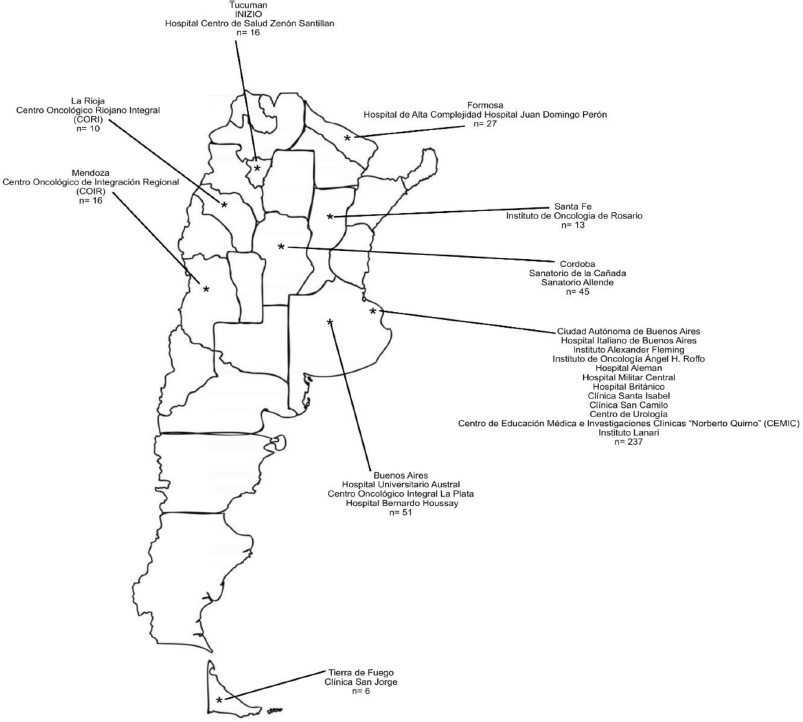
Supplementary Figure 1. Hospitals in the country that participated in the study. Geographic distribution of participating centres. Geographic distribution of the 19 participating institutions across Argentina, with the number of patients enrolled at each site (n).