Validation of the Spanish version of the shame and sigma scale for head and neck cancer survivors
Loreto Fernández-González1a, Rodrigo Lagos2b, Piero Bettoli3c, Loreto Moreira4d, Jaime Sapag5e, and David Kissane6f
1Global Institute of Psychosocial, Palliative and End of Life Care, 700 Bay Street, Suite 2303, Toronto, ON M5G 1Z6, Canada
2Center of Cognitive and Social Neuroscience, School of Psychology, Universidad Adolfo Ibáñez, Chile
3Clínica Dávila, Avenida Recoleta 464, Santiago, Chile
4Instituto Oncológico FALP, Jose Manuel Infante 805, Santiago, Chile
5Escuela de Salud Pública y Medicina Familiar, Pontificia Universidad Católica de Chile, Diagonal Paraguay 362, Santiago, Chile
6Melbourne Oncology Group, Cabrini Medical Centre, Suite 45, 181 183 Wattletree Rd, Malvern VIC 3144, Australia
ahttps://orcid.org/ 0000-0001-5026-6438
bhttps://orcid.org/0000-0002-5806-6227
chttps://orcid.org/ 0000-0002-3161-4406
dhttps://orcid.org/0000-0003-3544-3605
ehttps://orcid.org/0000-0003-2227-8233
fhttps://orcid.org/ 0000-0002-5930-4573
Abstract
Head and neck cancer (HNC) and its treatments can pose significant psychosocial challenges for survivors, including feelings of shame and stigma, which can worsen quality of life and survivorship. We aimed to test the psychometric properties of the Chilean Spanish version of the shame and stigma scale on a sample of head and neck cancer survivors.
Methods: The SSS is a 20-item self-administered questionnaire that assesses shame and stigma associated with HNC. A cross-sectional, descriptive, psychometric validation study was conducted in a private non-profit cancer centre in Santiago de Chile.
Participants were over 18 years of age who finished active treatment for HNC at any stage, were fluent in Spanish and were cognitively able to participate. Reliability was analysed using Cronbach’s alpha, and confirmatory factor analysis (CFA) was performed following the model of the original scale.
Results: A total of 120 HNC survivors participated in the study (39% women). The median age was 63 years.
The reliability analysis yielded a value of alpha = 0.92 (IC = 0.89–0.94), leading to the removal of one item to optimise internal consistency. Confirmatory factor analysis using the robust weighted least squares estimator with a one-factor structure yielded a Comparative Fit Index (CFI) of 0.984, a Root Mean Square Error of Approximation (RMSEA) of 0.098, a Standardised Root Mean Square Residual (SRMR) of 0.112 and a Tucker-Lewis Index (TLI) of 0.982. The four-factor model showed improved fit indices, with CFI = 0.997, RMSEA = 0.044, SRMR = 0.089 and TLI = 0.996, suggesting that the four-factor structure provides a better representation of the data under estimation.
Conclusion: SSS-Sp is psychometrically valid for use in a Spanish-speaking population, yielding high reliability and internal consistency. Exploring and measuring stigma and shame should be routinely performed with this population to ensure the correct management of these sources of distress.
Keywords: head and neck neoplasms, cancer, oncology, cancer survivor, shame, social stigma, speech, physical appearance, surveys and questionnaires, Chile
Correspondence to: Loreto Fernández-González
Email: loretofernandez2@gmail.com
Published: 03/11/2026
Received: 25/02/2026
Publication costs for this article were supported by ecancer (UK Charity number 1176307).
Copyright: © the authors; licensee ecancermedicalscience. This is an Open Access article distributed under the terms of the Creative Commons Attribution License (http://creativecommons.org/licenses/by/4.0), which permits unrestricted use, distribution, and reproduction in any medium, provided the original work is properly cited.
Background
The incidence of cancer has been steadily rising in recent years worldwide, a trend that is expected to continue, especially in low- and middle-income countries [1]. Head and neck cancers (HNCs) correspond to a set of neoplasms recognised in the ICD-10 between codes C00 and C14. That is, they include malignant tumours of the lip, tongue, oral cavity, larynx, pharynx and others, excluding the thyroid [1]. HNCs account for 6% of new cases diagnosed with cancer, with an estimated 650,000 new cases per year and 350,000 deaths annually. They are the 6th most frequent type of cancer worldwide [2].
Increasing rates of survival and younger onset of diagnosis due to human papillomavirus infection have resulted in growing interest in quality-of-life-related concerns both in research and clinical settings [3]. Indeed, physical and functional impairment, often irreversible, pose significant psychosocial challenges in cancer patients and survivors, and especially in this population [4]. Psychopathology is common in HNC patients and survivors, along with quality-of-life deterioration and social isolation due to stigma. It has been documented that persons with HNC have higher rates of suicide when compared to other cancer patients [5].
HNC patients and survivors are exposed to suffer important stigma because of the already charged meaning of cancer as a catastrophic disease and visible physiognomic and functional changes. Shame is also a source of distress, contributing to isolation and hiding due to disapproval of physical appearance [6]. The suffering stemming from stigma and psychosocial distress can affect key dimensions of survivorship such as return to work and resuming previous social roles [7]. The Shame and Stigma Scale (SSS-Sp) was developed to assess and identify levels of distress associated with these psychosocial issues. It has been translated and psychometrically validated into several languages; however, there was no Spanish version nor another measure for these specific constructs. Generating local evidence on these issues is crucial to implement effective survivorship care and design non-stigmatising awareness campaigns.
Thus, we aimed to test the psychometric properties of the Chilean Spanish version of the SSS-Sp on a sample of HNC survivors.
Methods
Descriptive, cross-sectional, psychometric validation study, conducted at a non-profit private cancer centre in Santiago de Chile. The protocol was approved by a research ethics board in compliance with local regulations (protocol approval number: 2019-A-01). Patients eligible to participate in this study were as follows: individuals 18 years of age or older, diagnosed with HNC stage I-IV who have completed treatment for any of the diagnoses defined by the ICD-10 as belonging to the head and neck area and fluent in Spanish. Patients with cognitive impairment or unable to provide informed consent were excluded. The study was conducted between March of 2018 and March of 2023, with an interruption of recruitment during 2020 and 2021 due to the COVID-19 pandemic. Patients were invited to participate by a healthcare provider who, after explaining the study, referred the patient to the research team. All participants signed an informed consent form and individually completed the SSS along with sociodemographic information.
Shame and Stigma Scale: The SSS is a self-administered questionnaire of 20 items consisting of statements about physical appearance and feelings of stigma and shame present during the last 7 days [6]. The scale is divided into four subscales corresponding to four factors: shame with appearance, sense of stigma, regret and social/speech concerns. Each item must be scored on a 5-point Likert scale from 0 to 4 based on frequency. The original SSS was published in 2013 in English specifically with oral cavity cancer patients and has already been translated and validated into several languages and cultural contexts since then, including other HNC tumour sites [8–11].
Validation procedures: the corresponding author of the original SSS was approached to confirm authorisation to validate the SSS in Spanish. Following the same methodology used by our team in other psychometric validations [12], the scale was then translated and back-translated into Spanish by members of the research team (LF-G and JS), reviewing discrepancies until reaching consensus. This version was validated linguistically via a pilot with three HNC care-related professionals, who suggested changes to improve its acceptability and comprehensibility. Cognitive interviews were conducted with ten patients (inclusion criteria same as mentioned) who completed the new version of the SSS. No changes were suggested, and items were deemed culturally appropriate and clinically relevant by participants. This final version of the SSS was then psychometrically tested accordingly.
Sample size and statistical analysis plan: Following the literature and previous validation projects conducted by the team, a sample size of a minimum of 100 participants (5 participants per item) was calculated. Descriptive statistics were used to characterise the sample demographically and clinically. Cronbach’s alpha was used to measure reliability, with an alpha equal to or greater than 0.70 as a high internal consistency, using the alpha function of the psych package [13] of the statistical software R, version 4.5.6 [14]. Confirmatory factor analysis (CFA) was performed following the original psychometric analysis, in which two models were evaluated: a global model (all items) and a four-factor model considering the dimensions of shame with appearance, sense of stigma, regret and social/speech concerns. Following the insightful suggestion of an anonymous reviewer, and to properly account for the ordinal and categorical nature of the items, these analyses were performed using the robust diagonally weighted least squares estimator instead of the traditional maximum likelihood method. All models were executed using the lavaan package in the R statistical software [15], with the items explicitly treated as ordered categorical variables.
Results
Description of the sample
A total of 120 HNC survivors participated in the study, including 73 men (61%) and 47 women (39%). A majority (57%) had public health insurance. In terms of tumour site, the main locations were the oral cavity (30%), larynx/hypopharynx (24%) and oropharynx (18%). The most common treatment was radiation (78%). Tumour stage information, when available, included both local (53%) and metastatic disease (47%). The sample demographics and clinical characteristics are detailed in Table 1. Continuous variables are summarised as the median with the 25th and 75th percentiles, and categorical variables are summarised as frequencies and percentages.
Psychometric properties
For the full scale, we obtained a Cronbach’s alpha value of 0.91 with a Feldt confidence interval of 0.89–0.94. Additionally, we calculated the effect of item loss on the scale (Table 2). The Appearance dimension yielded an alpha of α = 0.87 with a confidence interval of 0.82–0.90. It is important to note that the alpha value remains the same or decreases if any of the items are removed, except for item 3, where its removal results in a slight decrease in alpha.
Regarding the Stigma dimension, we obtained an alpha value of 0.85 with a confidence interval of 0.81–0.89. The alpha value remains the same or decreases if any of the five items are removed. Moving on to the Regret dimension, we obtained α = 0.71 with a confidence interval of 0.61–0.80. Notably, the alpha value decreases substantially when any item is removed.
For the Concerns dimension, the obtained alpha was α = 0.66 with a confidence interval of 0.52–0.75. The removal of item 20 led to a substantial increase in the alpha value to α = 0.80, with a confidence interval of 0.71–0.86. When item 20 was removed, the alpha for the full scale remained α = 0.92 (Table S1 in the Supplementary Material).
Confirmatory factor analysis and internal consistency
Based on the reliability analysis, item 20 was removed prior to CFA in order to improve internal consistency. Consequently, all subsequent structural and psychometric analyses were conducted exclusively on this final 19-item version of the scale. Confirmatory factor analysis with a one-factor structure yielded a Comparative Fit Index (CFI) of 0.984, a Root Mean Square Error of Approximation (RMSEA) of 0.098, a Standardised Root Mean Square Residual (SRMR) of 0.112 and a Tucker-Lewis Index (TLI) of 0.982. The four-factor model showed improved fit indices, with CFI = 0.997, RMSEA = 0.044, SRMR = 0.089 and TLI = 0.996, suggesting that the four-factor structure provides a better representation of the data (Table 3).
Table 1. Description of the sample. Continuous variables are expressed as median (P25–P75) and categorical variables as n (%).

Table 2. Cronbach’s Alpha analysis.
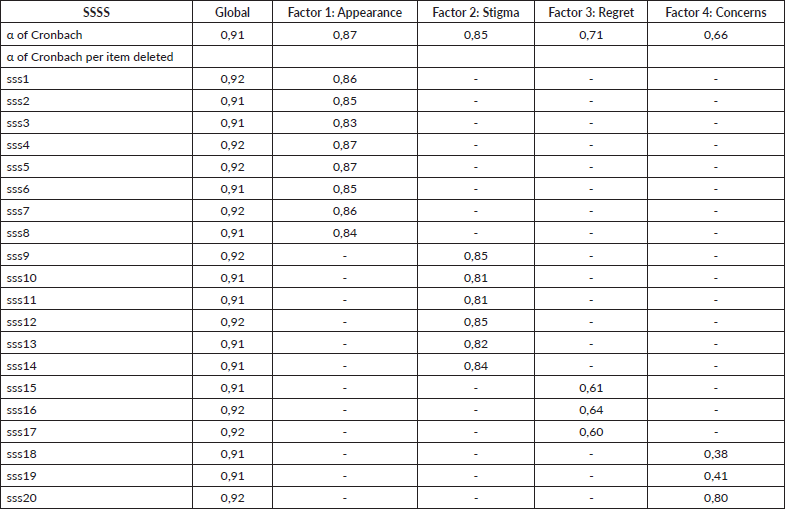
Table 3. Comparison of one-factor and four-factor confirmatory factor analysis models after item 20 removal.

A direct comparison between the one-factor and four-factor models was conducted using a chi-square difference test, as the models are nested. Results indicated that the four-factor model provided a significantly better fit to the data than the unidimensional model, as evidenced by a substantial reduction in the chi-square statistic (chi-square difference = 91.82, df difference = 6, p < 0.001). This conclusion was further supported by the substantial improvement across the global fit indices, indicating a more favourable and robust representation of the scale’s underlying structure under categorical estimation.
Taken together, these results suggest that a multidimensional structure better captures the underlying organisation of the scale than a single global factor.
For transparency, confirmatory factor analyses conducted using the full item set, including item 20, are presented in the Supplementary Material (Table S2).
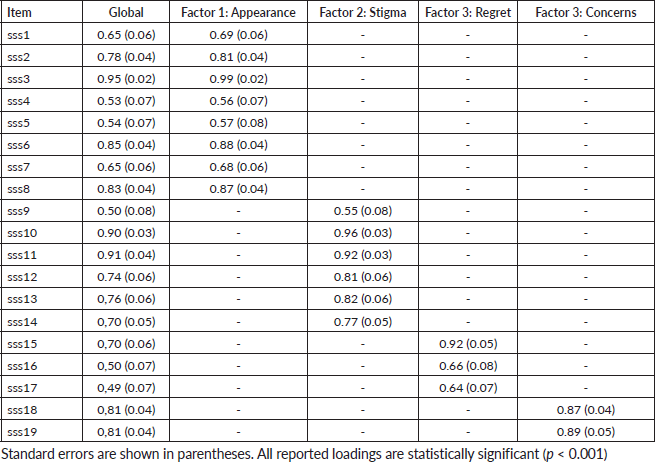
Table 4 presents the factor loadings obtained from the confirmatory factor analyses conducted on the reduced item set, excluding item 20. Loadings are reported for both the one-factor model and the four-factor model, with values in parentheses corresponding to their respective standard errors.
In the one-factor model, all items showed positive loadings on the global latent factor, with magnitudes ranging from moderate to high. For example, item sss2 showed a standardised loading of 0.78 (S.E. = 0.04), whereas item sss9 displayed a lower standardised loading of 0.50 (S.E. = 0.08), indicating variability in how strongly individual items relate to a single global construct.
In contrast, the four-factor model revealed a clearer and more differentiated pattern of loadings, where every item experienced an increase in its target factor loading compared to the unidimensional structure. Items associated with the Appearance dimension showed consistently strong loadings on their corresponding factor, such as sss2 with a standardised loading of 0.81 (S.E. = 0.04) and sss8 with a standardised loading of 0.87 (S.E. = 0.04). Similarly, items in the Stigma dimension loaded strongly on their factor, for example sss10 with a loading of 0.96 (S.E. = 0.03). Items belonging to the Regret dimension also exhibited high loadings, such as sss15 with a loading of 0.92 (S.E. = 0.05). Finally, items in the Concerns dimension demonstrated particularly strong loadings, with sss18 and sss19 showing standardised loadings of 0.87 (S.E. = 0.04) and 0.89 (S.E. = 0.05), respectively.
For transparency, factor loadings from confirmatory factor analyses conducted using the full item set, including item 20, are reported in the Supplementary Material (Table S3).
Table 4. Factor loadings for the one-factor and four-factor confirmatory factor analysis models after item 20 removal.
Discussion
Stigma and shame are main psychosocial stressors for HNC patients and survivors. Though all cancer patients and survivors are at risk of a deterioration in their quality of life, either transitory or permanent, HNC poses its specific set of psychosocial challenges [5]. Notwithstanding, the lack of validated instruments to measure stigma in the Spanish-speaking population has been a barrier to better understanding their experience and distress.
Our translation and psychometric validation of the SSS-Sp with Chilean HNC survivors into Spanish is a contribution for both clinicians and researchers who hope to study and support these people and their loved ones. Our meticulous study, ensuring a sufficient sample with diverse clinical and demographic characteristics, analysed through standard psychometric validation, yielded a measure with strong psychometric properties that can be added to the other languages into which this scale has been translated and validated in the past two decades.
In Spanish, this scale can be used as a complement to other measures already validated and available for this population, mainly quality of life. While our own had studied other important outcomes in HNC in our patients, like return to work, we have mostly used exploratory designs that are hard to extrapolate to other populations [7]. We hope that the SSS-Spanish will add to the arsenal of validated measures to study different aspects of the HNC lived experience.
Importantly, we are not reporting the results of the sample of this study in terms of their own shame and stigma, as the sample size and composition were designed for a psychometric study and not a clinical or prevalence study. Given the heterogeneity of treatments and primary tumour sites, our sample is insufficient to perform a comparison of groups or subgroups with high statistical power.
Like all studies, ours has strengths and limitations. We were able to gather a relatively large sample size for a type of cancer that is not highly prevalent, unlike other tumour locations. Our decision to capture the diverse range of tumour sites that are included under the umbrella of HNC diagnoses yielded positive results in terms of the psychometric strength of the SSS-Spanish version. This means that the scale is able to measure the different dimensions relative to the experience of stigma and shame in HNC, despite the anatomical and treatment variations that HNC encompasses.
Among the limitations of our study, the sample was recruited over a significant length of time, including a hiatus due to the COVID-19 pandemic. This might be considered a weakness of the study. However, the original version of the SSS was also validated with a sample collected over years of recruitment, which attests to the difficulty inherent in studying this population. Additionally, this allowed us to gather a decent sample size. Another limitation of our study is the missing data, especially for the cancer staging of the participants. We acknowledge this as a serious limitation, which is also a local problem in Chile and the region [16,17]. While we tried several strategies to search for the missing data, we decided to openly report it as missing instead of sacrificing the sample size by excluding those participants with no data on tumour stage.
Future research should describe the prevalence and characteristics of shame and stigma among HNC patients and survivors as a crucial psychosocial outcome that impacts their quality of life and mental health. Longitudinal studies are also needed to observe the variation in time of these issues, and prospective studies should be developed to capture changes over time and compare treatment modalities and their psychosocial impact.
Conclusion
The Spanish version of the SSS is psychometrically valid for use in a Spanish-speaking population. The SSS-Spanish version possesses high reliability and internal consistency and maintains the four-factor model of the original English version. Patients and survivors of HNC can use this self-administered, 19-item scale to express their feelings of stigma and shame as a consequence of the HNC diagnosis. Exploring and measuring stigma and shame should be routinely performed with this population to ensure the correct management of these sources of distress.
Conflicts of interest
The authors of the manuscript have no conflicts of interest.
Funding
None.
References
1. Cárcamo M (2018) Epidemiología y generalidades del tumor de cabeza y cuello Revista Médica Clínica Las Condes 29(4) 388–96 https://doi.org/10.1016/j.rmclc.2018.06.009
2. Carvajal VF, Cardemil MF, and Vásquez BP, et al (2024) Epidemiological and clinical description of patients with oropharyngeal cancer treated in a public oncology referral hospital in Chile ecancermedicalscience 18 1685 https://doi.org/10.3332/ecancer.2024.1685
3. Singer S, Amdal CD, and Hammerlid E, et al (2019) International validation of the revised European Organisation for Research and Treatment of Cancer Head and Neck Cancer Module, the EORTC QLQ‐HN43: phase IV Head Neck 41(6) 1725–37 https://doi.org/10.1002/hed.25609 PMID: 30636188
4. Bergerot C, Jacobsen PB, and Rosa WE, et al (2024) Global unmet psychosocial needs in cancer care: health policy EClinicalMedicine 78 https://doi.org/10.1016/j.eclinm.2024.102942 PMCID: 11615525
5. Breitbart W, Butow P, and Jacobsen P, et al (2021) Psycho-oncology (Oxford:Oxford University Press)
6. Kissane DW, Patel SG, and Baser RE, et al (2013) Preliminary evaluation of the reliability and validity of the Shame and Stigma Scale in head and neck cancer Head Neck 35(2) 172–83 https://doi.org/10.1002/hed.22943
7. Mimica X, González LF, and Sapunar J, et al (2025) Return to work in head and neck cancer survivors: an exploratory multimethod study at a cancer centre in Santiago, Chile ecancermedicalscience 19 1847 PMID: 40259912 PMCID: 12010127
8. Tseng WT, Lee Y, and Hung CF, et al (2019) Validation of the chinese version of the shame and stigma scale in patients with head and neck cancer Cancer Management and Research 11 10297–305 https://doi.org/10.2147/CMAR.S228843 PMID: 31849519 PMCID: 6910087
9. Goyal AK, Bakshi J, and Panda NK, et al (2021) Translation and validation of shame and stigma scale for head and neck cancer into the Hindi language J Maxillofac Oral Surg 20(4) 1–4 https://doi.org/10.1007/s12663-021-01588-z
10. Mangoulia P, Baizanis N, and Christodoulou C, et al (2020) The shame and stigma scale in head and neck cancer (SSS): translation and validation in Greek J Commun Med 3(1) 1020
11. Pirola WE, Paiva BS, and Barroso EM, et al (2017) Translation and cultural adaptation of the Shame and Stigma Scale (SSS) into Portuguese (Brazil) to evaluate patients with head and neck cancer Brazil J Otorhinolaryngol 83(6) 697–704 https://doi.org/10.1016/j.bjorl.2016.10.005
12. Fernández-González L, Russo NM, and Lagos R, et al (2021) Validación de la Escala de Muerte y Angustia al Morir (DADDS-Sp) en una población con cáncer avanzado en Chile ecancer 15 1326
13. Revelle, W (2026) psych: Procedures for psychological, psychometric, and personality research (R package version 2.6.1) [Computer software] (Evanston: Northwestern University) [
14. R Core Team (2024) R: A language and environment for statistical computing (Vienna: R Foundation for Statistical Computing) [https://www.R-project.org/]
15. lavaan, RY (2012) An R Package for Structural Equation Modeling J Stat Softw 48(2) 1–36 https://doi.org/10.18637/jss.v048.i02
16. Madariaga B, Mondschein S, and Torres S (2024) Breast cancer trends in Chile: Incidence and mortality rates (2007–2018) PLOS Global Public Health 4(6) e0001322
17. Taramasco C, Rimassa C, and Acevedo J (2024) Challenges in the surveillance of all cancer cases in Chile: The National Cancer Registry Medwave 24(1), e2771
Suplementary material
Reliability analyses of the reduced scale
Table S1 presents the Cronbach alpha coefficients for the global scale and each subscale, as well as the results of item deletion analyses conducted after the removal of item 20. At the scale level, internal consistency was high (alpha = 0.92), indicating excellent overall reliability. Subscale-level analyses also showed adequate to good internal consistency, with alpha values of 0.87 for Appearance, 0.85 for Stigma, 0.71 for Regret and 0.80 for Concerns.
Item deletion analyses revealed that the removal of any individual item did not lead to an improvement in the overall reliability of the scale. Across all dimensions, deleting any of the remaining items resulted in either no change or a reduction in the Cronbach’s alpha coefficient, suggesting that each item contributes positively to the internal consistency of its respective subscale.
Table S1. Cronbach alpha coefficients for the global scale and each subscale after item 20 removal, including item deletion analyses.

At the subscale level, the Appearance and Stigma dimensions showed stable alpha values across item deletions, indicating a robust internal structure. In contrast, the Regret dimension exhibited lower alpha values when individual items were removed, reflecting a greater sensitivity to item loss and suggesting that all items are important for maintaining acceptable reliability in this subscale. A similar pattern, though less pronounced, was observed for the Concerns dimension, where item deletion consistently reduced the alpha coefficient.
Taken together, these results support the internal consistency of the reduced version of the scale and justify the retention of all remaining items following the exclusion of item 20.
Confirmatory factor analysis of the full scale
As a complementary analysis, confirmatory factor analyses were conducted on the full version of the scale including all 20 items. Two competing models were evaluated: a one-factor model representing a single global construct and a four-factor model corresponding to the theorised multidimensional structure. At the level of absolute fit, the one-factor model yielded a CFI of 0.983, a TLI of 0.981 and a RMSEA of 0.096. The four-factor model showed a CFI of 0.996, a TLI of 0.995 and an RMSEA of 0.050, indicating that neither model achieved optimal absolute fit when all items were retained.
A direct comparison between the one-factor and four-factor models was performed using a chi-square difference test, as the models are nested. Results indicated that the four-factor model provided a significantly better fit to the data than the unidimensional model. Specifically, the four-factor model showed a lower chi-square value (chi-square = 209,49) compared to the one-factor model (chi-square = 342,66), with a statistically significant chi-square difference of 90,03 (df difference = 6, p =2.2e–16).
As a complementary analysis, these results mirror those obtained for the reduced item set, suggesting that the relative advantage of the four-factor structure is stable across item specifications and does not depend on the exclusion of item 20.
Supplementary factor loadings for the full item set
Table S3 reports the factor loadings obtained from confirmatory factor analyses conducted on the full version of the scale, including all 20 items. These analyses are presented for completeness and to allow direct comparison with the results reported in the main text, which are based on the reduced version of the scale after the exclusion of item 20.
Overall, the pattern of factor loadings in the full model closely resembles that observed in the reduced model. Most items show moderate to strong loadings on their theoretically expected factors, both in the one-factor model and in the four-factor model, supporting the general coherence of the proposed dimensional structure.
Table S2. Comparison of confirmatory factor analysis models for the full scale including all 20 items. The four-factor model shows improved fit relative to the one-factor model, supporting the multidimensional structure of the scale.

Notably, item 20 displays relatively low loadings across models. In the one-factor model, item 20 shows a standardised loading of 0.43, indicating a weak association with the global latent construct. Similarly, in the four-factor model, item 20 loads weakly on the Concerns factor, with a standardised loading of 0.47, which is substantially lower than the loadings observed for the other items in this dimension. This pattern is consistent with the reliability analyses reported in the main text and supports the decision to exclude item 20 from the primary analyses.
Taken together, these supplementary results indicate that while the overall factor structure is preserved when all items are retained, item 20 contributes less strongly to its intended dimension, providing convergent evidence for its removal in the final version of the scale.
Table S3. Factor loadings for the one-factor and four-factor confirmatory factor analysis models based on the full item set including all 20 items.