Introduction: High dose rate (HDR) brachytherapy is a promising therapeutic approach for localised prostate cancer. Optimised treatment plans have been shown to improve disease control and reduce toxicity on the organs-at-risk (OAR).
Aim: To report findings from the treatment plan parameters (TPPs) obtained from two different HDR brachytherapy treatment regimens at the University College Hospital, Ibadan Nigeria.
Methods: The treatment plans of 90 patients, who had HDR brachytherapy to the prostate gland between August 2020 and October 2023 were considered. All were treated with Bebig Saginova machine, housing Cobalt-60 source, the first multi-channel unit in the country then. 44% of patients received dose of 18 Gy in 2 fractions (category A), while the remaining received 27 Gy in 2 fractions (category B). Treatment plans were generated on the Sagiplan 2.0 treatment planning system from Eckert & Ziegler, BEBIG and relevant TPP were extracted and analysed using IBM SPSS 27.
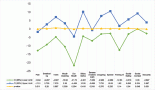
Results: The mean age(years) of patients in Categories A and B were 65.3 ± 6.59 and 66.5 ± 5.32, respectively; their gleason score and prostate-specific-antigen were (7 ± 1; and 7 ± 1) and (12.83 ± 16.32; and 12 ± 17 ng/mL), respectively. The mean volume (cm3) of prostate volume (PVol.) for both categories were 46 ± 21 and 31 ± 8, respectively. The paired t-test performed on TPP from patients in both categories was statistically significant (p < 0.005), except their age (p < 0.873) and dose homogeneity index (p < 0.639). Also, the regression analysis showed that V100 is statistically dependent (p < 0.05) on Total Reference Air Kerma, conformal index, Rectum D10 and PVol. in both categories.
Conclusion: Although, some level of optimal dose coverage around the prostate gland was achieved for some of the patients, especially those in Category B, there is still room for improvement to minimise the dose to OAR.