Background: Post-mastectomy radiotherapy (PMRT) significantly reduces loco-regional recurrence and improves survival in breast cancer patients with node-positive or high-risk disease. The UK START trials established 40 Gy in 15 fractions as a safe and effective alternative to 50 Gy/25. The FAST-Forward trial later demonstrated non-inferiority of 26 Gy in 5 fractions, but only a minority of participants had undergone mastectomy. Limited prospective data exist for ultra-hypofractionated PMRT, particularly in the Indian setting, where shorter regimens could reduce patient and system burden.
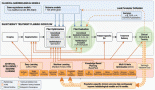
Methods: This prospective randomised study enrolled 50 women with stage II–IIIA invasive breast cancer treated with modified radical mastectomy. Patients were randomised equally to receive PMRT as either 40 Gy in 15 fractions (Group A) or 26 Gy in 5 fractions (Group B). CT-based planning was performed using 3D conformal radiotherapy or volumetric-modulated arc therapy techniques, with the deep inspiration breath hold (DIBH) technique implemented for left-sided cases to minimise cardiac dose.
Results: Baseline demographics were balanced, though Group B had more left-sided tumours (68% versus 40%) and fewer node-positive cases (44% versus 72%). Both regimens achieved excellent planning target volume coverage (>95%). Ultra-hypofractionation (26 Gy/5) yielded lower ipsilateral lung exposure (V30 = 17% versus Group A V20 = 27%), reduced contralateral lung (300 versus 384 cGy), contralateral breast (247 versus 320 cGy) and spinal cord dose (938 versus 2,206 cGy). Mean heart dose was slightly higher in Group B (275 versus 181 cGy), but no patient exceeded a mean heart dose of 6 Gy, and all had V 25% <5%, consistent with international tolerance thresholds. Acute toxicity was minimal in both arms, limited to Grade 1 dermatitis; no Grade ≥2 toxicity was observed. At 6 months, all patients were alive and disease-free.
Conclusion: Ultra-hypofractionated PMRT (26 Gy/5) is feasible, well-tolerated and dosimetrically advantageous for lungs, contralateral breast and spinal cord. Incorporating DIBH ensures safe heart sparing in left-sided disease. A longer follow-up is warranted to validate late toxicity and survival outcomes.