Introduction: Public health emergencies and crises such as the current COVID-19 pandemic can accelerate innovation and place renewed focus on the value of health interventions. Capturing important lessons learnt, both positive and negative, is vital. We aimed to document the perceived positive changes (silver linings) in cancer care that emerged during the COVID-19 pandemic and identify challenges that may limit their long-term adoption.
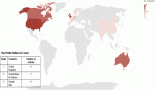
Methods: This study employed a qualitative design. Semi-structured interviews (n = 20) were conducted with key opinion leaders from 14 countries. The participants were predominantly members of the International COVID-19 and Cancer Taskforce, who convened in March 2020 to address delivery of cancer care in the context of the pandemic. The Framework Method was employed to analyse the positive changes of the pandemic with corresponding challenges to their maintenance post-pandemic.
Results: Ten themes of positive changes were identified which included: value in cancer care, digital communication, convenience, inclusivity and cooperation, decentralisation of cancer care, acceleration of policy change, human interactions, hygiene practices, health awareness and promotion and systems improvement. Impediments to the scale-up of these positive changes included resource disparities and variation in legal frameworks across regions. Barriers were largely attributed to behaviours and attitudes of stakeholders.
Conclusion: The COVID-19 pandemic has led to important value-based innovations and changes for better cancer care across different health systems. The challenges to maintaining/implementing these changes vary by setting. Efforts are needed to implement improved elements of care that evolved during the pandemic.