Sacituzumab govitecan improves PFS in first-line metastatic TNBC patients unable to receive PD-(L)1 inhibitors
20 Oct 2025

The content on this site is intended for healthcare professionals only
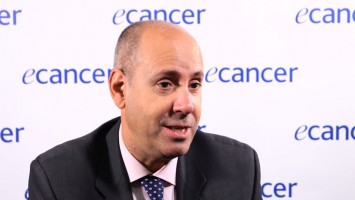
Dr Shapiro discusses the novel drug combination, when given sequentially, sapacitabine and seliciclib and their elicit antitumour effects in patients with incurable BRCA-deficient cancers during a press conference at the 2013 AACR Annual Meeting.
The phase I study was designed to exploit preclinical results that suggested that sapacitabine and seliciclib worked together synergistically. Sapacitabine is an oral nucleoside analogue that induces single-strand damage to DNA. If the damaged DNA is not repaired, it ultimately results in cell death. Repair of sapacitabine-induced DNA damage requires BRCA proteins, suggesting that BRCA-deficient cancers may be particularly sensitive.
Sacituzumab govitecan improves PFS in first-line metastatic TNBC patients unable to receive PD-(L)1 inhibitors
Breast cancer survivorship

Targeted therapies associated with increased risk for and incidence of thrombosis in the treatment of breast cancer

ESMO and WCLC: Latest developments in EGFR mutated NSCLC

New NK-1 inhibitor HR20013 shows promising results in preventing chemotherapy-induced nausea and vomiting in NSCLC patients

Advancements in paediatric Acute lymphoblastic leukemia management

ESMO 2024: Highlights and analysis

ESMO 2024: Latest in EGFR mutated NSCLC

Trastuzumab deruxtecan effective against brain metastases in HER2-positive breast cancer
