ASCO 2026: Latest updates in mRCC
30 May 2026

The content on this site is intended for healthcare professionals only
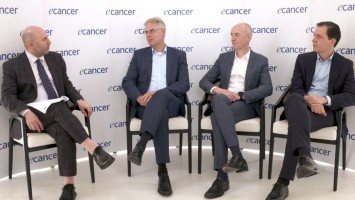
Prof Alison Birtle (Rosemere Cancer Centre, Lancashire Teaching Hospitals, Preston, UK), Dr Ignacio Duran (Hospital Universitario Marqués de Valdecilla, Santander, Spain), Prof Axel Merseburger (Universitätsklinikum Schleswig-Holstein, Lübeck, Germany), Dr José Domínguez-Escrig (Fundación Instituto Valenciano de Oncología, Valencia, Spain) and Prof Morgan Rouprêt (Pitié-Salpétrière Hospital, Paris, France) discuss bladder cancer updates from the second half of 2026.
The panel reviews emerging evidence on perioperative treatment for muscle-invasive bladder cancer (MIBC), considering whether chemo-immunotherapy remains the preferred approach and how recent clinical trial findings could change treatment strategies. The experts also explore new approaches for advanced bladder cancer, discussing whether further treatment intensification can improve outcomes or whether new therapeutic options are needed.
The discussion also examines the growing role of biomarkers and individual patient factors in personalising bladder cancer management, including how these may help guide treatment selection and identify patients most likely to benefit from specific approaches.
| Thinking outside the box | |
| Reinventing perioperative treatment in MIBC in 2026: Is chemo-immunotherapy over in this clinical context? | |
| New approaches in the advanced disease setting: Is more better, or are new drugs needed? | |
| Personalising treatment: The value of biomarkers and patient factors in managing patients with bladder cancer | |
| Take home messages | |
ASCO 2026: Latest updates in mRCC
ASCO GU 2026: Updates in renal cancer

ASCO GU 2026: Updates in bladder cancer

Best practice in precision medicine for prostate cancer

Key insights from lung cancer research at ASCO 2025

ASCO 2025: Importance of early testing in metastatic prostate cancer
New MOAs in prostate cancer treatment - what’s next?

ELCC 2025: Latest in EGFR positive NSCLC

Bone-protective agents given with enzalutamide with or without radium-223 show greater survival benefits in mCRPC
