ASCO 2025: Importance of early testing in metastatic prostate cancer
3 Jun 2025

The content on this site is intended for healthcare professionals only
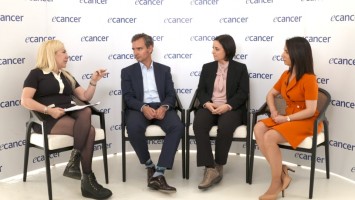
Dr Toni Choueiri (Dana-Farber Cancer Institute, Boston, USA), Prof Viktor Grünwald (University Hospital Essen, Essen, Germany), Dr Martin Voss (Memorial Sloan Kettering Cancer Center, New York, USA) and Prof Jens Bedke (Klinikum Stuttgart-Katharinenhospital, Stuttgart, Germany) share key highlights and real-world perspectives on the latest advances in metastatic renal cell carcinoma (mRCC) presented at ASCO 2026.
The panel explores emerging treatment strategies, including the RADICAL trial evaluating radium-223 plus cabozantinib for patients with bone metastases, and updates from the phase 3 CLEAR trial.
They also discuss important quality-of-life findings and body composition data from the LenCabo study, comparing lenvatinib plus everolimus with cabozantinib after PD-1 inhibitor progression.
Beyond treatment, the conversation highlights the growing role of innovation in patient care covering artificial intelligence-driven biomarkers such as vessel branching patterns, and the use of circulating tumour DNA to better understand disease progression and personalise risk assessment.
Bringing together clinical evidence and practical insights, this discussion reflects how rapidly evolving science is shaping more precise and patient-centred care in advanced kidney cancer.
| A phase 2 randomized trial of radium-223 dichloride and cabozantinib in patients (pts) with renal cell carcinoma (CC) with bone metastases (BM): RADICAL (Alliance A031801 | |
| Efficacy outcomes by patterns of progression in patients with advanced renal cell carcinoma from the phase 3 CLEAR trial | |
| Vessel branching patterns quantified by artificial intelligence as a novel prognostic biomarker in advanced renal cell carcinoma: A post-hoc analysis of the CM914 trial | |
| Body composition and quality of life (QOL) with lenvatinib + everolimus (len + eve) versus cabozantinib (cabo) in metastatic clear cell renal cell carcinoma (ccRCC) after PD-1 inhibitor progression: Results from the randomized phase I LenCabo trial | |
| What does the future look like? |
ASCO 2026: Latest updates in mRCC
Dr Toni Choueiri – Dana-Farber Cancer Institute, Boston, USA
Prof Viktor Grünwald – University Hospital Essen, Essen, Germany
Dr Martin Voss – Memorial Sloan Kettering Cancer Center, New York, USA
Prof Jens Bedke – Klinikum Stuttgart-Katharinenhospital, Stuttgart, Germany
TC: Hi, Toni Choueiri from the Dana-Farber Cancer Institute, but today I’m in the middle of ASCO 2026 in Chicago. A lot of beautiful abstracts in kidney cancer – over a hundred abstracts that we’re going to discuss here with three of my friends, colleagues: Dr Martin Voss from Memorial Sloan Kettering in New York, Dr Viktor Grünwald from the University of Essen and Dr Jans Bedke, the only urologist here, from Stuttgart Hospital. So I’m going to start with you, Martin, you did a wonderful discussion for the first trial ever in kidney cancer to focus solely on bone metastases: RADICAL presented by Dr McKay from Alliance. The study was negative but I think you saw hope in what we did. What do you think overall, if you can summarise this trial and think about the next trial in this? Because we proved that these studies can be done.
MV: Yes, great. Thank you Toni. So I’m happy to talk about that. So RADICAL was presented yesterday at the oral kidney and bladder session by Dr McKay and was a study, a randomised phase II trial, that ran through the cooperative groups with a dedicated clinical scenario in an area of high clinical need and that is patients with bony metastases at risk for symptomatic deterioration from their bone mets. It was looking at the comparison of cabozantinib, the standard agent that we use day to day in practice that has well-established clinical benefit, not only in controlling systemic disease but also in osseous metastases, and the addition of radium-223 to that. So patients were randomised to receive either of the two and there are a couple of important nuances that Dr McKay shared with us. Like you said, this was a negative study so the trial had a primary endpoint of symptomatic skeletal related events, so freedom from those events was compared between the two groups. The study closed after a pre-planned futility analysis that was done after an initial 50 events came out to not suggest benefit for the combination. So the study would have enrolled more patients but stopped enrolling after 98 patients.
What we saw was very interesting in that by hazard ratio there was no benefit to adding the radium to cabozantinib in preventing symptomatic skeletal-related events but there is somewhat of a signal still. So if you look at the hazard ratios in comparing those events then there seems to be benefit that comes out later in the game. So there’s a crossing of the curves that happens after about a year or so where patients that are on treatment longer seem to have less symptomatic skeletal events on the combination arm where early on there seemed to be a detriment. If you look at PFS and OS analyses then there’s a similar crossing of the curves which is very intriguing in the overall survival analysis. What that tells me is that although the study was negative and closed early, there is probably a group of patients who do benefit from a bone-targeted strategy like this. The study was pretty liberal in who they allowed entry so there are patients that may have had a single bone metastasis and some patients with a high burden of osseous metastatic disease. I think looking at that in the future will be very interesting.
So you asked what can RADICAL teach us or what is it that I think should happen in this space in the future, I do think this was an incredibly important study because it was the first, like you said, to address this area of high clinical need. It was also the first randomised trial of a radiopharmaceutical in the metastatic setting in kidney cancer. I think it opens a lot of doors for us moving forward. It was important to see that a study like that can be done, it was an investigator initiated trial that took a lot of group effort to pull off but it showed it is possible. We have a lot of radioligands coming and I think the osseous metastatic space remains of high interest to strategies like that. I do think that modern radiopharmaceuticals should be tested in that space and I do think if there were a change to be made then it might be relevant to narrow down a little bit on the burden of bony metastases, who goes on trial, and hopefully we’d see more benefit for these patients.
TC: Yes, we hope so. This was a labour of love. When Dr McKay was a post-doc at our place, one thing we missed on working on is the bone tumour microenvironment, like our breast cancer colleagues, although it’s an area extremely hard, we don’t have the right model and the biopsies will be hard. But still to be determined. At least we did the first study. Viktor, congratulations also. You have been the past several years involved with the story of pattern of progression and depth of response in multiple phase III trials. I was really happy to see CLEAR, which is the standard of pembro/len in first line RCC, or one of the important standards actually, that the regime was the longest PFS and highest response rate. So what did you think about patterns of progression overall? Is it to inform sequential therapy or to pick pembro/len over others? How is that work going to inform practice?
VG: I think it’s really an analysis we did really to inform the physicians, the clinicians, on the type of progression on the CT scan. You can get more out of that CT scan than just simply framing it progressive disease and now you have to change. When we first looked into the CLEAR study what we observed is that patients that lose responsiveness to len/pem, they still have a lower tumour burden than initially when they started the study. That made us really think how does it really impact on the post-trial survival. What we have seen is when we looked into the degrees of the tumour shrinkage between baseline and the time of progression, it informed survival, it was prognostic. Then we also looked in the type of progression, meaning patients that have only growing diseases that have been pre-existing lesions, novel lesions or growth of both actually. So the highest risk was in those that have new lesions and the growth of pre-existing lesions and it also informs prognosis in patients. It really translated into post-treatment survival differences. So you can have a pattern where that gives you different outcomes, so you have the best outcome with a low-risk progression type of pattern. That’s something that is informative when you really counsel patients.
TC: Yes, or actually when you plan especially second-line trials specifically after pembro/len and maybe stratification by pattern of progression, time on prior pembro/len etc. Because it’s just the regimen now used by many, many because of this PFS close to two years.
I’m going to move to biomarker, Jens, and you’ve been involved with a lot of biomarker projects here in, I know an area dear to your heart, the adjuvant setting. So CheckMate 914 was negative and I think it was negative because six months is not enough but we can debate that. Now how to salvage this trial and show where should we use what drug and what concept. Interesting to see this vessel branching pattern abstract by AI. Half of the slides I’ve seen in the educational session are AI, so at least this is a valid AI point here. I am not familiar with this type of work.
JB: No, I think Toni, it’s exactly what you say – you have a lot of adjuvant trials which have been performed and we all know that many of these have been negative. It is, of course, of importance to explore them – are there any potential biomarkers to differentiate the different subgroups of patients having been treated? For CheckMate 914 I agree with the six months of treatment which may have been too short but we could debate that there are other factors in that. So, just to remind you, CheckMate 914 was an adjuvant trial using the combination of ipilimumab and nivolumab compared to placebo and a third arm of nivolumab. In this analysis, by dedicated pathological analysis the vessel branching was analysed. As you mentioned, the artificial intelligence established patterns of high-branching vessels compared to low-branching vessels. The interesting result here is that in addition to the pathological classification of the TNM system, which was widely used in the adjuvant setting, an additional aspect of pathological evaluation was added here and the trial results on this retrospective exploratory analysis demonstrated that the high-branching vessels seem to be associated with an improved prognosis and improved DFS in this setting. Unfortunately, while it’s retrospective I don’t know if this will enter the clinics. They combined in their analysis the results of the vessel branching, the high vessel branching, together with the different risk categories based on the TNM classification originally designed within the trial. The C-index which formed the combination of this was round about 0.6 so it’s not like a rocket increase here at this point.
TC: I would think if you had high branching you’re more likely to spread, metastasise, and just it will be worse.
JB: I think, Toni, the high branching… what is the high branching? So the high branching is a higher oxygen supply within the tumour tissue and we know that slow-growing tumours have time for the vessel development. In contrast to fast growing and more aggressive tumours that often have a higher fraction of tumour necrosis. So the tumour necrosis as a sign of lower vessel branching, lower vessel density at the end, might be a translational explanation for that but it’s just speculation of course.
TC: So it’s an association rather than causation, the chicken before the egg or the egg before the chicken.
VG: I think it’s the phenotype. I think what you capture is really biology. So when we did this analysis we were looking into patterns of this vessel sprouting and we used H&E staining, it’s nothing fancy. So the high vessel branching is really associated with a poor angiogenic phenotype at the end. So it’s mirroring what we have done with RNA analysis but it’s really more simple, it’s less costly, it’s affordable, so that’s the way forward really, to explore how that really predicts outcome in our treatments.
TC: I think also ctDNA are getting better and better. KIM-1 is a test that whatever you throw at it’s prognostic and it’s easier, probably cheaper. So we’ll see how that goes with this. But I think you’re right, that’s capturing biology more than anything else. There’s one abstract, actually, that didn’t get a lot of noise but I think it’s extremely important. At ESMO published concomitantly in Annals of Oncology, a small randomised phase II from MD Anderson showing that combining lenvatinib and everolimus is superior to cabozantinib, but in terms of progression free survival, response rate, not overall survival, but at the price of toxicity. Here there’s a subsequent analysis from it that shows that actually this is a bit more complicated because that doublet regimen induces sarcopenia potentially and sarcopenia is something that is associated with a worse prognosis in general in cancer. Maybe, Martin, what do you think? Does that dampen your enthusiasm to use lenvatinib/everolimus?
MV: I think it goes into the decision whether or not to use lenvatinib/everolimus. So I think that len/cabo trial showed a very tangible increase in efficacy for the combination over cabozantinib in the second- and third-line setting. That was about 90 patients so it’s not a huge trial, 40-50 patients in each arm, but it was, like you said, from the primary presentation and the publication in Annals of Oncology already, clear that the combination as we al know is more toxic. So I think this has the benefits of investigator initiated trial – they went the extra mile and they looked at other aspects that may talk to tolerance and in this abstract they look at two things, they look at quality of life as a patient-reported outcome and they look at body composition and specifically change in body composition, which I think is very interesting.
So the quality of life analysis, as far as we know from the abstract, I guess we’ll see the details then at the session, was inconclusive but by observation favoured the single agent arm. So would argue the same thing – more toxicity may be a trend towards worse quality of life with the combination. Then secondly, in looking at the body composition they looked at the probability of actually increasing your body mass index from start to month 4. I don’t know exactly what their rationale was but I would think that they probably were trying to show us if there is benefit - you don’t lose body mass index, you may actually even gain it. What they show in the abstract is that it was significantly less likely for the patients on the combination to increase their BMI from baseline to month 4. Then they show in a table that the numbers actually do go down to a greater extent on the combination arm than they do with cabozantinib alone. They show the same thing as you said for skeletal muscle indices, so there is a trend towards losing not only body mass but muscle mass, and they show the same thing for subcutaneous adipose tissue. That’s all imaging based, so they use, again, some AI tool, I suspect, to process the imaging studies. But it sends an important message that says, yes, there’s toxicity and that toxicity has a tangible effect on metabolism and on the calorie processing and so forth.
So I do think it should go into decision making. I wouldn’t give that combination to just anyone just because the study showed that it was more active. So you would cautiously select patients that we think need more aggressive therapy with understanding that not only is it more toxic but it also has that effect. Would I choose someone who has tumour cachexia? I don’t know, I’m curious what you think, because maybe they really need aggressive therapy to overcome it and maybe that signal gets lost in the noise.
TC: Yes, it’s interesting. The question is is this regimen ever going to be used now that lenvatinib with pembro first line, len plus bel is coming, when are you going to use it? And if you use len, let’s say you’re sixth, seventh line, and you used it before, are you going to do len/everolimus or single agent everolimus that has a response rate less than 5%? I don’t know but I’m going to monitor the patient. The problem is how am I going to intervene? Exercise? Give them protein when the nephrologist said, ‘You can’t have protein, you have one kidney’? I don’t know. But, Viktor, more I think here the patients don’t spend a lot of time – 15 versus 10 months – but imagine if they’re on len/pembro first line, spend PFS two years. Do you think we can go back to CLEAR and look at obesity and sarcopenia inducing compared to sunitinib, here you have a control arm? Will that be a good idea?
VG: It would be an excellent idea. I think it’s really informative to get all these details out of those studies so that we have something to really discuss with the patients and get it really right for individual patients, not only looking at PFS and median and discuss these kinds of things, so outcome after three, four, five years of [?? 17:30]. It’s a very good suggestion actually.
TC: It’s a TKI effect, it’s not an IO effect, but that’s something maybe Jens you need to look at in CheckMate 914.
JB: Maybe, maybe not, but I think the results remind us of the balance of efficacy and the treatment quality of life under the treatment. When we discussed it at the ESMO we just focussed on the efficacy and now we’ve got the additional information for the impairment, let’s say, of life, the sarcopenia from this len/cabo analysis. We’re relating that to the adjuvant trials, they are all TKI-free, so just mentioning that. If we assume that this is a TKI effect, maybe it would be of interest to have a look at the HIF2α inhibitors. You mentioned the len/pembro in first line, in my mind was what about would this be the same effect of len/bel in the second line from LITESPARK-011? We also have a very increased efficacy in that setting of the combination of len/bel. What about the sarcopenia here, is that at the same extent that’s observed in len/cabo? How would the balance be here?
TC: Well bel and HIF2 inhibitors actually reverse sarcopenia and make you gain weight with an effect on PTHrP as long as the tumour is VHL and HIF2 driven. That’s work from actually Bill Kaelin himself, so that’s another potential indication – patients gaining weight. So we are up to finish but I want to thank you all. Thank you so much.
ASCO 2025: Importance of early testing in metastatic prostate cancer
New MOAs in prostate cancer treatment - what’s next?

Comment: Trial updates from GALAXIES Lung-201 and RELATIVITY-104 in NSCLC

Understanding the use of PARPi combinations to treat patients with mCRPC

ESMO 2024: Optimising the personalisation of prostate cancer treatment
