Exploring factors impacting quality of life in breast cancer patients undergoing adjuvant hormone therapy: insights from a cohort in northeastern Morocco
Hafssa El Hilali1, Nassiba Bahra2, Sanae Guennouni3, Chaymae Chbihi1, Samia El Hakym1, Diango Keita1, Sara Nejjari1, Abir Oufrid1, Oumaima Siyouri1, Lamiae Amaadour1,3,4, Karima Oualla1,3,4, Zineb Benbrahim1,3,4, Touria Bouhafa3,4,5, Nawfel Mellas1,3,4, Samira El Fakir2,3,4 and Samia Arifi1,3,4
1Department of Medical Oncology, Hassan II University Hospital, Fez 30000, Morocco
2Department of Epidemiology and Public Health, Faculty of Medicine, Pharmacy and Dental Medicine of Fez, Fez 30000, Morocco
3Faculty of Medicine, Pharmacy and Dental Medicine of Fez, Fez 30000, Morocco
4University of Sidi Mohamed Ben Abdellah, Fez 30000, Morocco
5Department of Radiotherapy, Hassan II University Hospital, Fez 30000, Morocco
Abstract
Purpose: Considering that the recommended duration of adjuvant hormone therapy in localised breast cancer is at least 5 years, it becomes crucial to investigate the quality of life (QOL) of these patients and the factors influencing it.
Objectives: To assess the QOL and identify factors impacting it in patients with localised hormone-sensitive breast cancer receiving adjuvant hormone therapy.
Methods: We surveyed 335 patients with localised hormone-sensitive breast cancer undergoing adjuvant hormone therapy using the Moroccan Arabic dialect version of the European Organisation for Research and Treatment of Cancer QLQ-C30 questionnaire anonymously, with ethics committee approval and patient consent.
Results: The overall QOL in our patient population was moderate, with positive scores for social functioning, followed by physical, cognitive and emotional functioning. Financial difficulties emerged as the most influential factor affecting patients’ QOL, followed by fatigue, pain and other symptoms. Age-related declines in physical functioning were observed, with symptoms more prevalent, especially diarrhoea, in patients aged 70 years and above (p = 0.009). Urban patients faced a greater financial impact on QOL than rural patients (p = 0.025). Higher education correlated with improved QOL, particularly in physical functioning (p = 0.025). Married individuals demonstrated better overall QOL and fewer symptoms (p = 0.027). Postmenopausal patients exhibited lower ability and a higher loss of appetite (p = 0.027). No significant correlation was found between Union for International Cancer Control stage and QOL. Patey mastectomy was associated with more pain than tumourectomy (p = 0.024). Previous chemotherapy had no overall QOL impact, but users reported less diarrhoea (p = 0.016). Hormone therapy type did not significantly affect overall health status, except for tamoxifen users who demonstrated improved functional roles (p = 0.008). The duration of adjuvant hormone therapy (<5 years or >5 years) showed no significant difference in patient QOL. Associated castration had a significant impact on overall health and role functioning, favouring patients without ovarian suppression (p = 0.034 and p = 0.011). Effective treatment tolerance positively influenced overall QOL, leading to better physical, emotional and cognitive functioning (p < 0.0001), with fewer pronounced symptoms.
Conclusion: Our study indicates that the overall QOL of patients with localised breast cancer under adjuvant endocrine therapy was moderate, and several factors were identified as major influences, each affecting the QOL in distinct ways.
Keywords: breast cancer, adjuvant endocrine therapy, quality of life, EORTC QLQ-C30
Correspondence to: Hafssa El Hilali and Samia Arifi
Email: drhafssa.elhilali@gmail.com and samia.arifi@usmba.ac.ma
Published: 20/08/2026
Received: 06/02/2026
Publication costs for this article were supported by ecancer (UK Charity number 1176307).
Copyright: © the authors; licensee ecancermedicalscience. This is an Open Access article distributed under the terms of the Creative Commons Attribution License (http://creativecommons.org/licenses/by/4.0), which permits unrestricted use, distribution, and reproduction in any medium, provided the original work is properly cited.
Introduction
Breast cancer remains the most prevalent malignancy among women worldwide, with hormone receptor-positive (HR+) tumours representing approximately 70%–80% of all cases. These hormone-sensitive cancers, which depend on estrogenic and/or progesterone for growth, exhibit distinct biological behaviour and therapeutic implications compared to other subtypes. In early stages, the disease is frequently asymptomatic, with clinical manifestations typically appearing only as the tumour progresses. Current treatment modalities - including surgery, chemotherapy (CMT), radiation therapy and endocrine therapy specifically targeting hormonal pathways - have markedly improved survival rates but often impair patients’ psychosocial well-being [1, 2].
Given the dominance of HR+ breast cancer, quality-of-life (QoL) assessments become particularly crucial, as these patients often face prolonged exposure to endocrine therapies such as tamoxifen or aromatase inhibitors. QoL has emerged as a critical prognostic indicator in breast cancer management [3], encompassing physical, psychological and social health domains to provide a holistic measure of patient well-being [4]. With HR+ tumours generally having more favourable survival outcomes but requiring years of adjuvant therapy, the long-term impact of these treatments on QoL is a pivotal consideration in clinical decision-making.
The European Organisation for Research and Treatment of Cancer (EORTC) addresses this need through its validated QLQ-C30 questionnaire, widely used in clinical trials to measure Health-Related Quality of Life (HRQoL). Scores (0–100) on functional and symptom scales quantify patient status, where higher function and lower symptom burdens reflect better QoL [5].
For HR+ localised breast cancer, adjuvant hormone therapy is recommended for at least 5 years - and often up to 10 - to prevent recurrence. However, the cumulative toll of side effects over such extended periods raises urgent questions about therapy’s impact on daily functioning and overall QoL.
In Morocco, breast cancer is the most common cancer among women, yet no study has assessed QoL using a validated Moroccan Arabic dialect version of the EORTC QLQ-C30 in patients receiving adjuvant endocrine therapy (AET). We hypothesised that in Moroccan patients with localised HR+ breast cancer on AET, QoL would be primarily influenced by socioeconomic factors (financial difficulties, low literacy) and treatment tolerance rather than by clinical factors such as disease stage or treatment duration. Our study focuses on elucidating these effects to guide personalised treatment strategies.
Primary objective
To evaluate HRQoL in patients with HR+ breast cancer undergoing AET, using the EORTC QLQ-C30 questionnaire.
Secondary objectives
-
To identify demographic, clinical and treatment-related factors associated with HRQoL changes.
-
To assess the differential impact of specific endocrine therapies on physical, emotional and social functioning.
Patients and methods
We conducted an institution-based cross-sectional study at the Medical Oncology Department of University Hospital CHU Hassan II in Fez, Morocco, from March to September 2023. The study population comprised 335 breast cancer patients receiving adjuvant hormone therapy. The sample size was calculated using the formula for a quantitative outcome (QoL score ranging from 0 to 100). Based on the EORTC QLQ-C30 guidelines published by Cocks et al [6], where standard deviations for functional and symptom scales typically range from 20 to 30 points, we assumed a standard deviation (σ) of 25 points. With a 95% confidence level (Z = 1.96) and a desired margin of error of three points, the minimum required sample size was estimated at 267
patients. Accounting for 20% of incomplete data, the target was set at approximately 320 patients. We included 335 patients, exceeding this requirement. All participants completed the validated Moroccan Arabic dialect version of the EORTC QLQ-C30 questionnaire anonymously. The threshold for poor QOL was defined as a global QoL score ≤50 (range 0–100). This cut-off is consistent with published EORTC minimally important difference estimates, where a change of ten points is considered clinically significant, and scores below 50 indicate moderate-to-severe impairment [6].
The study protocol received ethical approval from the institutional review board (CERB 8624). All participants provided written informed consent prior to enrolment and data collection. Inclusion criteria required participants to be women aged ≥18 years with histologically confirmed, localised (non-metastatic), HR+ breast cancer who had been prescribed oral adjuvant hormone therapy for at least 1 month prior to study participation.
Exclusion criteria consisted of: patients under 18 years of age, those with metastatic or hormone-refractory disease, patients receiving injectable hormone therapy or non-standard regimens, individuals who had permanently discontinued adjuvant therapy before study initiation and patients who declined participation or were lost to follow-up. These selection criteria were implemented to maintain a homogeneous study population focused specifically on assessing QOL in hormone-sensitive, localised breast cancer patients receiving standard oral endocrine therapy.
The questionnaire was administered face-to-face by trained interviewers (medical oncology residents) to ensure comprehension, given the high illiteracy rate (62% in our cohort). The response rate was 98.5% (335 of 340 eligible patients approached agreed to participate). Missing data rates were low (<2% for all items); incomplete questionnaires were excluded from analysis for the specific domain with missing data. For the global QoL score, we used complete-case analysis.
A descriptive analysis was performed. Qualitative variables were presented as frequencies and percentages, while quantitative variables were described as means ± standard deviations. A bivariate analysis was conducted to examine the association between QoL scores and patient characteristics. Comparison of means between two groups was performed using Student’s t-test. For variables with more than two categories, particularly age categorised into three classes, analysis of variance was used.
When the assumptions for parametric tests (normality and homogeneity of variances) were not met, appropriate non-parametric tests were used (Mann–Whitney or Kruskal–Wallis). Linear regression was performed, but the model was not significant.
Age was analysed as a categorical variable using clinically relevant cut-offs: <40 years, 40–69 years and ≥70 years, based on previous literature and the natural distribution of our data. Treatment duration was categorised as <5 versus ≥5 years, reflecting the standard 5-year AET duration recommended in clinical guidelines.
Multivariate regression analyses were performed to adjust for potential confounders. However, no statistically significant associations were identified in the multivariate model, likely due to limited statistical power for certain subgroups.
Results
The average age was 54 years, 50.7% were postmenopausal and 62% were illiterate. The majority were classified as stage II Union for International Cancer Control (UICC) (53.5%). Mastectomy was undergone by 74% of participants, with 79.4% receiving adjuvant or neoadjuvant CMT. Adjuvant radiotherapy (adj RTH) was indicated in 86.9% of cases. Tamoxifen, exemestane, letrozole and anastrozole were administered to 55.4%, 25.4%, 14.7% and 4.5%, respectively. Medical castration was associated with 12.5% of cases (Table 1). Of note, 47.2% of patients reported good tolerance to the treatment, 46% reported moderate tolerance and 6.9% reported poor tolerance with side effects such as hot flashes (68.1%), arthralgia (66.9%), vaginal dryness (12.8%), sleep disorders (12.5%), mood disorders, dyspareunia, loss of libido, nausea, vomiting, weight gain and various others. Among aromatase inhibitor users, arthralgia was reported by 66.9%, whereas no thromboembolic events were reported among tamoxifen users (Table 4).
Table 1. Demographic and clinical characteristics of patients (N = 335).
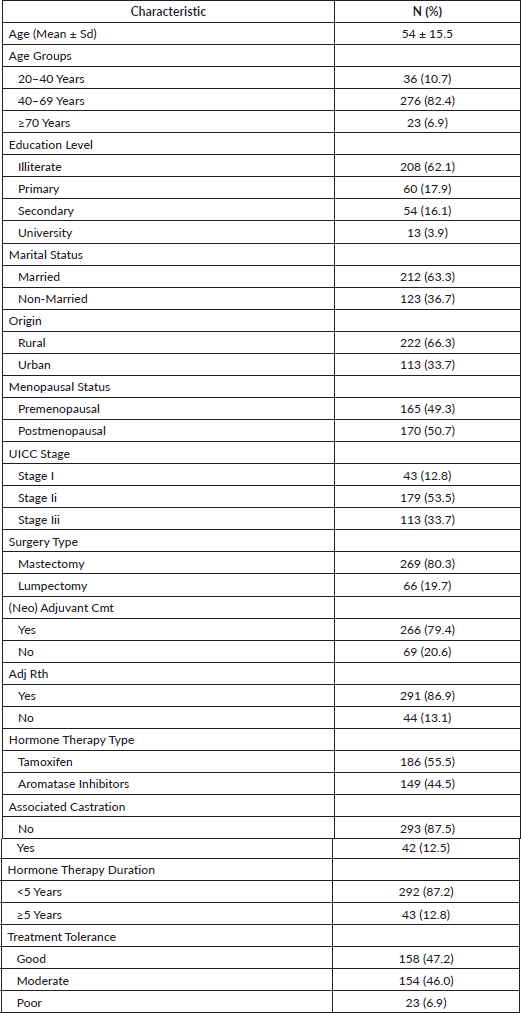
Table 2. EORTC QLQ-C30 scores in the total population (N = 335).

The QOL in the total population was quite good, with an average overall health status of 65.72 ± 22.54. The analysis of functional scales shows excellent social functioning (mean 94.47 ± 15.7), followed by a decreasing order of mean scores for physical functioning (67.5 ± 15.52), cognitive functioning (66.56 ± 28.54) and emotional functioning, which has the most impact on QOL, with a mean score of 50.2.
The symptoms affecting the QOL of our patients were, respectively, as follows: financial difficulties ranked first, followed by fatigue, pain, insomnia, dyspnoea, loss of appetite and constipation, with average scores of 91.5, 60.3, 31.3, 21.5, 20.7, 11.9 and 10.9. Nausea-vomiting (4.1) and diarrhoea (2.8) were rarely reported by our patients (Table 2).
In the examination of age-related impacts on QOL: Physical functioning (RF + PF) exhibited a decline with age (PF2: p < 0.0001, RF2: p = 0.027). Regarding symptoms, the occurrences of nausea, vomiting, insomnia and constipation were less prevalent in the 40–69 age group but more common among individuals under 40 or over 70 (p values: 0.002, 0.036 and 0.016, respectively). Diarrhoea was more prevalent in those aged 70 and above (p < 0.0001). The overall QOL diminished with advancing age (QL2: p = 0.009).
The origin of the patients only influenced the QOL in the financial domain, with urban patients showing a higher impact compared to rural patients (p = 0.025). Our study reveals a clear link between patients’ education levels and their QOL, particularly in physical functioning. Higher education correlates with improved perceived QOL (p = 0.025).
Marital status is linked to better QOL; married individuals score higher on overall quality (QL2) (p = 0.027). They also experience fewer symptoms, with nausea-vomiting and pain being less frequent (p = 0.022 and p = 0.031, respectively).
Menopausal status did not impact the overall QOL of the patients (QL2). However, postmenopausal patients showed a lower ability to fulfil their obligations and responsibilities compared to premenopausal patients (p = 0.027). Additionally, they experienced a higher loss of appetite (p = 0.031).
There was no significant correlation between the UICC stage and the QOL of the patients.
The type of surgery did not influence the overall QOL of the patients. However, the Patey mastectomy was associated with more pain compared to tumourectomy (p = 0.024). Previous CMT (adjuvant or neoadjuvant) had no impact on overall patient QOL. However, those who received CMT reported less diarrhoea under AET compared to those who did not (p = 0.016). We have no clear explanation for this unexpected finding. This result should be interpreted with caution, given the multiple comparison limitations. Patients who received adjuvant radiotherapy reported a significantly lower global health status (QL2) score compared to those who did not (p = 0.019).
The type of hormone therapy did not impact the QL2 of the patients. However, an improvement in functional role (RF2) was observed with tamoxifen, indicating a better ability to fulfil their responsibilities (p = 0.008), and this observation was consistent among premenopausal women. Tamoxifen was predominantly used in premenopausal patients in our cohort. Regarding the symptom scale, patients on anastrozole reported more diarrhoea than those receiving other types of hormone therapy (p = 0.002). This finding should be interpreted with caution due to the small sample size (n = 15) of anastrozole users.
Regarding the duration of adjuvant hormone therapy, whether it is less than 5 years or more than 5 years, there was no statistically significant difference in the QOL of the patients.
For associated castration, there was a statistically significant difference in the overall health and role functioning: p = 0.034 and p = 0.011 favouring patients without ovarian suppression.
The tolerance level of the treatment had a significant impact on the QOL of the patients. Those without side effects were considered to have good tolerance. Poor tolerance was associated with a lower overall QOL, with a higher global health score (QL2) in those with good tolerance (p < 0.0001). The domains of physical, emotional and cognitive functioning were also better in those with good tolerance (p = 0.002; 0.001; <0.0001, respectively). Most symptoms were more pronounced in those with poor tolerance, especially fatigue, dyspnoea and loss of appetite (p < 0.0001; <0.0001; 0.001, respectively).
Our study identified treatment tolerance as the most significant factor affecting QoL, with poor tolerance correlating with worse outcomes across all domains. Hormone therapy type showed selective impacts - tamoxifen improved role functioning while anastrozole increased diarrhoea. Younger age, higher education and married status were associated with better QoL, whereas postmenopausal status and Patey mastectomy specifically affected role functioning and pain, respectively. Notably, neither disease stage nor treatment duration influenced overall QoL. These findings highlight the multifactorial nature of QoL determinants, emphasising the importance of monitoring treatment tolerance and addressing modifiable psychosocial factors in clinical management (Table 3).
Table 3. Factors associated with global QOL (QL2): bivariate analysis.
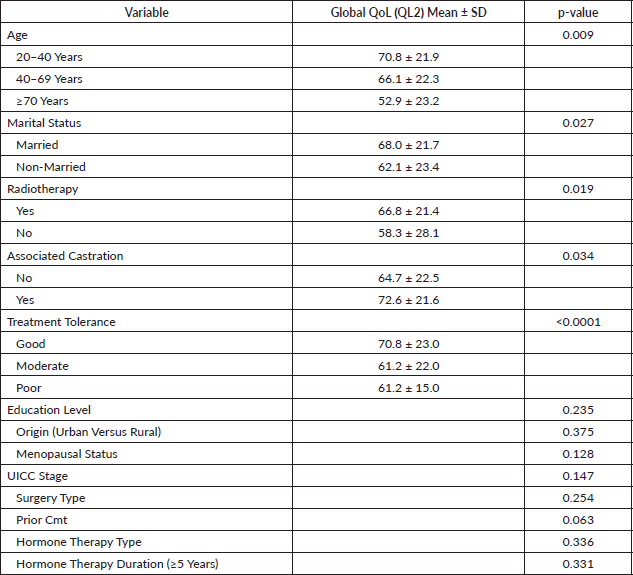
Table 4. QOL and symptom scores by treatment tolerance.

Discussion
Breast cancer survivors often face a range of long-term treatment-related side effects that impact psychological, functional and social dimensions of their lives. These include fatigue, pain, emotional disturbances, cognitive impairment, sexual dysfunction, lymphedema, cardiotoxicity and infertility. Unfortunately, these toxicities are frequently underdiagnosed and undertreated, presenting ongoing challenges in survivorship care. Moreover, the lack of detailed longitudinal biological data limits a comprehensive understanding of the interactions among these toxicities and their overall impact on QOL [7–9].
Despite a global call for improved management of breast cancer survivors, research in this area remains limited and fragmented. Many existing cohort studies are neither representative of the general population nor comprehensive in scope [7]. Specifically, there is a paucity of data regarding the QOL among Arab women with breast cancer [10]. A study conducted in the United Arab Emirates reported a relatively high average global health score of 74.6, outperforming results from other countries. This suggests a variability in QOL outcomes among Arab populations. In our Moroccan cohort, the mean overall health score was 65.7, which is comparable to the highest values reported in the literature.
Key symptoms such as anxiety, pain, fatigue and menopausal complaints significantly interfere with daily life and contribute to the decline in QOL. Surprisingly, these symptoms are often overlooked in literature reviews. One review identified fatigue, insomnia, depression, cognitive dysfunction, reproductive and menopausal issues and lymphedema as commonly reported concerns among survivors [11]. In contrast, our study highlighted financial hardship, fatigue, pain, dyspnoea and insomnia as the most prevalent symptoms. Financial difficulties in particular emerged as a major burden, negatively impacting patients’ overall well-being.
Contrary to findings in the literature suggesting that older patients may cope better with treatment and report moderate to good QOL [11, 12], our data revealed a decline in overall QOL with increasing age (QL2: p = 0.009). This discrepancy may be explained by context-specific factors in our Moroccan cohort. Older patients in our setting often have lower health literacy, may lack family support if widowed, face greater financial difficulties due to limited pension coverage and have underdiagnosed comorbidities. These factors, which are more prevalent in LMIC settings, may compound the effects of age on QoL.
Physical and role functioning scores were inversely correlated with age (PF2: p < 0.0001, RF2: p = 0.027), while other functional domains did not differ significantly by age. Symptom analysis showed that nausea, vomiting, insomnia and constipation were less frequent in patients aged 40–69, but more common among those under 40 or over 70 (p = 0.002, 0.036 and 0.016, respectively). Diarrheal was significantly more prevalent in patients aged 70 and above (p < 0.0001).
Previous research has shown that married patients often benefit from greater emotional and financial support, which can contribute to earlier diagnosis, better adherence to treatment and improved survival outcomes [13]. In our cohort, married patients had significantly better overall QOL compared to single, widowed or divorced individuals (QL2: p = 0.027). They also reported lower incidences of nausea/vomiting and pain (p = 0.022 and p = 0.031, respectively), underlining the importance of providing psychological and social support to unmarried women with breast cancer.
We acknowledge that the observed associations, such as the link between married status and better QoL, may be mediated by unmeasured variables. Married patients in our context may have higher household income, better social support networks and potentially better treatment adherence. Similarly, the association between higher education and better QoL may be mediated by health literacy and access to information. Future studies should include formal mediation analyses to disentangle these pathways.
Seventeen reviews focused on HRQOL in patients receiving systemic therapies, including CMT, hormone therapy and targeted treatments. Endocrine therapy, particularly tamoxifen and aromatase inhibitors, was frequently associated with side effects such as hot flashes, vaginal dryness, discharge, dyspareunia and joint pain [11, 14, 15]. Our findings are consistent with this literature, identifying hot flashes, joint pain and vaginal dryness as the most common side effects. Patients with better treatment tolerance reported significantly higher overall health scores (QL2: p < 0.0001) and better physical, emotional and cognitive functioning (p = 0.002, 0.001 and <0.0001, respectively). Symptoms such as fatigue, dyspnoea and appetite loss were more severe among those with poor tolerance.
The impact of the type of hormone therapy on QOL remains underexplored. One large e-cohort found that type of endocrine therapy had only a minor impact on QOL, with no significant difference observed in multivariate analysis [16]. Our study supports this, showing no significant difference in overall health scores based on therapy type, except that tamoxifen users reported significantly better role functioning (p = 0.008). Duration of therapy had no substantial effect on QOL, but associated surgical castration negatively affected both overall health and role functioning, favouring non-castrated patients (p = 0.034 and p = 0.011). Furthermore, postmenopausal patients experienced higher appetite loss and lower capacity (p = 0.027), highlighting the complexity of QoL concerns in this subgroup.
CMT has been associated with numerous physical and psychosocial side effects, particularly during prolonged or intensive treatment. Nonetheless, previous studies have shown that most patients experience a relatively quick recovery after treatment, with few long-term effects [18]. Our findings support this, indicating that prior CMT (adjuvant or neoadjuvant) did not negatively impact long-term QOL.
Radiotherapy, while effective in reducing recurrence and mortality rates, is commonly associated with fatigue. Although previous studies have highlighted the benefits of exercise during radiotherapy [17, 18], our results revealed a negative impact of radiotherapy on QOL, with declines in both overall health scores (p = 0.019) and symptom scales.
While previous studies have found that mastectomy with reconstruction offers better functional and emotional outcomes compared to mastectomy without reconstruction [19], data comparing mastectomy with tumourectomy are limited. Our study found no significant difference in overall QOL based on surgery type. However, patients who underwent Patey mastectomy reported higher levels of pain compared to those who had lumpectomy (p = 0.024), offering important insights into the nuanced effects of different surgical approaches.
Limitations of the study
A major limitation of our study is its cross-sectional design, which precludes any causal inference or assessment of QoL changes over time. QoL was measured at a single time point for each patient, regardless of the duration of AET. Therefore, we cannot distinguish whether differences in QoL between patients are due to treatment duration, age or other factors. Longitudinal studies are needed to capture the dynamic trajectory of QoL during the entire course of AET.
Multivariate regression analyses were performed to adjust for potential confounders (including age, menopausal status, therapy type and treatment tolerance). However, no statistically significant associations were identified in the multivariate model, likely due to limited statistical power for certain subgroups (e.g., anastrozole users, n = 15).
Additionally, this study used only the QLQ-C30 to assess the QOL, without including the QLQ-BR42, as the latter has not yet been translated into Moroccan Darija or validated for use in our local setting. Although the QLQ-C30 is a generic instrument, it effectively captured key dimensions relevant to our population. Once the QLQ-BR42 is validated, future studies should incorporate it to provide more breast cancer-specific insights.
Conclusion
Our study highlights actionable priorities to improve QoL in Moroccan breast cancer patients on AET. While the AMO-TADAMON system provides free cancer treatment, residual financial barriers such as transportation costs and lost wages persist and require complementary support like transport vouchers. We also recommend systematic screening for functional decline in older patients, proactive side effect management with timely endocrine therapy switching, and psychological support for unmarried patients. These context-specific interventions are feasible within the existing Moroccan healthcare framework.
Conflicts of interest
All authors declare that they have no financial or personal conflicts of interest that could have influenced the work reported in this paper.
Funding
The authors declare that no specific funding was received for this research, authorship or publication of this article.
References
1. Nguyen J, Popovic M, and Chow E, et al (2015) EORTC QLQ‑BR23 and FACT‑B for the assessment of quality of life in patients with breast cancer: a literature review J Comp Eff Res 4(2) 157–166 https://doi.org/10.2217/cer.14.76
2. Karakoyun‑Celik O, Gorken I, and Sahi S, et al (2010) Depression and anxiety levels in women under follow-up for breast cancer: relationship to coping with cancer and quality of life Med Oncol 27(1) 108–113 https://doi.org/10.1007/s12032-009-9181-4
3. Svensson H, Hatschek T, and Johansson H, et al (2012) Health‑related quality of life as a prognostic factor for response, progression‑free survival, and survival in women with metastatic breast cancer Med Oncol 29(2) 432–438 https://doi.org/10.1007/s12032-011-9844-9
4. Guyatt GH, Feeny DH, and Patrick DL (1993) Measuring health‑related quality of life Ann Intern Med 118(8) 622–629 https://doi.org/10.7326/0003-4819-118-8-199304150-00009
5. Aaronson NK, Ahmedzai S, and Bergman B, et al (1993) The European Organization for Research and Treatment of Cancer QLQ-C30: a quality-of-life instrument for use in international clinical trials in oncology J Natl Cancer Inst 85(5) 365–376 https://doi.org/10.1093/jnci/85.5.365 PMID: 8433390
6. Cocks K, King MT, and Velikova G, et al (2011) Evidence‑based guidelines for determination of sample size and interpretation of the European Organisation for the Research and Treatment of Cancer Quality of Life Questionnaire Core 30 J Clin Oncol 29(1) 89–96 https://doi.org/10.1200/JCO.2010.28.0107
7. Vaz‑Luis I, Cottu P, and Mesleard C, et al (2019) UNICANCER: French prospective cohort study of treatment‑related chronic toxicity in women with localized breast cancer (CANTO) ESMO Open 4(5) 562 https://doi.org/10.1136/esmoopen-2019-000562
8. Bower JE, Ganz PA, and Desmond KA, et al (2000) Fatigue in breast cancer survivors: occurrence, correlates, and impact on quality of life J Clin Oncol 18(4) 743–753 https://doi.org/10.1200/JCO.2000.18.4.743 PMID: 10673515
9. Elena JW, Travis LB, and Simonds NI, et al (2013) Leveraging epidemiology and clinical studies of cancer outcomes: recommendations and opportunities for translational research J Natl Cancer Inst 105(2) 85–94 https://doi.org/10.1093/jnci/djs473
10. Haddou Rahou B, El Rhazi K, and Ouasmani F, et al (2016) Quality of life in Arab women with breast cancer: a review of the literature Health Qual Life Outcomes 14 64 https://doi.org/10.1186/s12955-016-0468-9 PMID: 27117705 PMCID: 4847355
11. Mokhtari‑Hessari P and Montazeri A (2020) Health-related quality of life in breast cancer patients: a literature review Health Qual Life Outcomes 18(1) 338
12. Ballinger RS and Fallowfield LJ (2009) Quality of life and patient-reported outcomes in the older breast cancer patient Clin Oncol (R Coll Radiol) 21(2) 140–155 https://doi.org/10.1016/j.clon.2008.11.003
13. Goodwin JS, Hunt WC, and Key CR, et al (1987) The effect of marital status on stage, treatment, and survival of cancer patients JAMA 258(21) 3125–3130 https://doi.org/10.1001/jama.1987.03400210067027 PMID: 3669259
14. Cella D and Fallowfield LJ (2008) Recognition and management of treatment‑related side effects for breast cancer patients receiving adjuvant endocrine therapy Breast Cancer Res Treatment 107(2) 167–180 https://doi.org/10.1007/s10549-007-9548-1
15. Mioranza E, Falci C, and Dieci MV, et al (2016) The impact of adjuvant endocrine therapy in early breast cancer on quality of life: an overview of prospective trials Expert Rev Qual Life Cancer Care 1(2) 111–120
16. Benoit L, Cambra C, and Rouzier R, et al (2022) Quality of life in an e‑cohort of women treated by endocrine therapy for early breast cancer Clin Breast Cancer 22(3) e352–e361 https://doi.org/10.1016/j.clbc.2021.09.012
17. Lipsett A, Barrett S, and Haruna F, et al (2017) The impact of exercise during adjuvant radiotherapy for breast cancer on fatigue and quality of life: a systematic review and meta-analysis Breast 32 144–155 https://doi.org/10.1016/j.breast.2017.02.002 PMID: 28189100
18. Arraras JI, Manterola A, and Domínguez MA, et al (2008) Impact of radiotherapy on the quality of life of elderly patients with localized breast cancer: a prospective study Clin Transl Oncol 10(8) 498–504 https://doi.org/10.1007/s12094-008-0239-0 PMID: 18667381
19. Chen CM, Cano SJ, and Klassen AF, et al (2010) Measuring quality of life in oncologic breast surgery: a systematic review of patient‑reported outcome measures Breast J 16(6) 587–597 https://doi.org/10.1111/j.1524-4741.2010.00983.x PMID: 21070435