Digital infodemiology of cancer screening and awareness in Mexico: a Latin American Google Trends study
Diego Arriaga-Izabal and Francisco Morales-Lazcano
Faculty of Medicine, Autonomous University of Sinaloa, Culiacan 80019, Mexico
Abstract
Cancer remains a leading cause of morbidity and mortality in Latin America, including Mexico, where late-stage diagnosis limits treatment efficacy. While awareness months (AM) aim to promote early detection, their impact on public engagement in this region remains poorly characterised. The current study assesses the impact of these campaigns on public interest in cancer and screening in Mexico using Google Trends, with regional comparisons. A retrospective infodemiologic time-series analysis was conducted using monthly Google Trends data from Mexico, contextualised with data from other major Latin American countries. Relative search volume indices were used to evaluate public interest in breast (BC), prostate (PC), cervical (CC) and colorectal cancer (CRC) and their respective screening methods from 1 May 2005 to 1 May 2025. Interrupted time-series models with generalised least squares and autoregressive adjustments were applied to estimate immediate and short-term lagged changes in public interest during cancer AM while accounting for underlying temporal trends. In Mexico, BC AM generated the strongest increase in public interest (β = 29.09, p < 0.001), the highest among all countries. PC showed modest increases during its AM (β = 14.7, p < 0.001), although baseline interest declined over time. Effects for CRC and CC were minimal or negative (β = −0.31 and β = −1.31, respectively). Screening-related searches increased substantially for BC (β = 14.9, p < 0.001) and modestly for PC (β = 11.7, p < 0.001), with negligible changes for colorectal and cervical screening. Lagged analyses confirmed delayed effects. Cancer awareness campaigns in Mexico produce uneven online engagement. BC generates the strongest public interest, while the other campaigns may require enhanced communication strategies to improve effectiveness.
Keywords: breast cancer, prostate cancer, colorectal cancer, cervical cancer, digital health
Correspondence to: Diego Arriaga-Izabal
Email: diego_arriza@outlook.com
Published: 08/07/2026
Received: 05/02/2026
Publication costs for this article were supported by ecancer (UK Charity number 1176307).
Copyright: © the authors; licensee ecancermedicalscience. This is an Open Access article distributed under the terms of the Creative Commons Attribution License (http://creativecommons.org/licenses/by/4.0), which permits unrestricted use, distribution, and reproduction in any medium, provided the original work is properly cited.
Introduction
Cancer is one of the leading causes of morbidity and mortality worldwide, with rising incidence rates intensifying the burden on populations and healthcare systems alike [1]. In Mexico, cancer represents a growing public health challenge, with persistent delays in diagnosis and gaps in access to preventive services. Globally, an estimated 30%–50% of cancers are preventable through modification of risk factors, yet late-stage presentation remains frequent, limiting treatment options and worsening clinical outcomes [2, 3].
Screening programs for early detection of breast (BC), cervical (CC), colorectal (CRC) and prostate cancers (PC) have demonstrated the potential to reduce mortality substantially [4, 5]. Health awareness months (AM), such as BC (October), CC (January), CRC (March) and PC (November), aim to increase public knowledge, encourage screening and promote the recognition of risk factors and early symptoms. Although evidence suggests these campaigns can stimulate public interest and online engagement, though their reach and effectiveness vary across populations, their reach and effectiveness vary significantly across populations [6–8]. Ultimately, the success of cancer control relies on a continuum from awareness to early detection; however, this chain is often broken by barriers to healthcare access and limited health literacy. Identifying specific enablers, such as targeted digital outreach and sustained public advocacy, is therefore essential to optimise campaign efficacy [9, 10].
Digital epidemiology, particularly via Google Trends, offers a novel approach to monitoring public engagement. Search data provide near real-time insights into public interest, allowing for an indirect evaluation of campaign impact. Studies in high-income countries show that spikes in searches for cancer-related terms often coincide with awareness campaigns and may precede increases in screening uptake or healthcare consultations. Digital trends also help identify gaps in campaign reach, informing more targeted communication strategies [7, 11, 12].
In Mexico, research using digital data sources to assess cancer awareness remains limited. Structural inequalities, heterogeneous levels of digital literacy and differences in internet penetration complicate the interpretation of online engagement in the region. Moreover, unlike in high-income settings, there is a lack of systematic analyses linking online search patterns with awareness campaigns or screening behaviours, leaving significant major gaps in the understanding of how the public interacts with cancer-related information [7, 13–15].
The main aim of this study is to analyse the impact of cancer AM on public interest in cancer awareness and screening in Mexico, with regional comparisons across selected Latin American countries.
Methods
Study design and data source
A retrospective time-series analysis was conducted to assess the impact of national and international cancer AM on public interest in Mexico using Google Trends search activity. Google Trends was selected as the primary data source due to its dominance as the most frequently used search engine in the region, providing a continuous, population-wide proxy for information-seeking behaviour that is more representative and longitudinally consistent than social media platforms or delayed clinical registry data [16]. For regional comparison, Colombia, Argentina, Peru and Venezuela were included based on population size and the availability of continuous data from 1 May 2005 to 1 May 2025. The relative search volume (RSV), a country- and time-specific index normalised from 0 to 100, was used as the primary outcome to facilitate cross-country comparability. RSV reflects the frequency of a term’s search relative to all Google queries, scaled to the peak search volume (100) within the specified period and location.
Search terms and data processing
Cancers with established screening strategies and sufficient RSV data were included: BC (mammography; October), CC (cervical cytology; January), PC (PSA testing and prostate examination; November) and CRC (fecal occult blood test and colonoscopy; March). Spanish-language search terms were identified from public health campaign materials, Ministry of Health resources and manual Google Trends queries, incorporating regional linguistic variants where appropriate (Supplementary Table 1). Monthly RSV data were retrieved from Google Trends on 31 May 2025, restricted to web search queries and filtered by country. For each country-cancer combination, the three most consistently reported search terms across the study period were selected, and the final monthly RSV series was calculated as their arithmetic mean. This approach reduced linguistic variability and term-specific volatility without applying additional normalisation beyond Google Trends’ native scaling.
Table 1. ITS results for cancer awareness and screening in Latin America. Country-specific segmented regression estimates are shown for BC, CC, PC and CRC and their screening methods. The table reports coefficients (β) for time trends, AM effects, post-awareness trends and the COVID-19 period, with standard errors in parentheses and AIC for model fit.

Statistical analysis
The RSV trends were analysed using interrupted time-series (ITS) segmented regression with generalised least squares (GLSs) to estimate changes during AM, accounting for heteroscedasticity and temporal autocorrelation. Models included terms for baseline level, secular trend and the presence of AM, with autoregressive structures specified based on autocorrelation diagnostics of the modeling procedure. A continuous time variable and a COVID-19 indicator (January 2020–May 2023) were included to adjust for long-term trends and pandemic-related effects. Model selection was guided by the Akaike Information Criterion (AIC) and residual diagnostics. Sensitivity analyses evaluated lagged effects at 1 and 2 months following AM to capture the potential delay between initial awareness exposure and secondary public engagement. Effects were reported as absolute and relative percentage changes in RSV. Statistical significance was assessed using two-sided p-values <0.05. Data preprocessing was conducted in SPSS (v25.0), and analyses were performed in R (v4.2.0).
Ethic statement
The current study exclusively utilised publicly available, aggregated data from the Google Trends platform, which contains no personally identifiable information. As it did not involve human participants or the collection of private data, it was exempt from ethical review in accordance with institutional policies and applicable regulations.
Results
Across Latin America, BC AM consistently elicited the most pronounced increases in public interest. In Mexico, BC AM was associated with a substantial rise in RSV (β = 29.09, p < 0.001), corresponding to a 215% (95% CI 163%–261.1%) increase (Table 1). Comparable trends were observed across the region, with increases of 117% in Colombia, 214% in Argentina, 450% in Peru and 445% in Venezuela; these patterns were characterised by stable underlying secular trends and distinct, short-term delayed effects (Figure 1).
The PC AM produced more modest shifts in engagement. In Mexico, RSV increased during AM (β = 11.7, p < 0.001; +27% (95% CI 16.9%–37.6%)), despite a slightly declining secular trend (β = −0.10, p < 0.001). Responses in other countries were heterogeneous, ranging from a 15% increase in Colombia to an 89% increase in Venezuela.
In contrast, CRC AM had a minimal impact in Mexico (β = −0.31, p = 0.1; +7% (−3.2%–18.3%)), despite a small positive underlying trend (β = 0.06, p < 0.001). Engagement in other countries remained limited and inconsistent.
Similarly, CC AM were associated with reduced public interest in Mexico (β = −1.31, p = 0.03; −14% (−29%–4.2%)), with more pronounced declines observed in Colombia, Peru and Argentina, and smaller non-significant changes in Venezuela (Figure 1).
Regarding screening-specific search behaviour, BC screening showed the most robust response. In Mexico, AM was associated with a significant increase (β = 14.9, p < 0.001; +107% (7.1%–143.7%)), with sustained short-term effects. Conversely, PC, CRC and CC screening searches exhibited negligible, inconsistent or non-significant fluctuations across the studied countries (Figure 2).
Sensitivity analyses incorporating 1-and 2-month lag periods demonstrated that the principal findings remained largely unchanged. Delayed increases in RSV were most evident for breast cancer and breast cancer screening campaigns, whereas colorectal and cervical cancer awareness months continued to show limited or inconsistent effects across countries (Supplementary Table 2).
Discussion
Main findings
Cancer awareness campaigns can boost public interest and online engagement, which can be monitored through digital epidemiology tools like Google Trends; however, evidence from Mexico and other Latin American countries remains scarce due to disparities in internet access and limited regional analyses. The current study provides a comprehensive assessment of public interest in cancer awareness and screening in Mexico, with regional comparisons across Colombia, Argentina, Peru and Venezuela, using two decades of Google Trends data (2005–2025). Our analysis reveals distinct variations in population engagement by cancer type. BC-AM consistently generated the most pronounced national search activity, while PC-AM yielded moderate increases. Conversely, public interest in CRC and CC remained low, often showing negligible or declining engagement during awareness periods in Mexico.

Figure 1. ITS analysis of RSV for cancer-related terms during AM in selected Latin American countries (2005–2025). The gray lines represent observed monthly RSV; blue lines denote predicted values derived from GLS regression models. Red dots indicate the timing of established cancer awareness campaigns. Panels correspond to: (a): BC, (b): PC, (c); CC and (d): CRC.
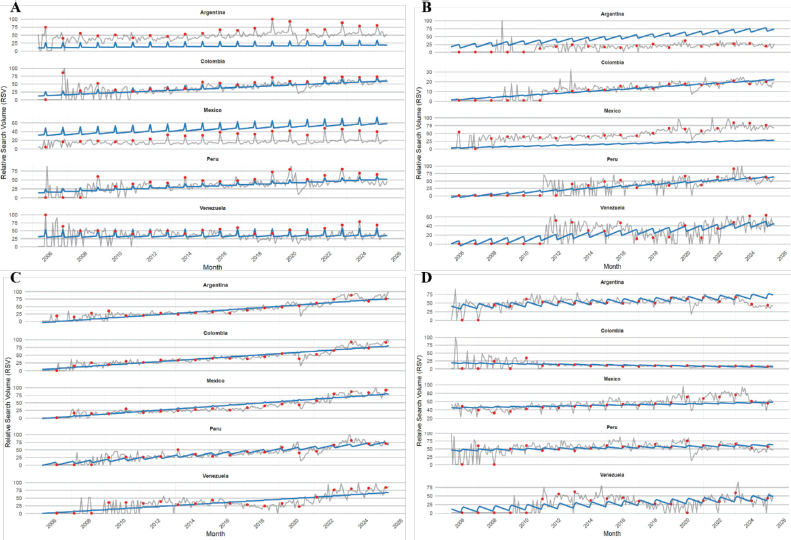
Figure 2. ITS analysis of RSV for cancer screening-related terms during AM in selected Latin American countries (2005–2025). Observed monthly RSV is depicted by gray lines, while blue lines represent model-based estimates derived from GLS regression. Red dots denote the timing of awareness campaigns. Panels correspond to: (a): BC screening, (b): PC screening, (c): CC screening and (d): CRC screening.
Implications for cancer control: bridging digital awareness and health system capacity
Our findings largely mirror global patterns, where BC AM generated the highest digital engagement, and PC AM produced moderate, less sustained search spikes [13–15, 17–19]. In contrast, our results for both CRC and CC diverged from studies in high-income settings, where seasonal awareness campaigns often yielded modest but measurable increases in public interest [20–23]. In Mexico and across Latin America, engagement for CRC and CC remains weak. These findings are consistent with previous studies from Peru and Brazil, where public engagement was similarly restricted to BC and PC campaigns [24, 25].
Disparities between Latin American and high-income populations stem from both the heterogeneous maturity of National Cancer Control Plans and individual health literacy. These results reveal significant engagement gaps across cancer types, highlighting the uneven efficacy of awareness initiatives in Mexico and the broader Latin American region. BC campaigns successfully foster public interest through sustained global advocacy and targeted initiatives; however, this engagement has not translated into proportional gains in screening coverage. Mexican national coverage reached 27.4% in 2018 before declining to 16.03% post-pandemic, leaving a majority of patients to be diagnosed at advanced stages [26–28]. Despite the formal implementation of mammography screening mandates in 1994 and increased federal funding beginning in 2003, programs remain constrained by organisational and quality deficiencies [26]. Current infrastructure is significantly underutilised, with evidence suggesting that mammography capacity could be increased by 50% through improved operational efficiency [28]. Furthermore, screening uptake is heavily stratified by socioeconomic and logistical factors; research indicates that higher utilisation is associated with advanced age, higher educational attainment, possession of social security and geographical proximity to diagnostic units [27]. Similarly, PC campaigns face significant structural constraints. Despite the inclusion of treatment within most publicly funded national insurance schemes, comprehensive national screening guidelines for PC were not formally established in Mexico until 2017 [29]. Beyond policy-related barriers, individual perceptions significantly impede screening uptake. Public misconceptions regarding inherent cancer risk are prevalent; notably, approximately two-thirds of men in studied cohorts report rejecting the digital rectal examination, reflecting profound psychological and cultural barriers to early detection [30].
Moreover, despite the lack of measurable impact from CC AM on digital public interest, CC screening, specifically cervical cytology and human papillomavirus (HPV) testing, has achieved significant national coverage following its institutionalisation in 1994 [26]. The prevalence of cervical cytology rose from 26.2% in 2000 to 45.5% in 2012, before declining to 24.9% during the COVID-19 pandemic. HPV testing, implemented in 2007, has maintained a lower prevalence (12.7%–16%) compared to traditional cytology. Adherence to these screening modalities remains highly stratified, with increased uptake consistently associated with higher socioeconomic status, greater urbanisation and advanced age [31]. In contrast, CRC campaigns have demonstrated limited efficacy; furthermore, the absence of a unified national CRC screening program remains a significant barrier. Although clinical recommendations have existed since 2009, implementation remains fragmented across institutions. Notable exceptions, such as the National Cancer Institute’s initiative launched in 2017, have yielded promising results using fecal immunochemical tests, with participation and colonoscopy completion rates reaching up to 91% and 77%, respectively [32]. However, the scalability of these programs is severely constrained by systemic limitations in public national health funding and human resource allocation.
More broadly, low public engagement across these cancers is driven by insufficient national promotion, inadequate media coverage and the underutilisation of digital platforms, which together exacerbate gaps in public risk perception. These systemic gaps are further underscored by uneven national investment. National funding for cancer control has historically been stratified by cancer type, with primary focus directed toward BC, CC and PC. For BC and CC, expenditures for screening and treatment account for approximately 5% of the total health budget, while allocations for PC. PC have represented only 0.9% of total expenditure, though this figure has risen progressively since the formal adoption of national screening guidelines, all supported by a combination of public and private funds [33].
Socioeconomic disparities and unequal access to healthcare services further attenuate the impact of awareness campaigns, particularly for CRC, which lacks the institutional visibility and advocacy momentum currently enjoyed by other cancer initiatives. Finally, CRC screening uptake is additionally hindered by individual perceptions of the screening process; the common misapprehension that colonoscopy is the sole available diagnostic modality creates a psychological barrier, stemming from the procedure’s perceived invasiveness, that existing awareness efforts have yet to effectively address.
Awareness campaigns in Mexico should address both social and structural barriers through culturally and regionally tailored strategies. Messaging needs to consider local language preferences, literacy levels and cultural perceptions of cancer risk, incorporating relatable narratives or testimonials to engage diverse populations, including rural and underserved communities. Digital optimisation, using social media, mobile platforms and online search monitoring, can expand campaign reach and help identify areas with low engagement that require targeted interventions. Continuous monitoring and evaluation of public interest using digital epidemiology tools can inform campaign adaptation in real time. Google Trends and similar platforms offer near real-time insights into population engagement, allowing health authorities to adjust strategies, optimise resources, and target efforts where they are most needed. Strengthening awareness campaigns in this way could improve early detection rates, enhance screening uptake and ultimately reduce cancer-related disparities in Mexico.
Strengths and limitations
At the time of writing, this study represents the largest and longest longitudinal assessment of public interest in cancer awareness in Mexico and neighboring Latin American countries, spanning 2005–2025 across five countries. Leveraging Google Trends offers an innovative, population-level perspective and the inclusion of multiple cancer types allows for comparative evaluation of campaign effectiveness. Analytical rigor was strengthened through time-series modeling and GLS, accounting for temporal autocorrelation and cross-country variability. However, several limitations should be noted. The study relies on search behaviour as a proxy for awareness rather than direct health actions, lacks detailed sociodemographic information and may also be affected by linguistic variations across Spanish-speaking countries and external media influences, regardless of the proposed strategies. Additionally, shifts in information-seeking behaviour related to COVID-19 may have residual effects, although specific strategies were implemented to mitigate the impact of these limitations.
Conclusion
Public interest and engagement in Latin America showed notable variation across cancer types, with BC campaigns eliciting the strongest and most consistent responses, while PC, CRC and CC demonstrated limited or even negative engagement. Our findings highlight the persistent gaps in awareness and access to information, underscoring the need for targeted, culturally adapted and regionally tailored awareness strategies to strengthen early detection efforts and reduce disparities in cancer outcomes.
Acknowledgments
The authors sincerely thank Dr Erika Celis-Aguilar for her generous financial support of this research and for her continued encouragement of academic and scientific activities.
List of abbreviations
AM, Awareness months; BC, Breast cancer; CC, Cervical cancer; CRC, Colorectal cancer; PC, Prostate cancer.
Conflicts of interest
None to declare.
Funding
The study received partial financial support from Dr Erika Celis-Aguilar. The funder had no role in the development of the manuscript.
Author contributions
DAI: Conceptualisation, Methodology, Data Curation, Formal Analysis, Writing of Original Draft, Visualisation.
FML: Supervision, Validation, Review and Editing, Resources and Project Administration.
Data availability
The data used in this study were obtained from publicly available Google Trends, which provides open-access, aggregated search activity data without personal identifiers. All search terms, parameters and data processing procedures are described in the Methods section and Supplementary Materials. The final compiled dataset supporting the findings of this study is available from the corresponding author upon reasonable request.
References
1. Kocarnik JM, Compton K, and Dean FE, et al (2022) Cancer incidence, mortality, years of life lost, years lived with disability, and disability-adjusted life years for 29 cancer groups from 2010 to 2019: a systematic analysis for the global burden of disease study 2019 JAMA Oncol 8(3) 420–444 https://doi.org/10.1001/jamaoncol.2021.6987 PMCID: 8719276
2. Bandini L, Schatz A, and Hood V, et al (2023) NCCN policy summit: reducing the cancer burden through prevention and early detection J Natl Compr Canc Netw 21(9) 910–914 https://doi.org/10.6004/jnccn.2023.7040 PMID: 37673113
3. Crosby D, Bhatia S, and Brindle KM, et al (2022) Early detection of cancer Science 375(6586) 9040 https://doi.org/10.1126/science.aay9040
4. Rajaraman P, Anderson BO, and Basu P, et al (2015) Recommendations for screening and early detection of common cancers in India Lancet Oncol 16(7) e352–e361 https://doi.org/10.1016/S1470-2045(15)00078-9 PMID: 26149887
5. Islami F, Marlow EC, and Thomson B, et al (2024) Proportion and number of cancer cases and deaths attributable to potentially modifiable risk factors in the United States, 2019 CA Cancer J Clin 74(5) 405–432 [https:doi.org/10.3322/caac.21858] PMID: 38990124
6. Baquero OS, Rebolledo EAS, and Ribeiro AG, et al (2021) Pink October and mammograms: when health communication misses the target Cad Saude Publica 37(11) 149620 [https:doi.org/10.1590/0102-311X00149620]
7. Nishimura Y and Acoba JD (2022) Impact of breast cancer awareness month on public interest in the United States between 2012 and 2021: a google trends analysis Cancers (Basel) 14(10) 2534 https://doi.org/10.3390/cancers14102534 PMID: 35626141 PMCID: 9140129
8. Glynn RW, Kelly JC, and Coffey N, et al (2011) The effect of breast cancer awareness month on internet search activity - a comparison with awareness campaigns for lung and prostate cancer BMC Cancer 11(1) 442 https://doi.org/10.1186/1471-2407-11-442
9. Brigo F, Igwe SC, and Nardone R, et al (2016) Cancer information disparities on the internet: an infodemiological study J Cancer Policy 8 33–37 https://doi.org/10.1016/j.jcpo.2016.04.002
10. Hussain SSA, Khwairakpam P, and Sharma A, et al (2026) From data to decisions: the vital role of digital epidemiology for strengthening public health Digit Health 12 20552076261436279 https://doi.org/10.1177/20552076261436279 PMID: 41993047 PMCID: 13080184
11. Neumann K, Mason SM, and Farkas K, et al (2023) Harnessing google health trends data for epidemiologic research Am J Epidemiol 192(3) 430–437 https://doi.org/10.1093/aje/kwac171
12. Marty R, Ramos-Maqueda M, and Khan N, et al (2023) The evolution of the COVID-19 pandemic through the lens of Google searches Sci Rep 13(1) 19843 https://doi.org/10.1038/s41598-023-41675-4 PMID: 37963932 PMCID: 10645993
13. Kirli Bolukbas M, Figen M, and Kocak Uzel E (2024) Cancer awareness across borders: a comparative study of internet search trends for breast and prostate cancer in Europe and Turkey BMC Cancer 24(1) 1563 https://doi.org/10.1186/s12885-024-13346-8 PMID: 39707258 PMCID: 11662565
14. Gathers D, Pankratz VS, and Kosich M, et al (2021) Using big data to gauge effectiveness of breast cancer awareness month Prev Med 150 106695 https://doi.org/10.1016/j.ypmed.2021.106695
15. Colbourne JRM, Toniolo JT, and Diacon A, et al (2023) Following the trend: a comparative analysis of public engagement and funding for annual prostate and breast cancer campaigns using google trends Anticancer Res 43(1) 409–415 https://doi.org/10.21873/anticanres.16176
16. Kamiński M, Czarny J, and Skrzypczak P, et al (2023) The characteristics, uses, and biases of studies related to malignancies using google trends: systematic review J Med Internet Res 25(1) e47582 https://doi.org/10.2196/47582
17. Rosenkrantz AB and Prabhu V (2016) Public interest in imaging-based cancer screening examinations in the United States: analysis using a web-based search tool AJR Am J Roentgenol 206(1) 113–118 https://doi.org/10.2214/AJR.15.14840
18. Ramadan M, Aboalola D, and Aouabdi S, et al (2024) Influence of breast cancer awareness month on public interest of breast cancer in high-income countries between 2012 and 2022: google trends analysis JMIR Cancer 10 e49197 https://doi.org/10.2196/49197 PMID: 39133912 PMCID: 11347895
19. Patel VR, Adamson AS, and Welch HG (2025) The rise in early-onset cancer in the US population-more apparent than real JAMA Intern Med 185(11) 1370–1374 https://doi.org/10.1001/jamainternmed.2025.4917
20. Pantel HJ, Kleiman DA, and Kuhnen AH, et al (2021) Has national colorectal cancer awareness month increased endoscopy screening rates and public interest in colorectal cancer? Surg Endosc 35 https://doi.org/10.1007/s00464-020-07413-x
21. Liu J, Niederdeppe J, and Tong C, et al (2024) Associations between news coverage, social media discussions, and search trends about celebrity deaths, screening, and other colorectal cancer-related events Prev Med 185 108022 https://doi.org/10.1016/j.ypmed.2024.108022 PMID: 38823651 PMCID: 11269033
22. Hagiya H, Koyama T, and Otsuka F (2022) Impact of the cervical cancer awareness months on public interest in Japan: a google trends analysis, 2012–2021 Sci Rep 12(1) 15391 https://doi.org/10.1038/s41598-022-19798-x PMCID: 9470073
23. Phillips CA, Barz Leahy A, and Li Y, et al (2018) Relationship between state-level google online search volume and cancer incidence in the United States: retrospective study J Med Internet Res 20(1) 6 https://doi.org/10.2196/jmir.8870
24. Luna-Abanto J, Gamarra L, and Desposorio Armestar D, et al (2022) Impact of cancer awareness campaigns in Peru: a 5-year google trends analysis Ecancermedicalscience 16 1477 https://doi.org/10.3332/ecancer.2022.1477
25. Quintanilha LF, Souza LN, and Sanchez D, et al (2019) The impact of cancer campaigns in Brazil: a google trends analysis Ecancermedicalscience 13 963 https://doi.org/10.3332/ecancer.2019.963 PMID: 31645890 PMCID: 6786828
26. Martínez-Montañez OG, Uribe-Zúñiga P, and Hernández-Ávila M (2009) Políticas públicas para la detección del cáncer de mama en México Salud Pública De México 51 [https://www.saludpublica.mx/index.php/spm/article/view/4906] Date accessed: 22/04/26 https://doi.org/10.1590/S0036-36342009000800028
27. Alvarado-López AL, Texcalac-Sangrador JL, and Ortega-Olvera C, et al (2025) Cobertura de mastografía en mujeres mexicanas: estimación y análisis de los factores asociados Salud Pública De México 67(3) 227–238 https://doi.org/10.21149/16507
28. Ramos-Herrera IM, González-Castañeda ME, and Vázquez-Castellanos JL, et al (2025) Clinical characteristics and spatial analysis of breast cancer in Jalisco, Mexico Gac Mex Oncol 24(3) 87–94 [https://doi.org/10.24875/j.gamo.25000014]
29. Lajous M, Cooperberg MR, and Rider J, et al (2019) Prostate cancer screening in low- and middle-income countries: the Mexican case Salud Publica Mex 61(4) 542–544 https://doi.org/10.21149/10373 PMID: 31314214 PMCID: 6955094
30. Balderas-Ortega J, Arellano-Romero NU, and Vergara-Sánchez D (2023) Percepción del cáncer prostático en hombres mexicanos y disposición para el tacto rectal Atención Familiar 24(2) 93–98 https://doi.org/10.22201/fm.14058871p.2023.2.85024
31. León-Maldonado LS, López-Olmedo N, and Murillo R, et al (2024) Tamizaje del cáncer cervical Salud Pública De México 66(4) 549–555 https://doi.org/10.21149/15894
32. Álvarez-López DI, Hernández-Guerrero A, and Freyria-Sutcliffe F, et al (2024) Current status of colorectal cancer screening in Mexico: a literature review Gac Mex Oncol 23(4) 226–233 [https://doi.org/10.24875/j.gamo.24000028]
33. Verastegui E and Mohar A (2010) Colorectal cancer in Mexico: should a middle income country invest in screening or in treatment? Eur J Health Econ 10(Suppl 1) 107–114 https://doi.org/10.1007/s10198-009-0190-1
Supplementary tables
Supplementary Table 1. Search keywords used in the analysis by topic. The table lists all search terms employed to capture public interest in BC, CC, PC and CRC, as well as their respective screening methods. Keywords include variations in spelling, accents and terminology commonly used in Spanish-language searches across Latin America.

Supplementary Table 2. Lagged ITS analysis of public interest in cancer types and screening methods across Latin America. Segmented regression results from country-specific ITS models incorporating one- and two-period lag terms are presented for BC, CC, PC and CRC, and their associated screening methods. The table includes estimated coefficients (β) for overall time trends, AM effects, lagged effects (Lagged 1 and 2), time after AM and COVID-19 period, with standard errors in parentheses. Model fit is reported as the AIC.