PEDCan: acceptability and feasibility of a mobile application to support primary health-care workers in recognising clinical features of childhood cancer in Uganda
Barnabas Atwiine1,2, Nura Izath3, James Ssemitego3, Naome Nsiimenta3, Wilson Birungi4, Anitah Kusaasira5, Nuriat Nambogo3, Martin Mukama3 and Santorino Data1,3,6
1Department of Paediatrics and Child Health, Mbarara University of Science and Technology, PO Box 1410, Mbarara, Uganda
2Department of Paediatrics and Child Health, Mbarara Regional Referral Hospital, PO Box, 40, Mbarara, Uganda
3Consortium for Affordable Medical Technologies Uganda (CAMTech Uganda), Mbarara University of Science and Technology, PO Box, 1410, Mbarara, Uganda
4 Ishongorero Health Centre IV, Mbarara District Local Government, PO Box, 1, Mbarara, Uganda Mbarara, Uganda
5Department of Obstetrics and Gynecology, Mulago National Referral Hospital, PO Box 7051, Kampala, Uganda
6Center for Innovation and Technology Transfer (CITT), Mbarara University of Science and Technology, PO Box 1410, Mbarara, Uganda
Abstract
Introduction: Early diagnosis of childhood cancer depends on a high index of suspicion and timely referral by primary healthcare workers (PHCWs) to tertiary centers. This study aimed to assess the acceptability and feasibility of a mobile application among PHCWs in recognising cancer-related clinical features in children.
Methods: We developed a mobile application called (PEDCan) to support PHCWs in recognising cancer-related clinical features in children, initiating remote consultations with specialists and referring suspected cases to cancer centers when necessary. In May 2021, we conducted a cross-sectional descriptive study among consenting PHCWs in southwestern Uganda to collect data on their knowledge of childhood cancer, smartphone ownership and internet usage. After training participants on the use of the application through mock clinical vignettes, we assessed their ease of use and readiness to adopt the application. Descriptive statistics were used to calculate the proportions of participants able and willing to use the application. Ethical approval was obtained from the Research and Ethics Committee of Mbarara University of Science and Technology.
Results: A total of 44 PHCWs participated in the study; 25 (56.8%) were nurses or midwives, 8 (18.2%) were clinical officers, 3 (6.8%) were medical doctors and 8 (18.2%) belonged to other professional cadres. All participants had previously heard about childhood cancer, and 28 (63.6%) had previously encountered a child suspected to have cancer. Thirty-eight (86.4%) participants owned a smartphone and used the internet, while 12 (31.6%) reported having constant internet access. Thirty-eight (86.3%) participants found the PEDCan application very easy or easy to use, and all participants expressed willingness to use it.
Conclusion: PHCWs in the participating health facilities were able and willing to use the PEDCan mobile application to recognise childhood cancer clinical features and initiate remote expert consultations using mock vignettes. A pilot study involving real patients would further demonstrate the application’s effectiveness in real-world clinical settings.
Keywords: early diagnosis, timely referral, childhood cancer, primary healthcare workers, Uganda, low- and middle-income countries
Correspondence to: Barnabas Atwiine
Email: batwiine@must.ac.ug
Published: 26/06/2026
Received: 23/10/2025
Publication costs for this article were supported by ecancer (UK Charity number 1176307).
Copyright: © the authors; licensee ecancermedicalscience. This is an Open Access article distributed under the terms of the Creative Commons Attribution License (http://creativecommons.org/licenses/by/4.0), which permits unrestricted use, distribution, and reproduction in any medium, provided the original work is properly cited.
Introduction
Early diagnosis contributes significantly to improved outcomes in children with cancer, as those diagnosed at less advanced stages have better treatment outcomes [3, 4]. For this to happen, primary healthcare workers (PHCWs) must promptly recognise children presenting with clinical features suggestive of cancer and refer to cancer specialists for definitive diagnosis [4, 5]
Globally, an estimated 400,000 children develop cancer each year [6] Of these, approximately 85% live in low- and middle-income countries (LMICs), where access to diagnostic and treatment services remains limited. Consequently, only about half of all children with cancer worldwide are diagnosed, with the majority of missed diagnoses occurring in LMICs [7]
In Uganda, approximately 3,000 children develop cancer annually; however, only about 1,000 (≈30%) are diagnosed [8], most of whom present with advanced disease [9]. This contributes to poor treatment outcomes [10, 11]
In many LMICs, PHCWs have limited or no training in paediatric oncology [12]. As a result, children with cancer are often misdiagnosed and treated for more common conditions or referred through complex and often bureaucratic national referral systems [12–14] Since childhood cancers frequently present with non-specific acute or sub-acute clinical features, they rapidly progress to severe disease or death if not diagnosed and treated promptly [15]. It is therefore critical to equip PHCWs with the knowledge and tools needed to recognise clinical features of cancer and to facilitate direct and timely referral to specialised cancer treatment centers.
Programs in countries such as Botswana [13], South Africa [16] and Rwanda [12] have demonstrated that training PHCWs can improve early recognition and referral of suspected childhood cancer cases. However, these programs have generally not provided ongoing decision-support tools or platforms for remote consultation, leading to attrition of knowledge and skills over time [16]
Telemedicine and mobile health (mHealth) applications have increasingly been used in LMICs to support paediatric care, training and service delivery, with promising results [1]. These technologies can provide decision support and facilitate communication with specialists, thereby helping to reduce disparities in access to specialised care [17–19]
A previous study has explored telehealth-based expert consultation models for childhood cancer [20]. Building on this work, we developed a mobile-based application, called (PEDCan), designed to support PHCWs in identifying clinical features suggestive of childhood cancer, initiating remote consultations with specialists and facilitating appropriate referrals.
We then conducted a study to evaluate the feasibility and acceptability of PEDCan among PHCWs in Southwestern Uganda, to inform the design and implementation of mHealth technologies to improve early diagnosis and treatment outcomes for children with cancer in Uganda and similar settings.
Methods
Study setting
This study was conducted in May 2021 in southwestern Uganda, a region with an estimated population of approximately 6 million people [21]. Paediatric oncology services in this region are provided by the Paediatric Cancer Unit (PCU) at Mbarara Regional Referral Hospital (MRRH), located in Mbarara City, about 260 km from the capital, Kampala, and which is one of the three designated comprehensive childhood cancer treatment centers in Uganda and the only one in western Uganda.
Uganda’s healthcare referral system is hierarchical, requiring patients to be referred sequentially from lower-level facilities to higher-level centers when diagnosis or management is not possible at the initial point of care. Three public Level IV Health Centres (HC IVs), Kinoni, Bwizibwera and Mbarara City, were purposively selected for this study because they are located within the catchment area of the PCU at MRRH. Each HC is led by a medical officer and staffed by a multidisciplinary team comprising doctors, clinical officers, nurses/midwives and laboratory personnel, with an average of 35 PHCWs. These facilities provide inpatient and outpatient services, including general wards, operating theatres, outpatient clinics and pharmacies and manage common childhood and maternal conditions. They receive referrals from lower-level health facilities and private clinics, as well as patients presenting directly from their homes. Cases requiring specialised care are referred to district or regional referral hospitals.
Study participants
This was a cross-sectional study assessing the feasibility and acceptability of the PEDCan mobile application. All PHCWs at the three selected HC IVs were eligible to participate and were approached during their routine weekly continuous professional development (CPD) meetings. At each facility, the first 15 PHCWs to arrive were consecutively recruited and provided written informed consent. Participants initially completed the first part of a structured questionnaire capturing baseline knowledge of childhood cancer, prior experience managing children with suspected cancer and their access to and use of smartphones and the internet.
Training and intervention
Following recruitment, all CPD attendees received a didactic lecture on the recognition of childhood cancer delivered by a paediatric oncologist. After the lecture, only the enrolled participants remained and underwent hands-on training in the use of the PEDCan mobile application.
Participants were then provided with mock clinical vignettes, which included children with and without clinical features suggestive of cancer. Participants were asked to put the information from these cases into the PEDCan application.
Data collection, management and analysis
Subsequently, the participants were interviewed using the second part of the questionnaire (adapted from a previous study that evaluated the use of another mobile application at our institution) to assess their experience using the application, perceived usability and their willingness to adopt the tool in routine clinical practice. Data from completed questionnaires were entered into Microsoft Excel spreadsheets and analysed using descriptive statistics. Frequencies and proportions were calculated for responses to key variables related to feasibility and acceptability.
Ethical considerations
Ethical approval was obtained from the Research and Ethics Committee (REC) of Mbarara University of Science and Technology (MUST). Administrative permission was also obtained from the management of the three participating health facilities before study initiation.
Description of the PEDCan mobile application
As shown in Figure 1, PEDCan application users Users register on the platform as either PHCWs or cancer specialists. Upon login, PHCWs can access: New Patient, My Patients, My References and My Account; while Specialists can access: Patient List
The application is based on the clinical premise that childhood cancers commonly present with either body masses/lumps (i.e., solid tumours and lymphomas) or pallor (i.e., leukaemias) [15]
After a PHCW has assessed a child with either a mass/lump or pallor, they select the child’s most prominent feature of the two (either a mass or pallor) within the application. Each category includes additional criteria suggestive of malignancy: mass-related clinical features, which include duration >2 weeks, diameter of >2 cm and being painless, firm/hard consistency or pallor-related features, which include fever >2 weeks in duration, hepatosplenomegaly/lymphadenopathy, bleeding tendencies and limb pains.
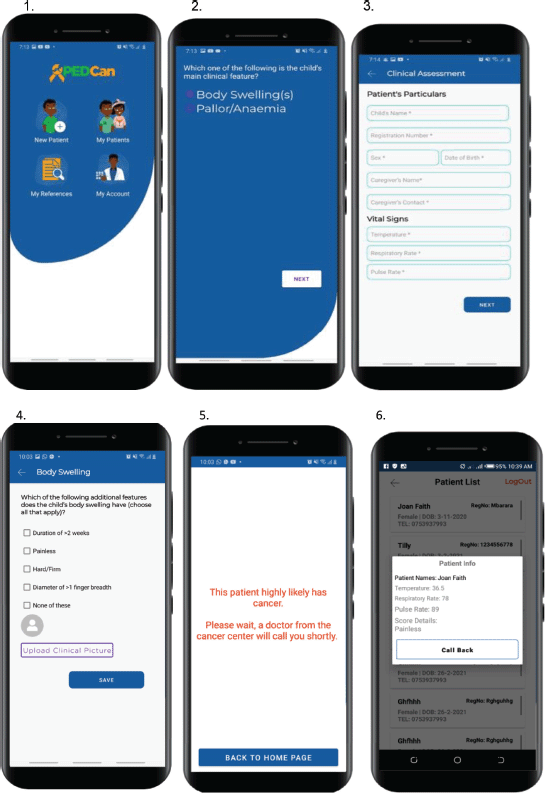
Figure 1. Interfaces of the PEDCan application. 1. Home screen with the PEDCan main features (New Patient, My Patient, My References and My Account). 2. Screen for clinical features. 3. Screen for clinical assessment. 4. Screen for further assessments. 5. Feedback screen. 6. Specialist’s interface with patient list.
Based on combinations of these features, the application classifies patients into three categories: unlikely, likely or highly Likely to have cancer. For patients classified as Likely or Highly Likely, the application transmits clinical information to the nearest cancer specialist. The specialist receives an alert via a pre-recorded voice notification and initiates a phone call to the PHCW for remote consultation and guidance on referral, if necessary. For patients classified as Unlikely, the application generates a prompt advising consideration of alternative diagnoses. All data entered into the application is securely stored on an encrypted Linux-based server.
Expected impact of PEDCan
PEDCan is designed to facilitate direct communication between PHCWs and cancer specialists, improve the timeliness and appropriateness of referrals, promote earlier diagnosis and initiation of treatment, support continuous learning through embedded reference materials and enhance retention of knowledge and clinical skills among PHCWs.
Results
A total of 45 PHCWs consented to participate in the study, and all, except one, underwent the training, completed both questionnaires and their data were analysed.
Demographic characteristics of the study participants
The demographic characteristics of the 44 participants are shown in Table 1. Their median (range) age was 33 (22–55) years. Twenty-eight (63.4%) were females, 25 (56.8%) nurses/midwives, 8 (18.2%) clinical officers, 3 (6.8%) doctors, 4 (9%) social workers, 2 (4.5%) laboratory assistants, 1 (2.2%) pharmacy assistant and 1 (2.2%) anesthetic assistant.
Awareness and experiences of participants regarding childhood cancer
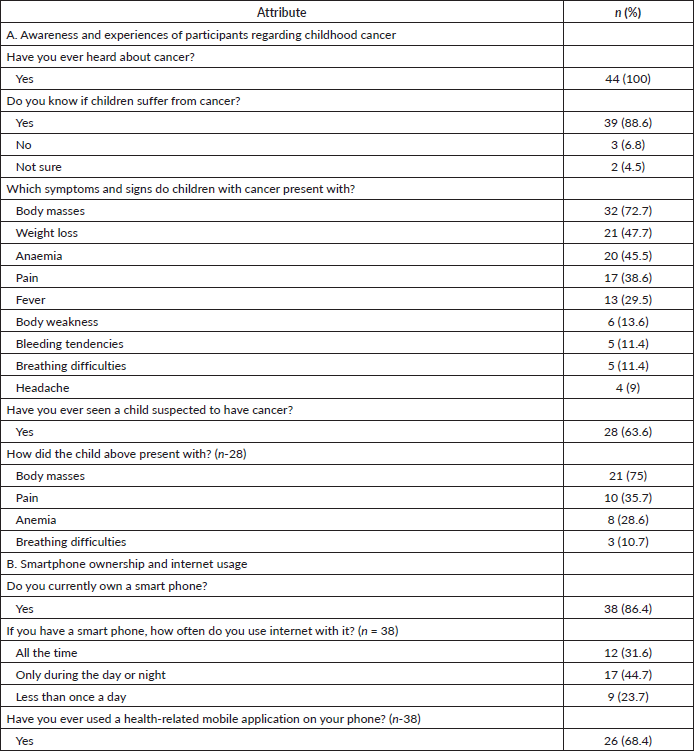
The responses of the participants regarding their awareness and experiences with childhood cancer are shown in Table 2. All (100%) of the participants had previously heard about cancer, and 39 (88.6%) knew that children suffer from it. Thirty-two (72.7%) participants knew that childhood cancer presents with body masses; 21 (47.7%) with weight loss; 20 (45.5%) with anemia; 17 (38.6%) with pain; 13 (29.5%) with fever; 6 (13.6%) with general body weakness; 5 (11.4%) with bleeding tendencies; 5 (11.4%) with breathing difficulties and 4 (9%) with headaches.
Twenty-eight (63.6%) participants had previously seen a child who was suspected of having cancer, with 21 (75%) saying that such children had body masses, 10 (35.7%) pain, 8 (28.6%) anemia and 3 (10.7%) breathing difficulties.
Table 1. Demographic characteristics of the study participants.
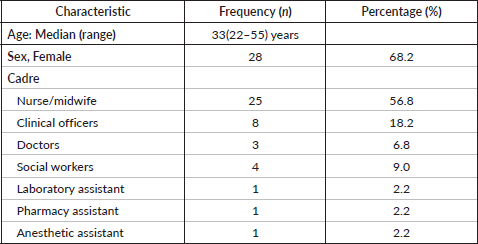
Table 2. Participants’ awareness about and previous experiences with childhood cancer.
Smart phone ownership and internet usage
As shown in Table 3, 38 (86.4%) participants owned a smartphone at the time of the interview and used the internet. Of the 38 participants, 12 (31.6%) accessed the internet all the time, 17 (44.7%) only during the day or night and 9 (23.9%) less frequently. Twenty-six (68.4%) had previously used another health-related mobile application on their phones.
Table 3. Participants’ ease of and willingness to use the PEDCan application.
Ease of use and acceptance of the PEDCan mobile application
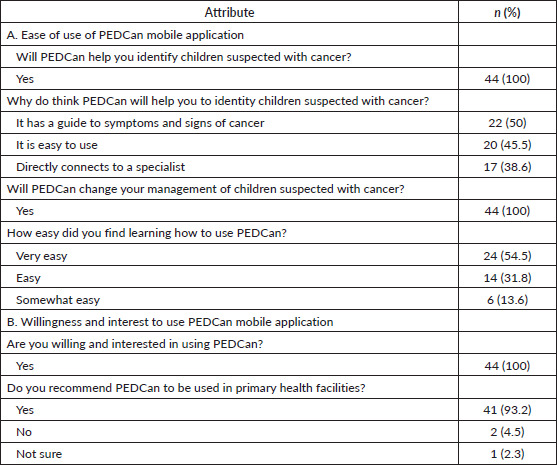
Twenty-four (54.5%), 14 (31.8%) and 6 (13.6%) participants found the learning of the use of PEDCan very easy, easy and somewhat easy, respectively. Forty-one (93.1%) participants said they would recommend its use in primary health care facilities.
All (100%) of the participants, after undergoing training in the use of the PEDCan application, reported that they thought that the application would help them detect cancer-related clinical features in children because it has a guide of the symptoms and signs, it was easy to use and it creates direct consultation with a specialist. They all said that the application would change the way they manage children suspected of having cancer, and were willing to and interested in using it.
Discussion
This study demonstrated a high level of ease with which PHCWs were able to learn and operate the PEDCan mobile application. The findings suggest that PEDCan is a simple and user-friendly tool for PHCWs, who are often the first and sometimes the only health workers to encounter sick children at primary health care facilities. When equipped with appropriate training and access to smartphones and the internet, PHCWs can use PEDCan to obtain timely specialist input, facilitating rapid clinical decision-making. Similar benefits of mHealth tools have been reported in childhood cancer care [19] and other broader disease management contexts [15, 22–25].
Importantly, PEDCan enables direct communication between PHCWs and cancer specialists, thereby bypassing the traditional stepwise referral system. This has the potential to reduce delays associated with sequential referrals and promote earlier access to definitive care at specialised cancer treatment centers.
Our study also demonstrated universal acceptability of the PEDCan application among PHCWs. Participants highlighted several reasons for this high level of acceptance, including the integration of cancer-related signs and symptoms within the application, its ease of use and its ability to facilitate direct consultation with specialists. These findings are consistent with previous studies showing that mobile applications can enhance PHCWs’ confidence, support remote consultations and improve patient outcomes [1, 2].The ONCOpeds application, for example, has similarly been shown to be highly acceptable and feasible for facilitating remote consultations between PHCWs and paediatric oncology specialists [20].
Diagnosing childhood cancer in LMICs remains challenging, as most of its clinical features mimic common paediatric illnesses [15], increasing the likelihood of misdiagnosis or delayed diagnosis. Our findings suggest that PEDCan, when combined with targeted training in recognising childhood cancer features, can serve as an effective telemedicine intervention to reduce missed and delayed diagnoses. Additionally, the application enhances communication between PHCWs and specialists, strengthening the overall referral pathway.
Another important advantage of PEDCan is its inclusion of simplified reference materials, which PHCWs can repeatedly access during routine practice. This feature may support ongoing learning and improve long-term retention of knowledge and clinical skills, reducing the need for frequent refresher training sessions.
One potential limitation to the widespread implementation of PEDCan is limited internet connectivity in rural areas. However, this barrier is gradually diminishing. Currently, approximately 50% of Uganda’s geographic area is covered by 3G networks, and internet penetration, estimated at 26.2%, is increasing rapidly (by approximately 14% annually) [25]. Notably, the majority of participants in this study (86.4%) owned smartphones and used the internet, suggesting a strong foundation for scaling such interventions.
Additionally, the sample size was relatively small and limited to three HC located within the catchment area of the PCU at MRRH. These facilities may have better access to internet infrastructure compared to more remote settings, potentially limiting generalisability. Future studies should include more geographically diverse and rural populations, where smartphone ownership and internet connectivity may be lower.
A key strength of this study is that participants were recruited directly from their clinical work settings, ensuring that the findings reflect real-world usability. Furthermore, participants demonstrated adequate baseline competence in smartphone use, which supports the feasibility of implementing PEDCan in similar contexts.
Conclusion and recommendations
The PEDCan mobile application is highly acceptable and feasible for use among PHCWs in southwestern Uganda. The study demonstrated strong enthusiasm and readiness among participants to adopt the application in routine clinical practice.
These findings support the need for a larger-scale pilot study involving more PHCWs across a wider geographic area to evaluate the effectiveness of PEDCan in real-world clinical settings. Such a study would provide critical evidence on its impact on early diagnosis, referral patterns and treatment outcomes for children with cancer. Ultimately, PEDCan has the potential to contribute significantly to improving the detection and management of childhood cancer in Uganda and other low-resource settings.
List of abbreviations
CAMTech, Consortium for Affordable Medical Technologies in Uganda; CPD, Continuous professional development; HCs, Health centres; LMIC, Low-and-middle income countries; MRRH, Mbarara Regional Referral Hospital; MUST, Mbarara University of Science and Technology; PCU, Paediatric cancer unit; PEDCan, Paediatric cancer; PHCWs, Primary health care workers; REC, Review and Ethics Committee; UCI, Uganda Cancer Institute.
Conflicts of interest
The authors declare no conflicts of interest.
Funding
The development of the PEDCan mobile application and the study were supported by the First Mile Program of Massachusetts General Hospital (MGH), in Boston, USA, through the Consortium of Affordable Medical Technologies in Uganda (CAMTech Uganda) of Mbarara University of Science and Technology.
References
1. The outcome and cost of a capacity‐building training programme on the early recognition and referral of childhood cancer for healthcare workers in North‐West Cameroon | Enhanced Reader
2. Chantada G, Lam CG, and Howard SC (2019) Optimizing outcomes for children with non-Hodgkin lym- phoma in low- and middle-income countries by early correct diagnosis, reducing toxic death and preventing abandonment 6(June) 1125–1135 [https://doi.org/10.1111/bjh.15785]
3. Levine DR, Mandrell BN, and Sykes A, et al (2017) Patients’ and parents’ needs, attitudes, and perceptions about early palliative care integration in pediatric oncology JAMA Oncol 3(9) 1214–1220 https://doi.org/10.1001/jamaoncol.2017.0368 PMID: 28278329 PMCID: 5824292
4. Ward ZJ, Yeh JM, and Bhakta N, et al (2019) Estimating the total incidence of global childhood cancer: a simulation-based analysis Lancet Oncol 20(4) 483–493 https://doi.org/10.1016/S1470-2045(18)30909-4 PMID: 30824204
5. Steliarova-Foucher E, Colombet M, and Ries LAG, et al (2017) International incidence of childhood cancer, 2001–10: a population-based registry study Lancet Oncol 18(6) 719–731 https://doi.org/10.1016/S1470-2045(17)30186-9 PMID: 28410997 PMCID: 5461370
6. Mawanda P (2018) Childhood Cancers on the Rise -UCI (Uganda Radio Network)
7. Atwiine B (2018) Clinical and Pathological Phenotypes of Paediatric Lymphomas among Children at Uganda Cancer Institute (Uganda Paediatrics Association)
8. Abdelkhalek ER, Sherief LM, and Kamal NM, et al (2014) Factors associated with delayed cancer diagnosis in Egyptian children Clin Med Insights Pediatr 8 39–44 https://doi.org/10.4137/CMPed.S16413 PMID: 25232287 PMCID: 4159362
9. Berhane A, Hailu T, and Mulugeta A (2019) Determinants of delayed diagnosis among pediatric cancer patients from Ayder comprehensive specialized hospital, Mekelle, northern Ethiopia BMC Pediatrics 19(1) 1–8 https://doi.org/10.1186/s12887-019-1848-1
10. Ntacyabukura B (2018) Childhood cancer early detection training program for primary healthcare providers J Glob Oncol 4_(suppl_2) 135s https://doi.org/10.1200/jgo.18.12500
11. Slone JS, Ishigami E, and Mehta PS (2016) Pediatric cancer recognition training in Botswana Glob Pediatr Health 3 [https://doi.org/10.1177/2333794x16635002] PMID: 27336006 PMCID: 4905160
12. Slone JS, Chunda-Liyoka C, and Perez M, et al (2014) Pediatric malignancies, treatment outcomes and abandonment of pediatric cancer treatment in Zambia PLoS One https://doi.org/10.1371/journal.pone.0089102 PMID: 24586527 PMCID: 3931678
13. Pizzo D and Popluck D (2015) Principles and Practises of Pediatric Oncology 7th edn (Elsevier) p 6
14. Poyiadjis S, Wainwright L, and Naidu G, et al (2011) The Saint Siluan warning signs of cancer in children: impact of education in rural South Africa Pediatr Blood Cancer 56(2) 314–316 https://doi.org/10.1002/pbc.22853
15. Chan NHM, Merali HS, and Mistry N, et al (2021) Development of a novel mobile application, HBB prompt, with human factors and user-centred design for helping babies breathe skills retention in Uganda BMC Med Informat Decis Making 21(1) 1–15 [https://doi.org/10.1186/s12911-021-01406-z]
16. Anticona Huaynate CF, Pajuelo Travezaño MJ, and Correa M, et al (2015) Diagnostics barriers and innovations in rural areas: insights from junior medical doctors on the frontlines of rural care in Peru BMC Health Serv Res 15(1) 1–10 https://doi.org/10.1186/s12913-015-1114-7
17. Rossell N, Salaverria C, and Hernandez A, et al (2018) Community resources support adherence to treatment for childhood cancer in El Salvador [Published Online] [https://doi.org/10.1080/07347332.2018.1427174]
18. World Health Organization (2018) mHealth, Use of Appropriate Digital Technologies for Public Health. Seventy-First World Health Assembly - Provisional Agenda Item 124 (A71/20) vol 28(March) pp 1–5 [https://doi.org/10.2337/dc11-0366.4]
19. Vásquez L, Montoya J, and Ugaz C, et al (2021) ONCOPEDS: a mobile application to improve early diagnosis and timely referral in childhood cancer in a low- and middle-income country—a pilot study Pediatr Blood Cancer 68(4) 1–7 https://doi.org/10.1002/pbc.28908
20. Ubos (2024) National Population and Housing Census 2024 Final Report Volume 1 (main) Republic of Uganda
21. Soloe C, Burrus O, and Subramanian S (2021) The effectiveness of mHealth and eHealth tools in improving provider knowledge, confidence, and behaviors related to cancer detection, treatment, and survivorship care: a systematic review J Cancer Educ https://doi.org/10.1007/s13187-021-01961-z PMID: 33598832 PMCID: 7889413
22. Wallis LA, Fleming J, and Hasselberg M, et al (2016) A smartphone app and cloud-based consultation system for burn injury emergency care PLoS One 11(2) 1–19 https://doi.org/10.1371/journal.pone.0147253
23. Blumrosen G and Rubinsky B (2010) Remote monitoring of internal bleeding based on magnetic induction and cellular phone technology: a potential application in poor regions in México Computación Y Sistemas 14(2) 187–195 [https://doi.org/10.13053/cys-14-2-1267]
24. Ekeland AG, Bowes A, and Flottorp S (2012) Methodologies for assessing telemedicine: a systematic review of reviews Int J Med Inf 81(1) 1–11 https://doi.org/10.1016/j.ijmedinf.2011.10.009
25. Gillwald A, Mothobi O, and Ndiwalana A, et al (2019) The State of ICT in Uganda