Safety of immune checkpoint inhibitors in a diverse patient population: a single-institution experience
Grace M Ferri1*, John F Murphy1*, Akash Oza1*, Alexander J B Bulteel1, Wafaa Abbasi2, Rachel Anderson1, Mehmed Taha Dinc1, Eva Gaufberg2, Kayra Cengiz2, Sainikhil Sontha2, Janice Weinberg3, Patrick Kurpaska4, Yashvin Onkarappa Mangala4, Matthew Kulke4 and Umit Tapan4
1Section of General Internal Medicine, Department of Medicine, Boston Medical Center, Boston, MA 02215, USA
2Boston University Chobanian and Avedisian School of Medicine, Boston, MA 02215, USA
3Department of Biostatistics, Boston University School of Public Health, Boston, MA 02215, USA
4Section of Hematology and Oncology, Boston University Chobanian and Avedisian School of Medicine and Boston Medical Center, Boston, MA 02215, USA
Abstract
Introduction: Among racial and socioeconomic minorities not appropriately represented by trial populations, rates of immune-related adverse events (irAEs) are unclear.
Objective: We sought to characterise factors associated with irAEs in adult cancer patients at Boston Medical Center, a safety-net hospital serving a diverse patient population, including racial and ethnic minorities.
Methods: We performed a retrospective study on all adult cancer patients at Boston Medical Center treated with first-line immune checkpoint inhibitors (ICIs) between 7/1/15 and 6/30/22. Baseline demographic (including socioeconomic) and oncologic variables were collected.
Results: From the overall cohort (n = 469), 34 patients (n = 34, 7%) on first-line ICI without prior chemotherapy developed at least one ICI toxicity. Toxicity was experienced in 10% of White patients, 5% of Black patients, 7% of Hispanic patients, 7% of non-Hispanic patients, 9% of public insurance recipients and 7% of private insurance recipients. When comparing those who sustained irAEs (n = 34) relative to their counterparts (n = 435), Fisher’s exact test did not indicate any significant association between incidence of irAEs and gender (p = 0.853), race (p = 0.352), ethnicity (p = 1.00), language (p = 0.827), insurance (p = 1.00), education (p = 0.267) or smoking (p = 0.695).
Conclusion: We did not identify disproportionate rates of toxicity among patients of racial and ethnic minorities or with public insurance. These findings suggest that management decisions and toxicity risk assessment should not be based solely on race or socioeconomic status. Future studies featuring diverse patient populations must be conducted to formulate clinical algorithms for irAE management.
Keywords: immunotherapy, antineoplastic agents, drug-induced abnormalities, medical oncology, diversity, equity, inclusion
Correspondence to: Grace M Ferri
Email: gferri@bu.edu
Published: 18/06/2026
Received: 06/11/2025
Publication costs for this article were supported by ecancer (UK Charity number 1176307).
Copyright: © the authors; licensee ecancermedicalscience. This is an Open Access article distributed under the terms of the Creative Commons Attribution License (http://creativecommons.org/licenses/by/4.0), which permits unrestricted use, distribution, and reproduction in any medium, provided the original work is properly cited.
Introduction
The therapeutic potential of immune checkpoint inhibitors (ICIs) in treating malignancies and improving survival has been established in clinical trials [1, 2]. However, cited studies demonstrate low rates of enrollment of minority populations within oncology drug clinical trials [3–13]. As a result, we lack sufficient data on ICI efficacy and safety within racial and socioeconomic minorities under-represented by trial populations [7, 14]. While studies have attempted to explore these side effect profiles within minority patient populations, data remain limited and contradictory [7, 15–17].
Herein we assessed patients with solid malignancies at a single institution who were (a) treated with first-line ICI without prior chemotherapy and (b) subsequently developed immune-related adverse events (irAEs) to gauge the impact of ethnicity and socioeconomic status on clinical outcomes. The study institution, Boston Medical Center Healthcare System, is the largest safety-net hospital in New England. Of the patients at Boston Medical Center, approximately 72% would be categorised as underserved. Patients belong to racial and ethnic minorities, where 32.1% of patients identify as Black, 5.2% as Asian, 0.3% as American Indian or Alaska Native, 15.2% as Hispanic or Latino and 0.2% as Native Hawaiian/Pacific Islander [18]. In addition, patients are often elderly, low-income or non-English-speaking (32%) and dependent on Medicaid or Medicare for health insurance coverage [19].
Methods
We queried the electronic medical record through the Clinical Data Warehouse to retrospectively assess all patients aged 18 and above at Boston Medical Center with solid malignancies treated with ICIs between 1 July 2015 and 30 June 2022. From these initial 469 patients meeting inclusion criteria, we identified 34 patients who (a) were receiving first-line mono- or dual-ICI therapy, (b) had not received prior chemotherapy and/or ICIs and (c) had developed one or greater irAE(s). ICI toxicities (irAEs) were determined and graded through a detailed retrospective chart review based on the treating clinician’s assessment and documentation. In cases where the grade of the irAE was not documented, grading was determined by the physician conducting the chart review based on ASCO guidelines incorporating laboratory abnormalities and radiographic findings [20]. When grading was ambiguous, events were adjudicated by dual physician review to ensure accuracy. This study was deemed exempt by the Institutional Review Board of Boston Medical Center.
Baseline demographic data and oncologic data were collected on all 469 patients. Outcomes included the number of toxicities per patient, days to toxicity onset, grade of ICIs toxicity, treatment of ICI toxicity, length of treatment of ICI toxicity and outcome of ICI toxicity (continuation, interruption or discontinuation of ICI). Analyses including confidence intervals at the 95% threshold and Fisher’s exact test were performed in R.
Results
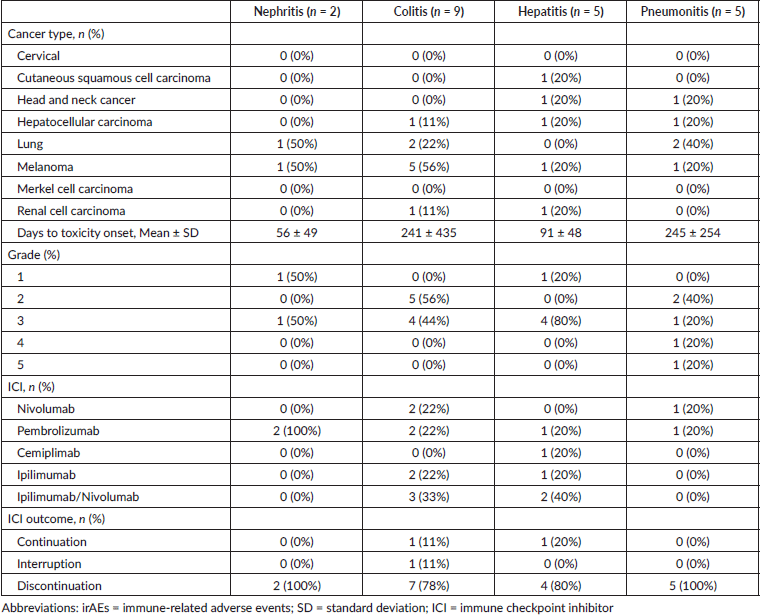
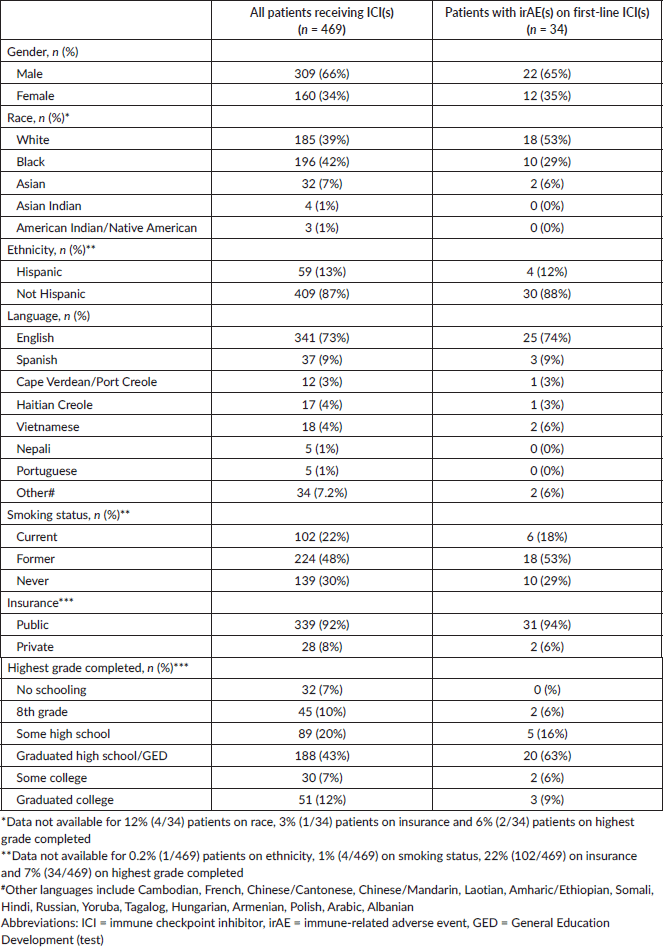
From 1 July 2015 to 30 June 2022, 34 adult cancer patients at Boston Medical Center on first-line ICI without prior chemotherapy exposure developed at least one ICI toxicity. Demographic variables are outlined in Table 1 for these patients (n = 34) relative to the overall cohort of patients treated with ICIs (n = 469). As detailed in Supplementary Table 1, the most common underlying malignancies included lung cancer, melanoma, renal cell carcinoma, hepatocellular carcinoma and head and neck cancers. ICIs used included PD-1/PD-L1 inhibitors (e.g., nivolumab, pembrolizumab and cemiplimab) as well as CTLA-4 inhibition (ipilimumab), including combination therapy. Major organ irAEs included colitis, hepatitis, pneumonitis and nephritis, most arising within 250 days of treatment and meeting criteria for grade 2–3 toxicity. A substantial proportion required corticosteroids and higher-grade toxicities frequently led to interruption or discontinuation of ICI therapy. One fatality was attributed to ICI pneumonitis.
Toxicity was experienced in 7% of male patients (95% confidence interval (CI): 4%–11%) and 8% of female patients (95% CI: 4%–13%). In terms of race and ethnicity, toxicity was experienced in 10% of White patients (95% CI: 6%–15%), 5% of Black patients (95% CI: 3%–9%), 7% of Hispanic patients (95% CI: 3%–16%) and 7% of non-Hispanic patients (95% CI: 5%–10%). By language, toxicity was experienced in 7% of English-speaking patients (95% CI: 5%–11%), 5% of Spanish-speaking patients (95% CI: 1%–17%) and 6% of Haitian Creole-speaking patients (95% CI: 1%–27%). Toxicity was noted in 6% of current smokers, 8% of former smokers and 7% of never smokers. In terms of insurance, toxicity was documented in 9% of public insurance recipients and 7% of private insurance recipients. Toxicities were found in 0% of patients who had no schooling, 4% of patients who had completed 8th grade, 6% of patients who had completed some high school, 11% of patients who had graduated high school or passed the General Educational Development (GED) test, 7% of people who had completed some college and 6% of those who had graduated college.
When comparing those who did sustain irAEs (n = 34) relative to their counterparts (n = 435), results of the Fisher’s exact test did not indicate a significant association between incidence of irAEs and gender (p = 0.853), race (p = 0.352), ethnicity (p = 1.00), language (p = 0.827), insurance (p = 1.00), education (p = 0.267) or smoking (p = 0.695).
Table 1. Baseline characteristics by irAE status (n = 469).
Discussion
Our study did not identify disproportionate rates of toxicity among patients of racial and ethnic minorities or with public insurance. To our knowledge, this study is the first to identify and study a novel cohort of socioeconomically diverse patients with irAEs on first-line ICIs without prior chemotherapy. This work builds on prior studies assessing racial and ethnic differences in response to PD-1/PD-L1 inhibitors in non-small cell lung cancer (NSCLC) and impact of insurance on treatment outcomes in patients on ICI therapy [15, 25].
Previous studies have analyzed patient health data prior to ICI therapy and created predictive toxicity-effectiveness modeling [21]. These models set the stage for clinical decision-making algorithms surrounding ICI use, monitoring and precautions. However, no studies have compared the frequency of irAEs in a population not exposed to chemotherapy, which can also cause multi-organ toxicities on unpredictable timescales [22, 23]. By eliminating potential alternative sources of confounding bias (e.g., prior chemotherapy or chemoimmunotherapy), we sought to more appropriately correlate irAEs with predisposing risk factors.
This study is limited by a small sample size and power owing to these stringent exclusion criteria. Moreover, we could not appropriately characterise ICI efficacy or correlate irAEs with outcome, given the variety of cancers studied, the observational nature of this study and the small sample size. The observed rate of irAEs in our cohort (7%) is lower than rates reported in clinical trials (approximately 15%–30%) [24]. This difference likely reflects the retrospective design of our study, which may underestimate lower-grade toxicities that are under-documented in routine clinical practice, as well as differences in cohort selection, as we included only patients receiving first-line ICI without prior chemotherapy. Additionally, clinical trials employ structured toxicity monitoring, which may increase detection of lower-grade events.
Despite these limitations, our findings provide real-world insight into irAE incidence in a socioeconomically diverse population underrepresented in clinical trials. Prior small studies on minority populations with metastatic NSCLC do demonstrate decreased cumulative dose of ICI and decreased survival [25, 26]. These adverse outcomes may be attributable to differences in management practices rather than intrinsic differences in medication efficacy or toxicity. Accordingly, we advocate for equitable ICI management regardless of race or socioeconomic status. We encourage larger studies on the incidence of irAEs among patients treated exclusively with ICI to create a more precise estimation of which toxicities are attributable to the ICI themselves. Future studies should include system-specific comorbidities predisposing to toxicity (e.g., history of dermatologic conditions among those with ICI dermatitis). Most importantly, diverse populations, such as the cohort we feature in this study, must be highlighted to promote in socially conscious care strategies.
Conflicts of interest
The authors declare no potential conflicts of interest. No disclaimers or relevant financial disclosures.
Continued
Funding
This work, including the preparation of this manuscript, was supported by Boston University Interdisciplinary Affinity Research Collaborative funding awarded to Dr. Matthew Kulke.
Author contributions
Conceptualisation, investigation, methodology, project administration, supervision - GMF, JFM, AO, AJBB, UT, YM, PK; data curation - KC, WA, EG, RA, MD, GMF, JFM, AO; formal analysis - JW, GMF; writing - GMF, JFM, AO, SS; funding acquisition - MK.
Data availability
The data underlying this article will be shared on reasonable request to the corresponding author.
References
1. Yang Y (2015) Cancer immunotherapy: harnessing the immune system to battle cancer J Clin Invest 125(9) 3335 https://doi.org/10.1172/JCI83871 PMID: 26325031 PMCID: 4588312
2. Haslam A, Olivier T, and Prasad V (2025) How many people in the US are eligible for and respond to checkpoint inhibitors: an empirical analysis Int J Cancer 156(12) 2352–2359 https://doi.org/10.1002/ijc.35347 PMID: 39887747
3. Kilic S, Zhao J, and Okut H, et al (2024) Disparities in US lung cancer clinical trial enrollment J Racial Ethnic Health Disparities 11 3201–3209 https://doi.org/10.1007/s40615-023-01776-2
4. Loree JM, Anand S, and Dasari A, et al (2008) Disparity of race reporting and representation in clinical trials leading to cancer drug approvals from 2008 to 2018 JAMA Oncol 5(10) e191870 https://doi.org/10.1001/jamaoncol.2019.1870
5. Unger JM, Hershman DL, and Osarogiagbon RU, et al (2020) Representativeness of black patients in cancer clinical trials sponsored by the National Cancer Institute Compared With Pharmaceutical Companies JNCI Cancer Spectr 4(4) https://doi.org/10.1093/jncics/pkaa034 PMID: 32704619 PMCID: 7368466
6. Peravali M, Gomes-Lima C, and Tefera E, et al (2020) Racial disparities in immune-related adverse events (irAE) of immune checkpoint inhibitors (ICPi) and association with survival based on clinical and biochemical responses JCO 38(15_suppl) 7025 https://doi.org/10.1200/JCO.2020.38.15_suppl.7025
7. Florez MA, Kemnade JO, and Chen N, et al (2022) Persistent ethnicity-associated disparity in antitumor effectiveness of immune checkpoint inhibitors despite equal access Cancer Res Commun 2(8) 806 https://doi.org/10.1158/2767-9764.CRC-21-0143
8. Grant SR, Lin TA, and Miller AB, et al (2020) Racial and ethnic disparities among participants in US-based phase 3 randomized cancer clinical trials JNCI Cancer Spectr 4(5) https://doi.org/10.1093/jncics/pkaa060 PMID: 33225207 PMCID: 7667997
9. Brahmer J, Reckamp KL, and Baas P, et al (2015) Nivolumab versus docetaxel in advanced squamous-cell non–small-cell lung cancer New Engl J Med 373(2) 123–135 https://doi.org/10.1056/NEJMoa1504627 PMID: 26028407 PMCID: 4681400
10. Borghaei H, Paz-Ares L, and Horn L, et al (2015) Nivolumab versus docetaxel in advanced nonsquamous non–small-cell lung cancer New Engl J Med 373(17) 1627–1639 https://doi.org/10.1056/NEJMoa1507643 PMID: 26412456 PMCID: 5705936
11. Garon EB, Rizvi NA, and Hui R, et al (2015) Pembrolizumab for the treatment of non–small-cell lung cancer New Engl J Med 372(21) 2018–2028 https://doi.org/10.1056/NEJMoa1501824 PMID: 25891174
12. Rittmeyer A, Barlesi F, and Waterkamp D, et al (2017) Atezolizumab versus docetaxel in patients with previously treated non-small-cell lung cancer (OAK): a phase 3, open-label, multicentre randomised controlled trial Lancet (London England) 389(10066) 255–265 https://doi.org/10.1016/S0140-6736(16)32517-X
13. Burtness B, Harrington KJ, and Greil R, et al (2019) Pembrolizumab alone or with chemotherapy versus cetuximab with chemotherapy for recurrent or metastatic squamous cell carcinoma of the head and neck (KEYNOTE-048): a randomised, open-label, phase 3 study Lancet (London England) 394(10212) 1915–1928 https://doi.org/10.1016/S0140-6736(19)32591-7 PMID: 31679945
14. Osarogiagbon RU, Sineshaw HM, and Unger JM, et al (2021) Immune-based cancer treatment: addressing disparities in access and outcomes Am Soc Clin Oncol Educ Book 41 66–78 https://doi.org/101200/EDBK_323523
15. Ayers KL, Mullaney T, and Zhou X, et al (2021) Analysis of real‐world data to investigate the impact of race and ethnicity on response to programmed cell death‐1 and programmed cell death‐ligand 1 inhibitors in advanced non‐small cell lung cancers Oncologist 26(7) 1226 https://doi.org/10.1002/onco.13780
16. Nazha B, Goyal S, and Chen Z, et al (2020) Efficacy and safety of immune checkpoint blockade in self-identified Black patients with advanced non-small cell lung cancer Cancer 126(23) 5040–5049 https://doi.org/10.1002/cncr.33141 PMID: 32902858 PMCID: 7717500
17. Miller KD, Goding Sauer A, and Ortiz AP, et al (2018) Cancer statistics for hispanics/latinos, 2018 CA A Cancer J Clin 68(6) 425–445
18. Justice, Equity, Diversity, and Inclusion (JEDI) Emergency Medicine [https://www.bumc.bu.edu/emergencymedicine/diversity-and-inclusion/] Date accessed: 19/06/24
19. NeighborHealth BMC FY19-22 Implementation Strategy [https://www.neighborhealth.com/wp-content/uploads/2024/05/BMC-FY19-22-Implementations-Strategy.pdf] Date accessed: 05/24
20. Schneider BJ, Naidoo J, and Santomasso BD, et al (2021) Management of immune-related adverse events in patients treated with immune checkpoint inhibitor therapy: ASCO guideline update J Clin Oncol 39(36) 4073–4126 https://doi.org/10.1200/JCO.21.01440 PMID: 34724392
21. Lippenszky L, Mittendorf KF, and Kiss Z, et al (2024) Prediction of effectiveness and toxicities of immune checkpoint inhibitors using real-world patient data JCO Clin Cancer Informat 8(8) [https://doi.org/10.1200/CCI.23.00207/SUPPL_FILE/DS_CCI.23.00207.PDF]
22. Farooq MZ, Sheeba, and Aqeel B, et al (2022) Association of immune checkpoint inhibitors with neurologic adverse events a systematic review and meta-analysis key points JAMA Netw Open 5(4) 227722 https://doi.org/10.1001/jamanetworkopen.2022.7722
23. Zhang W, Tan Y, and Li Y, et al (2023) Neutrophil to lymphocyte ratio as a predictor for immune-related adverse events in cancer patients treated with immune checkpoint inhibitors: a systematic review and meta-analysis Front Immunol 14 1234142 https://doi.org/10.3389/fimmu.2023.1234142 PMID: 37622124 PMCID: 10445236
24. Postow MA, Sidlow R, and Hellmann MD (2018) Immune-related adverse events associated with immune checkpoint blockade N Engl J Med 378(2) 158–168 https://doi.org/10.1056/NEJMra1703481 PMID: 29320654
25. Cook S, Samuel V, and Meyers DE, et al (2024) Immune-related adverse events and survival among patients with metastatic NSCLC treated with immune checkpoint inhibitors JAMA Netw Open 7(1) e2352302 https://doi.org/10.1001/jamanetworkopen.2023.52302
26. Mahadevia H, Eidenschink B, and Harry SS, et al (2023) e18538 Publication only impact of ethnicity and insurance on adverse effects and treatment outcomes related to immune checkpoint inhibitors at a safety net hospital [Published online]
Supplementary table
Supplementary Table 1. Outcomes by major organ toxicity among patients with irAEs (n = 34).