Survival analysis of cancer patients: a case study of Cape Coast Teaching Hospital, Ghana
Mahama Jato Asuma1, Akoto Yaw Omari Sasu1, Alhassan Faisal2, Akulibile James3 and Addae Bernard Mensah1
1Department of Statistics and Actuarial Science, Kwame Nkrumah University of Science and Technology (KNUST), PMB, Kumasi, Ghana
2Department of Statistics, University for Development Studies, PO Box TL 1350, Tamale, Ghana
3Department of Agricultural Economics, Agribusiness and Extension, Kwame Nkrumah University of Science and Technology (KNUST), PMB, Kumasi, Ghana
Abstract
Cancer remains a major public health concern in Ghana, and continuous evaluation of survival outcomes is critical for informing clinical decision-making and health policy. This study examined survival patterns among 394 cancer patients receiving care at the Cape Coast Teaching Hospital, focusing on gender and treatment exposure, including chemotherapy, radiotherapy and combined therapy, without directly comparing treatment modalities. Kaplan–Meier analysis indicated broadly comparable median survival experiences across gender and treatment groups, suggesting only minor differences in overall survival patterns. The log-rank test showed a statistically significant difference in survival between males and females (p-value = 0.0053), indicating that females had a higher likelihood of mortality relative to males. Cox proportional hazards models, however, indicated that females indeed had a higher risk of death compared to males but this was not statistically significant (p-value = 0.263). The same conclusion was drawn when accounting for treatment exposure to the gender groups. Time-varying Cox analyses further confirmed that the effects of gender and its interaction with treatment remained stable over time, with no significant time-dependent effects observed (p-values all >0.05). The results also show that treatment types observed had similar survival curves. These findings suggest that although unadjusted comparisons indicate potential gender differences, the hazard of death, when adjusted for treatment, did not differ significantly by gender and no time-dependent effects were detected. This underscores the importance of early diagnosis, timely treatment initiation and equitable access to care. The study, however, highlighted the need for larger, multi-center studies incorporating additional clinical and socioeconomic variables, such as treatment and cancer type, cancer stage, among others, to help better understand cancer survival dynamics in Ghana and the world at large.
Keywords: survival analysis, cancer patients, Cox model, Kaplan-Meier, chemotherapy and radiotherapy
Correspondence to: Mahama Jato Asuma
Email: jatoasuma11@gmail.com
Published: 11/06/2026
Received: 11/09/2025
Publication costs for this article were supported by ecancer (UK Charity number 1176307).
Copyright: © the authors; licensee ecancermedicalscience. This is an Open Access article distributed under the terms of the Creative Commons Attribution License (http://creativecommons.org/licenses/by/4.0), which permits unrestricted use, distribution, and reproduction in any medium, provided the original work is properly cited.
Introduction
Cancer remains a major global health challenge and one of the leading causes of morbidity and mortality worldwide. In 2020 alone, an estimated 10 million cancer-related deaths occurred globally, accounting for approximately one in every six deaths and one out of every five individuals get cancer in their lifetime [1, 2]. The most common cancers include breast, lung, colorectal and prostate cancers. Many cancer deaths are associated with preventable risk factors such as tobacco use, harmful alcohol consumption, obesity, poor diet and physical inactivity, while environmental exposures, particularly air pollution, further increase cancer risk, especially for lung cancer [3]. In low- and middle-income countries, infections such as human papillomavirus and hepatitis viruses contribute to nearly one-third of cancer cases [4]. Importantly, a substantial proportion of cancers are curable when detected early and managed appropriately [5, 6].
Despite advances in genomic and bioinformatics technologies that have improved understanding of cancer biology, treatment outcomes remain suboptimal for many malignancies, with limited knowledge on sustained therapeutic success [7]. Recent global disruptions, particularly the COVID-19 pandemic, further compounded these challenges by delaying diagnoses, interrupting treatment services and forcing health systems to ration limited resources, raising serious concerns about long-term cancer survival [8, 9]. Health system interventions, including early detection and access to effective treatment, remain central to improving cancer survival [10]. Several innovations, such as nanomedicine and immunotherapy, among others, aim to improve treatment precision, reduce adverse effects and enhance survival outcomes, although their widespread clinical integration is still evolving [11, 12].
Evidence from national cancer control programs and studies by [13] in India, underscores the importance of systematic screening and early diagnosis. For example, the implementation of the National Cancer Screening Program in Korea led to an increase in the 5-year relative survival rate to 72.9% in 2022 [14]. Similarly, in developed countries such as the United States, reductions in smoking, earlier detection and advances in targeted and immune-based therapies have contributed to declining cancer mortality; however, substantial racial and ethnic disparities persist, with Native American and Black populations experiencing disproportionately higher mortality compared to White populations[15–18]. Most advanced countries have recorded an increase in cancer survival rates across most cancer types. In contrast, cancer survival outcomes in some other parts of the world remain poor [19]. This poor cancer outcome is due to limited access to screening, diagnostics and treatment services. In India, for instance, fewer than 2% of married women have undergone cervical cancer screening, with utilisation strongly influenced by socioeconomic and educational status [13].
In Ghana, cancer has emerged as a major public health burden as well, with comparatively poor survival outcomes. Breast cancer is the most common malignancy among women, and prostate cancer is among the leading male cancers in urban registry data [20–22]. However, patients frequently present at advanced stages, reducing treatment effectiveness and survival prospects [23–25]. Unlike countries such as Korea and other developed settings that have implemented organised national cancer screening programs, Ghana currently does not have a formal, population-based national cancer screening program. Research indicates that Ghana lacks organised screening guidelines or program for early cancer detection, and screening activities remain largely opportunistic with very low uptake across the population, worsening cancer outcomes [26, 27]. Nevertheless, national public health efforts continue through various initiatives, including HPV vaccination rollouts, cancer awareness campaigns, community-level education and facility-based screening activities, among others.
These factors, such as a lack of population-based national cancer screening program among others, contribute to delayed diagnoses, poor treatment adherence and high mortality compared to high-income countries. Late presentation remains a critical determinant of poor survival. More than half of breast cancer patients in sub-Saharan Africa present at advanced stages, largely due to limited awareness and barriers to care [28, 29]. Advanced-stage disease is strongly associated with worse prognosis, underscoring the importance of early detection and timely treatment [30]. Survival also varies by treatment availability, and disparities in access to care contribute substantially to mortality differences across regions [31].
Beyond clinical and system-level challenges, gender-based disparities play a major role in cancer outcomes, influencing not only how often cancer occurs but also how patients respond to treatment and survive. Women and men differ in biological makeup, hormone profiles, immune responses and other physiological characteristics that can affect the way cancer develops and progresses. These biological differences also influence how the body processes medicines. For example, women and men can metabolise drugs differently, which may affect treatment tolerance, side effects and how well treatments are tolerated over time. Research shows that women are more likely than men to experience severe treatment-related toxicities, which can reduce adherence to therapy and potentially worsen outcomes [32–34].
In addition to biological differences, survival outcomes often vary by gender. Some studies show that women may have poorer survival in certain cancers compared with men, partly due to delayed diagnosis, unequal access to care and disparities in health system interactions [35]. On the other hand, men generally tend to have higher overall incidence and mortality for many cancers, a pattern linked to behavioural risk factors (such as tobacco and alcohol use), occupational exposures and lower engagement with preventive healthcare services [36, 37].
The influence of gender on cancer outcomes is not limited to biology and behaviour; social and structural factors also play a critical role. In low-resource settings, including many parts of sub‑Saharan Africa, gender disparities are further amplified by socioeconomic barriers, limited access to health services, poor health literacy and cultural influences that can delay care‑seeking behaviours, particularly among women [30, 38, 39]. These delays contribute to more advanced disease at diagnosis, less favourable treatment responses and lower survival. Importantly, gender differences extend beyond incidence and stage at diagnosis to affect treatment response and long‑term outcomes. A growing body of research indicates that men and women may respond differently to cancer therapies overall, including both systemic therapies and radiation, due to differences in immune responses, hormone levels and other physiological pathways [40, 41]. For example, women may experience higher rates of adverse events from treatment, while men may derive different survival benefits from the same interventions, pointing to the need for gender‑aware clinical decision-making [33]. These findings highlight that gender is a critical factor in cancer care, affecting treatment tolerance, survival and clinical decision-making. Recognising and addressing gender‑based differences is essential to optimise outcomes, improve treatment adherence, reduce avoidable side effects and design equitable cancer control strategies, especially in resource-limited settings where health system constraints further disadvantage vulnerable groups, using the survival analysis approach for a more comprehensive analysis.
Survival analysis methods provide a robust statistical framework for analysing time-to-event data and have been extensively applied in cancer epidemiology [42, 43]. The Kaplan–Meier estimator is particularly useful for estimating and comparing survival probabilities across treatment groups while accounting for censoring, which occurs when some individuals do not experience the event of interest during follow-up [44]. While Kaplan–Meier curves offer valuable descriptive insights, they do not allow for adjustment for multiple covariates that may influence survival outcomes. To overcome this limitation, the Cox proportional hazards (PHs) model is widely used to assess the effect of treatment modalities and patient characteristics on the hazard of death, while adjusting for covariates such as gender, age and other clinical factors [45]. The Cox model is especially advantageous in settings where the underlying hazard function is unknown, making it suitable for heterogeneous clinical populations, such as cancer patients with varying gender and treatment modalities. Nevertheless, its key assumptions, particularly PHs, may not always hold in contexts characterised by delayed referrals or gender-dependent treatment patterns, highlighting the importance of careful model application and interpretation [46]. There have also been notable disparities of cancer treatment access, screening and distribution in Ghana [27, 31, 47–51].
Against this background, the present study is motivated by the need to systematically examine cancer survival outcomes at the Central Regional Teaching Hospital (CCTH) in Ghana and to evaluate the impact of treatment modality on survival by gender. Specifically, the study seeks to identify disparities in survival outcomes associated with differences in gender and the types of treatment received, including chemotherapy, radiotherapy and combined modalities (chemotherapy and radiotherapy). By applying Kaplan–Meier survival estimation and Cox PHs modeling, extended to time-varying Cox models to test PHs assumptions, this study aims to generate evidence that reflects the realities of cancer care delivery at CCTH, particularly the relationship between gender and treatment types and their influence on patient survival.
Materials and methods
Source of data and statistical methods used
This study employed a quantitative design using secondary data from the CCTH, Cape Coast. The dataset comprised 394 cancer patients diagnosed and treated between 2017 and 2020. Chemotherapy was administered at CCTH, while patients requiring radiotherapy due to limited resources, were referred to Korle Bu Teaching Hospital or Komfo Anokye Teaching Hospital based on patient preference. All patients were monitored through routine reviews and follow-up, including those who received radiotherapy outside CCTH. The dataset included treatment type (chemotherapy, radiotherapy or combined therapy), gender, survival time measured in months and survival status (Death or censored). Patients who remained alive at the end of the study period or were lost to follow-up were treated as censored observations. It is also important to add that CCTH has other treatment modalities, such as surgery, which were not captured in our dataset.
Descriptive statistics were used to summarise patient characteristics by treatment type and gender. Survival probabilities were estimated using the Kaplan–Meier method, and survival curves were compared using the log-rank test. The Cox PHs regression model was applied to assess the effects of treatment type and gender on survival, with hazard ratios (HRs) and 95% confidence intervals (CIs) reported. The PHs assumption was tested to ensure model validity. All analyses were conducted using R software, with patient confidentiality ensured through strict anonymisation of records.
Survival analysis framework
Let T be a non-negative continuous random variable representing the time to event (treatment outcome). The survival function is given as follows:

where F(t) is the cumulative distribution function of T. The hazard rate, which describes the instantaneous risk of the event at time t, was defined as follows:

The cumulative hazard function H(t) is related to the survival function as follows:

Kaplan-Meier estimator
The Kaplan-Meier estimator, as proposed by Kaplan and Meier [44], is a non-parametric technique used to estimate the survival function in datasets that include censored observations, individuals not experiencing the event of interest, death in this case. It is expressed as follows:

where ti represents the ith ordered event time, di represents the number of observed events at ti, and ni represents the number of individuals at risk just before ti. The mean survival time is therefore estimated from the Kaplan-Meier curve as follows:

The variance of the K-M estimator is commonly approximated using Greenwood’s formula [55].

The median survival time, tmed, measure the time at which half of the individual has experienced the event of interest (survived in this case), is defined as the time at which Ŝ(tmed, ) = 0.5.
Cox regression model with interaction
The associations between gender, treatment type and their interaction on the hazard of the outcome were assessed using Cox PHs regression model with interaction [45]. The gender (X1) is binary (0 = female, 1 = male) and the treatment types (X2) is categorical with three different levels (Chemotherapy (Z1), Radiotherapy (Z2) and Combined (reference group)). Defining the dummy variables as follows:
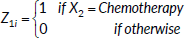
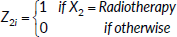
For the ith individual, the Cox PH model with interaction is defined as follows:

If we define the linear predictor as ηi = β1X1i + β2Z1i + β3Z2i + β4X1iZ1i + β5X1iZ2i and let t(1) < t(2) < …<t(D) be the ordered distinct event times, R(t(j)) be the risk set at time t(j). Assume no tied events, the Cox partial likelihood and its loglikelihood are as follows, respectively:


Parameter estimation was carried out by maximising the partial likelihood and survival probabilities were obtained by combining the estimated regression coefficients, baseline hazard and covariates. All analyses were performed in the R statistical software, using the survival package for Kaplan-Meier and Cox model implementation.
PHs assumption tests
To ensure the validity of the Cox PHs model applied in this study, formal tests were conducted to check whether hazard rates change over time, i.e., the PHs assumption. The PH assumption requires that the HRs for covariates remain constant over time. Both global and covariate-specific tests were employed.
Global test
The global test was used to assess whether the assumption that HRs do not change over time is satisfied. The test statistic followed a chi-squared distribution with p degrees of freedom, where p was the number of covariates. The null and alternative hypotheses were specified as follows:
H0: The assumption of constant HRs over time holds for all covariates.
H1: One or more covariates do not satisfy the assumption of constant HRs over time.
The global test statistic was defined as follows:

where


Schoenfeld residuals
Schoenfeld residuals provided a covariate-specific diagnostic for the PH assumption. For the kth predictor at the ith observed event time ti, the residual was computed as follows:

where rik is the Schoenfeld residual corresponding to the ith individual and the kth predictor covariate, Xik recorded value of k for individual i,

Baseline cumulative hazard and survival
Using the Breslow estimator, the baseline cumulative hazard was

where d(d) is the number of events at t(d). For a subject i,

where

DFBETA diagnostics
The DFBETA statistic was employed to ascertain the effect of each individual observation on the estimated regression coefficients in the Cox regression model. For the kth covariate, the DFBETA for the ith observation is defined as follows:

where


Results and discussions
Preliminary analysis with Kaplan-Meier survival times by variables
Figure 1 is a bar chart showing the Kaplan–Meier median survival times by treatment types and gender. It can be seen that the overall median survival time, irrespective of gender or treatment type, was 44 months. When disaggregated by gender, males had a slightly longer median survival time of 47 months compared to 43 months for females. By treatment type, patients who received radiotherapy had a median survival time of 47 months, those who underwent chemotherapy had a median survival time of 46 months, and patients who received both chemotherapy and radiotherapy had a median survival time of 44 months. Although these differences are small and not statistically conclusive, they suggest a potential survival advantage for males and for patients who received radiotherapy.
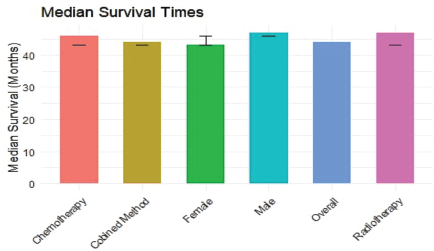
Figure 1. Median survival curves by gender and treatment type.
Kaplan-Meier survival curves
The Kaplan-Meier survival curves were employed to examine and visualise how risk is distributed across individuals and variables. Figure 2 presents the overall Kaplan-Meier survival curve for the survival data. It can be seen in Figure 2 that the survival curve follows the general principle of survival analysis, where survival probabilities decrease over time as the curve slopes downward. A notable decline is observed between 40 and 50 months, towards the end of the study period, compared to the earlier phase (0–40 months). This indicates that the probability of survival decreases with increasing time, while conversely, the probability of experiencing death rises as time progresses.
Also, Figure 3 presents the survival curves by gender, with the median survival times also indicated. From the figure, it can be observed that half of the female patients had died by 43 months, and none were observed surviving beyond the maximum follow-up period, as confirmed already in Figure 1. The two curves begin similarly, but from around 30 months onward, a clear divergence is observed. The female survival curve declines earlier than that of males. That is, females have an increased likelihood of mortality relative to males. The log-rank test supports this observation, yielding a p-value of 0.0053, suggesting the rejection of the null hypothesis at the 5% significance level with the conclusion that the survival experience of males and females is significantly different.
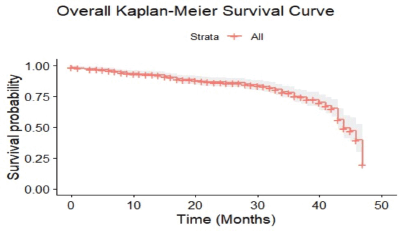
Figure 2. Overall Kaplan-Meier survival curve.
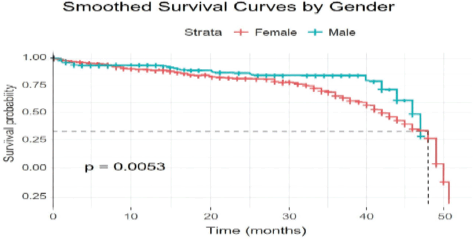
Figure 3. Survival curves by gender.
Furthermore, Figure 4 presents the survival curves for the three treatment types: chemotherapy, radiotherapy and a combination of the two. The curves are almost identical, suggesting that none of the three treatment approaches is different from the others. The log-rank test result (p-value = 0.99 >0.05) confirms this observation. Thus, there is no evidence of a difference in survival curves among the three treatment groups; they are identical.
Cumulative hazard curves of the variables under study
The cumulative hazard function provides the cumulative probability of experiencing the event of interest, which in this study is death. Similar to the survival curve, it illustrates that regardless of treatment type or gender, the risk of death increases over time. As shown in Figure 5, the curve slopes upward, reflecting the cumulative rise in risk, particularly noticeable between 30 and 50 months. This confirms that as time progresses, cancer patients face an increasing likelihood of death, which may be attributed to the severity of the disease or other contributing factors such as old age and underlying medical conditions.
Also, Figure 6 shows the cumulative hazard function by gender. The red line (females) lies consistently above the blue line (males). Although both curves slope upwards over time, the female curve increases more sharply compared to that of males. This indicates that females face a higher cumulative risk of death throughout the study period, consistent to the survival curve. The log-rank test results (p-value = 0.0053) further confirm that the curves are non-identical, suggesting a significant difference in cumulative hazard between the two gender groups
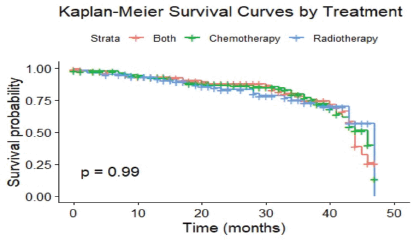
Figure 4. Survival curves by treatment type.
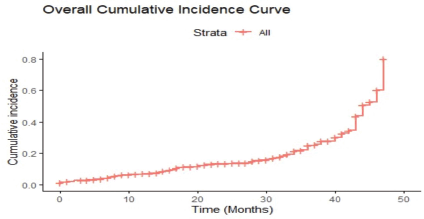
Figure 5. Cumulative hazard curves for all risks.
Furthermore, Figure 7 presents the cumulative hazard curves for the three treatment types. It can be observed that the probability of dying from cancer increases with time. The three treatment curves appear identical, each reflecting a similar increasing risk over time. The log-rank test yielded a p-value of 0.99, suggesting that the survival curves are statistically identical, and hence, there is no significant difference between treatment methods.
Cox models results outputs
Interpretation of Cox models results outputs
Table 1 presents the association of gender, treatment types and their interactions on the hazard of the death using Cox PHs models. The analysis was conducted using females as the reference gender category and the combined treatment group (chemotherapy & radiotherapy) as the reference treatment category. It can be seen from Table 1 that males had an HR of 0.7557 (95% CI: 0.4627–1.234; p = 0.263). An HR less than 1 suggests reduced risk, whereas an HR greater than 1 indicates increased risk; CIs that include 1 reflect uncertainty, and p-values above 0.05 indicate non-significance. Therefore, the HR of 0.7557 suggests a 24.43% lower of the hazard for males compared to females, but this effect was not statistically significant given that the CI includes 1 and the p-value is >0.05. Also, compared to the combined treatment group, patients who received chemotherapy alone had a HR of 0.8702 (95% CI: 0.6357–1.191; p = 0.385), indicating a 12.98% lower hazard compared to the combined treatment method, whereas those who received radiotherapy alone had a HR of 0.8320 (95% CI: 0.5797–1.194; p = 0.318), corresponding to a 16.8% lower hazard compared to the combined treatment method nevertheless, both effects were not statistically significant.
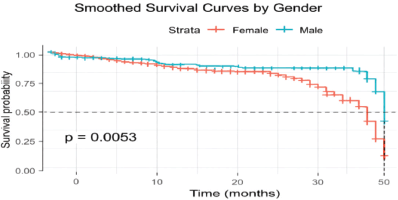
Figure 6. Cumulative hazard curves by gender.
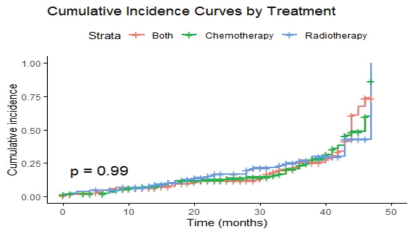
Figure 7. Cumulative hazard curves by treatment type.
When examining treatment interactions with gender, males who received chemotherapy (Gender_Chemotherapy) had an HR of 1.3767 (95% CI: 0.7229–2.622; p = 0.331), indicating 37.67% increase in risk for males as against females. Males who received radiotherapy (Gender_Radiotherapy) had an HR of 1.6957 (95% CI: 0.8463–3.398; p = 0.136), also indicating 69.57% higher risk as compared to females. These interaction effects suggest a higher hazard for males as compared to females but both results were not statistically significant.
The PHs assumption was evaluated using Schoenfeld residuals to determine whether the HRs remained constant over time as shown in (Table 2). It can be seen in Table 2 that the p-values for the individual covariates, the interaction between gender and treatment, as well as the global test are all non-significant (p > 0.05), indicating no evidence of violation of the PH’s assumption for the fitted model. Thus, the HRs estimated in the Cox model are valid and can be interpreted as consistent throughout the follow-up period. Furthermore, inspection of Schoenfeld residual plots in Figures 8–10 indicated no noticeable trends around the horizontal line, suggesting the absence of a time-varying effect in the covariates.
Table 1. Results of Cox PH model.
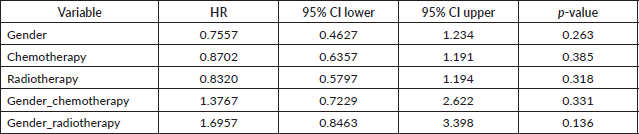
Table 2. Proportional assumptions test of the Cox model.
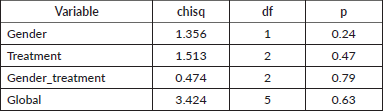
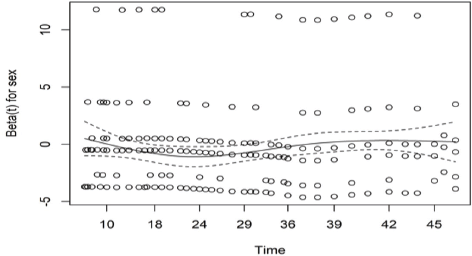
Figure 8. Schoenfeld residuals plot for gender.
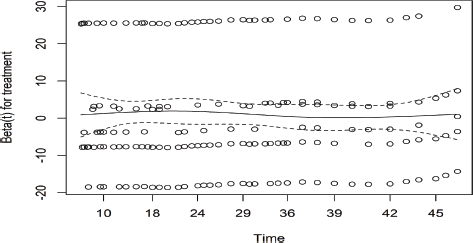
Figure 9. Schoenfeld residuals plot for treatment type.
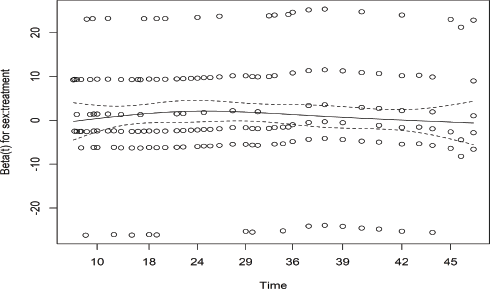
Figure 10. Schoenfeld residuals plot for gender: treatment type.
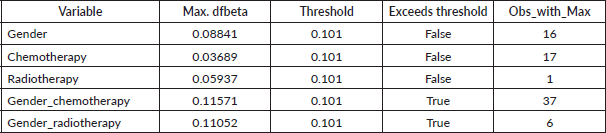
Also, DFBETA statistics were computed for all model coefficients, including the interaction terms and the results are presented in Table 3. It can be seen that a small number of observations exceeded the threshold of ±2/√n = 0.101. The DFBETA statistics identified that observations #37 and #6 had a high influence on the interaction term between gender and chemotherapy treatment, and between gender and radiotherapy treatment, respectively. However, sensitivity analysis showed that the exclusion of these cases did not materially change the model estimates. Therefore, all observations were retained. This suggests that the Cox model results are robust, and the estimated HRs are stable and reliable.
Table 3. Model diagnosis using DFbeta tests.
Conclusion
This study investigated cancer survival using Kaplan–Meier estimators and Cox PHs models, with particular emphasis on gender and its relationship with treatment. Using aggregated cancer data, the analysis provided an overall assessment of survival patterns among patients receiving cancer care. The findings indicate that gender was not significantly associated with differences in the hazard of death across any of the treatment type, which is in conformity with previous studies such as [52–54]. Although male patients exhibited a slightly lower risk compared to female patients, as indicated also by previous studies such as [35] and contrast to [31], this difference was not statistically significant in this study. The results also show that the three treatment types used (Chemotherapy, Radiotherapy and Combined therapy) had similar survival experiences.
Further analyses showed that the effect of gender on survival was consistent across treatments, as neither chemotherapy, radiotherapy nor the combined treatment types significantly modified the association between gender and the hazard of death. The fitted model satisfied the PHs assumption, suggesting that there were no observed differences in survival between males and females within the treatment groups. Importantly, these results should not be interpreted as evidence that cancer treatments are ineffective. Rather, they indicate that survival outcomes did not differ significantly by gender within treatment groups during the study period. Overall, the study highlights the importance of evaluating gender-related survival patterns while accounting for potential time-varying effects and provides evidence that gender does not exert a differential or time-dependent influence on cancer survival in this population.
Recommendations
The findings of this study highlight the importance of timely cancer diagnosis and prompt initiation of treatment for all patients, regardless of gender. Although no statistically significant gender differences in survival were observed, the early period following diagnosis remains clinically critical for patient outcomes. Strengthening early detection strategies, improving access to care and ensuring adherence to prescribed treatments may help improve survival trajectories during this vulnerable phase. The Ministry of Health and hospital management, particularly public health units, should intensify education and awareness programs to encourage early health-seeking behaviour and reduce delays in diagnosis and treatment initiation. Such measures reinforce the observed effectiveness of cancer treatments in stabilising survival risks over time.
This study was limited to data from a single hospital and lacked other important clinical variables, such as age of patient, cancer type, stage, socioeconomic status, medical history, comorbidities, treatment modalities, including surgery and lifestyle characteristics, which would enable deeper insights into survival patterns and the generalisability of the findings. Future research should extend to multiple treatment centers across Ghana to provide a more comprehensive national perspective. Further investigations may also explore early survival dynamics across patient subgroups to better inform clinical decision-making and policy development, building on evidence from this study and existing literature.
Acknowledgments
The authors wish to acknowledge the staff of the Cape Coast Teaching Hospital for their support during data collection, and colleagues at the Department of Statistics and Actuarial Science, KNUST and the Department of Statistics, UDS, for their valuable input. Special appreciation is extended to family and friends for their encouragement throughout this research. Special thanks again to all individual who have contributed to this studies success, especially in the reviewing process.
Conflicts of interest
The authors declare that there are no conflicts of interest regarding the publication of this study.
Funding
This research did not receive any specific grant from funding agencies in the public, commercial or not-for-profit sectors. All expenses were personally covered by the authors.
Informed consent
Not applicable. This study is not a case report and does not involve individual patient images or identifiable information.
Author contributions
Mahama J Asuma conceptualised the study, performed the data analysis and drafted the manuscript. Akoto Yaw Omari Sasu provided guidance on statistical methodology, supervised the research process and contributed to manuscript revision. Alhassan Faisal assisted with statistical coding and validation of results. Addae Benard Mensah contributed to literature review, interpretation of findings and manuscript editing. James Akulibile supported data collection, organisation and critical review of the manuscript. All authors read and approved the final version of the manuscript.
Ethical approval
This study was conducted in accordance with ethical standards for research involving human participants. Only de-identified patient information (coded numerically) was used, and no personal identifiers such as names, addresses or contact details were collected.
Data availability
The datasets generated and/or analysed during the current study contain de-identified patient information (coded as Patient 1, 2, 3 and so on) with no personally identifiable details. Due to privacy and ethical restrictions, the data are not publicly available but can be obtained from the corresponding author on reasonable request.
References
1. Sung H, Ferlay J, and Siegel RL, et al (2021) Global cancer statistics 2020: GLOBOCAN estimates of incidence and mortality worldwide for 36 cancers in 185 countries CA Cancer J Clin 71(3) 209–249 PMID: 33538338
2. Bray F, Laversanne M, and Sung H, et al (2024) Global cancer statistics 2022: GLOBOCAN estimates of incidence and mortality worldwide for 36 cancers in 185 countries CA Cancer J Clin 74(3) 229–263 PMID: 38572751
3. Bray F, Ferlay J, and Soerjomataram I, et al (2018) Global cancer statistics 2018: GLOBOCAN estimates of incidence and mortality worldwide for 36 cancers in 185 countries CA Cancer J Clin 68(6) 394–424 PMID: 30207593
4. De Martel C, Georges D, and Bray F, et al (2020) Global burden of cancer attributable to infections in 2018: a worldwide incidence analysis Lancet Global Health 8(2) e180–e190 https://doi.org/10.1016/S2214-109X(19)30488-7
5. Crosby D, Bhatia S, and Brindle KM, et al (2022) Early detection of cancer Science 375(6586) 9040 [10.1126/science.aay9040] https://doi.org/10.1126/science.aay9040
6. World Health Organization (2022) Cancer [Internet] (Geneva: World Health Organization) [https://www.who.int/ news-room/fact-sheets/detail/cancer] Date accessed: 07/09/25
7. Vogelstein B, Papadopoulos N, and Velculescu VE, et al (2013) Cancer genome landscapes Science 339(6127) 1546–1558 https://doi.org/10.1126/science.1235122 PMID: 23539594 PMCID: 3749880
8. Shah R, Hanna NM, and Loo CE, et al (2025) The global impact of the COVID-19 pandemic on delays and disruptions in cancer care services: a systematic review and meta-analysis Nature Cancer 6(1) 194–204 https://doi.org/10.1038/s43018-024-00880-4 PMID: 39747650
9. Yusuf A (2020) Cancer care in the time of COVID-19—a perspective from Pakistan Ecancermedicalscience 14 1026
10. Kim EE, Cenzer I, and Graham FJ, et al (2025) Time to benefit for lung cancer screening: a systematic review and survival meta-analysis Am J Prev Med 69(2) 107736 https://doi.org/10.1016/j.amepre.2025.107736 PMID: 40447235 PMCID: 12370011
11. Bhatt J, Jain S, and Gupta S, et al (2025) Nanomedicine revolutionizing cancer immunotherapy: recent advancements in nanotechnological strategies and applications Nanosc Adv 7(22) 7086–7108 https://doi.org/10.1039/D5NA00390C
12. Pucci C, Martinelli C, and Ciofani G (2019) Innovative approaches for cancer treatment: current perspectives and new challenges ecancer 13 961 https://doi.org/10.3332/ecancer.2019.961
13. Maheshwari V, Girotra S, and Malik M, et al (2025) Prevalence and predictors of cervical cancer screening among married women in India: a cross-sectional analysis of National Family Health Survey-5 data Cancer Res Statist Treatment 8(1) 30–38 https://doi.org/10.4103/crst.crst_99_24
14. Park EH, Jung KW, and Park NJ, et al (2025) Cancer statistics in Korea: incidence, mortality, survival, and prevalence in 2022 Cancer Res Treat 57(2) 312–330 https://doi.org/10.4143/crt.2025.264 PMID: 40083085 PMCID: 12016816
15. O’Keefe EB, Meltzer JP, and Bethea TN (2015) Health disparities and cancer: racial disparities in cancer mortality in the United States, 2000–2010 Front Public Health 3 51 https://doi.org/10.3389/fpubh.2015.00051
16. Lawrence WR, Mcgee-Avila JK, and Vo JB, et al (2022) Trends in cancer mortality among Black individuals in the US from 1999 to 2019 JAMA Oncol 8(8) 1184–1189 https://doi.org/10.1001/jamaoncol.2022.1472 PMID: 35587341 PMCID: 9121301
17. Gupta A and Akinyemiju T (2024) Trends in cancer mortality disparities between black and white individuals in the US, 2000-2020 JAMA Health Forum 5(1) e234617 https://doi.org/10.1001/jamahealthforum.2023.4617 PMID: 38214921 PMCID: 10787320
18. Siegel RL, Kratzer TB, and Giaquinto AN, et al (2025) Cancer statistics, 2025 Ca 75(1) 10 PMID: 39817679 PMCID: 11745215
19. Allemani C, Matsuda T, and Di Carlo V, et al (2018) Global surveillance of trends in cancer survival 2000–14 (CONCORD-3): analysis of individual records for 37 513 025 patients diagnosed with one of 18 cancers from 322 population-based registries in 71 countries Lancet 391(10125) 1023–1075 https://doi.org/10.1016/S0140-6736(17)33326-3 PMID: 29395269 PMCID: 5879496
20. Amoako YA, Awuah B, and Larsen-Reindorf R, et al (2019) Malignant tumours in urban Ghana: evidence from the city of Kumasi BMC Cancer 19(1) 267 https://doi.org/10.1186/s12885-019-5480-0 PMID: 30909876 PMCID: 6434839
21. Calys-Tagoe BN, Yarney J, and Kenu E, et al (2014) Profile of cancer patients’ seen at Korle Bu teaching hospital in Ghana (A cancer registry review) BMC Res Notes 7(1) 577 https://doi.org/10.1186/1756-0500-7-577
22. Agyemang EA, Gmanyami JM, and Amoakoh MY, et al (2024) A comparative study of cancer burden among males aged 35 to 75 years in Ghana: evidence from GLOBOCAN 2022 E-methodology 11(11) 77–89 https://doi.org/10.15503/emet2024.77.89
23. Tuck CZ, Cooper R, and Aryeetey R, et al (2023) A critical review and analysis of the context, current burden, and application of policy to improve cancer equity in Ghana Int J Equity Health 22(1) 254 https://doi.org/10.1186/s12939-023-02067-2 PMID: 38066530 PMCID: 10709985
24. Amamoo RS, Osei-Bonsu E, and Klimentidis YC, et al (2025) Late-stage diagnosis of breast cancer in Ghana: needs for patient and public education J Cancer Educ 1–10 [https://doi.org/10.1007/s13187-025-02748-2]
25. Okifo FO, A. Tuoyire D, and B. Appiah A, et al (2021) Breast cancer treatment and outcomes at Cape Coast teaching hospital, Ghana Ghana Med J 55(3) 190–197 https://doi.org/10.4314/gmj.v55i3.3
26. Afaya A, Seidu AA, and Sang S, et al (2022) Mapping evidence on knowledge of breast cancer screening and its uptake among women in Ghana: a scoping review BMC Health Serv Res 22(1) 526 https://doi.org/10.1186/s12913-022-07775-z PMID: 35443647 PMCID: 9022278
27. Okyere J, Simkhada B, and Simkhada P (2025) Unmet need for breast cancer screening among women of reproductive age in Ghana: a secondary analysis of the 2022 demographic and health survey BMC Public Health 25(1) 2026 https://doi.org/10.1186/s12889-025-23133-0 PMID: 40450253 PMCID: 12125886
28. Joko‐Fru WY, Miranda‐Filho A, and Soerjomataram I, et al (2020) Breast cancer survival in sub-Saharan Africa by age, stage at diagnosis and human development index: a population-based registry study Int J Cancer 146(5) 1208–1218 https://doi.org/10.1002/ijc.32406 PMCID: 7079125
29. Mensah KB and Mensah ABB (2020) Cancer control in Ghana: a narrative review in global context Heliyon 6(8) 6 https://doi.org/10.1016/j.heliyon.2020.e04564
30. Jedy-Agba E, Mccormack V, and Adebamowo C, et al (2016) Stage at diagnosis of breast cancer in sub-Saharan Africa: a systematic review and meta-analysis Lancet Global Health 4(12) e923–e935 https://doi.org/10.1016/S2214-109X(16)30259-5 PMID: 27855871 PMCID: 5708541
31. Wiredu EK and Armah HB (2006) Cancer mortality patterns in Ghana: a 10-year review of autopsies and hospital mortality BMC Public Health 6(1) 159 https://doi.org/10.1186/1471-2458-6-159 PMID: 16787544 PMCID: 1539002
32. Soldin OP and Mattison DR (2009) Sex differences in pharmacokinetics and pharmacodynamics Clin Pharm 48(3) 143–157 https://doi.org/10.2165/00003088-200948030-00001
33. Unger JM, Vaidya R, and Albain KS, et al (2022) Sex differences in risk of severe adverse events in patients receiving immunotherapy, targeted therapy, or chemotherapy in cancer clinical trials J Clin Oncol 40(13) 1474–1486 https://doi.org/10.1200/JCO.21.02377 PMID: 35119908 PMCID: 9061143
34. Ceria F, Muhammad G, and Del Giudice F, et al (2026) Unveiling the female factor: gender-based differences in outcomes and survival following radical cystectomy for bladder cancer Cancers 18(2) 308 https://doi.org/10.3390/cancers18020308 PMID: 41595229 PMCID: 12838950
35. Murphy G, Devesa SS, and Cross AJ, et al (2011) Sex disparities in colorectal cancer incidence by anatomic subsite, race and age Int J Cancer 128(7) 1668–1675 https://doi.org/10.1002/ijc.25481 PMCID: 3031675
36. Torre LA, Siegel RL, and Ward EM, et al (2016) Global cancer incidence and mortality rates and trends—an update Cancer Epidemiol Biomarkers Prev 25(1) 16–27 https://doi.org/10.1158/1055-9965.EPI-15-0578
37. Cook MB, McGlynn KA, and Devesa SS, et al (2011) Sex disparities in cancer mortality and survival Cancer Epidemiol Biomarkers Prev 20(8) 1629–1637 https://doi.org/10.1158/1055-9965.EPI-11-0246 PMID: 21750167 PMCID: 3153584
38. Sankaranarayanan R, Swaminathan R, and Brenner H, et al (2010) Cancer survival in Africa, Asia, and Central America: a population-based study Lancet Oncol 11(2) 165–173 https://doi.org/10.1016/S1470-2045(09)70335-3
39. Wiafe E, Mensah KB, and Appiah KAA, et al (2022) The direct cost incurred by patients and caregivers in diagnosing and managing prostate cancer in Ghana BMC Health Serv Res 22(1) 1105 https://doi.org/10.1186/s12913-022-08476-3 PMID: 36045364 PMCID: 9428865
40. Klein SL and Flanagan KL (2016) Sex differences in immune responses Nat Rev Immunol 16 626–638 https://doi.org/10.1038/nri.2016.90 PMID: 27546235
41. Klein SL and Morgan R (2020) The impact of sex and gender on immunotherapy outcomes Biol Sex Differ 11 24 https://doi.org/10.1186/s13293-020-00301-y PMID: 32366281 PMCID: 7197158
42. D’Arrigo G, Leonardis D, and Abd Elhafeez S, et al (2021) Methods to analyse time‐to‐event data: the Kaplan‐Meier survival curve Oxid Med Cellr Longev 2021(1) 2290120 https://doi.org/10.1155/2021/2290120
43. Elhafeez SA, Torino C, and D’Arrigo G, et al (2012) An overview on standard statistical methods for assessing exposure-outcome link in survival analysis (Part II): the Kaplan-Meier analysis and the Cox regression method Aging Clin Exp Res 24(3) 203–206 https://doi.org/10.1007/BF03325249
44. Kaplan EL and Meier P (1958) Nonparametric estimation from incomplete observations J Am Stat Assoc 53 457–481 http://dx.doi.org/10.1080/01621459.1958.10501452] https://doi.org/10.1080/01621459.1958.10501452
45. Cox DR (1972) Regression models and life‐tables J Roy Stat Soc Ser B (Methodol) 34(2) 187–202 https://doi.org/10.1111/j.2517-6161.1972.tb00899.x
46. Therneau TM and Grambsch PM (2000) Expected survival Modeling Survival Data: Extending the Cox Model (New York: Springer) pp 261–287
47. Moustafa M, Mali ME, and Lopez-Verdugo F, et al (2021) Surveying and mapping breast cancer services in Ghana: a cross-sectional pilot study in the Eastern Region BMJ Open 11(11) e051122 https://doi.org/10.1136/bmjopen-2021-051122 PMID: 34824116 PMCID: 8627397
48. Scott AA, Polo A, and Zubizarreta E, et al (2022) Geographic accessibility and availability of radiotherapy in Ghana JAMA Netw Open 5(8) e2226319 [10.1001/jamanetworkopen.2022.26319] https://doi.org/10.1001/jamanetworkopen.2022.26319 PMID: 35951324 PMCID: 9372791
49. Price MD, Rositch AF, and Dedey F, et al (2024) Availability and geographic access to hospital-based breast cancer diagnostic services in Ghana JCO Glob Oncol 10 e2300231 https://doi.org/10.1200/GO.23.00231 PMID: 38330275 PMCID: 10860977
50. Adzigbli LA, Aboagye RG, and Adeleye K, et al (2025) Cervical cancer screening uptake and its predictors among women aged 30–49 in Ghana: providing evidence to support the World Health Organization’s cervical cancer elimination initiative BMC Infect Dis 25 246 https://doi.org/10.1186/s12879-025-10485-6
51. Wongnaah F, Aboagye R, and Storph R, et al (2024) Regional variations in breast cancer screening uptake and its associated factors in Ghana Eur J Public Health 34(Supplement_3) e144 https://doi.org/10.1093/eurpub/ckae144.1267
52. Agyemang-Yeboah F, Yorke J, and Obirikorang C, et al (2018) Colorectal cancer survival rates in Ghana: a retrospective hospital-based study PLoS One 13(12) 209307 https://doi.org/10.1371/journal.pone.0209307
53. Kim YW, Joo DH, and Kim SY, et al (2025) Gender disparities and lung cancer screening outcomes among individuals who have never smoked JAMA Netw Open 8(1) e2454057 https://doi.org/10.1001/jamanetworkopen.2024.54057 PMID: 39813033 PMCID: 11736501
54. Buckman TA, Sakyi SA, and Yorke J, et al (2025) Prognostic factors and survival outcomes in colorectal cancer: insights from a Ghanaian cohort BMC Gastroenterol 25 876 https://doi.org/10.1186/s12876-025-04405-w PMID: 41462434 PMCID: 12751978
55. Greenwood M (1926) The natural duration of cancer Rep Public Health Med Subjects 33 1–26