Supporting oncology professionals through education
The content on this site is intended for healthcare professionals only
The content on this site is intended for healthcare professionals only
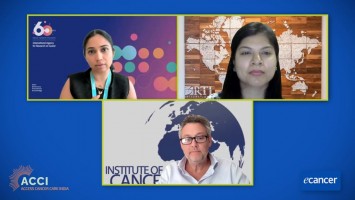
Helena Ullgren (Clinical Nurse Leader, Karolinska Institute, Sweden), Rachel Powell (Advanced Clinical Practitioner, Haematology & Oncology, University Hospitals Birmingham NHS Foundation Trust, UK), Irati Rodriguez-Matesanz (Oncology Nurse Practioner, City of Hope Cancer Centre, Atlanta, USA) and Elin Backman Stålnacke (Oncology Contact Nurse, Karolinska Institute, Sweden) discuss safe administration and dosing of EGFR inhibitors in NSCLC.
This expert panel discussion highlights the real-world challenges of managing patients on EGFR-targeted therapies, including amivantamab and tyrosine kinase inhibitors, with a focus on toxicity management, adherence, and treatment delivery.
The panellists emphasise that while many side effects such as skin toxicities, eye complications, gastrointestinal issues, and thromboembolic risk may not always be life-threatening, they can significantly impact quality of life and treatment compliance. Early and proactive management, particularly in the first weeks of therapy, is critical.
The discussion also explores the complexities of oral therapies, including strict dosing schedules and food requirements, which can make adherence challenging despite their convenience. In contrast, intravenous and subcutaneous treatments offer structured administration but come with their own logistical and safety considerations.
A key takeaway is the importance of patient education, continuous monitoring (including telehealth tools), and strong nurse–patient communication to ensure adherence and optimize outcomes. Experts also highlight that maintaining treatment continuity is crucial, as interruptions may negatively impact disease control.
Overall, the panel underscores that personalized treatment selection, proactive toxicity management, and multidisciplinary support are essential to maximizing the benefits of modern targeted therapies in lung cancer.