ASCO 2026: Latest updates in mRCC
30 May 2026

The content on this site is intended for healthcare professionals only
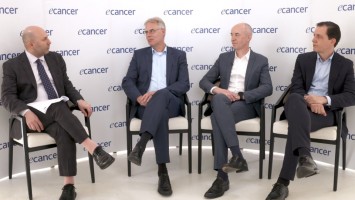
Dr Jan-Jaap Mellema speaks to ecancer about the phase 2 Indi-Blade trial.
He explains that the phase II Indi-Blade trial evaluated a bladder-sparing strategy using induction ipilimumab plus nivolumab followed by chemoradiotherapy in patients with muscle-invasive bladder cancer.
The study met its primary endpoint, with a two-year bladder-intact event-free survival of 76 percent and an overall survival rate of 96 percent.
Most patients successfully proceeded to chemoradiotherapy, and treatment-related toxicity was manageable.
Patients who were circulating tumour DNA negative at baseline or after immunotherapy had particularly favourable outcomes, suggesting a potential role for biomarker-guided treatment.
These results support this approach as an effective bladder-preserving alternative to radical cystectomy in a broader patient population.
In the Indi-Blade trial we looked at combination ipilimumab and nivolumab followed by consolidative chemoradiotherapy in patients with stage 2/3 urothelial carcinoma in an effort to broaden the population able to receive bladder-sparing treatment.
What was the study design?
In the Indi-Blade trial patients with clinical T2 to T4a, N0-2, muscle-invasive bladder cancer were included if suspected lymph nodes were amenable for radiation. They were then treated following the regimen of the first NABUCCO cohort, which was 3mg/kg ipilimumab followed by a combination of 3mg/kg ipilimumab and 1mg/kg nivolumab with a last cycle of nivolumab 3mg/kg after which patient response would be evaluated in a multidisciplinary meeting using imaging and cystoscopy. In absence of progression patients would then continue to consolidative chemoradiotherapy after which a second response evaluation would take place.
What were the results of this study?
The primary endpoint of the Indi-Blade trial was bladder intact event free survival at two years, for which we set a target of 70% to justify further clinical development. The Indi-Blade trial met that endpoint at 78% by which we could reject the null hypothesis of bladder intact event free survival equal to 50%. Secondary endpoints that we discussed here today were overall survival, which though a bit premature, maybe, but was a very encouraging 96% at two years. We reported on safety, which we found no new safety signals in the course of the study, and grade 3/4 or higher toxicity in the immunotherapy-related population and in the chemoradiotherapy population grade 3 or higher toxicity was very rare, with only 7%.
We further reported on ctDNA analysis which was collected throughout the course of the study before each immunotherapy cycle, at the response evaluations, so after immunotherapy and after chemoradiotherapy, and up to a year of follow-up after chemoradiotherapy. In these analyses we saw that patients who were ctDNA positive and would eventually experience an event would remain ctDNA positive throughout the course of the treatment or would become ctDNA positive at time of the event. Conversely, patients that would not experience an event either remained ctDNA negative from the baseline throughout the course of the study or would become ctDNA negative at either the first or second response evaluation. This really showed the monitoring power that ctDNA can have. Survival analysis by ctDNA status showed that post-immunotherapy absence of ctDNA was highly associated with bladder intact event free survival.
What is the clinical significance of these results?
We feel that the Indi-Blade trial, the results that we now can show, in of itself could justify randomised clinical trials. However, with the emergence of enfortumab vedotin and pembrolizumab in now the perioperative setting, we are very excited to see what such a potent therapy might do in this study design such as the Indi-Blade where patients are treated with very potent systemic therapy and would then, after response evaluation, maybe be randomised or could be allocated to either cystectomy in the case of non-response, for example, and in case of response, clinical response, either be subjected to chemoradiotherapy, which in our study showed very, very good results, of course, or might in some cases even be offered active surveillance. We feel that the Indi-Blade trial could be really a proof of concept to also include patients with larger tumours and higher tumour stages in these trials as well, as that might be very effective in those patients.
ASCO 2026: Latest updates in mRCC
Pembrolizumab alone achieves bladder preservation and ctDNA predicts outcomes in muscle-invasive bladder cancer
Enzalutamide plus leuprolide achieves durable PSA suppression after treatment suspension

Cabozantinib shows clinical benefit in refractory GCT with over 40% disease control
ASCO GU 2026: Updates in bladder cancer
Best practice in precision medicine for prostate cancer
New MOAs in prostate cancer treatment - what’s next?

TAR-200 plus cetrelimab show encouraging outcomes for MIBC patients ineligible for standard cisplatin-based chemotherapy

Understanding the use of PARPi combinations to treat patients with mCRPC
