ASCO 2026: Latest updates in mRCC
30 May 2026

The content on this site is intended for healthcare professionals only
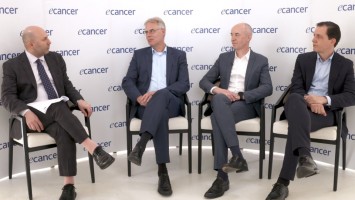
Dr Roberto Salgado speaks to ecancer about clinical outcomes of invasive lobular carcinoma (ILC) versus non-lobular breast cancer (NLC) assessed by expert pathologists, an artificial intelligence (AI) CDH1 classifier, and AI-derived tumour microenvironment (TME) biomarkers in TAILORx.
He says that in this analysis ILC was consistently associated with higher late recurrence and worse survival compared with non-lobular breast cancer, whether identified by expert pathology review or an AI-based CDH1 classifier.
While early outcomes were similar, ILC showed a significantly increased risk between years 5–15, with a nearly 5% overall survival difference at 15 years.
Both manual TIL scoring and a novel AI-derived tumour microenvironment risk score independently stratified recurrence risk beyond standard clinicopathologic factors and the 21-gene recurrence score.
Dr Salgado concludes by saying that these findings highlight the value of AI-driven pathology and TME analysis for long-term risk assessment and support consideration of extended endocrine therapy in patients with ER+/HER2−, node-negative ILC, even when genomic risk is low.
The TAILORx study is one of the largest, maybe the largest, study that has been performed to evaluate the prospective validation of the genomic assay to find patients with hormone receptor positive disease, the so-called luminal breast cancer patients, who may not need chemotherapy. Because we do know for many years already that patients who have low genomic risk, identified by a genomic signature, have such a good outcome that they may not need chemotherapy.
Now, two elements in this study. We have analysed in this study whether histology matters and breast cancer is a family of diseases. The two most important histological subtypes are ductal breast cancer and lobular breast cancer. So we have looked at, in this study, these two histologies but not only by the pathologist looking through the microscope but also we have combined an AI assay which is very specific for lobular breast cancer. So we have used manual, a bit like the APHINITY study, a manual assessment combined with an AI assay (Paige.AI), that measures a genomic alteration on the digital H&E slides so that the pathologist who thinks it’s lobular and if the AI tool confirms it is lobular we have nearly 100% assurance that it is indeed what he’s told you, because it’s not always that easy. By doing this we have shown that not the first five years but after five years, ten years, with 15 years follow-up, we see that the overall survival difference for lobular breast cancer is 5% less than for ductal. So this is an extremely important finding because nowadays we tend to think that lobular breast cancer is a breast cancer with an indolent disease, we just have to treat with endocrine therapy. But we do show that if you just wait long enough, those patients live shorter and have a higher risk that the tumour recurs. This may have important implications for those patients.
So nowadays those patients get five years of endocrine therapy, but these findings may be suggesting that a subset of them may need more than five years of treatment and this is a very important clinical finding.
In addition, we do know that some patients with so-called genomic risk who, according to the first results of these trials many years ago, are associated with an excellent outcome so that they do not need chemotherapy. But we have shown, and in clinics it is known, that some patients, even with low genomic risk, recur, so develop metastases very early. We don’t know how to find those. So applying the same AI, as developed by Case45 which we applied in APHINITY, we have found that the immune system is able to find those patients with low genomic risk that nowadays get the advice not to get long treatment, that the immune system is able to find those patients that will recur. This is a very important clinical finding because, again, most of these patients with low genomic risk do not get – again, I repeat, do not get – extended treatment or chemotherapy. We have shown that a subset of them, where the immune system is active, those are the patients that recur and that they may need additional treatment.
So both of these studies, APHINITY and TAILORx, demonstrate the concept that integrating AI to help pathologists and to help clinicians is feasible. It’s very feasible because it brings additional information to them which cannot be provided by the pathologist.
ASCO 2026: Latest updates in mRCC
AI-Based sTIL analysis expands identification of HER2+ BC patients benefiting from pertuzumab

Burden and trends of breast cancer worldwide: Opportunities for prevention?

Digital pathology superior to manual SP263 PD-L1 TC scoring for stage II-IIIA high PD-L1 expression NSCLC

The added value of integrative medicine

ctDNA evaluation may play a prognostic role in stage III colon cancer treated with celecoxib

Revolutionising myeloma treatment through immune profiling

ESMO 2024: Optimising the personalisation of prostate cancer treatment

ELCC 2024: Latest in EGFR mutant lung cancer; exon 20 mutation focus
