ASCO 2026: Latest updates in mRCC
30 May 2026

The content on this site is intended for healthcare professionals only
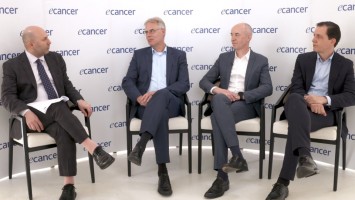
Dr Roberto Salgado speaks to ecancer about the phase III APHINITY trial.
The trial compares manual, digital, and AI-based assessment of stromal tumour-infiltrating lymphocytes (sTILs) in early-stage HER2-positive breast cancer.
Dr Salgado says that the results show that while manual sTIL scoring remains highly reproducible, AI-based quantification provides comparable and in some settings enhanced prognostic power for invasive disease-free survival and overall survival.
Importantly, both manual and AI sTIL assessments identified patients who derived significant benefit from adjuvant pertuzumab, with AI methods expanding the pool of node-positive patients likely to benefit.
Dr Salgado highlights how integrating AI-driven immune quantification with traditional pathology can improve risk stratification and help further personalise HER2-targeted therapy in early breast cancer.
The APHINITY study is actually a very well-known study in the oncology field. It’s the largest study in the adjuvant setting in which two blockers of HER2, pertuzumab and trastuzumab, were compared with a patient population with just one blocker of HER2, trastuzumab. It’s a practice-changing trial but it’s a bit controversial because the added benefit in terms of outcome is not existing in terms of overall survival. But there is an important benefit for patients with lymph node positive disease.
Because the overall survival benefit and because it’s only restricted to lymph node positive patients, there is an important interest to find biomarkers that can help identify patients who may benefit more from double blockade of HER2 versus single blockade of HER2.
We have analysed the immune system in that trial. We knew from a variety of studies that the immune system is a very important prognostic and predictive variable in HER2+ disease. But we have not only looked at the immune system by manual scoring, according to international guidelines which were developed by the TILs working group, but we have also applied a computational method. The computational method on the one hand which is based on artificial intelligence and a computational method on the other hand which is based on artificial intelligence.
What we have shown is that the more immune cells we have, so the stronger the immune system is in that particular disease, the longer the patients live. It doesn’t really matter how you measure it, whether you measure it with manual assessment done by the pathologist using a microscope, so it can be done by everybody, or if it is done by computational methods with AI or without AI. But what we mostly have shown, and this is certainly of interest to the community, is that if you combine manual scoring with an AI method that you can identify an additional set of patients who would have been missed by just the manual method in terms of benefit to the double blockade of HER2. This is a very important finding and very important information that we can give to clinicians but only if we do both - quantity and spatial metrics identified with artificial intelligence. This is a project that we have co-developed with a start-up called Case45 who helped us and we helped them develop this method to analyse not only quantity but also spatial positioning of immune cells and the importance thereof.
ASCO 2026: Latest updates in mRCC
SABCS 2025: Latest developments in multigene testing in early breast cancer

AI and pathology reveal higher late recurrence risk in invasive lobular breast cancer

Digital pathology superior to manual SP263 PD-L1 TC scoring for stage II-IIIA high PD-L1 expression NSCLC

The added value of integrative medicine

ctDNA evaluation may play a prognostic role in stage III colon cancer treated with celecoxib

Insights into germline genetic screening of breast cancer patients

Revolutionising myeloma treatment through immune profiling

ESMO 2024: Optimising the personalisation of prostate cancer treatment
