Background: In Latin America, cancer patients face multiple barriers to accessing timely diagnosis and treatment. Cancer navigation is a strategy that aims to improve the patient experience, reduce critical delays in care and enhance education about the cancer care process. However, its structured implementation has been limited in the region.
Objective: To describe the implementation and initial outcomes of a cancer navigation model at a cancer referral centre in Colombia and to evaluate its impact on waiting times, patient satisfaction and educational needs using the reach, effectiveness, adoption, implementation and maintenance (RE-AIM) framework. This study represents one of the first structured initiatives of its kind in the country.
Methods: A prospective, descriptive, observational cohort study was conducted between March 2023 and March 2024 at the Luis Carlos Sarmiento Angulo Cancer Treatment and Research Centre (CTIC), Bogotá, Colombia. Of the 3,000 patients treated, 1,879 were included in the cancer navigation programme. Consent for the evidence–verification–analysis protocol was offered to patients receiving comprehensive cancer care; 649 patients (34.5%) signed the consent form and formed the analysis cohort. The model followed the guidelines of the Oncology Nursing Society and the George Washington Cancer Centre, led by oncology nurse navigators. Indicators of timeliness of care, educational needs at two time points (M1: prior to the multidisciplinary team meeting; M2: after the start of treatment) and patient satisfaction were assessed.
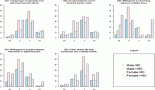
Results: The cohort comprised 649 patients (60% women; 50.4% aged over 65; 34% on the subsidised scheme; and 42.8% with advanced-stage disease). The time from diagnostic confirmation to the start of treatment had a median of 21.5 days (range: 11.0–44.7 days), compared with an institutional target of 30 days, which was consistently exceeded. Patient satisfaction, measured using the Net Promoter Score (scale: −100 to +100; values >70 = excellent), reached a median of 79.55 points (range: 66.24–89.49), exceeding the institutional target of 50 points in every month. Education was predominantly verbal (88.1% in M1; 95.1% in M2), with a comprehension rate of 76% in M1 and 83% in M2, assessed using the teach-back technique. The main educational needs in M1 were aspects of the healthcare system (85.5%) and diagnosis/treatment (77.5%); at M2, they were diagnosis/treatment (87.9%) and physical aspects (46%), with a notable reduction in administrative needs (85.5%→28%).
Conclusion: The cancer navigation programme implemented at the CTIC improved the timeliness of care, patient satisfaction and patients’ understanding of the information provided. The leadership of specialist nursing staff and the application of the RE-AIM framework enabled a structured, replicable implementation that had a positive impact on a highly complex and vulnerable population. Its implementation represents a viable strategy for improving comprehensive cancer care in Colombia.