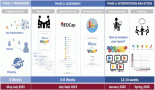
Radiation therapy (RT) is a cornerstone in the treatment of solid tumours, with more than half of all cancer patients requiring it for curative or palliative intent. However, delays in initiating RT after CT simulation (CT sim) can significantly impact clinical outcomes by increasing recurrence risk, triggering re-simulation due to anatomical shifts and causing psychological and logistical distress for patients and caregivers. This prospective quality improvement (QI) study was conducted at a rural cancer center in India from April to December 2022, aiming to reduce the time from CT sim to RT initiation. Using the A3 methodology in collaboration with Enable Quality, Improve Patient Care India, Stanford Medicine and the National Cancer Grid, a root cause analysis was conducted, followed by key driver identification via Pareto analysis. A series of Plan-Do-Study-Act (PDSA) cycles led to targeted interventions, including written standard operating procedures (SOPs) for scheduling, standardised patient instructions, clearly defined staff roles and stakeholder education. Data from 200 patients planned for radical treatment were analysed weekly, with treatment timelines plotted on a run chart. At baseline, the median delay from simulation to treatment initiation was 18 days. After implementation of interventions in July 2022, this was reduced to 12 days by September and further to 10 days by November, a 44.4% reduction. Additionally, the re-simulation rate dropped from 10% to less than 1%. No patient experienced a delay beyond the prescribed date, and importantly, staff feedback confirmed that the revised workflow did not increase perceived workload. The interventions were institutionalised through SOPs and monitored via real time dashboards, ensuring sustainability into 2024. This study demonstrates that targeted, systemlevel interventions developed using accessible QI methodologies can lead to meaningful reductions in RT delays and operational inefficiencies in low-resource environments. The model is feasible, cost-effective and adaptable to other cancer centers aiming to optimise timely RT delivery and improve patient outcomes.

Supporting oncology professionals through education
The content on this site is intended for healthcare professionals only