Implementing PrOFILE in Francophone Africa: a regional workshop to prioritise improvement in paediatric oncology
Ryan R. Lion¹, Glenn Mbah², Nathalie De Sousa Santos³, Anne Gagnepain-Lacheteau³, Karim Assani⁴, Aissata Barry⁵, Viviane Bissyande⁶, Chantal Bouda⁶, Aleine Budiongo⁴, Isaac Bahati Chuma⁷, Line Couitchéré⁸, Fatou Binetou Diagne Akondé⁹, Mame Ndella Diouf⁹, Aimée Kissou¹⁰, Robert Lukamba Mbuli¹¹, Boubacar Togo¹², Kan Paulin Yao¹³, Yao Atteby Jean Jacques¹³, Lea Zaho⁸, Ekhtelbenina Zein¹⁴, Isatou Bah Madison, and Laila Hessissen¹⁵
1Department of Global Pediatric Medicine, St. Jude Children’s Research Hospital, Memphis, TN, USA
2Department of Nursing and Midwifery, The University of Bamenda, Bamenda, Cameroon
3Groupe Franco-Africain d’Oncologie Pédiatrique (GFAOP), Gustave-Roussy, Villejuif, France
4Cliniques Universitaires de Kinshasa, Kinshasa, Democratic Republic of the Congo
5Centre Hospitalier Universitaire Donka, Conakry, Guinea
6Centre Hospitalier Universitaire Yalgado Ouédraogo, Ouagadougou, Burkina Faso
7Hôpital Général de Référence Charité Maternelle, Goma, Democratic Republic of the Congo
8Centre Hospitalier Universitaire de Treichville, Abidjan, Côte d’Ivoire
9Centre Hospitalier National Dalal Jamm, Dakar, Senegal
10Centre Hospitalier Universitaire Sourô Sanou, Bobo-Dioulasso, Burkina Faso
11Cliniques Universitaires de Lubumbashi, Lubumbashi, Democratic Republic of the Congo
12Centre Hospitalier Universitaire Gabriel Touré, Bamako, Mali
13L’Hôpital Mère-Enfant de Bingerville, Abidjan, Côte d’Ivoire
14Centre Hospitalier National, Nouakchott, Mauritania
15Pediatric Hematology-Oncology Department, Faculty of Medicine and Pharmacy of Rabat, Ibn Sina University Hospital Center, Mohammed V University, Rabat, Morocco
Abstract
Childhood cancer outcomes in Sub-Saharan Africa remain substantially lower than those observed in high-income countries, reflecting persistent barriers in financing, diagnostic capacity, workforce development, access to essential therapies and supportive care infrastructure. The St. Jude Pediatric Oncology Facility Integrated Local Evaluation (PrOFILE) is a structured institutional assessment framework designed to identify gaps in paediatric oncology care delivery and support context-specific quality improvement planning. In a partnership between St. Jude and the Groupe Franco-Africain d’Oncologie Pédiatrique (GFAOP), the first Francophone African implementation of PrOFILE was conducted across 11 paediatric oncology centres in Senegal, Côte d’Ivoire, Guinea, Mali, Burkina Faso and the Democratic Republic of Congo. A regional prioritisation workshop was subsequently held in Rabat, Morocco, on May 4–5, 2026, immediately prior to the annual GFAOP meeting. The workshop brought together paediatric oncology representatives from participating institutions, along with facilitators from St. Jude Global and GFAOP teams. Following review of aggregated regional PrOFILE findings, participants engaged in a structured consensus-based prioritisation process comprising four sequential activities: categorisation of recommendations, collaboration analysis, impact–effort prioritisation and action planning. Across participating countries, major shared priorities included strengthening national financing for paediatric cancer care, improving the quality and safety of chemotherapy delivery, expanding access to advanced diagnostics, improving access to high-quality medications and supportive care resources and reducing treatment abandonment. Participants additionally developed preliminary regional action plans and identified future country-level implementation workshops as the next phase of the initiative. This workshop demonstrated the feasibility of conducting a structured, regionally coordinated PrOFILE prioritisation process across multiple
Correspondence to: Ryan R Lion
Email: Ryan.Lion@stjude.org
Published: 05/10/2026
Received: 21/05/2026
Publication costs for this article were supported by ecancer (UK Charity number 1176307).
Copyright: © the authors; licensee ecancermedicalscience. This is an Open Access article distributed under the terms of the Creative Commons Attribution License (http://creativecommons.org/licenses/by/4.0), which permits unrestricted use, distribution, and reproduction in any medium, provided the original work is properly cited.
Francophone African countries. The initiative established a collaborative framework for future national implementation efforts and may provide a scalable model for paediatric oncology system strengthening in low-resource settings.
Keywords: global oncology, paediatrics, Africa, Francophone, quality improvement, implementation science
Introduction
Childhood cancer remains a major and growing cause of morbidity and mortality in Sub-Saharan Africa, where outcomes continue to differ from high-income countries [1,2]. Despite significant advances in paediatric oncology globally, many countries across the region continue to face major barriers to delivering high-quality cancer care, including limited diagnostic capacity, shortages in trained healthcare personnel, inconsistent access to essential medicines and supportive care, fragmented referral systems, inadequate financing and limited data infrastructure. These challenges are often compounded by competing health priorities and substantial variability in healthcare infrastructure both within and between regions. As efforts continue to expand access to paediatric cancer care globally, there is increasing recognition that structured, systems-level approaches are needed to identify gaps in care delivery and guide context-specific quality improvement efforts.
The St. Jude Pediatric Oncology Facility Integrated Local Evaluation (PrOFILE) was developed as a guided, modular, 360° institutional self-assessment designed to help paediatric oncology programs evaluate service delivery across the continuum of care [3]. It is structured around 5 components (Context, Workforce, Diagnostics, Therapy and Patients and Outcomes) that are further divided into 12 total modules (Figure 1). There are two versions of PrOFILE: a comprehensive version designed for individual institutions and an abbreviated version designed for multisite or regional assessments across multiple treating institutions. PrOFILE follows a three-phase framework consisting of preparation, evaluation and interpretation/action planning, with the goal of identifying institutional strengths, defining opportunities for improvement and supporting the development of actionable quality improvement strategies (Figure 2). In the abbreviated version, during the preparation phase (phase 1), all participating sites and key stakeholders are identified and engaged. During the evaluation phase (phase 2), sites complete an approximately 300-question institutional assessment spanning 12 modules and 5 major components of paediatric oncology care delivery. During the interpretation and action-planning phase (phase 3), participating teams review and contextualise their results, identify priority areas for improvement and develop implementation and quality improvement plans informed by the assessment findings.
To date, PrOFILE has been implemented across multiple global regions and involved more than 250 paediatric oncology sites worldwide. It has been successfully implemented in several African contexts in English [4,5]. Unlike traditional audits or accreditation models, PrOFILE is designed as a collaborative and locally driven process intended to strengthen institutional reflection, multidisciplinary engagement and long-term improvement planning. In partnership with the Groupe Franco-Africain d’Oncologie Pédiatrique (GFAOP), St. Jude Global launched the first implementation of PrOFILE in Francophone Africa. The GFAOP is a collaborative paediatric oncology network spanning multiple Francophone African countries and centres, focused on strengthening childhood cancer care through regional collaboration, capacity building and shared clinical initiatives [6]. This initiative aligned with the World Health Organization (WHO) Global Initiative of Childhood Cancer (GICC), which aims to achieve at least 60% survival for children with cancer by 2030 through health system strengthening in low- and middle-income countries (LMICs) [7].
PrOFILE brought together 11 paediatric oncology centres across six countries, including Senegal, Côte d’Ivoire, Guinea, Mali, Burkina Faso and the Democratic Republic of Congo for a structured prioritisation workshop. Given the linguistic, cultural and health-system diversity across the region, substantial effort was dedicated to contextual and linguistic adaptation of the PrOFILE process and workshop materials into French. The initiative additionally emphasised a regional collaborative approach, allowing participating institutions to define shared system-level priorities while also recognising the importance of country-specific implementation strategies. The workshop represented a major milestone in this collaboration, serving not only as a forum for reviewing aggregated PrOFILE findings, but also as a facilitated exercise in regional prioritisation, collaboration and action planning for paediatric oncology care across Francophone Africa.

Figure 1. Structure of the framework: components and associated modules used in the PrOFILE assessment.
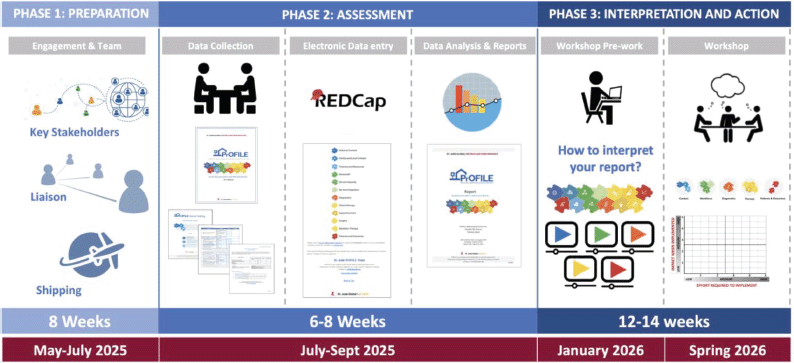
Figure 2. Overview of the three-phase PrOFILE implementation framework: preparation (Phase 1), assessment (Phase 2) and interpretation/action (Phase 3).
Workshop overview
Linguistic and contextual adaptation
Prior to the regional workshop, the standard abbreviated PrOFILE assessment tools and evaluation questions were formally translated into French. The translated materials subsequently underwent iterative review and contextual validation in collaboration with a member of the GFAOP to ensure linguistic accuracy, conceptual consistency and applicability across diverse healthcare systems and regional practice environments. This process included refinement of terminology, clarification of workflow descriptions and adaptation of select workshop exercises and facilitation materials to improve interpretability and regional relevance. Following completion of the institutional PrOFILE evaluations during phase 2, all workshop materials, activity guides and action-planning activities were also translated and standardised in French. Steering committee planning meetings were conducted in French throughout the three phases of PrOFILE, and the workshop itself was delivered entirely in French, including presentations, discussions, consensus-building activities and action-planning sessions. Collectively, these linguistic and contextual adaptations were designed to support meaningful engagement and facilitate implementation of the PrOFILE framework across participating Francophone African settings.
Setting and participants
The regional PrOFILE prioritisation workshop was conducted in Rabat, Morocco, from May 4–5, 2026, at the Faculty of Medicine and Pharmacy. The workshop brought together paediatric oncology representatives from 11 participating centres across six Francophone African countries, including Senegal, Côte d’Ivoire, Guinea, Mali, Burkina Faso and the Democratic Republic of Congo (Table 1). The participating institutions included paediatric oncology programs representing diverse healthcare systems, institutional capacities and regional contexts across Francophone Sub-Saharan Africa. Sixteen participants represented paediatric oncology centres across the six participating countries, including paediatric oncologists and one paediatric oncology surgeon. In addition, there were 2 facilitators from St. Jude Global (United States and Cameroon) and 4 representatives from GFAOP teams, including representatives from France, Mauritania and Morocco.
Table 1. Participating Countries and paediatric oncology centres included in the Francophone Africa PrOFILE workshop.

Workshop design
The workshop was structured over 2 days and combined presentation-based review and interactive exercises. The meeting began with introductory sessions describing St. Jude Global and the GFAOP, including introducing the workshop objectives. The workshop then transitioned to an overview of the PrOFILE framework by Dr. Ryan Lion, a paediatric oncologist at St. Jude Global on the Sub-Saharan Africa team. Participants then reviewed the aggregated regional PrOFILE findings led by Dr. Laila Hessissen, the President of the GFAOP. This conversation synthesised institutional evaluation data across participating centres and generated 99 total recommendations spanning the domains of Context, Workforce, Diagnostics, Therapy and Patients and Outcomes. During this review, participants discussed the aggregated PrOFILE scores for each module. These scores reflect the capacity and service delivery elements captured through the assessment questions, with higher percentages representing greater alignment with recommended paediatric oncology infrastructure and care delivery practices (Figure 3). The review demonstrated that most module scores remained below 50%, highlighting substantial opportunities for improvement across paediatric oncology systems in the region. The highest-scoring domains included surgery (54%), facility and local context (50%) and chemotherapy (47%), whereas lower scores were observed in national context (28%), radiation therapy (30%) and supportive care (34%).
Following review of the aggregated findings, participants engaged in four sequential workshop activities designed to support regional prioritisation and implementation planning, as summarised in Figure 4. The four sequential activities functioned as a structured implementation strategy by combining stakeholder engagement, contextual interpretation, consensus-based priority setting, feasibility assessment and action planning. Activity 1 used a categorisation exercise to classify recommendations according to regional engagement, priority and feasibility, resulting in five prioritised recommendations within each PrOFILE component. Activity 2 explored implementation challenges, potential solutions, key collaborators and opportunities for regional collaboration surrounding these priorities.
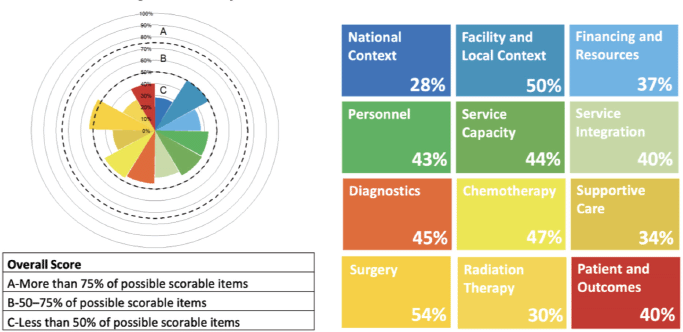
Figure 3. Aggregate PrOFILE cohort results across participating paediatric oncology centres, including module-specific performance metrics.
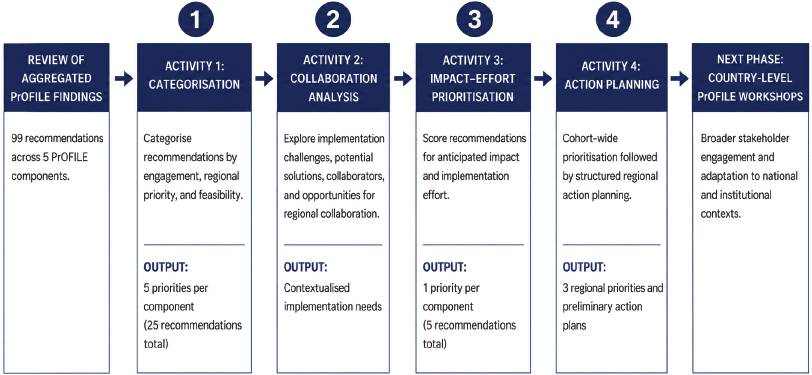
Figure 4. Overview of the four sequential activities used in the regional PrOFILE prioritisation workshop.
Day 2 began with Activity 3, which used a standardised 1–5 impact–effort scoring framework to narrow the priorities to one recommendation per component. Activity 4 then used cohort-wide prioritisation to select three priorities for the development of preliminary regional action plans, including implementation strategies and potential next steps. The second day concluded with a review session led by Dr. Glenn Mbah of St. Jude Global’s Sub-Saharan Africa team discussing experiences from prior PrOFILE implementation efforts in Cameroon, including lessons learned surrounding implementation and sustainability. The workshop concluded with discussions focused on planning future national PrOFILE workshops within participating countries, including stakeholder engagement, workshop structure and approaches for adapting regional priorities to local institutional and national contexts.
Workshop outcomes and prioritised recommendations
Activity 1: Categorisation exercise
During the categorisation exercise, participants were divided into five groups corresponding to the major PrOFILE components: Context, Workforce, Diagnostics, Therapy and Patients and Outcomes. There were 4–5 individuals in each group. Each group reviewed the aggregated cohort-level PrOFILE recommendations generated from the regional analysis and collaboratively categorised each recommendation into one of three predefined categories: (1) areas in which there was already regional engagement, (2) areas not yet addressed but considered a priority and (3) areas not currently feasible for regional implementation. Classification decisions were reached through group consensus, with participants discussing perspectives until agreement was reached on the placement of each recommendation. Groups were also permitted to introduce additional priorities not explicitly captured through the PrOFILE assessment but considered regionally relevant. Following group discussion and presentation of recommendations to the larger cohort, participants voted on the most important regional priorities using a sticker-based voting process. Overall, groups were encouraged to focus primarily on recommendations classified within the second category: areas not yet addressed but considered a priority for future regional implementation. This process resulted in the identification of five priority recommendations within each PrOFILE component that advanced to subsequent collaboration analysis and impact–effort prioritisation exercises. All priorities are described in Table 2.
Activity 2: Collaboration analysis
During the collaboration analysis exercise, participants remained within their assigned PrOFILE component groups and conducted a guided discussion around each of the five prioritised recommendations selected from the previous exercise. For every recommendation, participants identified implementation challenges, potential solutions and the key collaborators required to support successful implementation. Discussions emphasised the multidisciplinary and multi-level nature of paediatric oncology system strengthening and highlighted the need for collaboration across local institutional teams, Ministries of Health, national professional societies, the GFAOP network and international partners such as St. Jude. Common challenges included insufficient political prioritisation, shortages in trained healthcare personnel, inadequate infrastructure and equipment, inconsistent medication availability and procurement systems, limited access to specialised diagnostics and supportive care resources and substantial financial barriers affecting families. Participants also highlighted geographic inequities in access to care, gaps in multidisciplinary coordination and limited institutional capacity to support implementation and sustainability. Common themes for solutions included the importance of political engagement, workforce training partnerships, regional knowledge sharing, strengthening referral pathways and coordinated advocacy for diagnostics, medications and infrastructure. This exercise helped participants better contextualise the feasibility and collaborative requirements of each recommendation prior to the subsequent impact–effort prioritisation exercise.
Table 2. Top five prioritised recommendations identified within each PrOFILE component during the categorisation exercise.

Activity 3: Impact–effort prioritisation exercise
During the impact–effort prioritisation exercise, participants evaluated the five prioritised recommendations for each PrOFILE component using a structured scoring framework designed to assess both potential impact and implementation feasibility. Within their groups, participants assigned numerical scores for impact and effort to each recommendation and plotted them on a visual impact–effort matrix. Impact scores ranged from 1 to 5 and reflected the anticipated magnitude and breadth of improvement associated with implementing a recommendation. Higher impact scores were assigned to interventions supported by strong regional or global evidence and expected to improve outcomes across multiple paediatric cancer diagnoses and health system domains. Effort scores also ranged from 1 to 5 and reflected the perceived complexity and feasibility of implementation. Lower effort scores reflected recommendations considered more feasible to operationalise quickly within existing infrastructure and available financial resources, with greater anticipated institutional or governmental acceptability. For each recommendation, group members discussed their individual assessments of impact and effort and worked towards a consensus score. Where initial scores differed, participants discussed the rationale for their ratings and agreed upon a final score representing the group’s collective assessment.
This exercise encouraged participants to balance aspirational goals with realistic implementation considerations, while facilitating nuanced discussion regarding regional applicability, scalability and readiness for action. Following group discussion and scoring, participants voted to select one recommendation considered both highly impactful and reasonably implementable in each group. The five highest-priority recommendations selected across the PrOFILE components were as follows:
-
Context: Improving national financing for paediatric cancer care and addressing competing national health priorities (Impact = 5; Effort = 4)
-
Workforce: Improving the quality and safety of chemotherapy delivery (Impact = 4; Effort = 3)
-
Diagnostics: Expanding access to advanced diagnostic modalities, including immunophenotyping, immunohistochemistry and cytogenetics (Impact = 5; Effort = 3.66)
-
Therapy: Improving access to high-quality medications, including antimicrobials, supportive care medications and toxicity-prevention resources (Impact = 4; Effort = 3.66)
-
Patients and Outcomes: Reducing treatment abandonment (Impact = 4; Effort = 3.5)
Activity 4: Action planning
During the final action-planning exercise, participants reviewed the five recommendations that emerged from the impact–effort prioritisation process and conducted a final cohort-wide vote to select the highest-priority areas for regional action planning. Through this consensus-building process, participants selected three cross-cutting priorities that were considered both highly impactful and sufficiently feasible for coordinated regional implementation efforts over the next several years.
The three selected priorities included:
-
Improving national financing for paediatric cancer care and strengthening political engagement (Context).
-
Improving the quality and safety of chemotherapy delivery (Workforce).
-
Improving access to high-quality medications, including antimicrobials, supportive care agents and toxicity-prevention resources (Therapy).
Participants then self-selected into working groups aligned with one of the three final priorities. Using a structured action-planning framework, groups developed preliminary regional implementation plans focused on defining leadership structures, identifying required collaborators, establishing short-term and longer-term goals and outlining immediate next steps for implementation.
Within the context group, participants emphasised advocacy with Ministries of Health, engagement with intergovernmental organisations and integration of paediatric oncology into national health and cancer control strategies. The proposed measures of success included increased governmental budget allocation for paediatric cancer care, improved regional equity in access to services and stronger political commitment to paediatric oncology programs. Immediate next steps focused on coordinated advocacy efforts at national and regional levels, including engagement with organisations such as the WHO, UNICEF and the African Union.
Within the workforce group, participants focused on strengthening quality and safety systems surrounding chemotherapy delivery. Proposed goals included increasing adherence to standardised clinical procedures, expanding healthcare worker training, improving infrastructure and equipment availability, increasing quality audits and reducing treatment-related infections and toxic deaths. Immediate next steps included conducting baseline quality assessments, organising workforce training initiatives, implementing quality audit systems and developing standardised protocols and procedures.
Within the therapy group, participants focused on improving access to essential medications, supportive care agents and toxicity-prevention resources. Action plans emphasised strengthening procurement systems, advocating for inclusion of paediatric oncology medications on national essential medicines lists, improving budgeting and forecasting processes and expanding collaboration with Ministries of Health and international partners. Additional discussion emerged about leveraging the Global Platform for Access to Childhood Cancer, which aims to provide cancer medicines to LMICs through a partnership with St. Jude, the WHO and UNICEF. All groups additionally highlighted the importance of monitoring and alignment with future national PrOFILE workshops to support implementation.
Key themes and discussion
This workshop demonstrated substantial alignment across participating countries regarding the major barriers affecting paediatric oncology care delivery in Francophone Africa. Despite differences in geography, health system structure and resource availability, participants consistently highlighted financing limitations, workforce capacity, diagnostic infrastructure, access to essential medications and treatment abandonment as shared regional challenges. These findings reinforce many of the previously recognised system-level barriers to improving childhood cancer outcomes in LMICs while also highlighting the persistent need for coordinated implementation strategies capable of translating identified gaps into actionable improvement plans. Importantly, many of the priorities aligned closely to core WHO GICC pillars. Many of these priorities represented cross-cutting health-system constraints affecting multiple diagnoses and stages of care, which likely contributed to their prominence during regional prioritisation.
A major strength of this initiative was the use of a facilitated prioritisation methodology to move participants from broad assessment findings towards concrete implementation planning. Rather than focusing solely on identification of deficiencies, the workshop emphasised collaborative interpretation of data, consensus building, feasibility assessment and action-oriented planning. From a quality improvement and implementation perspective, this approach addressed the common gap between documenting opportunities for improvement and deciding which should be pursued first. The sequential process moved participants from assessment findings to contextual interpretation, prioritisation, feasibility assessment and preliminary action planning, providing a reproducible pathway for translating institutional data into shared priorities while preserving flexibility for adaptation during subsequent national workshops.
This initiative additionally represents the first coordinated implementation of PrOFILE in French within Francophone Africa. The workshop combined institution-level assessment data with regional consensus-building in a multilingual and contextually adapted environment. Building on prior PrOFILE implementations including Kenya and South Africa, which demonstrated the value of structured assessment and planning for paediatric oncology system strengthening, this initiative extended the approach to a multi-country Francophone regional context [4,5]. The collaborative adaptation of workshop materials and facilitation into French was particularly important in supporting engagement across participating countries and strengthening the regional relevance of the process. This experience may also inform future linguistic and contextual adaptations of PrOFILE for implementation in other regions and language settings across Africa.
An important conceptual aspect of this initiative was the distinction between regional and national implementation strategies. The regional workshop was not intended to replace country-level planning processes, but rather to establish shared priorities and train participating teams in the PrOFILE interpretation and methodology. The regional format may provide particular value for challenges that benefit from collective action, including shared learning, workforce development, coordinated advocacy and collaboration around access to medications and specialised services. However, sustainable implementation ultimately requires adaptation to national health systems, engagement of stakeholders with decision-making authority and local ownership of implementation efforts. As a next step, participants will now implement this prioritisation methodology at the level of their own country, with support from St. Jude and the GFAOP. National workshops will allow countries to contextualise these regional priorities within their own health systems, engage a broader range of national stakeholders and develop implementation plans tailored to local realities.
This initiative had several strengths, including broad multi-country participation, strong engagement across countries and institutions, use of real-world institutional assessment data and a highly structured workshop methodology. The workshop also demonstrated the feasibility of conducting collaborative paediatric oncology system-strengthening activities across multiple Francophone African countries within an existing regional network structure. Several limitations should also be acknowledged. PrOFILE data are based primarily on institutional self-assessment and therefore may be subject to reporting bias and variability in interpretation across sites. In addition, representation from participating paediatric oncology centres was primarily limited to paediatric oncologists and therefore did not reflect the full multidisciplinary and multisectoral perspectives involved in paediatric cancer care. The priorities emerging from the workshop may therefore have been influenced by differences in representation. Of note, prioritisation within a workshop setting does not ensure political feasibility or successful implementation. Several priorities, particularly those related to national financing, medication access and infrastructure, depend on governmental commitment, resource allocation and policy environments that vary substantially across participating countries. Broader engagement of nurses, pharmacists, other allied health professionals, hospital leadership, patient and family representatives, governments and other relevant partners will therefore be particularly important during subsequent national workshops, where broader stakeholder participation is a central component of the implementation approach.
Next steps and implications
The regional workshop served as a foundational step towards broader implementation of PrOFILE-informed improvement strategies across Francophone Africa. These efforts further support broader alignment with the WHO GICC goals by strengthening health systems and expanding access to quality paediatric oncology care. While the regional meeting was designed to define shared priorities and establish a collaborative framework for action, implementation will ultimately occur at the national and institutional levels. The next phase of the initiative will therefore focus on country-level PrOFILE workshops, beginning with Senegal as the first national implementation site, one of the WHO GICC focus countries.
These national workshops are intended to move beyond regional prioritisation towards operational planning and implementation. Countries will use their own institutional PrOFILE findings, regional workshop outputs and locally identified priorities to develop context-specific action plans tailored to their health systems, infrastructure, workforce capacity and national policy environment. Workshops will aim to strengthen national ownership of paediatric oncology system-strengthening initiatives while facilitating broader engagement of key stakeholders involved in implementation and decision-making. Future country-level workshops will include expanded participation from Ministries of Health, hospital leadership, clinicians, nurses, pharmacists, administrators, patient advocates and additional national and international partners. Particular emphasis will be placed on engaging decision-makers capable of supporting policy development, financing strategies, workforce planning, infrastructure development and integration of paediatric oncology priorities into broader national cancer control plans and health system strategies.
Importantly, the workshop was designed not only to identify priorities, but also to build regional capacity for ongoing quality improvement and implementation planning. Participants were introduced to a reproducible framework for conducting prioritisation exercises and developing structured action plans that can be replicated for quality improvement work within their own contexts.
Future efforts will additionally focus on establishing mechanisms for longitudinal follow-up, monitoring and evaluation of implementation progress. This includes tracking advancement of action plans, recognising implementation barriers and measuring the effectiveness of interventions. Continued regional collaboration through the GFAOP network may also support shared learning, coordinated advocacy efforts across participating countries and future expansion of PrOFILE to additional Francophone African paediatric oncology centres that did not participate across the broader GFAOP network.
Conclusion
This workshop demonstrated the feasibility of implementing a structured, regionally coordinated PrOFILE prioritisation process across multiple Francophone African countries. Strong participant engagement, substantial alignment in identified priorities and the successful integration of assessment data with collaborative implementation planning suggest that this model may provide a scalable framework for paediatric oncology system strengthening in low-resource settings. The initiative also established a platform for ongoing regional collaboration, shared learning and coordinated advocacy across GFAOP member countries. By linking institutional assessment data to prioritisation and action planning, this approach may help support more coordinated and contextually appropriate strategies to strengthen paediatric oncology care delivery and improve childhood cancer outcomes across the region.
Conflicts of interest
The authors declare that they have no competing interests.
Funding
This work was supported by the American Lebanese Syrian Associated Charities (ALSAC), the fundraising and awareness organisation of St. Jude Children’s Research Hospital.
References
1. Bhakta N, Force LM, and Allemani C, et al (2019) Childhood cancer burden: a review of global estimates Lancet Oncol 20(1) e42–e53 https://doi.org/10.1016/S1470-2045(18)30761-7 PMID: 30614477
2. Ward ZJ, Yeh JM, and Bhakta N, et al (2019) Global childhood cancer survival estimates and priority-setting: a simulation-based analysis Lancet Oncol 20(7) 972–983 https://doi.org/10.1016/S1470-2045(19)30273-6 PMID: 31129029
3. St. Jude Children’s Research Hospital (2026) The St. Jude Pediatric Oncology Facility Integrated Local Evaluation (PrOFILE) [Internet] (Memphis: St. Jude Children’s Research Hospital) [https://global.stjude.org/en-us/tools/sj-cares-tools/profile.html]
4. Naidu G, Omotola A, and Bhakta M, et al (2024) Improving childhood cancer care in South Africa using the Paediatric Oncology Facility Integrated Local Evaluation (PrOFILE) tool South African Health Rev 26 130–151 https://doi.org/10.61473/001c.122131
5. Mutua D, Omotola A, and Bonilla M, et al (2023) Implementation of a formalized evaluation and planning tool to improve pediatric oncology outcomes in Kenya Pediatr Blood Cancer 70(12) e30657 https://doi.org/10.1002/pbc.30657 PMID: 37690982
6. Groupe Franco-Africain d’Oncologie Pédiatrique (GFAOP) (2026) Groupe Franco-Africain d’Oncologie Pédiatrique (GFAOP) [Internet] (Villejuif: Groupe Franco-Africain d’Oncologie Pédiatrique) [https://www.gfaop.org/]
7. World Health Organization (2018) Global Initiative for Childhood Cancer [Internet] (Geneva: World Health Organization) [https://www.who.int/publications/m/item/global-initia-tive-for-childhood-cancer]