
Determinants of timely palliative care referral among metastatic cancer patients who receive specialist palliative care: a retrospective cohort study
Wararat Thatayua
Department of Social Medicine, Lampang Hospital, Amphur Muang, Lampang 52000, Thailand
ahttp://orcid.org/0009-0003-3042-1682
Abstract
This study examined determinants of timely referral to specialist palliative care among patients with metastatic cancer in a tertiary public hospital in northern Thailand. Although timely integration of palliative care is recommended in oncology guidelines, referral timing remains highly variable in routine clinical practice, particularly within clinician-initiated consultation-based models. A retrospective cohort study was conducted using electronic medical record data from adult patients with metastatic cancer who received specialist palliative care between January 2022 and May 2025. Timely referral was defined as the first palliative care contact within 8 weeks of metastatic cancer diagnosis. Associations with referral timing were evaluated using multivariable logistic regression models with physician-level cluster-robust standard errors.
A total of 766 patients were included, of whom 333 (43.47%) received timely referral. Older age was associated with higher odds of timely referral [Adjusted odds ratios (aOR) 1.022 per year increase; 95% CI 1.007–1.039]. Compared with gastrointestinal cancers, lung (aOR 1.587; 95% CI 1.056–2.384) and hepatobiliary malignancies (aOR 1.769; 95% CI 1.127–2.777) were more likely to receive timely referral, whereas urban residence was associated with lower odds of timely referral (aOR 0.760; 95% CI 0.592–0.974). Physicians with 10–14 years of experience were less likely to initiate timely referral than those with 5–9 years of experience (aOR 0.389; 95% CI 0.193–0.785). Associations persisted after accounting for physician-level clustering, suggesting that referral timing may reflect not only patient characteristics but also physician-related factors. These findings highlight the gap between guideline recommendations and the real-world implementation of timely palliative care. Embedding structured, needs-based referral approaches within routine oncology workflows may support more timely and equitable integration of specialist palliative care in middle-income healthcare settings.
Keywords: palliative care, neoplasm metastasis, referral and consultation, timely palliative care, health services research
Correspondence to: Wararat Thatayu
Email: mintwararatt@gmail.com
Published: 05/10/2026
Received: 07/05/2026
Publication costs for this article were supported by ecancer (UK Charity number 1176307).
Copyright: © the authors; licensee ecancermedicalscience. This is an Open Access article distributed under the terms of the Creative Commons Attribution License (http://creativecommons.org/licenses/by/4.0), which permits unrestricted use, distribution, and reproduction in any medium, provided the original work is properly cited.
Introduction
Timely referral to specialist palliative care is increasingly recognised as an important component of high-quality cancer care [1,2]. While many patients with metastatic disease ultimately receive palliative services, the point at which referral occurs within routine clinical practice varies considerably [3–5]. In consultation-based models of care, referral is often initiated through clinician judgement and local service workflows rather than through standardised pathways, which can lead to substantial variation in when palliative care is introduced [5,6].
Many patients are referred late in the disease trajectory [7–9], often only after clinical deterioration or escalating care needs, limiting opportunities for earlier supportive involvement [4,10,11]. This pattern has been particularly described in resource-constrained settings and across several Asian healthcare contexts [10,12,13], where palliative care referral often occurs during the final weeks of life rather than earlier in the disease trajectory [4,10]. Such late integration limits opportunities for symptom control, advance care planning and coordinated supportive care alongside active cancer treatment [3,9,11,14].
Among patients who receive specialist palliative care, factors influencing referral timing remain insufficiently understood [3,4,15]. Referral decisions may be shaped by patient characteristics, disease trajectories, clinician experience and organisational practices [6,16]. In consultation-based services, these influences operate within everyday clinical workflows and may contribute to variation in referral behaviour across physicians and departments [4,6,16].
At Lampang Hospital, specialist palliative care is delivered through a hospital-based consultation team, with referrals initiated by treating clinicians. As a regional tertiary referral centre providing oncology services for a large population in northern Thailand, the hospital reflects routine clinical workflows typical of public-sector cancer care in middle-income healthcare systems [10,12]. Although patients with metastatic cancer frequently access these services, the timing of referral following diagnosis has not been systematically examined [3,15]. Understanding determinants of referral timing within this setting could provide insight into how consultation-based palliative care is operationalised within routine oncology services in similar tertiary hospitals [1,12,17–19].
This study therefore aimed to examine determinants of timely referral to specialist palliative care among patients with metastatic cancer who received palliative services. Specifically, the study evaluated demographic, clinical and physician-related factors associated with timely referral in routine clinical practice.
Materials and methods
Study design and setting
This retrospective cohort study used secondary data extracted from the electronic medical record system at Lampang Hospital, a tertiary public hospital in northern Thailand that provides specialist palliative care through a consultation-based service.
Population
The study population included adult patients aged 18 years and older with metastatic cancer who received specialist palliative care between January 2022 and May 2025.
Metastatic cancer was identified using International Classification of Diseases, Tenth Revision (ICD-10) codes C76–C80, and receipt of specialist palliative care was identified using ICD-10 code Z71.8.
The date of metastatic cancer diagnosis was defined as the first recorded ICD-10 code C76–C80 in the electronic medical record during the study period.
Patients with missing metastatic cancer diagnosis dates or incomplete referral information were excluded prior to analysis. Patients who received specialist palliative care before the recorded date of metastatic cancer diagnosis were also excluded from the primary analytic cohort.
Variables
Collected variables included demographic factors (age, sex and place of residence classified as rural or urban), clinical factors (primary cancer site and referring department) and physician-level factors (years of clinical work experience of the referring physician).
Outcome definition
The primary outcome was timely palliative care referral, defined as the first documented palliative care contact occurring within 8 weeks of metastatic cancer diagnosis. Referral occurring more than 8 weeks after diagnosis was classified as delayed. The 8-week threshold was selected based on prior literature and international recommendations supporting timely integration of palliative care soon after diagnosis of advanced cancer, including guidance from the American Society of Clinical Oncology, which emphasises timely referral within the early disease trajectory [20].
Missing data
After application of exclusion criteria, all variables included in the regression analyses were complete, and no additional handling of missing data was required.
Statistical analysis
Participant characteristics were described using descriptive statistics. Categorical variables were reported as frequencies and percentages, whereas continuous variables were summarised using appropriate descriptive statistics, including means with standard deviations or medians with interquartile ranges, as appropriate. Among patients with delayed referral, the time from metastatic cancer diagnosis to first documented palliative care contact was summarised using the mean (SD) and median (IQR).
Initial associations between covariates and timely palliative care referral were explored using bivariate analyses, with categorical variables compared using the chi-square test.
Factors associated with timely referral were evaluated using multivariable logistic regression models. Covariates were selected a priori based on clinical relevance and existing literature, and all variables were entered simultaneously into the model. Adjusted odds ratios (aOR) with 95% confidence intervals were reported. Statistical significance was determined at an alpha level of 0.05.
Given the highly uneven distribution of patients across physicians, with many clinicians contributing small numbers of cases, multilevel random-effects modelling was not pursued. Instead, physician-level cluster-robust standard errors were applied to account for within-physician correlation and provide conservative inference.
Multicollinearity was assessed using variance inflation factors. All analyses were conducted using Stata version 13 [21].
Ethical considerations
Ethical approval was obtained from the Ethics Committee of Lampang Hospital (approval no. 005/69). The study was conducted in accordance with the ethical standards of the institutional research committee and the Declaration of Helsinki. As this was a retrospective study using de-identified electronic medical record data, the requirement for informed consent was waived by the ethics committee. Patient confidentiality was maintained throughout the study, and no identifiable personal information was included in the analysis or reporting.
Results
A total of 766 patients with metastatic cancer who received specialist palliative care were included in the analysis. Baseline characteristics of the study population are summarised in Table 1. Slightly more than half of the patients were male, accounting for 51.70%, and the mean age was 64.83 years (SD 11.75). The most common primary cancer sites were gastrointestinal (26.63%) and lung (24.41%).
Most patients lived outside urban areas (55.09%). The majority were managed by medical departments (59.40%), followed by surgical departments (30.81%) and other departments (9.79%). Regarding physician experience, over half of patients were referred by physicians with 10–14 years of clinical experience (53.13%).
Among the 766 patients, 333 (43.47%) received timely palliative care referral, and 433 (56.53%) received delayed referral. Among patients with delayed referral, the median time from metastatic cancer diagnosis to first documented specialist palliative care contact was 271 days (IQR 121–569), with a mean of 437.88 days (SD 466.89). A comparison of baseline characteristics between the two groups is presented in Table 2.
Table 1. Baseline characteristics of the study population (N = 766).
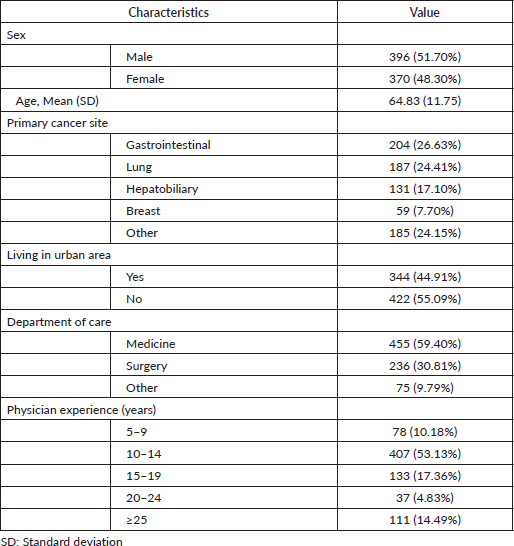
Table 2. Comparison of baseline characteristics between patients receiving and not receiving timely palliative care.
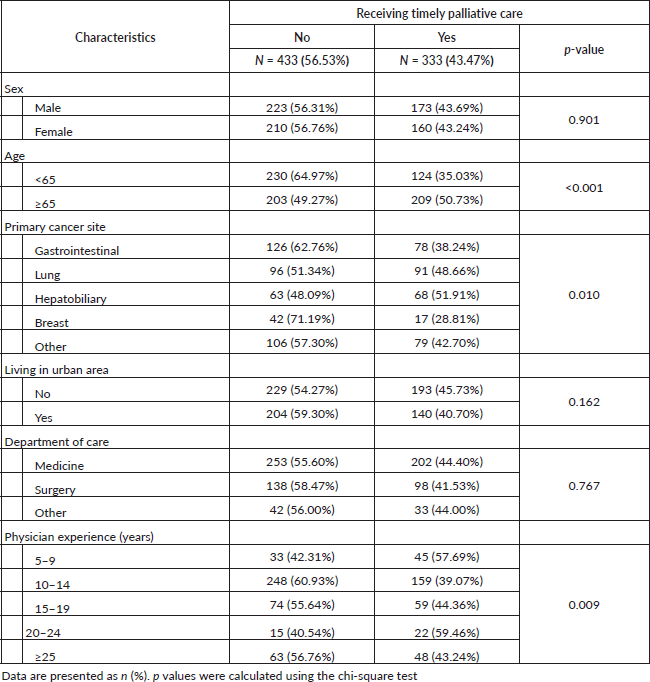
Age was significantly associated with referral timing. Patients aged ≥65 years were more likely to receive timely referral compared with those aged <65 years (p < 0.001). Primary cancer site was also associated with referral timing (p = 0.010), with higher proportions of timely referral observed among patients with hepatobiliary and lung cancers.
Physician experience showed a significant association with referral timing (p = 0.009). Patients referred by physicians with 5–9 years and 20–24 years of experience had higher proportions of timely referral compared with other experience groups.
Sex, living in an urban area and department of care were not significantly associated with timely referral.
Characteristics of referring physicians are summarised in Table 3. A total of 82 referring physicians were included in the analysis. Most had 10–14 years (25.61%) or 15–19 years (24.39%) of clinical experience, followed by ≥25 years (23.17%), 5–9 years (17.07%) and 20–24 years (9.76%).
Table 3. Characteristics of referring physicians (N = 82).
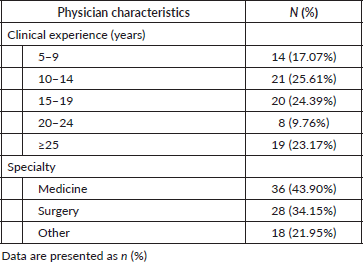
In terms of specialty, physicians from medical departments accounted for the largest proportion (43.90%), followed by surgical departments (34.15%) and other specialties (21.95%).
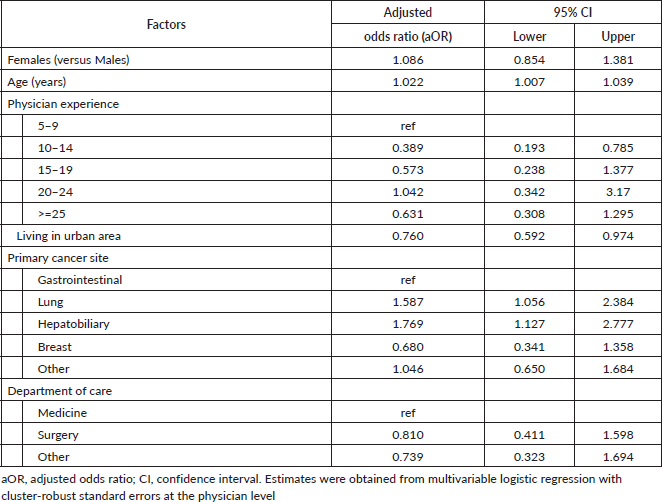
In multivariable logistic regression analysis adjusting for patient-, clinical- and physician-level factors and accounting for clustering by referring physician (Table 4), age was independently associated with timely palliative care referral (aOR 1.022 per year increase; 95% CI 1.007–1.039).
Physician experience was also associated with referral timing. Compared with physicians with 5–9 years of experience, those with 10–14 years of experience were less likely to initiate timely referral (aOR 0.389; 95% CI 0.193–0.785).
Patients living in urban areas had lower odds of receiving timely referral (aOR 0.760; 95% CI 0.592–0.974).
Regarding primary cancer sites, lung cancer (aOR 1.587; 95% CI 1.056–2.384) and hepatobiliary cancer (aOR 1.769; 95% CI 1.127–2.777) were associated with a higher likelihood of timely referral compared with gastrointestinal cancers.
Sex and department of care were not significantly associated with timely palliative care referral.
Discussion
This study examined determinants of timely referral to specialist palliative care among patients with metastatic cancer who had already accessed consultation-based services. Timely referral to specialist palliative care was associated with several factors, including age, primary cancer site, physician experience and urban residence. Although patient characteristics demonstrated statistical associations, persistent clustering at the physician level suggests that referral timing varies across clinicians. This variation indicates that integration of specialist palliative care may be influenced not only by patient characteristics but also by physician-related factors.
While previous studies have primarily examined whether patients access palliative care services [1,2], this study examined factors associated with timely referral to specialist palliative care among patients with metastatic cancer who received specialist palliative care through a consultation-based service, thereby addressing an important gap in the literature regarding determinants of timely palliative care referral within routine oncology practice [4,15].
These findings are consistent with prior studies demonstrating considerable variation in referral practices for specialist palliative care [1]. Previous research from high-income settings has shown that referral is frequently influenced by clinician perception, specialty culture and treatment intent rather than objective measures of need [1,6]. Similar findings have also been reported in middle-income healthcare settings [3,4,10,22]. Together, these findings suggest that consultation-based referral systems may inherently generate variability in timely referral across healthcare contexts, particularly where referral remains dependent on individual clinician initiation rather than standardised pathways. The proportion of timely referral observed in this study (43.47%) is comparable to that reported in other consultation-based oncology systems in middle-income settings, where early integration often remains below 50% despite the presence of established palliative care services.
Table 4. Multivariable logistic regression for timely palliative care referral (clustered by referring physician).
Older patients were more likely to receive timely referral. This may reflect the higher prevalence of frailty, comorbidities and reduced physiological reserve, which may limit eligibility for intensive disease-directed treatment and signal poorer prognosis. Greater symptom burden and clinical complexity may therefore prompt earlier recognition of supportive care needs. This interpretation is consistent with previous qualitative evidence suggesting that clinicians’ referral decisions are influenced by perceptions of prognosis, disease trajectory and patient needs rather than objective criteria alone, supporting the view that age may function as a contextual cue during referral decision-making [23]. Consequently, age may influence referral not only as a biological factor but also as a contextual cue influencing clinicians’ perceptions of appropriateness for palliative care integration within the disease trajectory.
Primary cancer site was also associated with referral timing. These differences likely reflect variation in disease trajectory, prognostic predictability, available treatment options and specialty-specific clinical cultures. Lung and hepatobiliary malignancies often involve rapid functional decline and limited late-line therapeutic options, making supportive care needs more clinically apparent. In contrast, gastrointestinal malignancies may follow more prolonged treatment pathways characterised by ongoing disease-directed interventions, potentially delaying consideration of palliative care involvement. Within consultation-based systems, disease-specific treatment trajectories may therefore influence when palliative care is perceived as appropriate, contributing to variability in referral timing across cancer types.
Physician experience demonstrated a non-linear association with timely referral to specialist palliative care, with physicians in the mid-career stage being less likely to initiate early referral compared with those earlier in their careers. These findings suggest that referral behaviour does not evolve linearly across the professional life course but may instead reflect a complex interaction between clinical experience, professional roles, attitudes, confidence and organisational factors [6,23,24].
Previous studies have reported that greater physician familiarity with palliative care is associated with increased referral practices [25]. However, much of the existing literature has focused on whether referral occurs at all, rather than when referral occurs. The present findings therefore suggest that factors influencing whether referral occurs may differ from those influencing the likelihood of early referral.
Changes in palliative care education over time may also have contributed to this pattern. Internationally, palliative care has become increasingly integrated into undergraduate medical education and competency frameworks, although implementation has remained variable across institutions and countries [26]. A similar trend has been observed in Thailand, where palliative care education has expanded substantially over the past decade, progressing from considerable variation across medical schools and the absence of a standardised undergraduate curriculum to broader integration within undergraduate and family medicine training programmes. Nevertheless, implementation remains heterogeneous across institutions [27,28]. However, the present study did not collect data on physicians’ educational background and therefore cannot determine whether differences in training contributed to the observed referral pattern.
Urban residence was associated with lower odds of timely referral, a finding that may initially appear counterintuitive given the greater availability of specialist services in urban settings. However, this finding suggests that differences in referral timing are unlikely to be explained solely by structural access. Rather, it highlights an important distinction between service availability and integration into routine clinical workflows. Previous studies have similarly demonstrated rural–urban differences in palliative care utilisation, often emphasising lower access in rural populations due to geographical barriers [29]. In contrast, the present findings suggest that delayed integration may also occur in highly specialised urban oncology environments.
One possible explanation is that urban patients are more frequently managed within specialised oncology pathways where access to advanced therapies may reinforce continued disease-directed treatment. This may contribute to therapeutic momentum, whereby active treatment is continually escalated, and consideration of palliative care is deferred [30]. Such patterns may be particularly relevant in tertiary urban cancer centres, where multiple treatment options and highly specialised oncology services remain readily available. In addition, more complex care pathways, higher service intensity and fragmentation across multiple specialties may diffuse responsibility for initiating palliative care referral and reduce opportunities for anticipatory integration. These findings therefore suggest that, within highly specialised tertiary systems, the threshold for initiating palliative care may paradoxically become higher despite greater service availability.
In routine oncology practice, referral to specialist palliative care is often triggered by identifiable clinical needs, including uncontrolled symptoms, functional decline, psychosocial distress, increasing decision-making complexity and transition towards end-of-life care [31]. Referral timing may therefore reflect the point at which these needs become sufficiently visible to prompt action. However, in the absence of standardised referral criteria, recognition of these needs may remain inconsistent, contributing to substantial variation in referral timing between clinicians and across care settings.
Previous studies have also highlighted that timely palliative care referral may be influenced by organisational factors, including referral systems, standardised referral criteria, routine needs assessment, models of integration between oncology and palliative care and resource availability [1,32].
Promoting more equitable and timely integration of palliative care may therefore require a shift from individually initiated referral towards structured, needs-based approaches embedded within routine oncology workflows. Operationalising this approach may involve translating common referral triggers into standardised clinical processes. For example, systematic symptom screening tools may help identify uncontrolled symptoms or distress; predefined clinical milestones, such as disease progression or transition to later-line therapy, may prompt consideration of specialist palliative care involvement; and structured criteria surrounding end-of-life transitions or discontinuation of disease-directed treatment may facilitate earlier referral discussions. Embedding such triggers within electronic medical records and routine oncology consultations may help standardise referral practices while preserving flexibility for clinician judgement in complex cases [33].
Within consultation-based tertiary oncology systems, these triggers may be particularly relevant during key transition points in the disease trajectory. These include disease progression, development of refractory disease, transition to later-line therapy, treatment intolerance, repeated hospitalisations, emergency department utilisation or clinician recognition of limited prognosis. Patient- and family-related factors, including preference for comfort-focused care or increasing caregiver burden, may also indicate unmet supportive care needs and prompt referral consideration.
A major strength of this study lies in the use of real-world clinical data to examine referral timing within routine oncology practice in a middle-income healthcare setting. By evaluating consultation-based palliative care delivery within a tertiary referral hospital and accounting for physician-level clustering, this study provides insight into how physician-level variation in referral timing occurs under routine clinical conditions. Several limitations should be considered. This study relied on retrospectively collected data, and important clinical variables, including symptom burden, functional status, treatment preferences, patient and family preferences and patient-reported outcomes, were unavailable. These factors may influence both clinicians’ referral decisions and referral timing but could not be evaluated using routinely collected retrospective data. The study was conducted within a single tertiary hospital operating under a consultation-based model, which may limit the generalisability of the findings to other healthcare settings. Although referral patterns may also be influenced by organisational factors, such as referral pathways, staffing and local service organisation, these were not directly measured in the present study. In addition, the observational design does not permit direct examination of clinician attitudes, communication dynamics or decision-making processes underlying referral behaviour. Future research should therefore explore whether more systematic referral approaches, including trigger-based or protocolised integration models, may reduce variability in clinician-initiated referral practices and improve timely integration of specialist palliative care.
Overall, these findings suggest that referral timing functions not solely as a patient-driven clinical event but also as a behavioural and organisational process shaped by healthcare systems, oncology workflows and clinician practice patterns. Embedding structured referral pathways, routine needs assessment and system-level triggers within oncology care may support earlier and more equitable integration of palliative care, particularly within resource-constrained consultation-based cancer systems, while still preserving clinician judgement in complex clinical situations.
Conclusion
These findings suggest that referral timing reflects not only clinical need but also behavioural and organisational processes embedded within consultation-based oncology care models. When access to specialist palliative care depends primarily on clinician-initiated consultation, variation in referral practices may contribute to unequal integration despite comparable patient needs. Promoting more consistent and equitable integration may therefore require a shift from discretionary referral towards structured, needs-based approaches embedded within routine oncology workflows, including systematic screening and predefined referral triggers. By providing real-world evidence from a tertiary referral hospital in a middle-income healthcare setting, this study highlights opportunities for system-level strategies to support earlier integration of specialist palliative care within routine cancer care delivery for patients with metastatic cancer.
Acknowledgments
The author would like to acknowledge the support of the palliative care team and hospital staff in facilitating data access for this study.
Conflicts of interest
The author declares no conflicts of interest.
Funding
This research received no specific grant from any funding agency in the public, commercial or not-for-profit sectors.
Author contributions
Wararat Thatayu conceived and designed the study, collected and analysed the data, interpreted the findings, drafted and revised the manuscript and approved the final version for publication.
References
1. Hui D, Heung Y, and Bruera E (2022) Timely palliative care: personalizing the process of referral Cancers 14(4) 1047 https://doi.org/10.3390/cancers14041047 PMID: 35205793 PMCID: 8870673
2. Lakhani S, Scalzitti DA, and Padrone L, et al (2023) From evidence to practice: early integration of palliative care in a comprehensive cancer center Supportive Care Cancer 31(1) 17
3. Crowley F, Zeng L, and Sheng T, et al (2024) Patterns of referral to supportive oncology (SO) practice embedded in a cancer center and impact of timing of referrals on end-of-life outcomes J Clin Oncol 42(16_suppl) e24064 https://doi.org/10.1200/JCO.2024.42.16_suppl.e24064
4. Müller S, Fink M, and Hense J, et al (2022) Palliative care outpatients in a German comprehensive cancer center—identifying indicators for early and late referral BMC Palliative Care 21(1) 221 https://doi.org/10.1186/s12904-022-01114-z
5. Dillon EC, Meehan A, and Li J, et al (2021) How, when, and why individuals with stage IV cancer seen in an outpatient setting are referred to palliative care: a mixed methods study Supportive Care Cancer 29(2) 669–678
6. Salins N, Ghoshal A, and Hughes S, et al (2020) How views of oncologists and haematologists impacts palliative care referral: a systematic review BMC Palliative Care 19(1) 175 https://doi.org/10.1186/s12904-020-00671-5 PMID: 33228651 PMCID: 7686696
7. Allsop MJ, Ziegler LE, and Mulvey MR, et al (2018) Duration and determinants of hospice-based specialist palliative care: a national retrospective cohort study Palliative Med 32(8) 1322–1333 https://doi.org/10.1177/0269216318781417
8. Bennett MI, Ziegler L, and Allsop M, et al (2016) What determines duration of palliative care before death for patients with advanced disease? A retrospective cohort study of community and hospital palliative care provision in a large UK city BMJ Open 6(12) 12576 https://doi.org/10.1136/bmjopen-2016-012576
9. Wadhwa D, Popovic G, and Pope A, et al (2018) Factors associated with early referral to palliative care in outpatients with advanced cancer J Palliative Med 21(9) 1322–1328 https://doi.org/10.1089/jpm.2017.0593
10. Almouaalamy N, Almarwani K, and Almehmadi A, et al (2020) Referral time of advance cancer patients to palliative care services and its predictors in specialized cancer center Cureus 12(12) e12300
11. Abunasser M, Abu-Fares H, and Abdel-Razeq S, et al (2023) Aggressiveness of cancer care at end of life in patients with metastatic breast cancer in Jordan J Multidisciplinary Healthcare 2873 2873–2881 https://doi.org/10.2147/JMDH.S422391
12. Ghabashi EH, Sharaf BM, and Kalaktawi WA, et al (2021) The magnitude and effects of early integration of palliative care into oncology service among adult advanced cancer patients at a tertiary care hospital Cureus 13(5) e15313
13. Dalal RM, Su M, Hopson M, Sadeghi N (2025) Palliative care referral and utilization patterns among patients diagnosed with metastatic lung cancer within an urban safety-net hospital system JCO Oncol Pract 21(10_suppl) 115
14. Bonnet J, Cernik C, and Uno H, et al (2026) Timing and outcomes of palliative care integration into care of adolescents and young adults with advanced cancer JCO Oncol Pract 22(1) 74–82 https://doi.org/10.1200/OP-24-00907
15. Crowley F, Sheng T, and Zeng L, et al (2024) Patient factors associated with early vs late referral to supportive oncology JCO Oncol Pract 20 202 https://doi.org/10.1200/OP.2024.20.10_suppl.202
16. Vanbutsele G, Deliens L, and Cocquyt V, et al (2019) Use and timing of referral to specialized palliative care services for people with cancer: a mortality follow-back study among treating physicians in Belgium PLoS One 14(1) 210056 https://doi.org/10.1371/journal.pone.0210056
17. Hui D, Anderson L, and Tang M, et al (2020) Examination of referral criteria for outpatient palliative care among patients with advanced cancer Supportive Care Cancer 28(1) 295–301
18. Hui D, Mori M, and Watanabe SM, et al (2016) Referral criteria for outpatient specialty palliative cancer care: an international consensus Lancet Oncol 17(12) e552–e5e9 https://doi.org/10.1016/S1470-2045(16)30577-0 PMID: 27924753
19. Hausner D, Tricou C, and Mathews J, et al (2021) Timing of palliative care referral before and after evidence from trials supporting early palliative care Oncologist 26(4) 332–340 https://doi.org/10.1002/onco.13625 PMCID: 8018311
20. Ferrell BR, Temel JS, and Temin S, et al (2017) Integration of palliative care into standard oncology care: american Society of Clinical Oncology clinical practice guideline update J Clin Oncol 35(1) 96–112 https://doi.org/10.1200/JCO.2016.70.1474
21. LLC S (2013) Stata Statistical Software: Release 13 Version 13 ed (College Station, TX: StataCorp LLC)
22. Dalal RM, Su M, and Hopson M, et al (2025) Palliative care referral and utilization patterns among patients diagnosed with metastatic lung cancer within an urban safety-net hospital system JCO Oncol Pract 21(10_suppl) 115 https://doi.org/10.1200/OP.2025.21.10_suppl.115
23. Zhang S, Li Z, and Yue P (2024) Healthcare providers’ attitudes and associated factors on palliative care referral: a qualitative systematic review and meta‐aggregation J Clin Nursing 33(9) 3355–3380 https://doi.org/10.1111/jocn.17160
24. Schenker Y, Crowley-Matoka M, and Dohan D, et al (2014) Oncologist factors that influence referrals to subspecialty palliative care clinics J Oncol Pract 10(2) e37–e44 https://doi.org/10.1200/JOP.2013.001130
25. Ahluwalia S and Fried T (2009) Physician factors associated with outpatient palliative care referral Palliat Med 23(7) 608–615 https://doi.org/10.1177/0269216309106315 PMID: 19460830 PMCID: 2916731
26. Head BA, Schapmire TJ, and Earnshaw L, et al (2016) Improving medical graduates’ training in palliative care: advancing education and practice Adv Med Educ Pract 799–113 https://doi.org/10.2147/AMEP.S94550
27. Suvarnabhumi K, Sowanna N, and Jiraniramai S, (2013) Situational analysis of palliative care education in Thai medical schools. Palliat Care 7 S12532
28. Wongprom I, and Chaithanasarn A (2023) A survey of palliative care domains and the palliative care provision confidence of Thai family practitioners BMC Palliative Care 22(1) 147 https://doi.org/10.1186/s12904-023-01272-8 PMID: 37794416 PMCID: 10552241
29. Freeman JQ, Scott AW, and Akhiwu TO (2024) Rural-urban disparities and trends in utilization of palliative care services among US patients with metastatic breast cancer J Rural Health 40(4) 602–609 https://doi.org/10.1111/jrh.12826 PMID: 38375950 PMCID: 11333727
30. Conlon MS, Caswell JM, and Santi SA, et al (2019) Access to Palliative Care for Cancer Patients Living in a Northern and Rural Environment in Ontario, Canada: the Effects of Geographic Region and Rurality on End-of-Life Care in a Population-Based Decedent Cancer Cohort Clin Med Insights Oncol 13 1179554919829500 https://doi.org/10.1177/1179554919829500 PMID: 30799969 PMCID: 6378418
31. Hui D, Meng YC, and Bruera S, et al (2016) Referral Criteria for Outpatient Palliative Cancer Care: a Systematic Review Oncologist 21(7) 895–901 https://doi.org/10.1634/theoncologist.2016-0006 PMID: 27185614 PMCID: 4943399
32. Mathews J, Hannon B, and Zimmermann C (2021) Models of integration of specialized palliative care with oncology Curr Treatment Options Oncol 22(5) 44 https://doi.org/10.1007/s11864-021-00836-1
33. Kawashima A and Evans CJ (2023) Needs-based triggers for timely referral to palliative care for older adults severely affected by noncancer conditions: a systematic review and narrative synthesis BMC Palliat Care 22(1) 20 https://doi.org/10.1186/s12904-023-01131-6 PMID: 36890522 PMCID: 9996955
