Misinformation in the UK media: reporting on cancer in the Royal Household
Tamara Yu1, Grant Lewison2, Richard Sullivan2* and Ajay Aggarwal3,4,5*
1The Royal Marsden NHS Foundation Trust, SW3 6JJ London, UK
2Institute of Cancer Policy, King’s College London, SE1 9RT London, UK
3National Cancer Audit Collaborating Centre, Clinical Effectiveness Unit, Royal College of Surgeons of England, WC2A 3PE London, UK
4Department of Health Services Research & Policy, London School of Hygiene & Tropical Medicine, WC1E 7HT London, UK
5Guy’s Cancer Centre, Guy’s and St Thomas’ NHS Foundation Trust, SE1 9RT London, UK
Abstract
The media play a central role in providing information and news on cancer prevention and advances in cancer research, which ultimately influence policy-making. It is therefore essential that the information disseminated is accurate and taken from credible sources. In this study, we sought to assess the quality of cancer reporting in UK newspapers and to review the credibility of the sources used for information on cancer diagnosis in the Royal Household. A total of 72 stories published in UK newspapers in the 40 days following the news of King Charles III’s and Princess Catherine’s cancer diagnosis on 5 February 2024 and 22 March 2024, respectively, contained information related to cancer and were assessed for the accuracy of the information and source credibility. About 26% of the stories were found to have made false claims related to cancer or cancer care. Misinformation was most commonly about standard cancer treatments (47% of misinformation), followed by cancer epidemiology (21%) and then complementary and alternative medicine (16%). Source credibility was variable, with most misinformation published by journalists without a health information background or quoted by individuals with no oncology or medical background. In conclusion, the quality of newspaper reporting on cancer is variable, and urgent measures should be taken to address this. Potential strategies include stricter standards for health reporting and greater transparency regarding source credibility. Closer collaboration between the press and the healthcare community is also required.
Keywords: misinformation, media reporting, cancer
Correspondence to: Tamara Yu
Email: tamara.yu@rmh.nhs.uk
Published: 14/09/2026
Received: 11/04/2026
Publication costs for this article were supported by ecancer (UK Charity number 1176307).
Copyright: © the authors; licensee ecancermedicalscience. This is an Open Access article distributed under the terms of the Creative Commons Attribution License (http://creativecommons.org/licenses/by/4.0), which permits unrestricted use, distribution, and reproduction in any medium, provided the original work is properly cited.
Background
The reporting of cancer care in the media may influence not only decisions made by members of the public regarding their health, but also, more broadly, policy-making and individual patient care. A cancer diagnosis in a public figure generates significant media interest [1]. For example, Angelina Jolie and Deborah James have been the focus of significant, but often inaccurate, media reporting [2]. Such reporting comes at a time when the public is being exposed to ever greater social and traditional media, as well as increasing levels of misinformation. Unlike the general reporting of cancer in the media, human interest stories have greater emotional and political impact [3].
Health misinformation is defined as health-related information that is inaccurate or misleading according to established scientific knowledge or the best available scientific evidence at the time [4]. This should be distinguished from disinformation, which is the deliberate publication of false or misleading information to advance a particular political, ideological or other agenda [5, 6]. Malinformation is a form of disinformation disseminated with the intent to harm an individual or group of individuals [7].
The main newspapers in the UK are classified as either broadsheets or tabloids, two established categories of print media. Broadsheets traditionally have larger page sizes and are associated with more analytical reporting on current affairs, whereas tabloid newspapers tend to prioritise sensationalised stories presented in a more informal and accessible style [8, 9]. However, several newspapers that provide analytical reporting have changed from broadsheet to tabloid format, such as The Times and The Guardian.
The news of King Charles III’s cancer diagnosis, which was announced by Buckingham Palace on 5 February 2024, and subsequent news of Princess Catherine’s cancer diagnosis on 22 March 2024, created an environment for misinformation on cancer. We hypothesised that there would be significant misinformation in newspaper stories following the announcement of both King Charles III’s and Princess Catherine’s cancer diagnosis, through a variety of speculative and selective pathways. We aimed to assess the degree of misinformation in UK newspaper reporting and to review the credibility of the sources making claims related to cancer and cancer care in these contexts.
Methods
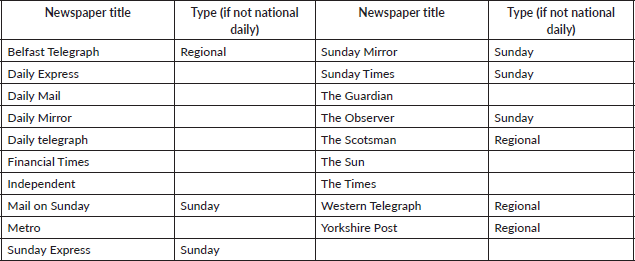
The full-text database Factiva, ©Dow Jones, was searched for stories in 19 newspapers or news websites that have the largest circulation across the UK or regionally that contained the strings ‘cancer’ and (‘King’ or ‘Princess’). The newspapers are listed in Table 1. Papers published in the 40 days following the news of King Charles III’s and Princess Catherine’s cancer diagnosis, on 5 February 2024 and 22 March 2024, respectively, were extracted from the database by a bibliometrician (GL). A total of 326 stories were downloaded, but after examination of the headlines and full texts of the stories, only 72 were found to be about cancer or cancer care for the two Royal patients, and the others were discarded.
The full text of each story meeting the inclusion criteria was analysed thematically and the following information was collected: the name of the newspaper and whether it was a tabloid or broadsheet, the journalist’s name and their situation or job title (if they were a newspaper correspondent or freelance journalist and whether or not they had a background in health journalism). Finally, we also assessed the credibility of any person or organisation making claims related to cancer. They were classified into three groups: those with a medical qualification or reputable position, such as the National Heath Service (NHS) website or Cancer Research UK, without a medical qualification or background, or no information about qualifications available/position not stated.
Table 1. Newspapers searched for stories about cancer in King Charles III and Catherine, Princess of Wales, in 2024.
The topics of the stories were categorised into raising awareness of cancer, new treatment or technology, lifestyle recommendations, cancer epidemiology, information about standard cancer treatment, complementary and alternative medicine and issues with NHS cancer care.
The correctness of the claims related to cancer was scored using a five-point scale by two oncologists (TY and AA) as either entirely correct, mostly correct with some factual inaccuracies, mostly incorrect, clearly incorrect or not possible to judge.
Results
There were 305 newspaper stories referring to King Charles III, and 553 to Princess Catherine, and cancer. Of these, 265 and 521, respectively, did not make cancer-related claims and were excluded. We identified 40 stories about King Charles III and 32 about Princess Catherine, which were found to make claims related specifically to cancer or cancer care, and these were retained for analysis (see Appendix Table A1).
Of these 72 stories, 6 were published in broadsheets (8% of stories), the remainder in tabloids. The newspapers with the most stories were The Independent (n = 16, 22%), followed by the Daily Mail (n = 10, 14%), the Daily Mirror (n = 9, 12%) and The Guardian (n = 7, 10%).
Some 49 stories (68%) were written by newspaper correspondents, almost half of whom (24) had a background in medicine or health journalism. Eleven (15%) of the stories were written by freelance journalists, seven of whom did not have a background in medicine or health journalism. In the remaining 12 stories (17%), the journalist’s name was not given. Where information related to cancer was quoted from a person or organisation (n = 25), six of the claims were made by an individual with either no medical background (n = 2) or whose name or background was not stated. Two of the stories (one in the Metro and another in The Guardian) quoted ‘leading doctors’ and ‘medical experts’ but did not name them.
The most common topics discussed in the stories were the epidemiology of cancer and information on standard cancer treatments, such as systemic therapies (chemotherapy and immunotherapy), surgery and radiotherapy. These topics were present in 45% of the stories. Creation of greater awareness of cancer was the next most common topic (17%), followed by issues with cancer care in the NHS (14%). Lifestyle recommendations and new treatment or technology each accounted for 9% of the topics, and the least common topic was complementary and alternative medicine (5% of topics).
Of the 72 stories, 19 (26%) were deemed to be factually incorrect and made false claims related to cancer. Of these, the claims made about cancer and cancer care were deemed to be entirely incorrect (inaccurate and untruthful) in 6 stories (8%), and the other 13 stories (18%) contained at least some factual inaccuracies.
The large majority (16 out of 19) of factually incorrect stories were published in tabloid newspapers, with only two in broadsheets. In 10 out of the 19 factually incorrect stories, the journalist did not have a background in health journalism, and in two of the factually incorrect stories, the journalist’s name was not given. Of the three stories in which a false claim about cancer was made by an individual, in two of them the individual did not have a medical background.
Of the 19 stories containing false claims related to cancer, 9 were related to standard cancer treatments, followed by 4 on cancer epidemiology and 3 on complementary and alternative medicine. Examples of misinformation about standard cancer treatments include that chemotherapy is only used for cancers which are potentially curable and that it is often curative even when given on its own [10]; that nonsmall cell lung cancer is usually treated with surgery [11]; and that patients will lose their hair and eyebrows during cancer treatment (which is not the case for many cancer treatments, including some types of chemotherapy) [12]. Examples of misinformation related to cancer epidemiology include that there is no difference in the incidence of cancer between people of different socioeconomic backgrounds, and that King Charles III’s prognosis may be good because he does not have a significant family history of cancer (he does; his grandfather died of lung cancer) [13, 14].
Misinformation related to complementary and alternative therapies included that homoeopathy may be an effective treatment for cancer [15], and that the solar eclipse was a hopeful sign for Princess Catherine’s recovery, as it would be appearing 6 months after her cancer treatment started [16]. Misinformation about NHS cancer care included that patients should bypass general practitioners who ‘frequently miss the early signs of cancers when more reliable blood tests could quickly assess the risks’ – not all cancers can be diagnosed on blood tests, and nonspecific testing for tumour markers would likely add further pressure on resources and generate longer waiting times [17].
Discussion
The media interest that followed the news of two cancer cases in the Royal Family provided an opportunity for the credibility of cancer reporting to be assessed. In particular, we checked major topics and themes and the extent of misinformation. In this analysis, we found that it was most commonly related to standard cancer treatments (chemotherapy, immunotherapy, surgery and radiotherapy), which may influence decisions made by cancer patients regarding their treatment and their compliance with treatment.
Misinformation regarding cancer in the media is of concern owing to its potential to affect the management and outcomes of patients with cancer as well as cancer care and policy-making generally. Evidence from previous studies suggests that media coverage on cancer influences the beliefs and behaviour of both patients and medical professionals, and misinformation can therefore have negative effects in the real world [18–23]. Those most susceptible to cancer misinformation tend to have lower levels of education and health literacy, less trust in healthcare and more positive views on alternative medicine [24]. There is emerging evidence that the media tend to overemphasise the potential efficacy of cancer drugs and rarely discuss treatment failure or toxicities, and that patients have unrealistic expectations regarding the curative potential of their treatment [25–27]. This is demonstrated in our analysis, where one example of misinformation was the claim that chemotherapy is often curative. A retrospective analysis on UK newspaper reporting on the NHS cancer drugs fund from 2010 to 2015 found that media coverage was positively slanted and did not reflect the mounting evidence of its ineffectiveness [28].
Our analysis further supports the growing evidence that there is a systemic problem with cancer reporting in the media. Health journalists have been shown to prioritise public interest when selecting cancer research topics to report on [29], and are more likely to cover medical research with weaker methodology and observational studies than randomised controlled trials [30, 31]. The media also cover certain cancers (such as breast, colon, brain cancer and leukaemia) disproportionately more than others relative to their incidence, and tend to reflect celebrity endorsement and corporate funding [32–37].
Statements made about cancer in the media should ideally be made by individuals with medical qualifications or medical organisations, and greater transparency on the sources used would allow the reader to be better informed of their credibility before they may be influenced on decisions regarding their health. In this analysis, when claims related to cancer were quoted from a person or organisation, six of the claims were made by someone with either no medical background or whose name and background were not stated.
The majority of the stories deemed to be factually incorrect were published in tabloids, which typically have a larger circulation than broadsheets. Readers of these newspapers may assume that the information published has been verified and may be less sceptical of information they read in widely circulated newspapers compared to information on social media, although there is evidence that health misinformation on social media is often believed by viewers to be true [38]. A study amongst US adults found that participants with cancer believed misinformation related to cancer treatment to be true more often than those without a diagnosis, which suggests that individuals with cancer may be more vulnerable to misinformation regarding cancer treatment [38].
Our findings show the need for health misinformation in the media to be urgently addressed. The Editors’ Code of Practice outlines ethical standards for the press in the UK, and includes the requirement for journalists to verify facts and avoid publishing misleading content [39]. Although there are two regulatory bodies in the UK that enforce this, press regulation is voluntary, and publishers decide which regulatory body, if any, to join [40]. The burden of identifying health misinformation currently lies disproportionately with the public. Strategies to address misinformation may include stricter standards for verification of information and independent regulation, and educational interventions for journalists and editors on verification of information related to health. The provision of accurate, accessible and comprehensible information about cancer is essential, and the responsibility for this is shared across the healthcare community. Greater transparency on the background of any sources quoted making claims related to cancer is also necessary.
Limitations of our study include that we only analysed stories published in the 40 days following the news of King Charles III’s and Princess Catherine’s cancer diagnosis. A limited number of stories were therefore included in our analysis, which did not allow meaningful statistical analysis. However, a comprehensive search for relevant stories was undertaken, and they are likely to provide a reasonable indication of national reporting trends.
Further analysis is needed on cancer misinformation on social media, where there is likely to be a greater degree of misinformation, and concerningly, studies have demonstrated that social media posts containing health misinformation achieve higher engagement levels than factual posts [41–43]. A systematic review of items on health misinformation on social media between 2000 and 2019 found that cancer and diabetes were the topics with the greatest amount of misinformation [44]. Another systematic review over the same time period found that smoking products and drugs were the topics where the most quality concerns on social media were raised, with moderate rates of misinformation on cancer [45]. An updated review is needed, given that social media are constantly evolving, and misinformation is likely to have become more widespread. Further work is also needed to better understand perceptions of cancer news from the perspective of patients and clinicians, and to identify tailored interventions to counter the spread of cancer misinformation.
Conclusion
To conclude, misinformation regarding cancer and cancer care is being circulated in UK newspapers with potentially damaging consequences. There is an urgent need to address this to reduce the risk of harm to those with lived experience of cancer. Collaboration between the press and the healthcare community needs to be improved to increase the credibility of information published about cancer [46]. Authors and journalists should be encouraged to rely on high-quality, evidence-based sources when reporting on cancer. In addition, reliable websites and platforms that provide accurate and up-to-date cancer information in an accessible, journalist-friendly format should be identified, strengthened and actively promoted to improve the quality of cancer reporting. Greater transparency regarding sources used is essential for accountability and should be a standard for health reporting.
Conflicts of interest
The authors declare that they have no conflicts of interest.
Funding
AA was supported by a National Institute for Health and Care Research (NIHR) Advanced Fellowship, NIHR300599.
Author contributions
All authors were involved in the conception and design of the manuscript, and performed the initial literature review. All authors critically revised the manuscript and approved the final version.
References
1. Benjamin DJ, Lythgoe MP, and Moyers JT, et al (2025) Cancer in public figures, 2010–2020 ESMO Real World Data Digit Oncol 7 100119 https://doi.org/10.1016/j.esmorw.2025.100119
2. Rosenthal AN (2017) Media must report celebrity health stories responsibly BMJ 356 192 https://doi.org/10.1136/bmj.j192
3. Lewison G, Tootell S, and Roe P, et al (2008) How do the media report cancer research? A study of the UK’s BBC website Br J Cancer 99 569–576 https://doi.org/10.1038/sj.bjc.6604531 PMID: 18665166 PMCID: 2527836
4. Tejan M (2021) Part I: misinformation in public health emergencies. HPHR / BCPHR 31 [https://doi.org/10.54111/0001/EE9]
5. Teplinsky E, Ponce SB, and Drake EK, et al (2022) Online medical misinformation in cancer: distinguishing fact from fiction JCO Oncol Pract 18 584–589 https://doi.org/10.1200/OP.21.00764 PMID: 35357887 PMCID: 9377685
6. Zielinski C (2021) Infodemics and infodemiology: a short history, a long future Rev Panam Salud Publica 45 40 https://doi.org/10.26633/RPSP.2021.40
7. Wardle C and Derakhshan H (2017) Information Disorder: Toward an Interdisciplinary Framework for Research and Policy Making (Strasbourg: Council of Europe)
8. Briggs A and Burke P (2010) A Social History of the Media: from Gutenberg to the Internet 3rd edn (Cambridge: Polity Press)
9. Chandler D and Munday R (2016) A Dictionary of Media and Communication (Oxford: Oxford University Press)
10. Jackson-Spence F (2024) What Lies Ahead for the Princess of Wales as She Undergoes Chemotherapy? The Daily Telegraph
11. Searles M (2024) The Types of Cancer the King May Have and How They May be Treated The Daily Telegraph
12. Nolan L (2024) Family is Vital, This Proves it The Daily Mirror
13. (2024) King Charles Cancer: if You Can’t Say Anything Nice, Say Nothing at All The Yorkshire Post
14. Wilkes D (2024) Cancer has been a Rare Illness in Royal Family The Daily Mail
15. Cripps C (2024) Orchid Essences, Oxygen Chambers and Lots of Crying: Have the Royals Got the Right Idea About Homeopathy? Independent Online
16. Frank D (2024) Eclipse Shows She can Overcome this Challenge The Mail on Sunday
17. Newark T (2024) Even in Illness, the King is Setting an Example for Nation The Daily Express
18. Shim M, Kelly B, and Hornik R (2006) Cancer information scanning and seeking behavior is associated with knowledge, lifestyle choices, and screening J Health Commun 11(Suppl 1) 157–172 https://doi.org/10.1080/10810730600637475 PMID: 16641081
19. Yanovitzky I and Blitz CL (2000) Effect of media coverage and physician advice on utilization of breast cancer screening by women 40 years and older J Health Commun 5 117–134 https://doi.org/10.1080/108107300406857 PMID: 11010345
20. Nattinger AB, Hoffmann RG, and Howell Pelz A, et al (1998) Effects of Nancy Reagan’s mastectomy on choice of surgery for breast cancer by US women JAMA 279 762–766 https://doi.org/10.1001/jama.279.10.762 PMID: 9508152
21. Niederdeppe J, Lee T, and Robbins R, et al (2014) Content and effects of news stories about uncertain cancer causes and preventive behaviors Health Communication 29 332–346 https://doi.org/10.1080/10410236.2012.755603
22. Warner EL, Waters AR, and Cloyes KG, et al (2021) Young adult cancer caregivers’ exposure to cancer misinformation on social media Cancer 127 1318–1324 https://doi.org/10.1002/cncr.33380
23. Passalacqua R, Caminiti C, and Salvagni S, et al (2004) Effects of media information on cancer patients’ opinions, feelings, decision making process and physician patient communication Cancer 100 1077–1084 https://doi.org/10.1002/cncr.20050 PMID: 14983505
24. Scherer LD, Mcphetres J, and Pennycook G, et al (2021) Who is susceptible to online health misinformation? A test of four psychosocial hypotheses Health Psychol 40 274–284 https://doi.org/10.1037/hea0000978 PMID: 33646806
25. Weeks JC, Catalano PJ, and Cronin A, et al (2012) Patients’ expectations about effects of chemotherapy for advanced cancer N Engl J Med 367 1616–1625 https://doi.org/10.1056/NEJMoa1204410 PMID: 23094723 PMCID: 3613151
26. Rubagumya F, Galica J, and Rugengamanzi E, et al (2023) Media coverage of cancer therapeutics: a review of literature J Cancer Policy 36 100418 https://doi.org/10.1016/j.jcpo.2023.100418 PMID: 36871667
27. Fishman J, Ten Have T, and Casarett D (2010) Cancer and the media: how does the news report on treatment and outcomes? JAMA Intern Med 170 515–518 https://doi.org/10.1001/archinternmed.2010.11
28. Lewison G, Aggarwal A, and Roe P, et al (2018) UK newspaper reporting of the NHS cancer drugs fund, 2010 to 2015: a retrospective media analysis J Roy Soc Med 111 366–373 https://doi.org/10.1177/0141076818796802 PMID: 30212638 PMCID: 6194957
29. Aggarwal A, Batura R, and Sullivan R (2014) The media and cancer: education or entertainment? An ethnographic study of European cancer journalists Ecancermedicalscience 8 423 [https://doi.org/ 10.3332/ecancer.2014.423] PMID: 24834118 PMCID: 3998657
30. Selvaraj S, Borkar DS, and Prasad V (2014) Media coverage of medical journals: do the best articles make the news? PLoS One 9 e85355 https://doi.org/10.1371/journal.pone.0085355 PMID: 24465543 PMCID: 3894978
31. Pellechia MG (1997) Trends in science coverage: a content analysis of three US newspapers Public Understand Sci 6 49–68 https://doi.org/10.1088/0963-6625/6/1/004
32. Jensen JD, Moriarty CM, and Hurley RJ, et al (2010) Making sense of cancer news coverage trends: a comparison of three comprehensive content analyses J Health Commun 15 136–151 https://doi.org/10.1080/10810730903528025 PMID: 20390983
33. Len Rios ME, Hinnant A, and Park S, et al (2008) Study asks if reporter’s gender or audience predict for paper’s cancer coverage Newspaper Res J 29 91–104 https://doi.org/10.1177/073953290802900208
34. Slater MD, Long M, and Bettinghaus EP, et al (2008) News coverage of cancer in the United States: a national sample of newspapers, television, and magazines J Health Commun 13 523–537 https://doi.org/10.1080/10810730802279571 PMID: 18726810 PMCID: 3037797
35. Cohen EL, Caburnay CA, and Luke DA, et al (2008) Cancer coverage in general-audience and Black newspapers Health Communication 23 427–435 https://doi.org/10.1080/10410230802342176 PMID: 18850390
36. Stryker JE, Emmons KM, and Viswanath K (2007) Uncovering differences across the cancer control continuum: a comparison of ethnic and mainstream cancer newspaper stories Prev Med 44 20–25 https://doi.org/10.1016/j.ypmed.2006.07.012
37. Kamenova K, Reshef A, and Caulfield T (2013) Angelina Jolie’s faulty gene: newspaper coverage of a celebrity’s preventive bilateral mastectomy in Canada, the United States, and the United Kingdom Genet Med 15 814–820 [https://doi.org/ 10.1038/gim.2013.199]
38. Lazard AJ, Nicolla S, and Vereen RN, et al (2023) Exposure and reactions to cancer treatment misinformation and advice: survey study JMIR Cancer 9 e43749 https://doi.org/10.2196/43749 PMID: 37505790 PMCID: 10422174
39. Editors’ Code of Practice Committee (2021) Editors’ Code of Practice (London: Independent Press Standards Organisation)
40. Woodhouse J (2024) How is the Press Regulated? House of Commons Library [https://commonslibrary.parliament.uk/research-briefings/cbp-7576/] Date accessed: 07/02/26
41. Kureyama N, Terada M, and Kusudo M, et al (2023) Fact checking cancer information on social media in Japan: retrospective study using Twitter JMIR Form Res 7 e49452 https://doi.org/10.2196/49452
42. Alsyouf M, Stokes P, and Hur D, et al (2019) “Fake news” in urology: evaluating the accuracy of articles shared on social media in genitourinary malignancies BJU Int 124 701–706 https://doi.org/10.1111/bju.14787 PMID: 31044493
43. Loeb S, Langford AT, and Bragg MA, et al (2024) Cancer misinformation on social media CA Cancer J Clin 74 453–464 [https://doi.org/ 10.3322/caac.21857] PMID: 38896503 PMCID: 11648589
44. Afful-Dadzie E, Afful-Dadzie A, and Egala SB (2023) Social media in health communication: a literature review of information quality Health Informat Manage J 52(3–17) 3–17 https://doi.org/10.1177/1833358321992683
45. Lledó V and Álvarez-Gálvez J (2021) Prevalence of health misinformation on social media: systematic review J Med Internet Res 23 e17187 https://doi.org/10.2196/17187
46. Chen X and Siu LL (2001) Impact of the media and the internet on oncology: survey of cancer patients and oncologists in Canada J Clin Oncol 19 4291–4297 https://doi.org/10.1200/JCO.2001.19.23.4291 PMID: 11731511
Appendix
The 72 stories in UK newspapers that were included for analysis are listed chronologically and grouped by the diagnosis that prompted the coverage. Stories were coded along five dimensions: the main thematic focus, source credibility, author/agent credibility, the cancer-related claims made and an assessment of the factual correctness of the content. ‘Quoted source credibility’ refers to the person or organisation quoted making claims related to cancer. ‘–’ indicates no external source was quoted.
Table A 1. Full listing with characteristics of the 72 analysed news stories.
Part A. King Charles III coverage (articles 1–40).

Part B. Princess of Wales coverage (articles 41–72).