Delphi-based validation of the parameters of the Palliative Care Parametrisation Tool (PCPT) for determining medical and nursing visits in home-based palliative care
Ariel Cherro1,2,3*, Adriana Fernandez4, María Victoria Fasano5 and Lucas Morando1
1Care Home, División Cuidados Paliativos de Nutri Home S.A, Ciudad Autónoma de Buenos Aires CP 1428, Argentina
2Consejo de Cuidados Paliativos, Sociedad Argentina de Medicina, Ciudad Autónoma de Buenos Aires C1181ACK, Argentina
3Universidad Nacional de Mar del Plata, Cátedra de Cuidados Paliativos, Mar del Plata, Provincia de Buenos Aires B7600, Argentina
4Universidad Nacional de La Plata, Cátedra de Nutrición Humana, La Plata, Provincia de Buenos Aires B1900, Argentina
5Instituto de Desarrollo e Investigaciones Pediátricas (IDIP), Hospital de Niños La Plata, La Plata, Provincia de Buenos Aires CP 1900, Argentina
Abstract
Introduction: The determination of visit frequency in home-based palliative care (HBPC) is usually based on discretionary and nonstandardised criteria. To reduce variability, the Palliative Care Parametrisation Tool (PCPT) was developed, integrating three clinical parameters: the nursing score (NS), the ESAS -based distress score and the ECOG scale. Following prior validation of the NS, this study corresponds to the second phase of the process: validation of the functioning of the three parameters as a whole.
Methods: A two-round Delphi study was conducted with an expanded panel of experts. About 29 professionals participated in the first round and 28 in the second round. Surveys were distributed via email using Google Forms, with weekly reminders and a 1-month collection period for each round. A 1–10 Likert scale was used, and consensus was defined as ≥80% of scores ≥7.
Results: In the second round, all items reached consensus (83%–97%). Median scores remained high (9–10), with a reduction in interquartile dispersion, indicating consolidation of agreement. The panel confirmed the logic of the PCPT: the NS is the dominant parameter for nursing visits and a modifier for medical visits; the distress score is the dominant parameter for medical visits and a modifier for nursing visits. The ECOG scale acts as a modifier in both cases.
Conclusion: The three PCPT parameters and their operational logic achieved validation by expert consensus. This represents a key step towards the standardisation of the allocation of medical and nursing visits in HBPC and towards the formal implementation of the tool.
Keywords: palliative care, home-based palliative care, Delphi method, visit frequency, visit scheduling, symptom burden, care complexity, parametrisation tool, validation study
Correspondence to: Ariel Cherro
Email: ariel.cherro@carehome.com.ar
Published: 14/09/2026
Received: 01/06/2026
Publication costs for this article were supported by ecancer (UK Charity number 1176307).
Copyright: © the authors; licensee ecancermedicalscience. This is an Open Access article distributed under the terms of the Creative Commons Attribution License (http://creativecommons.org/licenses/by/4.0), which permits unrestricted use, distribution, and reproduction in any medium, provided the original work is properly cited.
Introduction
Palliative care is defined as specialised medical care aimed at improving the quality of life of individuals with serious illnesses. Its primary objective is to alleviate symptoms and reduce stress associated with potentially life-limiting conditions, regardless of disease stage or the need for disease-modifying therapies. It is a comprehensive approach that addresses the physical, emotional, spiritual and social dimensions of the care process [1].
In recent years, the use of home-based palliative care (HBPC) models delivered by interdisciplinary teams has steadily increased [2–4]. This growth is supported by evidence demonstrating a positive impact mainly on quality of life and cost reduction for the healthcare system [5, 6]. However, the literature does not provide a standardised method for determining how many visits each professional on the team should make for a given patient. On the contrary, multiple studies describe that visit frequency – especially nursing visits – is determined based on intuition, prior experience, general guidelines, administrative coverage conditions or colleagues’ recommendations [7–10]. This variability highlights the need to move towards systematic and reproducible tools. Some authors have demonstrated improvements using more structured visit planning frameworks, including dynamic scheduling and route optimisation [11]. However, there are no specific references regarding the number and frequency of visits for each discipline.
Additionally, certain clinical patient factors have been associated with a greater need for visits, such as a low score on the Palliative Performance Scale, presence of pain or recent discharge from hospitalisation [12]. These approaches contribute to more efficient use of resources while maintaining appropriate quality standards.
In Argentina, Carehome has been providing HBPC for more than 16 years in 49 cities, caring for approximately 1,600 patients per year, of whom 70% have advanced oncological disease and 96% are adults. In this context, the need to develop a reproducible method for assigning visit frequency was identified. This led to the development of the Palliative Care Parametrisation Tool (PCPT), a tool designed to standardise the allocation of visits by physicians, nurses, psychologists and physiotherapists for adult oncology patients. The instrument integrates validated scales – ESAS for symptom burden and ECOG for functional status – together with a Nursing Score (NS) developed ad hoc and previously validated through a Delphi study [13].
Nursing visits are essential to achieving the objectives of HBPC: symptom management, prevention of avoidable hospitalisations and support to enable death at home when desired [10, 14, 15]. The marked shortage of nursing staff and physicians specialised in palliative care in Argentina reinforces the need for this type of parametrisation strategy [16–18]. Furthermore, the local regulatory framework establishes that nurses are not permitted to prescribe medication or indicate procedures, which requires patients with high care needs to also receive a higher number of medical visits [19, 20].
Recent national data reveal a significant deficit: there are only 1.6 nurses per physician, and only 0.5 when considering professional nurses alone, figures well below PAHO/WHO recommendations [20]. Regarding physician availability, Argentina has 584 specialised teams for a population of 46 million (1.3 per 100,000 inhabitants) 18, an insufficient figure to meet estimated demand, highlighting a shortage of available professionals [18].
In this context, the PCPT was developed to guide the allocation of visits based on three objective parameters representing key dimensions of clinical complexity in HBPC: (1) NS, focused on care needs; (2) ESAS-based distress score, an indicator of symptom burden and (3) ECOG, as a prognostic marker and level of dependence on others for activities of daily living [22–26].
The prior validation of the NS constituted an essential first step [13]. The present study continues this process by evaluating, through expert consensus, the relevance, clarity and integrated functioning of the three PCPT parameters for recommending medical and nursing visits.
Planning visit frequency in HBPC is a central component of care quality. However, decisions are often based on discretionary and nonstandardised criteria, such as prior experience, clinical intuition or administrative constraints. There are factors that generate variability in care intensity, such as caregiver capacity within the family environment and symptom burden, amongst others. If these are not systematically considered, they may impact the quality of care and outcomes.
The PCPT was designed to standardise the determination of medical, nursing, psychological and physiotherapy visits in HBPC. For the determination of medical and nursing visits (the focus of this article), the PCPT integrates three dimensions: NS, ESAS-based distress score and the ECOG scale, representing care burden, symptom burden and functionality/prognosis.
Materials and methods
Expert panel
The experts participating in the Delphi study (Table 1) were selected amongst representatives of organisations related to home palliative care. Selection criteria included:
-
Broad expertise in clinical and management domains
-
Active involvement as key stakeholders in the regional development of palliative care
-
Post-college training in palliative care (master’s degree or a clinical specialty)
-
At least 5 years of experience in HBPC
Preparation: development of the PCPT
In the first unstructured round, a team of six experts discussed which items to include in the score, based on factors identified through interdisciplinary discussions amongst professionals from multiple cities. The objective was to define elements that influence performance in home palliative care, particularly regarding outcomes, such as place of death and frequency of hospital readmissions.
Following this preliminary consensus process, the operational ranges of the parametrisation tool were subsequently established with the aim of adjusting the frequency and intensity of care according to patient complexity. Complexity was defined through the integration of three clinical parameters: functional status (ECOG), the distress score (based on the sum of ESAS) and the NS.
Within this framework, the levels of intervention were defined as follows:
-
Medical visits: A spectrum was established ranging from a baseline level of ‘up to one visit per week’ (equivalent to a minimum of 2 monthly visits at the lowest complexity level) to a maximum of three visits per week in situations of high clinical demand (Table 2).
-
Nursing visits: The scheme includes from three to six visits per week at the initial levels, progressively increasing up to three visits per day. In scenarios of maximum complexity or end of life, these interventions are supplemented by nursing shifts (partial or continuous) according to the intensity score obtained (Table 3).
Table 1. Characteristics of the surveyed experts.

Table 2. Parametrisation of medical visits.

Table 3. Parametrisation of nursing visits.

Rationale for the clinical parameters
The three clinical parameters that determine the appropriate number of medical and nursing visits required by a patient were selected because they reflect the multidimensional needs of individuals receiving HBPC. In addition, they have the advantage of being based on data routinely available in medical records:
-
Nursing practices (NS): This score was developed de novo and previously validated by the Carehome team [13]. It includes categories of care needs that, in daily practice, require nursing interventions. These categories were scored according to their complexity and their estimated impact on the number of visits required, considering both clinical and socio-family factors (e.g. caregiver preparedness and training in medication administration). Sporadic practices such as the administration of enemas or bisphosphonates are excluded.
-
Symptom burden (ESAS-based distress score): ESAS, commonly used by palliative care teams, measures distress across 9–11 symptoms. The classic ESAS version is used, mandatorily incorporating the assessment of constipation. Although there are assessment tools that exceed the 0–10 intensity scale, its inclusion in ESAS allows rapid and effective screening. This decision is based on the high prevalence of constipation in the home setting and its potential to generate serious complications (such as functional obstruction or delirium) if not detected early. A higher total severity score indicates a greater need for visits to optimise symptom control, reduce hospitalisations and minimise emergency department visits [27, 28].
-
Functionality and prognosis (ECOG Scale): Functional status at the start of HBPC has been identified as a prognostic factor. The ECOG scale is routinely included in the medical record and is particularly valuable for predicting overall survival and other clinical outcomes in various types of cancer.
First and second Delphi rounds
Before the Delphi rounds were launched, the components of the PCPT were converted into a questionnaire suitable for expert consensus assessment (Figure 1). Experts scored each statement on a ten-point Likert scale, where one indicated strong disagreement and ten indicated strong agreement. An initial pilot evaluation involving ten experts was conducted to assess item clarity, interpretability and feasibility of administration. Based on the feedback obtained, adjustments were made to optimise the wording and structure of the questionnaire before distribution to the Delphi panel.
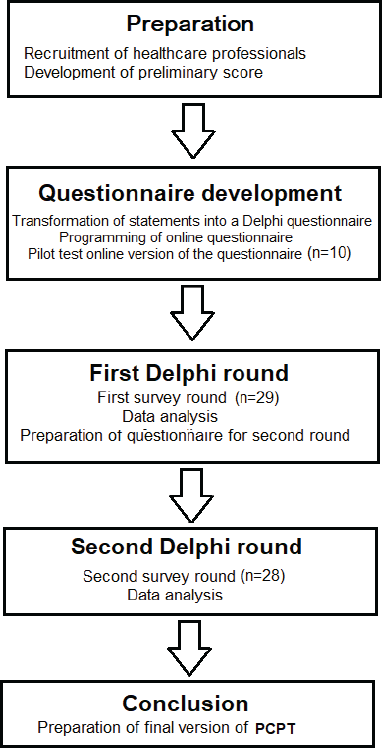
Figure 1. Flowchart of the Delphi process used for validation of the PCPT.
Professionals were asked about their level of agreement with the proposed structure and its functioning. The PCPT operates based on a simple hierarchy for interpreting three parameters. For the allocation of nursing visits, the NS acts as the dominant parameter, as it directly reflects the actual care burden in the home setting. The ESAS-based distress score and ECOG function as modifying parameters, capable of adjusting the recommendation only when both coincide in a different column from that of the NS. Similarly, for determining medical visits, the ESAS-based distress score is the dominant parameter, while the NS and ECOG operate as modifiers. Thus, the algorithm establishes that the final recommendation arises from agreement between two of the three parameters when such agreement exists; in the absence of concordance, the dominant parameter corresponding to the type of visit being evaluated always prevails. This scheme allows for clear decisions, reproducible across teams and sensitive to the patient’s actual clinical complexity.
Procedure
Experts completed the Delphi questionnaire electronically through Google Forms, rating each item on the Likert scale according to their level of agreement (Table 4). Invitations were distributed by email, and weekly reminders were sent throughout the 1-month response period for each round. The process was conducted anonymously to promote independent responses and reduce potential bias related to participants’ professional reputation or influence.
Table 4. Delphi questionnaire structure.

Definition of consensus and data analysis
Consensus was established a priori as agreement by at least 80% of participants, defined as ratings of 7 or higher on the Likert scale. Items failing to achieve consensus after four Delphi rounds, without evidence of meaningful variation between rounds, were considered for removal from the tool.
In practice, the consensus process was completed after two rounds. The second round focussed on the categories showing the lowest levels of inter-expert agreement during the initial evaluation. Following each round, summarised feedback was provided to all panel members, including the median, interquartile range (IQR) and the proportion of agreement for each item (percentage of ratings ≥7). Items meeting the predefined consensus criterion were excluded from subsequent rounds.
Statistical analyses were conducted using R software version 4.5.1. In addition to the Delphi consensus analysis, content validity was assessed using Aiken’s V coefficient, which quantifies the degree of expert agreement regarding the appropriateness of the proposed decision rules and visit parametrisation criteria included in the tool. This analysis provided complementary evidence supporting the adequacy and coherence of the proposed framework. Statistical significance was established at p < 0.05.
Results
In the first round of validation of the PCPT, responses were obtained from an initial panel of 29 Argentine experts, selected based on their postgraduate training and experience in home-based care (Table 1). They represented a total of 14 cities across Argentina. The panel consisted of 23 physicians (79.3%) and 6 nurses (20.7%); 72.4% had more than 10 years of experience and 27.6% between 5 and 10 years. In the second round, the sample was adjusted to 28 specialists due to 1 participant being unable to respond within the established timeframe.
The assessment of content validity using Aiken’s V coefficient demonstrated satisfactory levels of expert agreement regarding the proposed clinical decision rules incorporated into the PCPT. Aiken’s V values ranged between 0.701 and 0.889, supporting the relevance and adequacy of the proposed categories. The strongest agreement amongst experts was observed for the proposed criteria related to Questions 8 and 12, whereas the lowest coefficients were found for Questions 11 and 14, although all remained within acceptable ranges. Confidence intervals indicated stable agreement across the expert panel. The complete results of the Aiken’s V analysis are summarised in Table 5. These results provide additional evidence supporting the content validity and clinical relevance of the proposed instrument. The Delphi rounds yielded consistently high levels of expert agreement for all evaluated decision criteria. In the first round, median ratings ranged between 9 (P25–P75: 5–10) and 10 (P25–P75: 9–10), reflecting strong initial endorsement of the proposed visit parametrisation framework (Table 6).
Table 5. Content validation of the palliative care parametrisation tool.
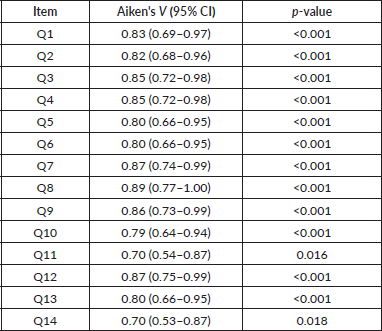
Table 6. Analysis of the two Delphi rounds.
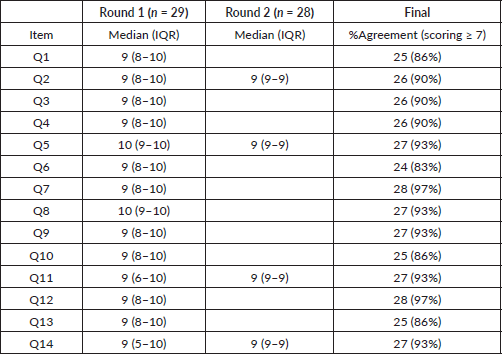
The second round focused on criteria with comparatively lower agreement, resulting in more homogeneous responses across panellists. According to the predefined consensus threshold, all evaluated criteria achieved agreement rates above 83%. Notably, two criteria reached 97% agreement and several others exceeded 90% consensus. Collectively, these findings indicate that the Delphi approach successfully consolidated expert agreement regarding the dimensions included in the PCPT.
This analysis confirmed:
-
The NS as the dominant parameter for nursing visits.
-
The distress score as the dominant parameter for medical visits.
-
ECOG as a modifying parameter for both medical and nursing visits.
-
An algorithm based on agreement between two of the three parameters.
Discussion
The PCPT provides a structured and reproducible approach for planning medical and nursing visits in HBPC, reducing subjective variability in decision making. The consensus achieved supports its applicability and clinical justification for all stakeholders involved in care: patients, families, care teams, payers and the healthcare system as a whole. The PCPT captures patient complexity and translates it into care intensity, and can be used by any of the stakeholders involved. This enables the use of a common language and enhances transparency in decision making. Further validation is still required regarding how the PCPT determines home-based psychology and physiotherapy visits, as well as linking the use of the tool to its impact on key performance indicators in HBPC.
As a limitation, it should be noted that the design and operational logic of the PCPT tool are intrinsically linked to the regulatory framework and scope of nursing practice in Argentina. Unlike models implemented in the United States, Brazil or the United Kingdom, where advanced practice nurses have legal autonomy to prescribe medications and request and interpret diagnostic tests, nursing practice in Argentina operates under a framework of limited autonomy and hierarchical dependence for pharmacological and diagnostic decision making [21,29–33]. This regulatory constraint implies that, in the face of increased care complexity identified by nursing staff, a higher frequency of medical visits is necessarily required to adjust the therapeutic plan. Consequently, if the PCPT were adapted to healthcare systems with high nursing autonomy, the relationship between the frequencies of visits by both roles could become decoupled, allowing nursing staff to manage much of symptom exacerbation without necessarily increasing the burden of physician visits.
Conclusion
The three PCPT parameters achieved robust expert consensus. The tool is advancing towards consolidation as a standard for determining the frequency of medical and nursing visits in HBPC for adult cancer patients.
Acknowledgements
To Andrés Martinuzzi for his collaboration during the development of the study. To Gregorio Raviolo and Martín Leguizamón for the technical support.
Conflicts of interest
The authors declare no conflicts of interest.
Funding
This research did not receive any specific grant from funding agencies in the public, commercial or nonprofit sectors. The study was carried out as part of the authors’ routine professional activities within CAREHOME.
Ethical approval
This study did not involve patients or personal data. All participants were healthcare professionals voluntarily completing an anonymous survey. Therefore, ethical approval was not required, in accordance with national guidelines.
Author contributions
Agustín Flores, Carina Badalotti, Carolina Ghiglieri, Constanza Nuñez, Daniela Bideberry, Diego Scotta, Eduardo Ortíz, Eyelen Cubas Toledo, Gabriela Capalbo, Gabriela Nuñez, Graciela Jury, Irina Casariego, Ivan Inchausti, Ivana Ferrero, Jacqueline Cimerman, Jorge Flores, Karina Stadler, Lisandro Figueroa, Lucas Bode, Maria Celeste García, María del Carmen Fernández, María Eugenia Vescio, Mariángeles Fossati, Melina San Segundo, Mónica Buriano, Mónica Vera, Sandra Vela Perez, Silvia Lazarte.
Declaration of generative artificial intelligence (AI) & AI-assisted technologies in the writing process
AI tools, specifically ChatGPT (OpenAI, GPT-4), were used in the preparation of this manuscript to improve the clarity of English grammar, spelling and language structure. These tools were employed to enhance the readability and presentation of the text but were not used to generate scientific content, interpret data or influence the study’s conclusions.
References
1. Radbruch L, De Lima L, and Knaul F, et al (2020) Redefining palliative care—a new consensus-based definition J Pain Symptom Manage 60 754–764 https://doi.org/10.1016/j.jpainsymman.2020.04.027 PMID: 32387576 PMCID: 8096724
2. Chung HH, Wang CL, and Wu JJ, et al (2024) Trend analysis of quality indicators in palliative home care among terminally ill cancer and non-cancer patients in Taiwan: a 6-year observational study Support Care Cancer 32 [https://doi.org/10.1007/S00520-023-08277-2]
3. Maetens A, Deliens L, and Van den Block L, et al (2019) Are we evolving toward greater and earlier use of palliative home care support? A trend analysis using population-level data from 2010 to 2015 J Pain Symptom Manage 58(19) 19–28 https://doi.org/10.1016/j.jpainsymman.2019.04.008
4. Sun Z, Laporte A, and Guerriere DN, et al (2005) Utilisation of home-based physician, nurse and personal support worker services within a palliative care programme in Ontario, Canada: trends over 2005–2015 Health Soc Care Community 25 1127–1138 https://doi.org/10.1111/hsc.12413
5. Cherro AF (2024) Cost-saving with home palliative care: the trend in some developed nations and the current situation in Argentina Nursing Commun 8 e2024027 https://doi.org/10.53388/IN2024027
6. Luta X, Ottino B, and Hall P, et al (2021) Evidence on the economic value of end-of-life and palliative care interventions: a narrative review of reviews BMC Palliat Care 20 89 https://doi.org/10.1186/s12904-021-00782-7 PMID: 34162377 PMCID: 8223342
7. Irani E, Hirschman KB, and Cacchione PZ, et al (2018) Home health nurse decision-making regarding visit intensity planning for newly admitted patients: a qualitative descriptive study Home Health Care Serv Quart 37 211–231 [https://doi.org/10.1080/01621424.2018.1] https://doi.org/10.1080/01621424.2018.1456997
8. Jack BA, O’Brien MR, and Scrutton J, et al (2015) Supporting family carers providing end-of-life home care: a qualitative study on the impact of a hospice at home service J Clin Nurs 24 131–140 https://doi.org/10.1111/jocn.12695
9. Sockolow PS, Bowles KH, and Pankok C, et al (2021) Planning the episode: home care admission nurse decision-making regarding the patient visit pattern Home Health Care Manage Pract 33 193–201 https://doi.org/10.1177/1084822321990775
10. Allo JA, Cuello D, and Zhang Y, et al (2016) Patient home visits: measuring outcomes of a community model for palliative care education J Palliat Med 19 271 https://doi.org/10.1089/jpm.2015.0275
11. Demirbilek M, Branke J, and Strauss A (2019) Dynamically accepting and scheduling patients for home healthcare Health Care Manag Sci 22 140–155 https://doi.org/10.1007/s10729-017-9428-0 PMCID: 6373314
12. Harrold J, Byhoff E, and Harris P, et al (2014) All hospice patients are not equal: development of a visit-based acuity index J Palliat Med 17 135–140 https://doi.org/10.1089/jpm.2013.0109
13. Cherro A, Fernandez A, and Gonzalez H, et al (2026) Delphi method validation of a tool for planning home visits in palliative care: palliative care parametrisation tool Ecancermedicalscience 20 2056 https://doi.org/10.3332/ecancer.2026.2056 PMID: 41777415 PMCID: 12950890
14. Seow H, Sutradhar R, and Mcgrail K, et al (2016) End-of-life cancer care: temporal association between homecare nursing and hospitalizations J Palliat Med 19 263–270 https://doi.org/10.1089/jpm.2015.0229
15. Sutradhar R, Barbera L, and Seow HY (2017) Palliative homecare is associated with reduced high- and low-acuity emergency department visits at the end of life: a population-based cohort study of cancer decedents Palliat Med 31 448–455 https://doi.org/10.1177/0269216316663508
16. Boniol M, Kunjumen T, and Nair TS, et al (2022) The global health workforce stock and distribution in 2020 and 2030: a threat to equity and ‘universal’ health coverage? BMJ Glob Health https://doi.org/10.1136/bmjgh-2022-009316
17. Pastrana T, Torres-Vigil I, and De Lima L (2014) Palliative care development in Latin America: an analysis using macro indicators Palliat Med 28 1231–1238 https://doi.org/10.1177/0269216314538893 PMID: 24925578 PMCID: 4233157
18. Tripodoro VA, Candelmi D, and Suárez D, et al (2025) Informe sobre la situación de los cuidados paliativos en Argentina según los indicadores de la OMS (Pamplona: ATLANTES Global Observatory of Palliative Care, Universidad de Navarra)
19. Congreso de la Nación Argentina (1991) Ley N° 24.004: Ley de ejercicio de la enfermería. Boletín Oficial de la República Argentina. Buenos Aires, Argentina. Available from: Ley 24.004. https://www.argentina.gob.ar/normativa/nacional/ley-24004-403/texto
20. Boletín Oficial República Argentina - Ministerio De Salud - Resolución 1927/2023 (n.d.) [https://www.boletinoficial.gob.ar/detalleAviso/primera/293212/20230831] Date accessed: 4/08/25
21. Salud OP de la (2023) La situación de la enfermería en la Región de las Américas Informe final del Foro Regional para el Avance de la Enfermería en América Latina (8 y 9 de septiembre del 2022)
22. Stapleton SJ, Holden J, and Epstein J, et al (2016) A systematic review of the symptom distress scale in advanced cancer studies Cancer Nurs 39 E9–23 https://doi.org/10.1097/NCC.0000000000000292
23. Hannon B, Dyck M, and Pope A, et al (2015) Modified edmonton symptom assessment system including constipation and sleep: validation in outpatients with cancer J Pain Symptom Manage 49 945–952 https://doi.org/10.1016/j.jpainsymman.2014.10.013
24. Mercadante S, Valle A, and Porzio G, et al (2013) Prognostic factors of survival in patients with advanced cancer admitted to home care J Pain Symptom Manage 45 56–62 https://doi.org/10.1016/j.jpainsymman.2011.12.288
25. Kumar D, Neeman E, and Zhu S, et al (2024) Revisiting the association of ECOG performance status with clinical outcomes in diverse patients with cancer JNCCN J Nat Comprehensive Cancer Netw 22 [https://doi.org/10.6004/JNCCN.2023.7111]
26. Käsmann L, Taugner J, and Eze C, et al (2019) Performance status and its changes predict outcome for patients with inoperable stage III NSCLC undergoing multimodal treatment Anticancer Res 39 5077–5181 https://doi.org/10.21873/anticanres.13701 PMID: 31519618
27. Larkin P, Sykes N, and Centeno C, et al (2008) The management of constipation in palliative care: clinical practice recommendations Palliative Med 22(7) 796–807 [https://doi.org/10.1177/0269216308096908]
28. Mercadante S, Adile C, and Lanzetta G (2021) The lower the expectations in controlling the symptoms of advanced cancer patients, the better the clinical response J Pain Symptom Manage [https://doi.org/10.1016/j.jpainsymman.2020.09.006]
29. Decreto No. 2497/93 (1993, 9 de diciembre) Reglamentación de la Ley Nº 24.004 Boletín Oficial de la República Argentina [http://servicios.infoleg.gob.ar/infolegInternet/anexos/0-4999/655/norma.htm]
31. Cassiani SHDB, Aguirre-Boza F, and Hoyos MC, et al (2022) Advanced practice nursing in Latin America and the Caribbean: strategy for universal access to health and universal health coverage Revista Panamericana De Salud Pública 46 [https://doi.org/10.26633/RPSP.2022.63]
32. Maier CB, Aiken LH, and Busse R (2017) Nurses in advanced roles in primary care: policy levers of change in dynamic health systems OECD Health Working Papers 98 [https://doi.org/10.1787/26d40081-en]
33. Toso BRGO, Padilha MI, and Biff D (2019) Advanced practice nursing in Brazil: historical and political challenges Revista Brasileira De Enfermagem 72(1) 10–14 [https://doi.org/10.1590/0034-7167-2018-0652]