MCED blood test trial fails primary end point, but screening cut number of cancers found at stage IV
1 Jun 2026

The content on this site is intended for healthcare professionals only
Prof Carsten Niemann speaks to ecancer about the first prospective, multicenter validation of the Chronic Lymphocytic Leukemia Treatment-Infection Model (CLL-TIM), a machine-learning algorithm designed to predict risk of severe infection or need for treatment within two years in newly diagnosed, asymptomatic chronic lymphocytic leukemia (CLL) patients.
Conducted within the PreVent-ACaLL trial across nine international sites, this study evaluates the model’s generalizability and reliability in a real-world prospective setting.
Prof Niemann says that patients were stratified into four groups based on risk and prediction confidence (HR-HC, HR-LC, LR-LC, LR-HC).
Results demonstrate strong generalisation, with the high-risk/high-confidence (HR-HC) group showing significantly worse infection-free and treatment-free survival compared with low-risk groups, including lower composite infection/treatment-free survival (54% vs up to 95.9%).
The model also showed reliable confidence calibration, as HR-HC patients had worse outcomes than HR-LC patients, supporting the predictive value of model confidence scores.
Importantly, HR-HC patients also had lower overall survival and significantly reduced infection-free and treatment-free survival, despite the model not being trained on survival outcomes.
These findings support the clinical utility of CLL-TIM as a decision-support tool to guide early risk stratification, inform infection prophylaxis strategies, and improve monitoring intensity in high-risk CLL patients.
For the last decade we have been developing decision support tools. Decision support tools is essentially using pattern recognition to use all the amounts of health data we have on our patients to identify patients with an unmet need. What we did for the CLL Treatment-Infection Model was to start out realising that our patients newly diagnosed with CLL actually had a higher risk of severe infection than the risk of receiving CLL treatment, and for the patients who had been diagnosed with CLL and experienced a severe infection before receiving CLL treatment they had a one month mortality rate of 10%.
So we had a clear unmet need. We had not been aware of this in the clinic because we would not see these patients in the haematology clinic, they would be admitted to a regular emergency room upon the infection. So we set out to find a way to identify these patients at the time of diagnosis and we used all the available data and developed the CLL Treatment-Infection Model, CLL TIM, which we published a few years ago.
To validate that algorithm we also used an external German CLL trial and we have also now recently had colleagues from the Mayo Clinic validating this algorithm. But what is most important is, as if it was a new drug, we also need to validate prospectively that the algorithm works and that’s what we have been presenting here – the prospective validation in the PreVent-ACaLL clinical trial.
What were the key results?
What we reported this EHA meeting is the results from the non-randomised part of the trial. We pre-screened a bit more than 500 patients and the algorithm would assess them as high risk or low risk in terms of the event of infection or CLL treatment in the first two years from diagnosis. What we report here is for the four groups of patients because in addition to the high risk/low risk assessment we also assessed the confidence that the algorithm would have in the estimate of whether the patient would be high risk or low risk. So we had a high risk/high confidence group, high risk/low confidence group, low risk/low confidence group and low risk/high confidence group.
For the trial it was defined that only the high risk/high confidence group, the patients being at the highest risk of a severe infection or CLL treatment and the algorithm assessing this with a high confidence, that would be eligible for the trial for the randomised part of the trial. For those patients, half of the patients, actually a bit more than half of the patients, eventually were not randomised due to patient choice or due to assessment of the investigator.
We report on this half of the high risk/high confidence patients and the three other groups to see prospectively if the algorithm could actually in a change of time, it was trained before 2019 and the trial was enrolling from 2020 onwards, so it was a change of time, it was a change of geography, meaning that we also included Swedish and Dutch sites, and it was a change of medical environment, both in terms of other hospitals, other medical cultures, but also being during the COVID pandemic.
What we see in the trial here is that the algorithm is robust. It can still differentiate or identify the patients being at high risk of severe infection or CLL treatment in the high-risk groups as compared to the low-risk groups. We can also demonstrate that the confidence estimate is still valid and robust in this change of time and change of location.
Obviously the next step now would be to test if the algorithm could actually identify these patients and the intervention would have an impact in terms of lowering the risk of CLL treatment and lowering the risk of severe infections. That’s what we’re waiting for, is the next part of the trial to report on the randomised patients.
MCED blood test trial fails primary end point, but screening cut number of cancers found at stage IV
Part 1: Why test?
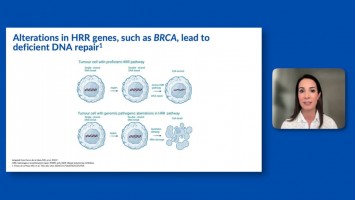
Part 2: How to get biopsies for testing?
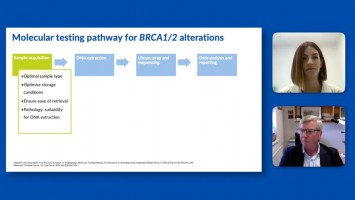
Part 3: Managing testing efficiencies – How to optimise next generation sequencing and HRR testing
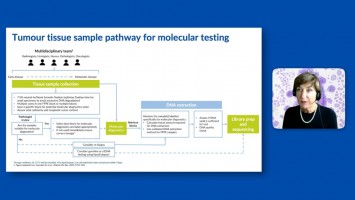
Low-dose CT screening reduces lung cancer mortality and improves survival in broad populations

SABCS 2025: Latest developments in multigene testing in early breast cancer

Transperineal biopsy improves prostate cancer detection

Mobile prostate cancer screening clinic can help address barriers to serving high-risk communities

Blood-based test may provide a convenient and effective option for CRC screening in the average-risk U.S. population
