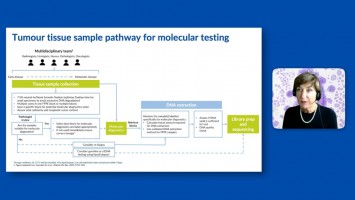
Part 2: How to get biopsies for testing?
5 May 2026

The content on this site is intended for healthcare professionals only
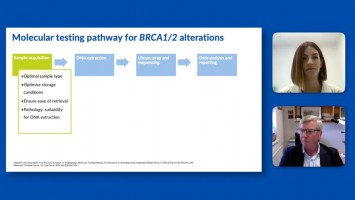
In this video, Dr Elena Castro explains the importance of BRCA and homologous recombination repair (HRR) gene testing in prostate cancer.
BRCA mutations impair DNA repair, making tumours more aggressive but also more sensitive to targeted treatments like PARP inhibitors. These alterations occur in about 10% of patients (mainly BRCA2), while HRR gene defects are found in up to 20–25%.
She says patients with BRCA mutations tend to have significantly worse outcomes with standard therapies, including shorter progression-free and overall survival. Importantly, these mutations are present across both high- and low-volume disease, reinforcing the need to test all patients with metastatic prostate cancer.
Dr Castro talks about current guidelines that strongly recommend both germline and somatic testing, as each identifies different patients who may benefit from targeted therapy. Beyond treatment selection, germline testing also has important implications for family risk assessment.
Overall, comprehensive BRCA and HRR testing is essential to guide treatment decisions and improve outcomes in prostate cancer.
To watch the other videos in this series click here.
Part 2: How to get biopsies for testing?
Part 3: Managing testing efficiencies – How to optimise next generation sequencing and HRR testing
BRCA1/BRCA2 germline mutations in patients with breast/ovarian cancer

Social determinants and survival outcomes in early-onset colorectal cancer in the US

Transperineal biopsy improves prostate cancer detection

Blood-based test may provide a convenient and effective option for CRC screening in the average-risk U.S. population

Insights into germline genetic screening of breast cancer patients

Unlocking the potential of liquid biopsy applications in personalised care for older adults with cancer

Best practice in HRRm testing in patients with metastatic prostate cancer
