Febrile neutropenia and its outcome among children with cancer at Jimma University Medical Center, Pediatric Oncology Unit: prospective observational study
Hailu Alemu1, Diriba Fufa1, Melkamu Berhane2, Mulatu Gashaw3 and Sheena Mukkada4,5
1Department of Pediatrics, Division of Pediatric Hematology–Oncology, Jimma University, Jimma 378, Ethiopia
2Department of Pediatrics and Child Health, Jimma University, Jimma 378, Ethiopia
3Department of Clinical Microbiology, Jimma University, Jimma 378, Ethiopia
4Department of Global Pediatric Medicine, St. Jude Children’s Research Hospital, Memphis, TN 38105-3678, USA
5Department of Infectious Diseases, St. Jude Children’s Research Hospital, Memphis, TN 38105-3678, USA
Abstract
Background: Febrile neutropenia (FN) is a frequent and serious complication in children with cancer. In resource-constrained cancer centres, infectious complications pose a significant risk to patient health and survival. The aim of the study was to evaluate the clinical characteristics and outcomes of FN in children with cancer treated at Jimma University Medical Center (JUMC) Pediatric Hemato–oncology Unit.
Methods: A prospective, longitudinal observational study was done over 12-month, from 1 December 2023, to 30 November 2024. Children with cancer who developed FN were enrolled and followed throughout their FN episodes. Clinical characteristics, microbiological findings, treatment practices and outcomes were assessed. Blood cultures and antimicrobial susceptibility testing were performed according to standard operating procedures. Descriptive statistics were used to summarise socio-demographic, clinical, microbiological and outcome data.
Results: During the study period, 110 children with cancer admitted to the JUMC Pediatric Hemato–oncology Unit were followed, among whom 32 (29.1%) experienced 67 episodes of FN. Leukaemia was the most common underlying malignancy (17/32, 53.1%). The mean age of patients with at least one FN episode was 7.3 ± 4.5 years, and the mean absolute neutrophil count at FN diagnosis was 257 ± 222 cells/µL. Blood cultures were positive in 7 (10.5%) FN episodes. The mean time from physician prescription to administration of the first dose of antibiotics was 2.57 ± 1.91 hours. Overall, 14 (43.8%) of the 32 patients with FN experienced a poor outcome, including in-hospital death in 8 (25.0%) and discharge against medical advice in 6 (18.8%).
Conclusion: FN was common and associated with poor outcomes. Delayed administration of empirical antibiotics highlights the need to strengthen early diagnosis, standardised management and infection prevention to improve outcomes in resource-limited settings.
Keywords: febrile neutropenia, paediatric cancer, bloodstream infection, outcomes, Ethiopia
Correspondence to: Hailu Alemu
Email: hailuca24@gmail.com
Published: 07/09/2026
Received: 26/02/2026
Publication costs for this article were supported by ecancer (UK Charity number 1176307).
Copyright: © the authors; licensee ecancermedicalscience. This is an Open Access article distributed under the terms of the Creative Commons Attribution License (http://creativecommons.org/licenses/by/4.0), which permits unrestricted use, distribution, and reproduction in any medium, provided the original work is properly cited.
Introduction
Febrile neutropenia (FN) is one of the most common and life-threatening complications of chemotherapy in children with cancer. It is characterised by the simultaneous occurrence of fever and neutropenia and represents a medical emergency requiring prompt evaluation and treatment. The National Institute for Health and Care Excellence defines FN as a single temperature ≥38.0°C with an absolute neutrophil count (ANC) <500 cells/µL, or <1,000 cells/µL with an anticipated decline to <500 cells/µL [1].
Children receiving cancer treatment are particularly vulnerable to FN because of chemotherapy-induced immunosuppression, underlying disease, poor nutritional status and other host-related factors [2]. Although the source of infection is frequently unidentified, bloodstream infections remain the most important microbiologically documented infections and are associated with substantial morbidity and mortality. Bacterial pathogens predominate, although fungal and viral infections also contribute, particularly in profoundly immunocompromised patients [2, 3].
In neutropenic patients, fever may be the only clinical indicator of infection, as typical signs and symptoms may be diminished or absent. Importantly, serious infections can occur even in the absence of fever, complicating early diagnosis and intervention (NICE, 2012). Therefore, early and accurate detection of infection is critical in FN management.
Early and appropriate sampling is critical to effective management in high-risk FN patients. The International Pediatric Fever and Neutropenia Guideline, first published in 2012 and updated in 2023, recommends that blood cultures should be obtained at the onset of FN in children with cancer from all lumens of central venous catheters, and it also conditionally recommends considering peripheral blood cultures concurrently to enhance detection of bloodstream infection. The guideline further recommends targeted diagnostics: urinalysis and urine culture when a mid-stream specimen is readily available and chest imaging only for patients with respiratory signs or symptoms, reflecting an evidence-based approach that prioritises early identification of potential infectious sources while avoiding unnecessary testing [4, 5].
Timely initiation of empirical antibiotics within 60 minutes of patient arrival is a commonly used target and has been shown to significantly improve outcomes in children with FN [6, 7]. Nonetheless, the implementation of this practice remains inconsistent across institutions.
Although international guidelines provide robust recommendations, they emphasise the need to tailor empirical antimicrobial therapy according to institutional microbiological profiles, local antimicrobial susceptibility patterns and patient-specific factors. Empirical therapy may be administered as monotherapy with an antipseudomonal penicillin, an antipseudomonal cephalosporin (e.g., cefepime, ceftazidime or cefoperazone–sulbactam) or a carbapenem (meropenem or imipenem). Alternatively, combination therapy with an antipseudomonal β-lactam plus an aminoglycoside may be used. The choice of empirical therapy should be guided by the local microbiological epidemiology, antimicrobial susceptibility patterns and the availability of essential antibiotics, particularly in resource-limited settings [3, 4, 5, 8].
Despite the high burden of FN in children with cancer, there is currently no published data describing the clinical and microbiological characteristics of FN in children with cancer at Jimma University Medical Center (JUMC). Therefore, this study aimed to assess the clinical features, microbial patterns and treatment outcomes of FN among children with cancer patients at JUMC Pediatric Hematology–Oncology Unit, southwest Ethiopia. The findings are expected to inform local treatment protocols and improve the quality of FN management in this setting.
Methodology
Study setting
JUMC Pediatric Hemato–oncology Unit is a 24-bed unit providing services to children with diverse forms of paediatric cancer since August 2016, giving services to over 600 patients to date. Each month, approximately 10–15 new patients are diagnosed, and 35–45 patients are admitted to the unit for various reasons. The treatment modalities used in the unit include chemotherapy, surgery and radiotherapy, along with several other supportive treatments.
Study design
This is a hospital-based prospective longitudinal study conducted among paediatric cancer patients admitted to the JUMC Pediatric Hemato–Oncology Unit from 1 December 2023, to 30 November 2024.
Sample size and sampling technique
All children with cancer who were admitted to the unit during the study period and fulfilled the inclusion criteria were included in the study using the consecutive sampling technique.
Inclusion criteria
All children with cancer admitted to JUMC Pediatric Hemato–Oncology Unit whose parents/guardians gave consent to participate in the study were included.
Exclusion criteria
Children whose parents/guardians declined consent for participation.
Study variables
Socio-demographic variables (age, sex, etc.), clinical variables (type/s of cancer, hematologic profile, etc.), microbiologic profile (aetiology identified) and outcome variables (discharge, leave against medical advice, referral, death, etc.) were collected using a structured questionnaire.
Data collection tools and procedures
Data collection instruments
A structured questionnaire addressing the socio-demographic, clinical and microbiologic variables was used to collect the relevant data. The questionnaire was developed by reviewing the relevant literature. The relevant data were collected by reviewing the patients’ charts and trained nurses were used for data collection.
Data collection procedures
All children with cancer admitted to the unit who were fulfilling the inclusion criteria were enrolled on admission, and followed for the occurrence of FN during their hospital stay. When FN occurred, blood samples for culture and sensitivity (C&S) and complete blood count were collected prior to initiating antibiotics, following routine clinical procedures. Additionally, a urine sample was collected for C&S when indicated.
Microbiological procedures did include blood culture processing and antimicrobial susceptibility testing, following the centre’s SOPs and the recent Clinical and Laboratory Standards Institute guidelines [9].
Data quality control measures
To ensure data reliability, all data collection forms were reviewed for completeness and consistency. A standardised approach was followed for microbiological testing, and regular checks were made to ensure data integrity during entry and analysis.
Data processing and analysis
Data were entered into Kobo Toolbox and exported to an Excel worksheet for analysis. The data were cleaned, coded and analysed using SPSS® Statistics (version 27). Descriptive statistics, such as mean and percentages, were conducted to characterise the study participants and the findings of the study. Results are presented as narratives and by using tables and figures as appropriate.
Patient outcome was classified as ‘poor’ if the patient dies, leaves the hospital against medical advice, disappears from the hospital or is referred for treatment escalation and ‘good’ if the patient improves with the treatment.
Ethical considerations
Ethical approval was obtained from the Institutional Review Board (IRB) of Jimma University, Institute of Health Sciences. Verbal informed consent was obtained from parents or guardians after explaining the study’s purpose, objectives and procedures.
Results
Socio-demographic characteristics
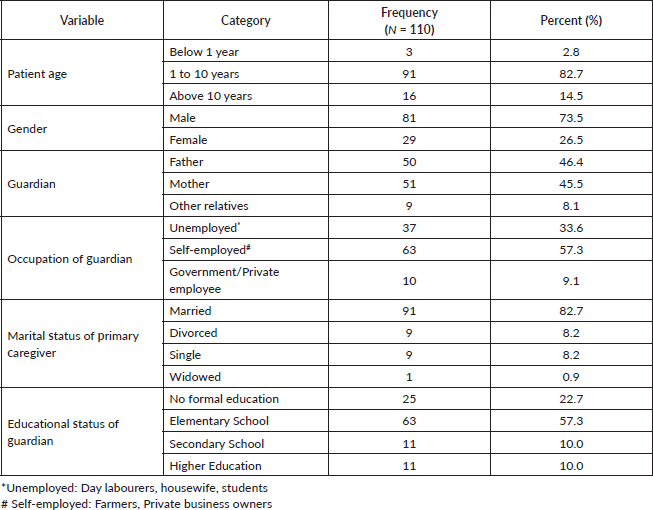
A total of 110 children were admitted to the Pediatric Hematology–oncology Unit at JUMC between 1 December 2023, and 30 November 2024. All eligible patients were included in the study, yielding a response rate of 100%. Most participants were male (81/110, 73.6%). The mean age was 7.3 ± 4.5 years, with ages ranging from 4 months to 18 years (Table 1).
Clinical and laboratory characteristics
Leukaemia was the most common underlying malignancy, accounting for 17 of 32 patients (53%) who developed FN (Table 2). Severe wasting at admission was present in 33 of the 67 FN episodes (49.3%). Overall, 67 episodes of FN occurred among 32 (29.1%) of the 110 study participants, with one patient experiencing as many as six episodes. All patients fulfilled the study case definition for FN.
Table 1. Socio-demographic characteristics of children and their parents/guardians admitted to JUMC Pediatric Hemato–Oncology Unit 2023/24 (N = 110).
Prior antibiotic exposure before specimen collection was documented in 16 (23.9%) FN episodes. No identifiable source of infection was found in approximately two-thirds of the episodes, whereas clinically documented infections, predominantly involving the respiratory or gastrointestinal tract, were identified in 16 (23.9%) episodes.
The mean ANC at the diagnosis of FN was 257 ± 222 cells/µL. Blood cultures were obtained in 60 (89.5%) FN episodes, of which 7 (10.5%) yielded positive results (Table 3).
Antibiotic treatment
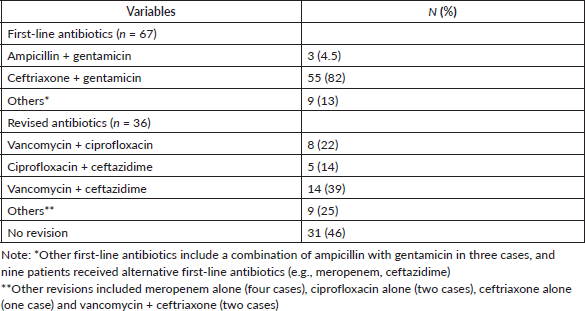
All of the patients with FN have been started on antibiotics, with the time to administration ranging from 1 to 9 hours. The mean time from prescription to antibiotic administration was 2.57 (SD = 1.91) hours. Only in one third (20/67, 30%) of FN episodes antibiotics were administered within 1 hour of the physician’s order.
The most commonly prescribed first-line antibiotics were a combination of ceftriaxone and gentamicin, accounting for 76% (51/67) of FN episodes (Table 4). In over half of patients, antibiotics were modified during the course of admission, with the most frequent revisions being ceftazidime + vancomycin. Meropenem was used for second-line revisions, either alone or in combination, for four patients.
Table 2. Clinical characteristics and outcomes among children treated for FN at JUMC 2023/24.
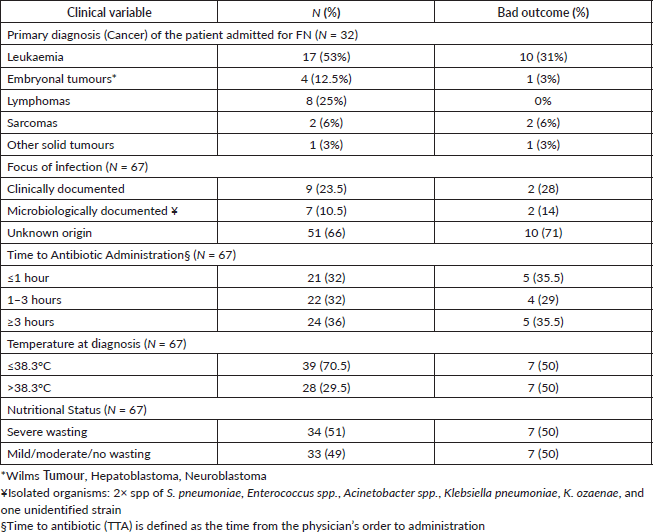
Table 3. Laboratory characteristics of FN episodes treated at JUMC Pediatric Oncology Unit between 1 December 2023, and 30 November 2024.
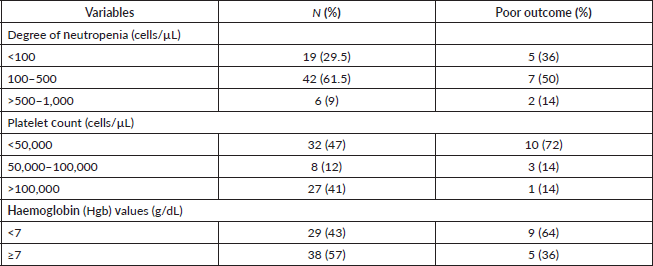
Table 4. Details of antibiotic treatment in children with FN at JUMC Pediatric Oncology Unit between 1 December, 2023, 30 and November, 2024 (N = 67).
Outcomes
Fourteen (43%) of 32 patients treated for FN had a poor outcome, either the patients died in the hospital (8/32, 25%) or left against medical advice (LAMA) (6/32, 18.5%).
Discussion
The socio-demographic profile and distribution of underlying cancers in this cohort are similar to reports from other Ethiopian centres, where children with FN are typically young, and leukaemia is the most frequent malignancy among hospitalised cases [10].
The prevalence of severe acute malnutrition among children treated for FN in this study is comparable to, or slightly lower than, figures reported from several other low- and middle-income settings; for example, work from a tertiary haematology–oncology unit in India documented severe malnutrition in more than 60% of children with hematologic malignancies and also demonstrated a strong association between malnutrition and mortality during FN episodes [11, 12]. Although these similarities underscore that nutritional vulnerability is a consistent and important risk factor for adverse outcomes in paediatric oncology across resource-limited settings, this needs further study as the methods and timing of nutritional assessments vary.
In this cohort, fever without an identifiable clinical focus was the most common presentation, accounting for two-thirds of FN episodes. This pattern aligns with many paediatric oncology series in which a substantial proportion of episodes remain without a documented site of infection, although reported rates of microbiologically confirmed infection vary widely between centres. Studies from Brazil [13] and other middle-income countries have reported higher proportions of culture-proven bacterial or fungal infections than observed here, whereas multicentre work from several sub-Saharan African hospitals has described culture positivity rates closer to our findings [14]. A retrospective series from another Ethiopian paediatric cancer centre also reported a low proportion of culture‑positive cases, very similar to the 10.5% observed in this study [15]. Such variation likely reflects differences in patient mix, antimicrobial pre-treatment, availability and reliability of microbiology services, and local practices around timing and volume of blood culture collection.
Time to antibiotic administration is a key quality indicator in the management of FN and is strongly linked to clinical outcomes. The mean time from physician prescription to administration of the first dose of antibiotics was 2.57 hours, substantially exceeding the recommended target of administration within 60 minutes for children with FN. Delays in initiating empirical antimicrobial therapy have been associated with worse clinical outcomes, including progression to severe sepsis, prolonged hospitalisation, and increased mortality. Similar challenges have been reported in other low- and middle-income countries, where timely antibiotic administration is often limited by healthcare system and resource constraints [16]. These findings underscore the need to strengthen institutional FN pathways, improve access to essential antibiotics and streamline processes to ensure prompt initiation of empirical therapy [4, 6, 7].
The overall rate of poor outcomes in this cohort was high, with about 25% of FN episodes resulting in in-hospital death or LAMA. In our resource-limited Ethiopian paediatric oncology setting, LAMA occurs in a context nearly comparable to in-hospital deaths, as families often deliberately withdraw care when anticipating imminent death, preferring to avoid it occurring in the hospital due to extreme financial burdens, particularly the lack of systems for transporting deceased bodies, which makes public transport unfeasible and prohibitively costly. This culturally and economically driven behaviour underscores families’ strategic choice for home-based end-of-life care amid pervasive logistical barriers.
The FN-associated in-hospital mortality rate of around 12% aligns with reports from other African centres but remains markedly higher than rates in high-income countries. This disparity, compounded by high LAMA rates, likely stems from delayed presentation, prevalent malnutrition and comorbidities, limited intensive care access and microbiology/antimicrobial constraints, emphasising the urgent need for context-specific interventions, including enhanced infection control measures.
The strong association between severe anaemia, thrombocytopenia and poor outcomes observed in this study is consistent with findings from other Ethiopian hospitals [15], where low haemoglobin and platelet counts have been identified as important predictors of mortality in children with FN. Together, these data suggest that close monitoring and aggressive correction of profound haematologic abnormalities, particularly in children with leukaemia, should be prioritised as part of supportive care bundles to reduce mortality in this high-risk population.
Conclusion and recommendations
This study highlights critical gaps in the management and outcomes of FN among paediatric oncology patients, with a particularly high burden of mortality and treatment failure in children with leukaemia and those presenting with severe anaemia or thrombocytopenia. These findings indicate an urgent need to shift from purely descriptive care to structured quality‑improvement efforts focused on timely, standardised management.
Priority actions should include establishing systems to track and consistently reduce the time from recognition of FN to administration of the first antibiotic dose, with an accepted standard (e.g., within 1 hour) and regular audit-feedback. Capacity building for nurses and clinicians in correct and timely blood culture sampling, including before antibiotics when feasible, is essential to improve pathogen detection and rational antimicrobial use. Implementation of a context‑appropriate, standardised FN management guide, with clear triage criteria, empiric antibiotic algorithms and escalation pathways, should be coupled with bedside training, checklists and ongoing supervision.
Strengthening communication channels between clinical teams and the microbiology laboratory, for example through standardised request forms and rapid reporting of positive cultures, can further support timely decision-making. Future, larger studies should evaluate the impact of such quality-improvement interventions on time-to-antibiotics, microbiologic yield and patient outcomes and refine risk-stratification tools for high-risk children. Ultimately, embedding these quality‑improvement strategies into routine practice has the potential to substantially reduce preventable deaths from FN in paediatric oncology settings similar to ours.
Acknowledgments
The authors sincerely acknowledge the contributions of all co-authors for their guidance, expertise and support throughout the study. We are especially grateful to Dr Melkam Teferi (General Practitioner, Jimma University Medical Center), Sr Yabsera Bantayehu (Paediatric Oncology Nurse, Jimma University Medical Center) and Mr Esubalew Mezgebu (Head Nurse, Pediatric Oncology Unit, Jimma University Medical Center) for their invaluable assistance with data collection and data management. We also thank Jimma University for providing the financial support that made this study possible.
Conflicts of interest
The authors declare no conflicts of interest.
Funding
The author declares that he has received financial support from Jimma University (research support of 60,000 ETB) for this study. No other financial relationships or conflicts of interest exist.
References
1. National Institute for Health and Care Excellence (NICE) (2012) Prevention and Management of Neutropenic Sepsis in Cancer Patients: Evidence Review (London: National Institute for Health and Care Excellence)
2. Kara SS, Tezer H, and Polat M, et al (2019) Risk factors for bacteremia in children with febrile neutropenia Turk J Med Sci 49(4) 1198–1205 https://doi.org/10.3906/sag-1901-90 PMID: 31385488 PMCID: 7018307
3. Boeriu E, Borda A, and Vulcanescu DD, et al (2022) Diagnosis and management of febrile neutropenia in pediatric oncology patients—a systematic review Diag (Basel) 12(8) 1800
4. Lehrnbecher T, Phillips R, and Alexander S, et al (2012) Guideline for the management of fever and neutropenia in children with cancer and/or undergoing hematopoietic stem-cell transplantation J Clin Oncol 30(35) 4427–4438 https://doi.org/10.1200/JCO.2012.42.7161 PMID: 22987086
5. Lehrnbecher T, Robinson PD, and Ammann RA, et al (2023) Guideline for the management of fever and neutropenia in pediatric patients with cancer and hematopoietic cell transplantation recipients: 2023 update J Clin Oncol 41(2023) 1774–1785 https://doi.org/10.1200/JCO.22.02224 PMID: 36689694 PMCID: 10022858
6. Koenig C, Schneider C, and Morgan JE, et al (2020) Interventions aiming to reduce time to antibiotics (TTA) in patients with fever and neutropenia during chemotherapy for cancer (FN): a systematic review Support Care Cancer 28(5) 2369–2380 PMCID: 7083808
7. Todurkar N, Trehan A, and Bansal D (2021) Time to antibiotic administration in children with febrile neutropenia: report from a low middle-income country Indian J Med Res 154(4) 615–622 https://doi.org/10.4103/ijmr.IJMR_2483_19
8. Kebudi R and Kizilocak H (2018) Febrile neutropenia in children with cancer: approach to diagnosis and treatment Curr Pediatr Rev 14(3) 204–209 https://doi.org/10.2174/1573396314666180508121625 PMID: 29737253
9. Clinical and Laboratory Standards Institute (CLSI) (2022) Performance Standards for Antimicrobial Susceptibility Testing. CLSI supplement M100 32nd edn (Wayne: Clinical and Laboratory Standards Institute)
10. Mohammed HB, Yismaw MB, and Fentie AM, et al (2019) Febrile neutropenia management in pediatric cancer patients at Ethiopian tertiary care teaching hospital BMC Res Notes 12 456 https://doi.org/10.1186/s13104-019-4569-5
11. Gupta H, Pant G, and Verma N (2022) Malnutrition in childhood cancer patients: magnitude, key indicators and outcome Pediatr Hematol Oncol J 7(4) 155–160 https://doi.org/10.1016/j.phoj.2022.09.001
12. Israëls T, Chirambo C, and Caron HN, et al (2008) Nutritional status at admission of children with cancer in Malawi Pediatr Blood Cancer 51(5) 626–628 https://doi.org/10.1002/pbc.21697 PMID: 18668514
13. Lima MAF, De Sá Rodrigues KE, and Vanucci MF, et al (2023) Bloodstream infection in pediatric patients with febrile neutropenia induced by chemotherapy Hematol Transfus Cell Ther 45(2) 170–175 https://doi.org/10.1016/j.htct.2021.08.005 PMCID: 10244251
14. Israels T, Afungchwi GM, and Klootwijk L, et al (2021) Fever and neutropenia outcomes and areas for intervention: a report from SUCCOUR—supportive care for children with cancer in Africa Pediatric Blood Cancer 68(9)
15. Assefa S, Alemayehu T, and Abebe W (2017) Factors associated with treatment outcome of pediatric cancer patients admitted with febrile neutropenia in Tikur Anbessa Specialized Teaching Hospital, Addis Ababa, Ethiopia Ethiop Med J 55(1) PMID: 29148638
16. Karaman S, Vural S, and Yildirmak Y, et al (2012) Comparison of piperacillin-tazobactam and cefoperazone-sulbactam monotherapy in treatment of febrile neutropenia Pediatr Blood Cancer 58(4) 579–583 https://doi.org/10.1002/pbc.23245