BCG in the fight against cancer: exploring its applications in diverse tumour types and future directions
P Ignacio A Bianco1,2, O Jeismar M Carballo1, P Isaac R Blanca3 and Ana Federica Convit1,3
1Jacinto Convit World Organization Inc., Pompano Beach, FL 33069, USA
2University of Bologna, 40126 Bologna, Italy
3Unidad Experimental de Inmunoterapia, Fundación Jacinto Convit, Caracas 1071, Venezuela
Abstract
Bacillus Calmette–Guérin (BCG), originally a tuberculosis vaccine, is a standard immunotherapy for non-muscle-invasive bladder cancer (NMIBC). This review summarises BCG biology, including trained immunity, and evaluates clinical and translational evidence for BCG across solid tumours. We aim to distinguish guideline-supported indications from investigational uses and identify contexts where BCG may remain clinically relevant or trial-ready. Evidence is strongest in NMIBC, where outcomes depend on induction plus maintenance schedules and appropriate patient selection. Outside the bladder, intralesional and vaccine-adjuvant approaches show signals in selected melanoma and vaccine settings, while historical lung and colorectal trials largely failed to translate into durable benefit. Emerging preclinical work in hepatocellular carcinoma and breast cancer suggests potential synergy with modern immunotherapy strategies. BCG should be framed as a platform immunomodulator whose value beyond NMIBC requires mechanism-guided trials, clear safety boundaries and clinically anchored endpoints.
Keywords: Bacillus Calmette Guérin vaccine, urinary bladder neoplasms, immunotherapy, trained immunity, intralesional injections, cancer vaccines
Correspondence to: Ana Federica Convit
Email: publicaciones@jacintoconvit.org
Published: 09/06/2026
Received: 09/10/2025
Publication costs for this article were supported by ecancer (UK Charity number 1176307).
Copyright: © the authors; licensee ecancermedicalscience. This is an Open Access article distributed under the terms of the Creative Commons Attribution License (http://creativecommons.org/licenses/by/4.0), which permits unrestricted use, distribution, and reproduction in any medium, provided the original work is properly cited.
Introduction
Bacillus Calmette–Guérin (BCG) was repurposed as intravesical immunotherapy for bladder cancer following its success as a tuberculosis vaccine. Its anti-tumour activity is multifaceted. Directly, BCG induces apoptosis, necrosis and oxidative stress through caspase activation, tumour necrosis factor–alpha (TNF-α) signaling and production of nitric oxide and reactive oxygen species (ROS), damaging tumour DNA and proteins [1]. BCG’s preferential cytotoxicity for tumour over normal urothelium appears to reflect selective uptake: malignant urothelial cells commonly activate Rac1/Cdc42-Pak1-dependent macropinocytosis, enabling BCG entry and concentrating downstream cytotoxic and immune effects in tumour cells [2].
BCG also acts as a pathogen-associated molecular pattern that engages pattern-recognition receptors (notably TLRs) on antigen-presenting cells (APC) and, in some contexts, on tumour cells, driving T helper 1 (Th1)-polarised cytokines (e.g., Interleukin (IL) IL-2/IL-12,‑2/IL‑12, Interferon (IFN) IFN-γ ‑γ and TNF‑α) and recruitment of CD8⁺ T cells, macrophages, natural killer cells and neutrophils. Neutrophils can contribute direct cytotoxicity via TNF-related apoptosis-inducing ligand release and neutrophil extracellular trap formation. Response heterogeneity likely reflects at least three non-mutually exclusive factors: (i) some cancer cells internalise BCG and acquire APC-like cytokine signaling; (ii) BCG can trigger caspase-dependent cytotoxicity with ROS-mediated injury and cell-cycle arrest and (iii) BCG may upregulate PD‑L1 on tumour and inflammatory cells, partially counteracting cell-mediated immunity [3].
BCG’s modern oncologic use was established in bladder cancer, where randomised trials showed intravesical BCG reduced recurrence relative to chemotherapy controls and long-term outcomes improved when induction was followed by maintenance dosing [4, 5]. International guidelines consistently recommend intravesical BCG for appropriately selected intermediate and high-risk non-muscle-invasive bladder cancer (NMIBC) after transurethral resection of bladder tumour, because it reduces recurrence and (in higher-risk groups) delays or reduces progression. For optimal efficacy, guidelines specify that BCG should not be delivered as induction alone: a complete schedule includes a 6-week induction course followed by maintenance instillations (commonly 3-weekly cycles at 3, 6, 12, 18, 24, 30 and 36 months), with duration tailored to risk, toxicity and BCG availability [6, 7]. Taken together, the randomised-trial evidence and guideline-endorsed use of intravesical BCG in NMIBC provide a clinical proof of principle that BCG can act as an effective, controllable, locally delivered immune therapy. This success has prompted efforts to redeploy BCG as an in situ immune stimulus in other tumour types.
Importantly, BCG is not a single product but a family of live-attenuated sub-strains with measurable biological and clinical differences. Comparative analyses in NMIBC suggest that strain selection can influence immunogenicity and tolerability, although adequate maintenance remains a dominant driver of durable benefit [8, 9]. These same properties matter when BCG is repurposed as a Th1-biased adjuvant in therapeutic cancer vaccines: more reactogenic preparations can amplify local innate activation and dendritic-cell recruitment, whereas less reactogenic strains may reduce injection-site morbidity and discontinuation risk [10, 11].
Interest in BCG beyond the bladder has resurfaced alongside modern immuno-oncology because BCG can (i) directly injure tumour cells, (ii) activate innate sensors that set up Th1-polarised inflammation and (iii) induce trained immunity that may heighten subsequent antitumour responses. Most contemporary programs still center on bladder cancer, but smaller bodies of evidence exist in melanoma, hepatocellular carcinoma (HCC) and vaccine-adjuvant settings. The sections below focus on where signals are reproducible, where they have failed to translate, and what trial designs could realistically move the field forward. Table 1 summarises the evidence landscape and practical niches for BCG beyond NMIBC.
Table 1. Evidence chart of BCG applications beyond bladder cancer (representative evidence).

BCG in melanoma: intralesional immunotherapy, combination approaches and vaccine-adjuvant strategies
Melanoma remains a primary target for BCG beyond the bladder due to the accessibility of cutaneous metastases. Intralesional therapy exploits this accessibility: in-transit and cutaneous melanoma metastases are one of the few solid-tumour settings where BCG can be delivered directly into tumour deposits. Intralesional BCG triggers a Th1-skewed inflammatory milieu through pattern-recognition receptor signaling and can recruit dendritic cells, macrophages and cytotoxic lymphocytes within injected lesions, providing a plausible in situ vaccination effect [12].
Historical context and early outcomes
Historically, intralesional BCG produced frequent regression of injected lesions and occasional regression of uninjected lesions (abscopal-type effects), but enthusiasm declined due to systemic adverse events when dosing and patient selection were not tightly controlled [12]. In the current era, in which effective systemic therapies exist, intralesional BCG is best viewed as a niche, local-control strategy or a priming maneuver within carefully monitored combinations, not a stand-alone systemic therapy.
Combination with checkpoint inhibitors
A cautionary example is a Phase I study that administered intralesional BCG followed by ipilimumab; the trial was stopped early after severe immune-mediated colitis/hepatitis occurred without clear clinical benefit. Broadening of autoantibody repertoires tracked with escalating BCG dose and preceded toxicity, supporting autoantibody monitoring as a practical safety biomarker when pairing BCG with checkpoint blockade [13].
Combination with IL-2
In contrast, pairing intralesional BCG with IL‑2 has shown more consistent clinical activity with tolerable toxicity. In a contemporary series of stage III/IV disease with cutaneous/subcutaneous metastases, the combination achieved high local response rates, including complete responses in many injected lesions, with occasional systemic responses, consistent with synergy between BCG-driven innate priming and IL-2-mediated T-cell expansion [14].
BCG as a vaccine adjuvant: the CSF-470 experience
BCG’s most persuasive ‘beyond intralesional’ melanoma signal comes from its use as a vaccine adjuvant. In the randomised CASVAC-0401 study, the CSF‑470 (VACCIMEL) allogeneic whole-cell vaccine combined with BCG and granulocyte-macrophage colony-stimulating factor improved distant metastasis-free survival compared with IFN-α2b with acceptable tolerability [15]. Correlative immune analyses showed vaccine-induced T‑cell reactivity against shared melanoma antigens and predicted neoantigens, with functional cytotoxicity and delayed-type hypersensitivity responses that tracked clinical benefit [16].
Alternative BCG-adjuvanted vaccine strategies
Not all BCG-adjuvanted melanoma vaccines have translated into survival gains. In Canvaxin™ programs, adding BCG did not produce a clear overall survival advantage in broadly selected populations, underscoring that adjuvant potency alone does not overcome weak antigen selection or advanced disease biology [17]. Across autologous and whole-cell vaccine experiences, delayed-type hypersensitivity has repeatedly behaved as an on-treatment pharmacodynamic marker and, in some cohorts, stratified patients with superior long-term outcomes, suggesting that future BCG-adjuvanted vaccines should prospectively use immune readouts to enrich for responders rather than treat unselected populations [18].
Expanded trials and future directions
Practically, the melanoma lesson is bifurcated: (i) intralesional BCG can deliver high local control (especially with IL‑2) and is worth testing as a priming agent; (ii) as a vaccine adjuvant, BCG can support durable systemic immunity when paired with a credible antigen source (e.g., whole-cell vaccines) and when immune monitoring is built into the trial [14–16]. The main risk is over-activation: checkpoint combinations require conservative dosing, early stopping rules and biomarker-triggered monitoring for immune toxicity [13].
BCG in lung cancer: intrapleural and vaccine-adjuvant trials show limited, non-reproducible benefit
BCG has been repeatedly tested in lung cancer, mainly as postoperative intrapleural therapy or as a vaccine adjuvant, because most lung tumours are not amenable to intratumoural injection. Small early studies suggested possible benefit in stage I disease, but the best-controlled randomised data in stage I non-small cell lung cancer did not demonstrate a survival or disease-free survival advantage for intrapleural BCG [19, 20]. Vaccine-adjuvant strategies were also largely negative; for example, in limited-stage small-cell lung cancer, adjuvant vaccination with BEC2/BCG did not improve survival, progression or quality of life versus placebo [21]. Taken together, the lung literature reads as a cautionary tale: signals were stage-restricted, inconsistent and not reproducible in rigorous trials. Any renewed lung-cancer interest would therefore need a mechanistically distinct approach rather than repeating intrapleural adjuvant paradigms.
BCG in colorectal cancer: early postoperative signals, negative cooperative-group trials and a stage II niche for BCG-adjuvanted vaccines
Colorectal cancer was an early testbed for ‘nonspecific’ immunostimulation. A 1970s randomised study suggested that postoperative BCG, with or without 5-fluorouracil, could prolong disease-free interval in high-risk disease, which fueled multiple follow-on regimens and vaccine concepts [22].
However, larger cooperative-group experiences failed to confirm a meaningful cancer-specific survival benefit for BCG-based approaches. In National Surgical Adjuvant Breast and Bowel Project C‑01 (n >1,000), BCG produced at most modest signals that did not translate into improved colon-cancer–specific survival, while chemotherapy drove the clinically relevant benefit [23]. Similarly, an Eastern Cooperative Oncology Group trial of an irradiated autologous tumour-cell vaccine with BCG after resection did not improve long-term disease-free or overall survival [24]. A more nuanced result emerged with OncoVAX® (autologous tumour cells + BCG), which reduced recurrence mainly in stage II rather than stage III disease, implying that if BCG-adjuvanted vaccination has a colorectal niche, it is likely earlier-stage, minimal-residual-disease settings with intact immune competence [25]. Overall, the colorectal experience supports using BCG as an adjuvant only when antigen strategy, stage selection and immune monitoring are optimised, rather than as a stand-alone stimulant.
Why lung and colorectal programs rarely translated
Across lung and colorectal studies, several recurring factors likely limited translation into durable survival gains: delivery constraints, because most lung tumours were not injectable and postoperative exposure was variable; patient selection that mixed minimal residual disease with bulky disease, diluting any stage-restricted benefit; heterogeneous regimens and endpoints that were not aligned with immune kinetics or maintenance-like exposure; limited biomarker-driven enrichment and immune monitoring; and toxicity and dosing constraints that curtailed sustained immunologic pressure.
BCG in HCC: preclinical ‘Heating’ via trained immunity and IFN-γ, supporting biomarker-guided in situ strategies
HCC is typically immunosuppressive (‘cold’), making it a plausible target for in situ immune ‘heating.’ In murine HCC models, systemic BCG vaccination inhibited established tumours, increased intratumoural CD4⁺/CD8⁺ T cells and M1-like macrophages, and engaged IFN‑γ–linked programs; in that setting BCG outperformed anti‑PD‑1 therapy [26]. Mechanistically, the effect appears to depend on trained-immunity pathways and IFN-γ signaling. When these were blocked, benefit diminished, supporting the idea that BCG is acting as a programmable innate primer rather than a nonspecific irritant [26]. From a translational standpoint, the most credible clinical path is not systemic BCG monotherapy but in situ strategies (intratumoural injection, peri-ablation or in combination with locoregional therapy) paired with biomarker-rich immune readouts [27].
BCG in other cancers
Beyond bladder cancer, BCG applications remain mostly investigational and often preclinical, with clinical use limited by tumour accessibility, safety and inconsistent efficacy.
Breast cancer
Breast cancer programs largely use BCG as an adjuvant within autologous or whole-cell vaccine platforms. In a small clinical study, an autologous tumour lysate/BCG approach was feasible and safe as an adjunct to standard therapy, though the evidence base remains thin by modern standards [28]. Building on this line of work, the platform has been further developed and formalised as ConvitVax, an autologous tumour cell vaccine combined with BCG and formalin, which has demonstrated acceptable toxicity and immune activation in preclinical and translational studies, including potential synergy with anti-PD-1 therapy in experimental models. This vaccine is expected to enter early-phase clinical testing in the near future [29, 30]. ConvitVax is now being evaluated clinically in metastatic breast cancer (NCT06023277). The practical limitation is delivery and safety: systemic BCG toxicity and the relative inaccessibility of many breast lesions make intratumoural strategies harder to scale than in skin or bladder [31].
Sarcomas
Case-level signals have been reported in some sarcomas and hematologic malignancies, but they are too anecdotal to support routine use; they mainly reinforce that BCG’s effects are context-dependent and delivery-limited. For example, isolated partial responses have been described in rare sarcoma cases treated with intralesional BCG-based regimens, and veterinary experience (e.g., equine sarcoids) supports the concept that localised BCG can trigger regression in some mesenchymal tumours [31].
Head and neck cancers
In head and neck cancers, the most consistent data are preclinical: BCG-conditioned immune stimulation can increase inflammatory cytokines, enhance antigen presentation and suppress tumour-cell proliferation and angiogenic signaling in vitro [32]. Reported effects include increased Th1-associated cytokines and upregulation of antigen-presentation machinery (e.g., (Human Leukocyte Antigen/Major Histocompatibility Complex class I) class I), which can improve immune recognition in experimental systems [33, 34]. While intriguing, these models do not resolve real-world safety constraints for intratumoural BCG in complex anatomic sites, so clinical translation remains speculative. Prior attempts at local delivery have been limited in part by concern for infectious complications and the practical difficulty of safely injecting tumours in high-risk head-and-neck locations [31].
Hematologic malignancies
Evidence in hematologic malignancies is largely historical and inconsistent; any potential role would likely be as an immune-reconstitution adjunct after cytotoxic therapy rather than as a primary antitumour agent, and clinical translation remains uncertain. In preclinical leukemia models, post-chemotherapy BCG has been reported to improve survival in association with enhanced marrow recovery and innate immune activation, suggesting a plausible adjunctive niche that remains unproven clinically [31].
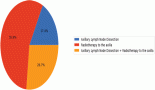
Overall, BCG reliably stimulates immunity across tumour types, yet delivery barriers, systemic toxicity and uneven efficacy constrain its use outside bladder cancer. In practice, any progress beyond bladder cancer will likely require highly selected settings where local delivery is feasible and immune readouts can guide dosing and safety. Rational combinations and biomarker-guided strategies may expand its role, as summarised in Figure 1.
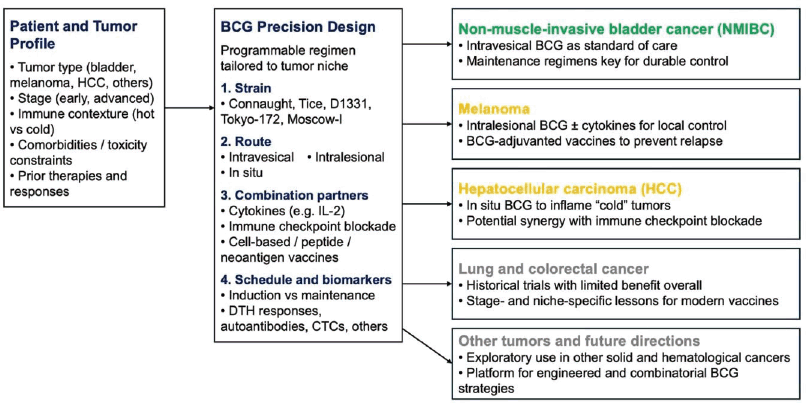
Figure 1. BCG in the fight against cancer: applications across tumour types.
Conclusion
This review traces BCG’s evolution from a century-old tuberculosis vaccine to a versatile oncologic tool. Its mechanisms span direct cytotoxicity, trained innate immunity and durable adaptive responses, while clinically meaningful differences among sub-strains influence outcomes. BCG remains definitive in NMIBC, shows renewed promise in melanoma -particularly within IL-2 combinations and cell-based vaccines and yields mixed or stage-limited signals in lung- colorectal and other tumours. Preclinical advances in HCC highlight BCG’s capacity to convert ‘cold’ tumours into immunologically ‘hot’ targets and, in models, to outperform checkpoint blockade when applied appropriately. Looking ahead, progress will depend on precise mechanism-guided-guided use rather than broad stimulation, anchored by three priorities: (1) strain selection informed by comparative genomics (i.e., ‘early’ versus ‘late’ sub-strains with differing immunogenic profiles) and tailored to tumour context; (2) leveraging trained immunity, as BCG induces epigenetic reprogramming of innate cells that may potentiate subsequent immunotherapies and (3) predictive biomarkers, including autoantibody signatures and immune-reactivity measures such as delayed-type hypersensitivity, to enrich for patients most likely to benefit and to guide dosing and safety monitoring.
Acknowledgments/funding
This work received no external funding. No funding body had any role in the design of the review; collection, analysis or interpretation of the literature; writing of the manuscript; or decision to submit. The authors thank medical writer Michelle Yaw for language improvement. We also deeply thank our senior advisor and Director, Professor Antonio Convit, for his assistance in editing this article.
Conflicts of interest
Publication costs for this article were supported by ecancer (UK Charity number 1176307).
References
1. Han J, Gu X, and Li Y, et al (2020) Mechanisms of BCG in the treatment of bladder cancer-current understanding and the prospect Biomed Pharmacother 129 110393 https://doi.org/10.1016/j.biopha.2020.110393 PMID: 32559616
2. Redelman-Sidi G, Iyer G, and Solit DB, et al (2013) Oncogenic activation of Pak1-dependent pathway of macropinocytosis determines BCG entry into bladder cancer cells Cancer Res 73(3) 1156–1167 https://doi.org/10.1158/0008-5472.CAN-12-1882 PMID: 23378476 PMCID: 3756537
3. Chakra MA, Luo Y, and Duquesne I, et al (2024) Update on the mechanism of action of intravesical BCG therapy to treat non-muscle-invasive bladder cancer Front Biosci-Landmark 29(8) 295 https://doi.org/10.31083/j.fbl2908295
4. Lamm DL, Blumenstein BA, and Crawford ED, et al (1991) A randomized trial of intravesical doxorubicin and immunotherapy with Bacille Calmette–Guérin for transitional-cell carcinoma of the bladder N Engl J Med 325(17) 1205–1219 https://doi.org/10.1056/NEJM199110243251703 PMID: 1922207
5. Lamm DL, Blumenstein BA, and Crissman JD, et al (2000) Maintenance Bacillus Calmette-Guérin immunotherapy for recurrent Ta, T1 and carcinoma in situ transitional cell carcinoma of the bladder: a randomized Southwest Oncology Group study J Urol 163(4) 1124–1129 https://doi.org/10.1016/S0022-5347(05)67707-5 PMID: 10737480
6. Babjuk M, Burger M, and Capoun O, et al (2022) European association of urology guidelines on non–muscle-invasive bladder cancer (Ta, T1, and carcinoma in situ) Eur Urol 81(1) 75–94 https://doi.org/10.1016/j.eururo.2021.08.010
7. Holzbeierlein JM, Bixler BR, and Buckley DI, et al (2024) Diagnosis and treatment of non-muscle invasive bladder cancer: AUA/SUO guideline: 2024 amendment J Urol 211(4) 533–538 https://doi.org/10.1097/JU.0000000000003846 PMID: 38265030
8. D’Andrea D, Gontero P, and Shariat SF, et al (2019) Intravesical Bacillus Calmette-Guérin for bladder cancer: are all the strains equal? Transl Androl Urol 8(1) 85–93 https://doi.org/10.21037/tau.2018.08.19 PMCID: 6414340
9. Witjes JA, Dalbagni G, and Karnes RJ, et al (2016) The efficacy of BCG TICE and BCG connaught in a cohort of 2,099 patients with T1G3 non–muscle-invasive bladder cancer Urol Oncol Semin Orig Investig 34(11) 484.e19–484.e25
10. Marriott M, Post B, and Chablani L (2023) A comparison of cancer vaccine adjuvants in clinical trials Cancer Treat Res Commun 34 100667
11. Miyazaki J, Onozawa M, and Takaoka E, et al (2018) Bacillus Calmette–Guérin strain differences as the basis for immunotherapies against bladder cancer Int J Urol 25(5) 405–413 https://doi.org/10.1111/iju.13538 PMID: 29506322
12. Mordoh A, Aris M, and Carri I, et al (2022) An update of cutaneous melanoma patients treated in adjuvancy with the allogeneic melanoma vaccine VACCIMEL and presentation of a selected case report with in-transit metastases Front Immunol 13 842555 https://doi.org/10.3389/fimmu.2022.842555 PMID: 35432383 PMCID: 9011367
13. Da Gama Duarte J, Parakh S, and Andrews MC, et al (2018) Autoantibodies may predict immune-related toxicity: results from a phase I study of intralesional Bacillus Calmette–Guérin followed by ipilimumab in patients with advanced metastatic melanoma Front Immunol 9 411 https://doi.org/10.3389/fimmu.2018.00411
14. Vidovic D, Helyer LK, and Pasternak S, et al (2023) Abscopal responses in patients with metastatic melanoma involving skin and subcutaneous tissues treated with intralesional IL2 plus BCG Front Oncol 13 1160269 https://doi.org/10.3389/fonc.2023.1160269 PMID: 37182189 PMCID: 10172468
15. Mordoh J, Pampena MB, and Aris M, et al (2017) Phase II study of adjuvant immunotherapy with the CSF-470 vaccine plus Bacillus Calmette–Guerin plus recombinant human granulocyte macrophage-colony stimulating factor vs medium-dose interferon alpha 2B in stages IIB, IIC, and III cutaneous melanoma patients: a single institution, randomized study Front Immunol 8 625 https://doi.org/10.3389/fimmu.2017.00625
16. Podaza E, Carri I, and Aris M, et al (2020) Evaluation of T-cell responses against shared melanoma associated antigens and predicted neoantigens in cutaneous melanoma patients treated with the CSF-470 allogeneic cell vaccine plus BCG and GM-CSF Front Immunol 11 1147 https://doi.org/10.3389/fimmu.2020.01147 PMID: 32582212 PMCID: 7290006
17. Faries MB, Mozzillo N, and Kashani-Sabet M, et al (2017) Long-term survival after complete surgical resection and adjuvant immunotherapy for distant melanoma metastases Ann Surg Oncol 24(13) 3991–4000 https://doi.org/10.1245/s10434-017-6072-3 PMID: 29019177
18. Lotem M, Merims S, and Frank S, et al (2016) Adjuvant autologous melanoma vaccine for macroscopic stage III disease: survival, biomarkers, and improved response to CTLA-4 blockade J Immunol Res 2016 1–12 https://doi.org/10.1155/2016/8121985
19. McKneally M, Maver C, and Kausel H (1976) Regional immunotherapy of lung cancer with intrapleural BCG Lancet 307(7956) 377–379 https://doi.org/10.1016/S0140-6736(76)90212-9
20. Mountain CF and Gail MH (1981) Surgical adjuvant intrapleural BCG treatment for stage I non-small cell lung cancer J Thorac Cardiovasc Surg 82(5) 649–657 https://doi.org/10.1016/S0022-5223(19)39259-1
21. Bottomley A, Debruyne C, and Felip E, et al (2008) Symptom and quality of life results of an international randomised phase III study of adjuvant vaccination with Bec2/BCG in responding patients with limited disease small-cell lung cancer Eur J Cancer 44(15) 2178–2184 https://doi.org/10.1016/j.ejca.2008.06.036 PMID: 18676140
22. Mavligit G, Burgess M, and Seibert GB, et al (1976) Prolongation of postoperative disease-free interval and survival in human colorectal cancer by BCG or BCG plus 5-fluorouracil Lancet 307(7965) 871–876 https://doi.org/10.1016/S0140-6736(76)92093-6
23. Wolmark N, Fisher B, and Rockette H, et al (1988) Postoperative adjuvant chemotherapy or BCG for colon cancer: results from NSABP protocol C-011 JNCI J Natl Cancer Inst 80(1) 30–36 https://doi.org/10.1093/jnci/80.1.30 PMID: 3276901
24. Harris JE, Ryan L, and Hoover HC, et al (2000) Adjuvant active specific immunotherapy for stage II and III colon cancer with an autologous tumor cell vaccine: Eastern Cooperative Oncology Group Study E5283 J Clin Oncol 18(1) 148–157 https://doi.org/10.1200/JCO.2000.18.1.148 PMID: 10623705
25. Uyl-de Groot C, Vermorken J, and Hanna Jr. M, et al (2005) Immunotherapy with autologous tumor cell-BCG vaccine in patients with colon cancer: a prospective study of medical and economic benefits Vaccine 23 2379–2387 https://doi.org/10.1016/j.vaccine.2005.01.015
26. Vaziri F, Setayesh T, and Hu Y, et al (2024) BCG as an innovative option for HCC treatment: repurposing and mechanistic insights Adv Sci 11(14) 2308242 https://doi.org/10.1002/advs.202308242
27. Hsieh CH, Chuang PC, and Liu YW (2025) Beyond adaptive immunity: trained innate immune responses as a novel frontier in hepatocellular carcinoma therapy Cancers 17(7) 1250 https://doi.org/10.3390/cancers17071250 PMID: 40227782 PMCID: 11987826
28. Convit J, Montesinos H, and Oviedo H, et al (2015) Autologous tumor lysate/Bacillus Calmette–Guérin immunotherapy as an adjuvant to conventional breast cancer therapy Clin Transl Oncol 17(11) 884–887 https://doi.org/10.1007/s12094-015-1320-0 PMID: 26077120 PMCID: 4608991
29. Duarte CMA, Carballo OJM, and De Gouveia YM, et al (2021) Toxicity evaluation of ConvitVax breast cancer immunotherapy Sci Rep 11(1) 12669 https://doi.org/10.1038/s41598-021-91995-6
30. Godoy-Calderón MJ, Salazar V, and González-Marcano E, et al (2018) Autologous tumor cells/Bacillus Calmette-Guérin/formalin-based novel breast cancer vaccine induces an immune antitumor response Oncotarget 9(29) 20222–20238 https://doi.org/10.18632/oncotarget.25044 PMID: 29755647 PMCID: 5945537
31. Vandeborne L, Pantziarka P, and Van Nuffel AMT, et al (2021) Repurposing infectious diseases vaccines against cancer Front Oncol 11 688755 https://doi.org/10.3389/fonc.2021.688755 PMID: 34055652 PMCID: 8155725
32. Sánchez-Rodríguez C, Cruces KP, and Riestra Ayora J, et al (2017) BCG immune activation reduces growth and angiogenesis in an in vitro model of head and neck squamous cell carcinoma Vaccine 35(47) 6395–6403 PMID: 29029943
33. Conti-Freitas LC, Foss-Freitas MC, and Mamede RCM, et al (2009) Effect of BCG stimulus on proinflammatory cytokine production in laryngeal cancer Cancer Immunol Immunother 58(1) 25–29 https://doi.org/10.1007/s00262-008-0520-7
34. Liu WM, Fowler DW, and Gravett AM, et al (2011) Supernatants from lymphocytes stimulated with Bacillus Calmette-Guerin can modify the antigenicity of tumours and stimulate allogeneic T-cell responses Br J Cancer 105(5) 687–693 https://doi.org/10.1038/bjc.2011.306