Building research capacity among health care professionals in LMICs: experiences from the 9th Tata Annual Biostatistics and Research Methods Course, 2025
Soumitra Shankar Datta1,2,a, Jigeesha Ghosh1,b, Dishari Choudhury1,c, Suvro Sankha Datta3,d, Prateek Jain4, Sakshi Adhia1,e, Indranil Mallick5,f, Sanjit Agrawal6, Sanjay Garg7,8, Shouriyo Ghosh9,g, Arijit Nag9, Arnab Mukherjee1,h, Soumita Ghose10,i, Sayantani Das1,j, Rima Mukherjee8,11, Sujit Sarkhel12,k and Pattatheyil Arun4,13
1Department of Palliative Care & Psycho-oncology, Tata Medical Center, New Town Rajarhat, Kolkata 700160, India
2Institute of Clinical Trials and Methodology, University College London, 90 High Holborn, London WC1V 6LJ, UK
3Department of Transfusion Medicine, Tata Medical Center, New Town Rajarhat, Kolkata 700160, India
4Department of Head and Neck Surgery, Tata Medical Center, New Town Rajarhat, Kolkata 700160, India
5Department of Radiation Oncology, Tata Medical Center, New Town Rajarhat, Kolkata 700160, India
6Department of Breast Surgery, Tata Medical Center, New Town Rajarhat, Kolkata 700160, India
7Fortis Hospital, 730, Eastern Metropolitan Bypass, Anandapur, East Kolkata Twp, Kolkata, West Bengal 700107, India
8Indian Psychiatric Society - West Bengal Chapter, Dr BC Roy IMA House, 11/3 Dr Biresh Guha Street, Kolkata, Circus Avenue, Kolkata, West Bengal 700017, India
9Department of Clinical Haematology and Cellular Therapies, Tata Medical Centre, New Town Rajarhat, Kolkata 700160, India
10Department of Administration and Policy, Tata Medical Center, Major Arterial Road, New Town, Rajarhat, Kolkata 700160, India
11Department of Psychiatry, Woodlands Multispeciality Hospital, 8/5, Alipore Road, Kolkata 700 027, India
12Editor in Chief, Indian Journal of Psychiatry, Department of Psychiatry, IPGMER and SSKM Hospital, 7, D. L. Khan Road, Kolkata, West Bengal 700025, India
13Chief Executive Officer, Tata Medical Center, Major Arterial Road, New Town, Rajarhat, Kolkata 700160, India
ahttps://orcid.org/0000-0003-1674-5093
bhttps://orcid.org/0009-0002-5666-3447
chttps://orcid.org/0009-0002-2284-8945
dhttps://orcid.org/0000-0003-2094-6429
ehttps://orcid.org/0000-0001-5077-0749
fhttps://orcid.org/0000-0002-5567-9204
ghttps://orcid.org/0000-0003-2804-7815
hhttps://orcid.org/0000-0002-6325-7116
ihttps://orcid.org/0000-0003-1674-5093
jhttps://orcid.org/0009-0000-2424-2715
khttps://orcid.org/0000-0002-6646-7469
Abstract
Modern medicine, especially oncology in low- and middle-income countries (LMICs), requires clinicians to remain updated in a rapidly evolving field of medicine in the face of a high clinical load. Clinicians need to be able to critically evaluate published evidence and make informed decisions about the individual patients they treat. A clinical culture that encourages clinicians to question and think critically would produce high-quality research from parts of the world that have highest disease burden but lowest contribution to published research. A two-day research methods course was conducted jointly by the Tata Medical Center, Kolkata and the West Bengal Chapter of the Indian Psychiatric Society on 22nd–23rd August 2025. We report on our experience of organising this course and the lessons learned from interacting with the audience in an LMIC setting.
Live anonymous participant responses were captured using Mentimeter software during the training, and written anonymous feedback were provided by majority of attendees. The three main barriers to conducting research that our participants reported were: ‘lack of training in research’, ‘difficulties in writing a research paper’ and the ‘researcher’s personal circumstances’. The participants in our course comprised both men and women clinicians, mostly in their early careers and this group of learners appreciated hands-on training on literature search, reference management and working with the SPSS statistical software to conduct standard statistical tests. To achieve this, institutions and individuals need to foster a conducive environment for research, inspiring those who will be responsible for the future health care delivery.
Keywords: cancer, statistics, research methods, training, LMICs, health care staff, doctors, oncology
Correspondence to: Soumitra S Datta.
Email: ssdatta2000@yahoo.com
Published: 19/02/2026
Received: 09/10/2025
Publication costs for this article were supported by ecancer (UK Charity number 1176307).
Copyright: © the authors; licensee ecancermedicalscience. This is an Open Access article distributed under the terms of the Creative Commons Attribution License (http://creativecommons.org/licenses/by/4.0), which permits unrestricted use, distribution, and reproduction in any medium, provided the original work is properly cited.
Introduction
While practising medicine, especially oncology, clinicians need to have a good grasp of the concept of ‘risk’ [1] as clinical decisions have to be weighed in terms of potential benefit and harm [2]. To do so, they must develop a critical approach to thinking early in their career that enables them not only to evaluate published medical literature but also to determine whether the evidence presented can be applied to the specific context in which they carry out their clinical practice. There has been an exponential growth in published medical literature; from ten medical journals at the end of the 17th century, the number increased to 100,000 by the end of the 20th century [3]. Clinicians in all sub-specialities of medicine need to be capable of assimilating and understanding the scientific basis of medical evidence. Much of the learning can be done across multiple specialities. Over the past decade, as we developed research methods training in oncology, we reflected on the available literature on teaching medical statistics and research methods. A recent review on integrating ‘research’ and ‘teaching’ reported the challenges of incorporating teaching research methods into higher education curricula as follows: a) limitation of resources, b) difficulties in balancing ‘training in research methods’ and the ‘core curriculum’ and c) absence of ‘research-oriented institutional culture’ [4]. They suggested that successful strategies could include timely curricular updates, encouraging faculty involvement in research, cross-disciplinary collaboration and the horizontal and vertical integration of research, starting with the undergraduate curriculum and extending forward [4]. In order to encourage multi-disciplinary learning and discussion, the 9th Tata Annual Biostatistics and Research Methods Course 2025 was jointly organised by the Tata Medical Center, Kolkata, a state-of-the-art cancer centre in Eastern India and the West Bengal Chapter of the Indian Psychiatric Society, a national association of psychiatrists from all over India. As this programme was a continuation of an ongoing initiative, the 2-day programme was designed based on existing expertise and feedback from participants from previous years. The lectures incorporated straightforward examples from oncology, enabling participants to comprehend research methodologies easily. This approach was consistent with the tradition of joint events organised by ecancer Global Foundation and Tata Medical Center, Kolkata, over the past decade. [5, 6].
Programme details
The 9th Tata Annual Biostatistics and Research Methods Course 2025 was conducted over 2 days, with participants from various parts of the country in attendance. All delegates were required to pre-register online at least 1 month in advance, after paying the applicable course fees. The course included didactic lectures on specific topics related to ‘research methods’, selective tests used in ‘biostatistics’ and interactive workshops involving multiple faculties.
Dr. Soumitra S Datta, organising chair for the course, introduced the course by delivering the welcome address, where he highlighted the importance of learning research methodology and biostatistics in the field of medicine and other allied health fields. The welcome address also included a summary of the demographic information and professional backgrounds of all registered participants, which showed that, in addition to doctors, nurses, psychologists, medical/healthcare administrators, and other professionals also participated in the course. This was followed by a welcome address from Dr. P Arun, Chief Executive Officer of Tata Medical Center Trust, Kolkata, who acknowledged the importance of research. Dr Aniruddha Deb and Dr Sanjay Garg welcomed the delegates on behalf of the West Bengal Chapter of the Indian Psychiatric Society. They spoke briefly on the importance of research in clinical practice. The overview of the 9th Tata Annual Biostatistics and Research Methods Course 2025 is captured in Video 1.
An application called ‘Mentimeter’ was used to gather free-text responses from the participants, thereby engaging the audience. A series of questions were displayed throughout the course for the participants to respond to. Participants could join the quiz online by scanning a QR code. Free-text responses collected from the Mentimeter were analysed using the principles of thematic analysis used in qualitative research.
One of the first questions asked was ‘Why do you want to learn research methods?’ The question was open-ended and each participant could give up to three responses. The main themes and sub-themes which emerged from the answers to this question are presented in Figure 1. The four themes that emerged on the underlying motivation to attend the research methods course are: a) learning and improving knowledge on research methods (‘improve academic knowledge’, ‘strategic learning’, ‘improve rigour’ and so on) b) professional development (‘self development’, help with DNB/MD/DrNB thesis and so on) c) Translational aspects of learning (‘learn about Evidence Based Medicine’, ‘assess outcomes of treatments’, ‘contribute to building new evidence’, improve clinical practice and so on) d) Help with adapting to change (‘adapt to new technologies’, ‘develop prediction models from past data’).
From Figure 1, it is evident that the participants were motivated to learn about research methods to achieve their goals of gaining knowledge about research methodology and statistical analysis, developing their professional skills, improving clinical outcomes and making an impact on their own work in their respective roles.
The 2-day Biostatistics & Clinical Research Methodology course was designed to transition from the basics of biostatistics and research methods to more complex skills, such as learning to use the SPSS software to conduct standard statistical tests on a hypothetical dataset. The audience was provided an opportunity to ask questions at the end of each session.
Biostatistics and research methods course (9:00–17:30) - day 1 (22nd August 2025)
The first day of the Biostatistics & Clinical Research Methodology Course consisted of six technical sessions spanning over 8 hours covering a wide range of topics, including the basics of statistics, data analysis, research ethics and how to write a paper. Additionally, a workshop on PubMed search and Reference Management using Zotero was held.
Video 1. Overview of the 9th Tata Annual Biostatistics and Research Methods Course 2025 by Dr Soumitra Datta, Chair of Organising Committee, Dr Sanjay Garg, Organising Secretary, other faculty members and several participants. (See the video at https://vimeo.com/1166052267/f3b7037b0a?share=copy&fl=sv&fe=ci.)
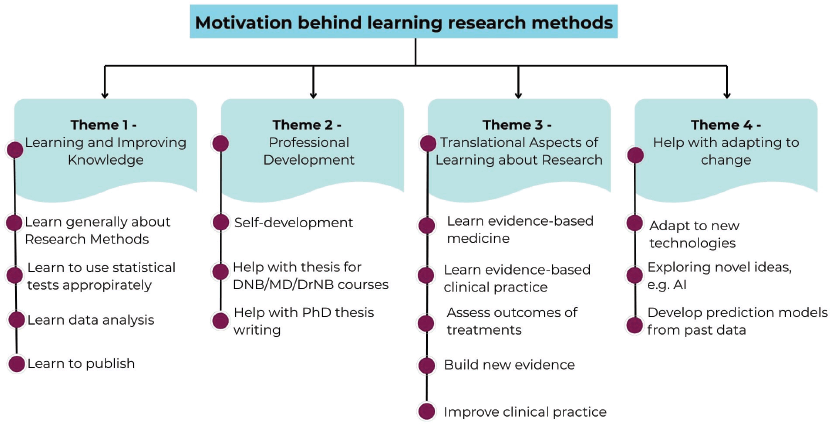
Figure 1. Synthesis of free text responses on motivation to participate in the research methods course.
Technical session 1: types of data/measurement scales/measurements of central tendency/dispersion/sample size calculation
This session was conducted by Dr Arijit Nag, Senior Consultant in the Department of Clinical Haematology at Tata Medical Center, Kolkata. Dr. Nag explained the basics of biostatistics in a simplified manner in his presentation. He set the tone for the upcoming sessions by covering topics such as grouped and ungrouped data, measures of central central tendency and ways to calculate sample size.
Technical session 2: bivariate statistics (Chi-square, Fisher's Exact test, Student's t-test, Mann-Whitney test)
Dr Indranil Mallick, Senior Consultant, Department of Radiation Oncology, Tata Medical Center, Kolkata, conducted two sessions, one after the other. The first session was on Chi-square, Fisher's exact test, Student's t-test and the Mann-Whitney test.
Technical session 3: tests of significance (p-value and confidence interval)
Dr Mallick continued his second session, where he covered p-value and confidence interval and discussed data analysis. The two sessions by Dr Mallick were very interactive and used universally understandable examples. Video 2 by Dr Mallick showcases the journey of a clinician-researcher over time.
Video 2. Reflections by Dr Indranil Mallick on the importance of conducting clinical research to impact patient care. (See the video at https://vimeo.com/1166048080/43f4beef14?share=copy&fl=sv&fe=ci.)
Technical session 4: writing a research paper (IMRAD)
Dr Soumitra S Datta, Senior Consultant Psychiatrist, Tata Medical Center, Kolkata and organising chair for the course, conducted a session on writing a research paper, covering the main aspects of Introduction, Methods, Results and Discussion (IMRAD). His presentation explained the basics of introducing research problems, presenting research findings and writing the discussion section of a research paper. Dr Datta also employed the same free-text software ‘Mentimeter’ to engage the audience with a few multiple-choice questions. These responses were quantitatively analysed based on percentage.
The first quantitative question was, ‘What do you usually write first when writing a research paper?’ and the options that the participants could choose from to respond were Introduction, Results, Abstract, Discussions or Methods. Sixty-one participants responded to this question, of which 25 (41%) participants responded to ‘Introduction’, 18 (30%) participants answered ‘Abstract’, 11 (18%) participants responded to ‘Methods’, 4 (6%) participants answered ‘Discussions’ and 3 (5%) participants responded to ‘Results’. These results have been summarised using the following pie chart (Figure 2).
The final question in this segment was ‘Which is true regarding answering reviewers' comments?’ and 59 participants answered it. Of the 59 participants who responded, 23 (39%) participants chose ‘You can respond to only selected questions raised by the reviewers’, 19 (32%) participants chose ‘Usually journals do not raise much questions to well written papers’, 10 (17%) participants chose ‘You need to respond to all reviewers’ and 7(12%) participants chose ‘You need to respond within a specific time frame’. These results have been summarised using the following pie chart (Figure 3).
Technical session 5: diagnostic accuracy testing (sensitivity, specificity, predictive power, ROC curve)
This session was conducted by Dr. Suvro Sankha Datta, Senior Consultant in the Department of Transfusion Medicine, Tata Medical Center, Kolkata and Joint Organising Secretary for the course. Dr. Datta covered the concepts of sensitivity, specificity, predictive power and ROC curve with relevant examples.
Technical session 6: research ethics
Dr Prateek Jain, Senior Consultant in the Department of Head and Neck Surgery, Tata Medical Center, Kolkata and Joint Organising Secretary for the course, conducted an interesting session on research ethics. He discussed the principles of non-maleficence, beneficence, justice and autonomy, engaging the audience in an interactive and participatory discussion.
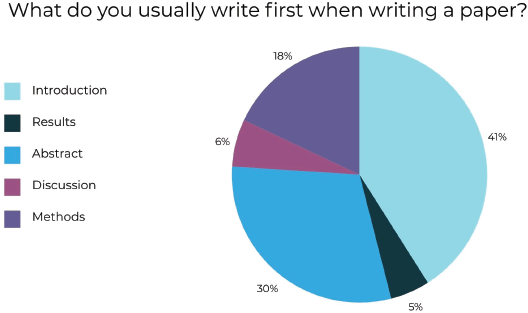
Figure 2. Percentage of responses to ‘What do you usually write first when writing a paper?’
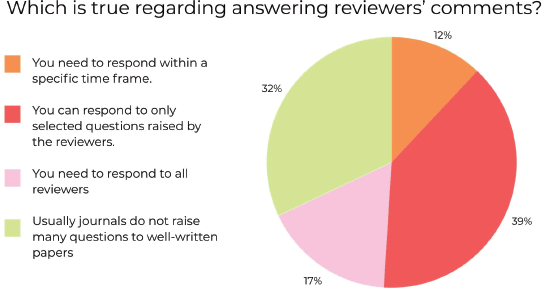
Figure 3. Percentage of responses to ‘Which is true regarding answering reviewers' comments?’
Workshop 1: PubMed literature search and reference management (Zotero)
Dr Prateek Jain & Dr Shouriyo Ghosh (Associate Consultant, Clinical Haematology and Cellular Therapies, Tata Medical Center, Kolkata) conducted the workshop together. Dr. Ghosh was the first speaker and he covered PubMed literature search. Dr. Jain facilitated the session on using Zotero for reference and citation management. Both workshop facilitators demonstrated the software while simultaneously engaging with and assisting the audience in using it.
Mentimeter was employed to ask the audience, ‘A referencing software helps in the following ways?’. The options that the participants could choose from to respond were ‘Cite references in a Word document’, ‘Reformat a paper with a new referencing style’, ‘Cite multiple references at the same place’ or ‘All of the above’. A total of 60 participants responded to this question of which 5 (8%) participants chose ‘Cite references in a word document’, 2 (4%) participants chose ‘Reformat a paper with a new referencing style’, 5 (8%) participants chose ‘Cite multiple references at the same place’ and 48 (80%) chose ‘All of the above.’ The fact that the majority of participants chose ‘All of the above’ suggests that a research methodology course that has a specific workshop on reference management is vital for fulfilling the learning goals of young clinicians. These results have been summarised using the following pie chart (Figure 4).
Biostatistics and research methods course (9:00–17:30) - day 2 (23rd August 2025)
The second day of the Biostatistics & Clinical Research Methodology Course consisted of three technical sessions covering more specific and complex topics related to data analysis and research, as well as a workshop on using SPSS.
Technical session 7: RCT and systematic reviews
Dr Soumitra S Datta began the day’s proceedings with a session on Randomised Control Trial (RCT) and Systematic Review. He covered the basics of RCT with the research design and relevant concepts, along with examples from previous relevant research. He then moved on to discussing Systematic Review.
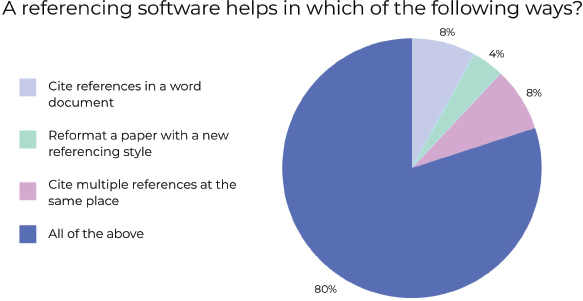
Figure 4. Percentage of responses to ‘A referencing software helps in which of the following ways?’
Technical session 8: survival analysis- an overview
This session was conducted by Dr Sanjit Agrawal, Senior Consultant, Department of Breast Surgery, Tata Medical Centre, Kolkata. He discussed the basics of survival analysis. Dr Sanjit also addressed the application of survival analysis in oncology.
Technical session 9: correlation and regression
Dr Soumitra S Datta conducted this session. He began by recapitulating the basics of statistics that had been discussed on Day 1, and then proceeded to explain the concepts of correlation and regression analysis. He tried to simplify complex ideas for the participants to grasp. The participants engaged in interaction with the resource person and asked many questions.
Workshop 2: SPPS hands-on training
The second workshop for the course was jointly facilitated by Dr Sanjit Agrawal & Dr Soumitra S Datta. The participants had already downloaded a trial version of SPSS, and a data set had been shared with them prior to the workshop so that they would be better prepared. Dr Agrawal began by explaining the basics of entering data into the SPSS software, setting the data values and then explained the method of generating results. Over the next few hours, he explained how to calculate descriptive statistics and conduct standard statistical tests. The next part of the SPSS workshop was conducted by Dr Datta, who demonstrated how to calculate correlation coefficients and perform regression analysis using a hypothetical set of data.
During the course, participants were asked via Mentimeter, ‘What’s the hardest part of writing a research paper?’ The obtained responses (n = 47) were analysed qualitatively, and the main themes that emerged are described in Figure 5. The major themes that emerged were a) Lack of training in research (‘finding a research problem or a gap’; ‘sampling participants’, ‘budgeting a project’), b) Difficulties in writing a research paper (‘organising different sections, ‘managing the flow from one section to another’, writing an abstract’ and so on) and c) Researcher’s personal circumstances (‘lack of time’, ‘anguage barriers with patient population’ and so on).
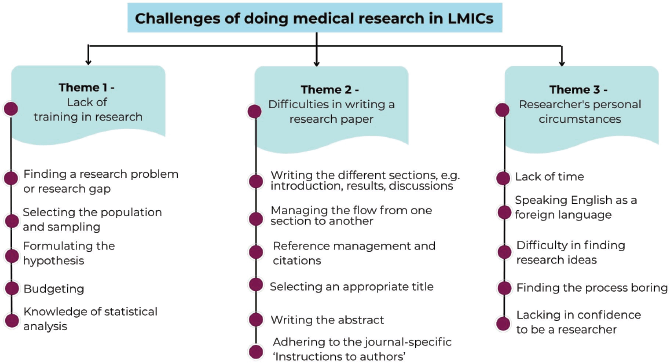
Figure 5. Synthesis of free text responses on challenges the participants face while writing a paper.
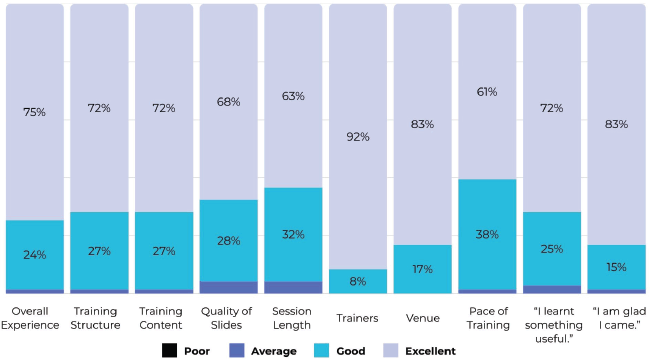
Figure 6. Quantitative ratings provided by participants (n = 71) at the end of the 2-day programme.
Finally, the closing session was conducted by Dr Rima Mukherjee, the current president of the West Bengal Chapter of the Indian Psychiatric Society. She thanked the audience and felicitated the organisers and faculty on behalf of the Indian Psychiatric Society.
Results of participant feedback
The ‘9th’ Tata Annual Biostatistics and Research Methodology course 2025 had a total of 94 participants, which included 81 delegates, ten faculty members and three organising committee members. 81 pre-registered delegates from various parts of India attended the course. Of these, 71 participants (71/81, 87%) provided written feedback. Of the 81 delegates, 44 were women (54%) and 37 were men (46%). There were 55 delegates (74%) who were early-career professionals, aged under 40 years. The programme attracted medical professionals (n = 55, 74%) from diverse specialities, along with participants from related disciplines (n = 26, 32%), including psychologists, medical students and allied health professionals.
The majority of the feedback from the delegates was rated ‘excellent’, followed by ‘good’ in all aspects of the quantitative ratings, as shown in Figure 6. In the free-text part of the responses, they elaborated on specific aspects of the course they liked. The participants appreciated the hands-on training sessions on Zotero and SPSS.
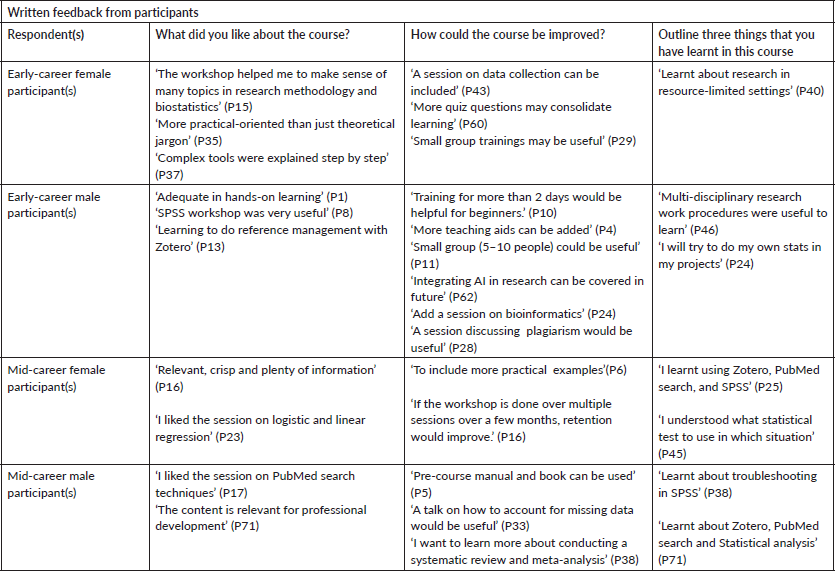
The summary of free-text responses is presented in Table 1.
To summarise the above table (Table 1), the feedback has been grouped by the participants’ age, gender and current career standing. It was found that most participants appreciated the workshops on Zotero, PubMed search and Statistical analysis using SPSS and some requested longer sessions for these topics. They also enjoyed the multidisciplinary approach adopted by the trainers and the clear and concise delivery of the lectures.
Feedback was also collected in video format from the participants and faculty who consented to being recorded. They discussed the need to conduct a research methodology course, shared their key takeaways and reflected on the 2-day programme.
Table 1. Written feedback from participants after completion of the course.
Conclusion
Our findings suggest that post-graduate trainees in oncology and other specialities, qualified medical and nursing professionals working in oncology and medical academics were all eager to learn about research methods in a structured two-day course delivered by clinician-researchers. The underlying motivation for learning about medical research was varied, including improving existing knowledge, eagerness to design their own research studies, professional development and developing the capacity to apply emerging evidence in clinical practice. Published literature from other parts of the globe have similarly highlighted the positive impact of a research culture on patient experience, as well as the learning experience of trainees, resident doctors and the institutional culture [7]. The feedback identified gaps in knowledge about writing a research paper and a lack of understanding of strategies for responding to reviewers’ comments. This is not surprising, given the limited exposure to a research culture for the majority of delegates who participated in the research methodology course. The three main barriers to conducting research that our participants reported were ‘‘lack of training in research’, ‘difficulties in writing a research paper’ and the ‘researcher’s personal circumstances’. These findings corroborated with those reported from a survey conducted in 27 countries in Africa, which highlighted the barriers to clinical research and emphasised the lack of dedicated research teams in LMICs, paucity of staff skilled in research and poor team commitment to research in the face of high clinical load, alongside other resource-related issues and regulatory barriers [8]. After attending the course, participants mentioned in their feedback the value of hands-on training and appreciated the faculty's clear and straightforward approach to explaining complex concepts. Many participants requested frequent sessions and small group training.
In recent times, there has been significant discussion worldwide about the gender gap in scientific research and the under-representation of women in biomedical research teams and publications [9]. This is true for academic medicine, even in high-income countries as the US [10]. We are pleased to report that the majority of our participants were women in the early stages of their careers. One can hope that the gender gap in medical research will be closed over time as the female workforce in medicine increases worldwide and women become more inspired to pursue research as a career [11]. The government of India has initiated innovative programmes to encourage women in science under the umbrella of Women in Science and Engineering-KIRAN [12].
The majority of the global cancer burden is in LMICs [13], and more research is needed to originate from these areas. To achieve this, institutions and individuals need to foster a conducive environment for research, inspiring those who will be responsible for the future healthcare delivery.
Acknowledgments
The biostatistics and research course was entirely funded by delegates' registration fees. We did not receive any external funding. The organising team is indebted to the following staff of Tata Medical Center for helping with the programme: Mr Subhobrata 'Banerjee', Mr Koushik Roy and Mr Arnab Neogi, all from the IT team for their support with the website development and IT support on the day of the programme, Mr Subhasis Das, Ms Dipali Banerjee from the Finance team and Mr Sanjeev Agarwal, Chief Finance Officer for help with financial aspect and planning, Mr Arnab Ghosh and Mr Shantanu Roy from F&B department for hospitality, Mr Soumen Das, Manager, Housekeeping Department for support and Mr Monisankar Karmakar and Mr Kallol Ghosh, Manager from Purchase team for all the help provided to liaise with external service providers, and Mr Goutam Jana, Chief Security Officer for assistance during the programme.
Tata Medical Center, Kolkata is indebted to the Indian Psychiatric Society, West Bengal Chapter, for their whole-hearted support.
The organisers of the programme thank the West Bengal Medical Council for approving the programme for CME points for delegates who attended. The audio-visual team, Mandrex Design, did an excellent job and the organisers are grateful to them.
The organisers are thankful to ecancer Global Foundation for their support in publishing the open-access conference report in the journal ecancermedicalsciences.
Conflicts of interest
The authors declared that they do not have any conflicts of interest.
Funding
All faculties for the course taught pro-bono. Other organisational aspects were covered by participant registration fees and support from Tata Medical Center, Kolkata. The open-access fees for this project report was supported by ecancer Global Foundation.
References
1. Martyn C (2014) Risky business: doctors’ understanding of statistics BMJ 349(sep17 4) g5619 https://doi.org/10.1136/bmj.g5619
2. World Health Organisation (2023) Patient safety [Internet] https://www.who.int/news-room/fact-sheets/detail/patient-safety Date accessed: 30/09/2025
3. Ghasemi A, Mirmiran P, and Kashfi K, et al (2023) Scientific publishing in biomedicine: a brief history of scientific journals [Internet] Int J Endocrinol Metab Internet 21(1) e131812 http://doi.org/10.5812/ijem-131812
4. Ahmed Y, Taha MH, and Khayal S (2024) Integrating research and teaching in medical education: challenges, strategies, and implications for healthcare [Internet] J Adv Med Educ Prof 12(1) 1–7 http://doi.org/10.30476/JAMP.2023.99751.1854 PMID: 38313425 PMCID: 10837463
5. Datta SS, Agrawal S, and Jain P, et al (2023) Conference report: introducing oncology to undergraduate medical and allied health sciences students: reflections from 2nd ecancer TMC Oncology Congress 2023 at Kolkata, India [Internet] In Ecancermedicalscience 17 1647 p https://pubmed.ncbi.nlm.nih.gov/38414934/
6. Datta SS, Sheth H, Ghosh S, et al (2025) Pioneering psycho-oncology: a collaborative journey for medical and psychology students at ecancer-Tata Medical Center Kolkata Psycho-oncology Congress 2024 [Internet] ecancer 19: 1828 https://doi.org/10.3332/ecancer.2025.1828
7. Bhuiya T and Makaryus AN (2023) The importance of engaging in scientific research during medical training [Internet] Int J Angiol 32(3) 153–157 [10.1055/s-0042-1759542] https://doi.org/10.1055/s-0042-1759542 PMID: 37576537 PMCID: 10421692
8. Conradie A, Duys R, and Forget P, et al (2018) Barriers to clinical research in Africa: a quantitative and qualitative survey of clinical researchers in 27 African countries [Internet] Br J Anaesth 121(4) 813–821 https://doi.org/10.1016/j.bja.2018.06.013 PMID: 30236243