177Lu-PSMA-617 in metastatic castration-resistant prostate cancer shows higher PSA response with lower toxicity
20 Oct 2025

The content on this site is intended for healthcare professionals only
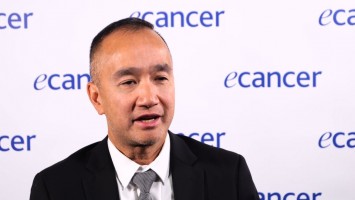
Prof Sandler talks to ecancertv at ASCO 2015 about a federally funded phase III study found that adding docetaxel chemotherapy to standard hormone and radiation therapy reduces the risk of death for men with high-risk, localised prostate cancer.
Read the news article and watch the press conference for more.
ecancer's filming at ASCO has been kindly supported by Amgen through the ECMS Foundation. ecancer is editorially independent and there is no influence over content.
ASCO 2015
Effective adjuvant chemotherapy for high-risk, localised prostate cancer
Prof Howard Sandler - Cedars Sinai Medical Center, Los Angeles, USA
You’ve been looking at a specific group of patients with prostate cancer. Tell me which ones and what you were trying to do.
We were looking at high risk localised non-metastatic prostate cancer patients. Their standard treatment was radiation therapy and two years of hormonal therapy and our question was whether adding adjuvant docetaxel would improve overall survival.
How did you go about answering your question?
We answered it, we attempted to answer it, in the standard way with a randomised phase III study where one arm was standard therapy, as I mentioned, and the experimental arm involved six cycles of adjuvant docetaxel beginning one month after the completion of radiotherapy.
Now what did you get coming out of this?
So we observed an improvement in overall survival of about 5% four years after patients entered the study. For prostate cancer this detection of an improvement in survival at four years is relatively remarkable because prostate cancer takes a long time to have the data mature. For us to detect a meaningful benefit in overall survival at four years is impressive.
It could mean that at longer periods you’d have quite a big difference, how big could that be?
That’s a good question. I don’t know how big the difference could be. I think it could be bigger and I expect that with more maturity the data will show that the survival curves will continue to separate. It could be… it’s already clinically meaningful so any greater separation would be only more meaningful.
How does this affect the approach that the busy cancer doctor should now be using with patients who have high risk localised prostate cancer?
Busy doctors are busy but maybe I’m going to make them a little busier because I think that for some men with high risk localised prostate cancer they should have a discussion with their physician, with their oncologist, about whether adjuvant docetaxel is appropriate for them. It may not be for all; even in more advanced disease where docetaxel has been used for a long time all men don’t get chemotherapy for one reason or another. But I think the discussion should take place and I think we’ll be in a situation where there will be an individualised decision making process. Some men will elect to receive adjuvant care and others won’t.
And that’s because of the potential downside of adding this therapy. What might that be?
There was some modest haematological toxicity. The good thing about this study is that the chemotherapy is very well established and medical oncologists around the world are familiar with giving adjuvant docetaxel. So there’s nothing new in that and we didn’t detect any new safety concerns. So I think the side effect side of the equation is well established and it will be a balance of whether people want to do that or not. The median age in our study was 66 years old, men with prostate cancer tend to be an older age group, and older men are somewhat reluctant to embark on chemotherapy. So that might be a little bit of a brake on the adoption of adjuvant chemotherapy.
So what’s the basic message that you’d like doctors to take home from this particular finding then?
In this high risk localised prostate cancer population my basic message is that for the first time we actually have data that suggests that there’s an improvement in overall survival with chemotherapy. The basic message is that you have data now that you can use in a fully informed conversation with newly diagnosed men with high risk prostate cancer.
177Lu-PSMA-617 in metastatic castration-resistant prostate cancer shows higher PSA response with lower toxicity
Talazoparib and enzalutamide combination therapy shows significant benefit in treating mCRPC

Understanding the use of PARPi combinations to treat patients with mCRPC

ESMO 2024: Optimising the personalisation of prostate cancer treatment

OncoAlert round up July 28th to August 3rd, 2023

Latest in PARP inhibitors and combination therapies for prostate cancer

Final OS results of IMvigor130: Atezolizumab plus platinum/gemcitabine for mUC

Gemcitabine, cisplatin plus nivolumab achieves clinical complete response in subset of muscle-invasive bladder cancer patients

Adjuvant nivolumab as standard of care for high-risk muscle-invasive urothelial carcinoma after radical resection
