mRNA-4359 plus pembrolizumab shows high response rates and robust T-cell activation in melanoma

20 May 2026

The content on this site is intended for healthcare professionals only
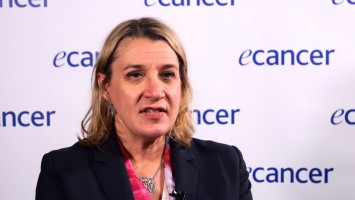
Dr Inge Marie Svane speaks to ecancer about the phase 3 clinical findings of IO102-IO103, an investigational immune-modulatory cancer vaccine designed to enhance anti-tumour immunity by targeting IDO1+ and PD-L1+ cells within the tumour microenvironment.
Dr Svane explains that the study evaluates IO102-IO103 in combination with pembrolizumab versus pembrolizumab monotherapy in treatment-naive patients with advanced melanoma.
The results of the study show that the combination of IO102-IO103 and pembrolizumab delivered a clinically meaningful 8.4-month improvement in progression-free survival with a favourable safety profile.
Dr Svane says that these results support the potential of this therapeutic vaccine to enhance checkpoint inhibitor efficacy in advanced melanoma without adding systemic toxicity.
This is a phase III trial where we have randomised patients with metastatic melanoma for first-line therapy either participating in the group of patients only receiving the anti-PD-1 antibody or having an immune modulatory vaccine on top of the anti-PD-1 antibody. Our findings were that it seems that we can actually benefit the patient by adding on this immune regulatory vaccine and what we found was that we had a PFS of 19 months as compared to 11 months in the control group. But we didn’t reach the significance level of 0.045, we had a p-value of 0.056. But when we looked into subgroups of poor prognosis like the PD-L1 negative patients we did see a significantly better progression free survival when we added on the vaccine.
Were there any adverse events?
No, and that is a very important issue, actually because normally when you add or you combine checkpoint inhibitors you severely increase the risk of serious side effects. But in this case we only saw mild local reactions where we injected the vaccine, we didn’t have any additional systemic side effects.
What could be the implications of these findings?
The implications, as I see it, this could be a very good alternative to the combination checkpoint inhibitors for patients, specifically the PD-L1 negative patients who are the patients who are really difficult to treat.
What are the next steps?
What is going on at the moment from the company side is that they are considering planning a new phase III trial where they actually want to try to test this immune modulatory vaccine towards PD-L1 and IDO in combination with two different checkpoint inhibitors.
mRNA-4359 plus pembrolizumab shows high response rates and robust T-cell activation in melanoma
Machine learning models improve prediction of immunotherapy outcomes across multiple cancer types

PRAME-targeted TCR therapy shows high response rates in metastatic uveal melanoma

Adjuvant pembrolizumab in resected merkel cell carcinoma shows improved distant metastasis-free survival
Zanzalintinib plus atezolizumab improves survival in refractory mCRC

Osimertinib plus chemo improves survival across high-risk subgroups in EGFR-mutated aNSCLC

Avelumab maintenance after reduced chemotherapy cycles improves QoL without sacrificing survival in aUC

Domvanalimab, zimberelimab and FOLFOX shows durable survival in advanced HER2-negative GC/GEJC/EAC

Abemaciclib combined with endocrine therapy improves OS in high-risk HR+, HER2− early breast cancer