
Supporting oncology professionals through education
The content on this site is intended for healthcare professionals only
The content on this site is intended for healthcare professionals only
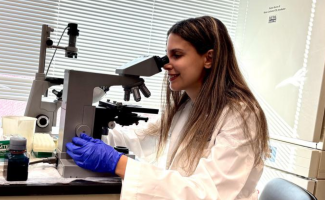
Researchers at the Johns Hopkins Sidney Kimmel Comprehensive Cancer Centre and Johns Hopkins Children’s Centre found that an experimental drug may help overcome one of the major challenges in treating an aggressive subtype of acute myeloid leukaemia (AML), known as FLT3-positive AML.
In laboratory and animal studies, the drug, called PHI-101, was effective against leukaemia cells carrying genetic mutations that cause resistance to existing FLT3-targeted therapies.
The findings, published in Leukaemia, suggest that PHI-101 could provide a new treatment option for patients whose leukaemia stops responding to drugs designed to block FLT3, a protein that helps regulate the growth of blood cells.
Mutations in the FLT3 gene occur in approximately one-third of patients with AML, and can cause leukaemia cells to grow uncontrollably.
Drugs called FLT3 inhibitors have significantly improved treatment options for patients with these mutations.
However, some patients develop additional mutations that allow their cancer cells to evade the drugs, causing the leukaemia to return or continue growing.
“FLT3 inhibitors have made an important difference in the treatment of AML, but resistance remains a significant limitation,” says Marina Mitrou, M.D., fellow in paediatric oncology and first author of the study.
“What makes this drug particularly promising is its ability to target several mutations associated with resistance, including one that makes many existing FLT3 inhibitors ineffective.”
The research focused particularly on a mutation called F691L, sometimes referred to as a “gatekeeper” mutation because it alters a critical region of the FLT3 protein where drugs bind.
This change can prevent existing treatments from effectively blocking the protein’s activity, allowing leukaemia cells to continue growing.
PHI-101 appears to overcome this obstacle by binding to the FLT3 protein in a way that is less affected by the genetic changes that interfere with other inhibitors.
To evaluate the drug, researchers tested PHI-101 in leukaemia cell lines, samples from patients with AML and mouse models of the disease.
They found that the drug effectively blocked FLT3 activity and inhibited the growth of leukaemia cells carrying several mutations, including F691L and another resistance-associated mutation, D835.
In laboratory experiments, PHI-101 was more effective than two FDA-approved FLT3 inhibitors, gilteritinib and quizartinib, against leukaemia cells carrying the F691L mutation.
The drug caused leukaemia cells with FLT3 mutations to die, but had little effect on other cells.
The researchers observed promising results in mice as well.
In one experiment involving mice transplanted with human AML cells carrying a FLT3 mutation, PHI-101 reduced leukaemia in the bone marrow and extended median survival to 191 days, compared with 133 days for mice treated with gilteritinib and 108 days for untreated mice.
In a separate mouse model of leukaemia carrying the treatment-resistant F691L mutation, PHI-101 extended median survival to 44.4 days, compared with 21.4 days for mice receiving gilteritinib and 19.4 days for untreated mice.
“One of the most encouraging findings was that PHI-101 remained effective against the F691L mutation, which is particularly difficult to treat,” says Donald Small, M.D., Ph.D., the Kyle Haydock Professor of Oncology at the Kimmel Cancer Centre and senior author.
“These findings suggest we may be able to offer another treatment option for patients who develop resistance to existing FLT3 inhibitors.”
The research builds upon decades of pioneering discoveries led by Small at the Johns Hopkins Sidney Kimmel Comprehensive Cancer Centre that helped establish FLT3 as an important target for leukaemia treatment.
In 1992, Small was the first scientist to clone the human FLT3 gene, and subsequently demonstrated its important role in AML.
His lab was also the first to discover a FLT3 inhibitor and to show its success in killing FLT3 mutant cell lines.
They proceeded to screen thousands of compounds from a drug library and discovered very potent FLT3 inhibitors that eventually made their way into clinical trials.
Working with Small, Mark Levis, M.D., Ph.D., showed the preferential killing of FLT3 mutant leukaemia cells from patients and, together with Doug Smith, M.D., helped design the first trials of FLT3 inhibitors for patients with FLT3 mutant AML.
Levis and Small subsequently developed a test to determine whether FLT3 inhibitors were successfully blocking their intended target in patients.
This research helped guide the development and clinical testing of more effective FLT3 inhibitors, establishing the foundation for treatments now used in patients with AML.
“Johns Hopkins Kimmel Cancer Centre has a long history of research aimed at understanding FLT3 and developing drugs to target it,” says Small.
“We have made important advances, but we also know that leukaemia can find ways around these treatments. Our goal is to continue developing better drugs that can overcome resistance and improve outcomes for patients.”
PHI-101 is being evaluated in a phase I clinical trial in Korea and Australia involving patients with relapsed or refractory AML — leukaemia that has returned after treatment or has not responded to treatment.
Early clinical findings have shown encouraging activity, although additional studies are needed to further determine the drug’s safety and effectiveness in patients.
Researchers are also interested in whether PHI-101 could be used earlier in treatment or combined with other drugs to improve responses and potentially prevent resistance from developing.
“Ultimately, we hope these findings will lead to more effective and longer-lasting treatments for patients with AML,” says Mitrou.
“We are continuing to investigate how this drug might be used, both for patients whose leukaemia has become resistant to treatment and potentially as part of initial therapy.”
In addition to Mitrou and Small, researchers participating in the study were Li Li, Bao Ho Nguyen, Gi-Jun Sung, Ky-Youb Nam, Kyu-Tae Kim, Jeong-Hyeok Yoon, Michelle Wang, David Young, Ruiqi Zhu, Tessa Seale, Seung-Hye Choi and Taebo Sim.
Source and image: Johns Hopkins Medicine
The World Cancer Declaration recognises that to make major reductions in premature deaths, innovative education and training opportunities for healthcare workers in all disciplines of cancer control need to improve significantly.
ecancer plays a critical part in improving access to education for medical professionals.
Every day we help doctors, nurses, patients and their advocates to further their knowledge and improve the quality of care. Please make a donation to support our ongoing work.
Thank you for your support.