
Supporting oncology professionals through education
The content on this site is intended for healthcare professionals only
The content on this site is intended for healthcare professionals only
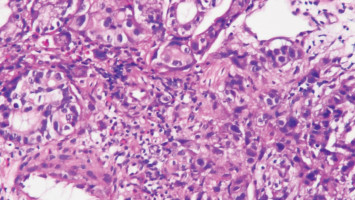
KRAS mutations define a distinct molecular subset of gastric adenocarcinoma (GA), yet how oncogenic KRAS shapes the gastric tumour immune microenvironment - and drives resistance to immunotherapy - has remained poorly understood.
KRAS alterations occur in approximately 10% of GA, functioning not only as potent oncogenic drivers but also as regulators of the tumour microenvironment.
In the new study, the researchers first performed whole-exome sequencing on tumour specimens from patients with GA who had received neoadjuvant chemotherapy combined with PD-1 blockade.
Among recurrently mutated genes associated with poor treatment outcome, KRAS stood out: patients with KRAS-mutant tumours derived very limited benefit even when their tumours were classified as dMMR with a CPS score above 10 - two established biomarkers predicting response to immune checkpoint inhibitors.
Multiplex immunohistochemistry confirmed that KRAS-mutant tumours are poorly infiltrated by lymphocytes, most strikingly a depletion of intratumoural CD8+ T cells, together with increased infiltration of CD68+ myeloid cells.
To investigate the underlying biology, the team generated a stomach-specific, genetically faithful and immunocompetent mouse model of KRASG12D-driven GA (the CPPK model, based on Anxa10-CreERT2, KrasG12D and Trp53-floxed alleles), together with matched organoids and cell lines.
The model faithfully recapitulates the development of human poorly differentiated GA - from early antralization of gastric glands, to advanced tubular and intestinal-type adenocarcinoma, and finally liver and peritoneal metastasis.
Mirroring the clinical observations, CPPK mice were intrinsically resistant to PD-1 blockade.
Single-cell RNA sequencing of tumour tissues uncovered a profoundly immunosuppressive microenvironment in KRAS-mutant tumours: regulatory T (Treg) cells comprised 41.7% of tumour T cells, 55.3% of the NKT compartment consisted of exhausted T cells, and TGF-beta signalling was markedly activated in tumour Tregs, where it showed spatial co-localization with the CTLA-4 molecule.
These data point to TGF-beta-positive Tregs as a key cellular hub that maintains immune suppression.
Treatment with MRTX1133, a recently developed small-molecule inhibitor of KRASG12D, effectively suppressed tumour growth and prolonged survival in the mouse model, and inhibited KRASG12D gastric cancer cell lines and organoids (IC50 values of 271-485 nM).
However, functional immune analyses revealed that effective antitumor immunity was not restored: immune cells expanding after KRAS inhibition were predominantly immunosuppressive Tregs, and cytotoxic T cell function remained unchanged.
Mechanistically, TGF-beta signalling was required to maintain Treg dominance and suppress effector T cell function.
Building on these insights, the researchers combined KRAS inhibition with CTLA-4 blockade, a strategy that directly targets regulatory T cells.
The combination markedly attenuated TGF-beta activity, impaired Treg function and synergistically enhanced antitumor immune responses.
Adding PD-1 blockade on top of this doublet led to complete eradication of three subcutaneous tumours, and the combination significantly prolonged survival in the spontaneous CPPK model.
The findings identify oncogenic KRAS as a key regulator of TGF-beta-dependent immune suppression in gastric adenocarcinoma, and provide a strong preclinical rationale for CTLA-4-based combination immunotherapy in this molecularly defined subset of patients.
See the article: Targeting KRAS reprograms a Treg-dominant immunosuppressive microenvironment and sensitises KRAS-mutant gastric adenocarcinoma to CTLA-4 immunotherapy (Science China Life Sciences, 2026).
The study was carried out by researchers from Peking University Cancer Hospital & Institute and collaborating institutions, and was supported by grants from the National Science and Technology Major Project of China, the Beijing Natural Science Foundation and the National Natural Science Foundation of China.
Source: Science China Press
The World Cancer Declaration recognises that to make major reductions in premature deaths, innovative education and training opportunities for healthcare workers in all disciplines of cancer control need to improve significantly.
ecancer plays a critical part in improving access to education for medical professionals.
Every day we help doctors, nurses, patients and their advocates to further their knowledge and improve the quality of care. Please make a donation to support our ongoing work.
Thank you for your support.