
Supporting oncology professionals through education
The content on this site is intended for healthcare professionals only
The content on this site is intended for healthcare professionals only
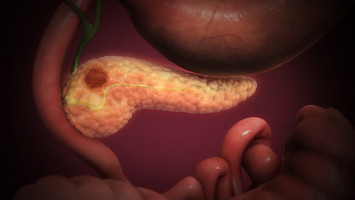
On August 26, 2026, the U.S. Food and Drug Administration approved daraxonrasib (Rasonque®) for adults with metastatic pancreatic adenocarcinoma who have received at least one prior line of systemic therapy.
The decision, arriving 6.5 months ahead of its PDUFA target date, ends a decades-long quest to clinically target the RAS oncogene and establishes the first broadly applicable targeted therapy for pancreatic cancer.
A commentary published in Clinical Cancer Bulletin —the international open‑access journal sponsored by Zhongshan Hospital, Fudan University and edited by Academician Jia Fan—frames this milestone against the long history of therapeutic failure in this disease.
In the commentary, Professor Liang Liu and Dr. Chenchen Liu of the Department of Pancreatic Surgery at Zhongshan Hospital, Fudan University, examine the two landmark New England Journal of Medicine trials that provided the evidentiary basis for the approval.
They underscore that the phase Ⅲ RASolute 302 trial yielded a median overall survival of 13.2 months with daraxonrasib versus 6.6 months with chemotherapy (HR 0.40) in the RAS G12‑mutant population—a result that, as they note, “even surpasses the historic benchmark of FOLFIRINOX as first‑line therapy (11.1 months).” The objective response rate (31.6%) was nearly three times that of chemotherapy, and the safety profile favoured daraxonrasib, with fewer grade ≥3 adverse events and a discontinuation rate of only 1.2%.
The commentary highlights the mechanistic innovation that sets daraxonrasib apart: as a first‑in‑class RAS(ON) multi‑selective inhibitor, it targets the active GTP‑bound state of KRAS, NRAS, and HRAS across G12, G13, and Q61 mutations—covering more than 90% of pancreatic cancer patients.
This “fundamental transition from allele‑specific to broad‑spectrum mutational inhibition” overcomes the long‑standing “undruggable” barrier that had frustrated the field for decades.
At the same time, the authors acknowledge that important challenges remain.
Acquired resistance—driven by secondary mutations, bypass pathway activation, or disruption of tri‑complex binding—will require sustained scientific effort to understand and overcome.
They call for continued investigation into combination strategies and evaluation in earlier treatment settings, including adjuvant and neoadjuvant use.
“RAS was long regarded as the ‘Holy Grail of undruggable targets’,” said Professor Liu.
“The approval of daraxonrasib proves that this target is not only pharmacologically tractable but also capable of delivering meaningful improvements in survival and quality of life. For surgeons and oncologists who have long confronted this most recalcitrant of malignancies, this is the dawn we have been waiting for.”
We are an independent charity and are not backed by a large company or society. We raise every penny ourselves to improve the standards of cancer care through education. You can help us continue our work to address inequalities in cancer care by making a donation.
Any donation, however small, contributes directly towards the costs of creating and sharing free oncology education.
Together we can get better outcomes for patients by tackling global inequalities in access to the results of cancer research.
Thank you for your support.