
Supporting oncology professionals through education
The content on this site is intended for healthcare professionals only
The content on this site is intended for healthcare professionals only
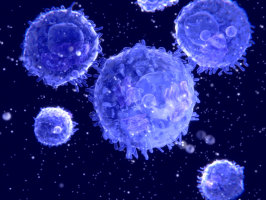
New research reveals a promising new target for treating cancer by harnessing a type of molecule previously thought to do more harm than good.
For decades, reactive oxygen species, or ROS, often called free radicals, have been viewed primarily as harmful molecules linked to ageing, DNA damage and cancer.
A new study co-led by Oregon Health & Science University finds that cancer-fighting T cells need small amounts of ROS to attack tumours.
The investigators discovered that cancers exploit the T cell need for ROS by releasing an antioxidant protein that removes ROS from the tumour environment, effectively shutting down the attack by the immune system upon the cancer.
Published today in the journal Science, the findings identify a previously unknown way tumours escape immune attack and point to a promising new target for cancer immunotherapy.
The research was co-led by physician-scientist Robert L.Eil, M.D., associate professor of surgery in the OHSU School of Medicine and member of the OHSU Knight Cancer Institute, alongside investigators at the University of Cambridge.
“One of the surprising findings is that antioxidants aren't always beneficial in the context of cancer,” Eil said.
“While reactive oxygen species sound threatening, T cells actually need them to perform their tumour-fighting job. What we found is that tumours can exploit the T cell’s dependency by removing the reactive oxygen species the immune system depends on.”
By analysing tumour interstitial fluid, the liquid that surrounds cells within tumours, researchers found that tumours create an antioxidant-rich environment that essentially chemically "smothers" T cells.
The team identified high levels of an antioxidant enzyme known as peroxiredoxin-1, or PRDX1, which neutralises the ROS within the tumour microenvironment, depriving the T cells of the signals they need to activate and attack cancer cells.
“We tend to think of reactive oxygen species purely as damaging byproducts of metabolism. But we are increasingly understanding that ROS have important functions within cells, and T cells require them to activate,” said Alexander J.Wesolowski, Ph.D., first author of the study and a researcher in the Department of Pathology at the University of Cambridge.
“Our study develops this picture, revealing that tumours can exploit this very dependency to evade elimination.”
How tumours silence T cells
The findings may also help explain a long-standing mystery in cancer research. To determine whether PRDX1 directly contributes to tumour immune evasion, researchers used CRISPR gene-editing technology to create cancer cells that could no longer produce antioxidant protein.
Removing PRDX1 enhanced immune activity and reduced tumour growth in multiple experimental models. In one melanoma model, tumours lacking PRDX1 were spontaneously rejected by the immune system.
In others, eliminating PRDX1 made previously resistant tumours responsive to immune checkpoint blockade, a form of immunotherapy that helps T cells recognise and attack cancer.
The research team also investigated whether the same mechanism occurs in people. They analysed published datasets from human cancer cell lines, examined gene activity across thousands of human tumours and measured PRDX1 in fluid collected from patient tumours.
Across all three approaches, researchers found evidence that human cancers also release PRDX1 into their surroundings, where it can suppress T cell activity.
The findings are especially significant because many cancers either do not respond to immunotherapy or eventually develop resistance.
“The immune system has already shown us that it can eradicate advanced cancers in some patients,” Eil said.
“The challenge is that current immunotherapies don't work for most people, and even when they do, complete responses remain relatively uncommon. The more we understand how tumours suppress T cells, the more opportunities we have to design therapies that reverse that suppression.”
Researchers describe PRDX1 as part of a previously unrecognised "redox checkpoint," a mechanism by which tumours manipulate ROS levels to suppress anti-tumour immunity.
The study found that cancer cells increase PRDX1 expression during a process known as immunoediting, in which tumours evolve under pressure from the immune system and acquire characteristics that help them escape immune attack.
Considering future therapies
Researchers are considering how they might be translated into future therapies. Potential approaches include drugs that neutralise tumour-derived antioxidants, therapies that block PRDX1 activity and engineered immune cells designed to resist the suppressive effects of antioxidant-rich tumour environments.
“What's exciting is that we've identified a target nobody was really looking for before,” Eil said. “This doesn't put a drug in patients' hands tomorrow, but it gives us an entirely new pathway to pursue. Discovering new targets is how future treatments begin.”
Eil said his team and collaborators will continue studying how tumours suppress immune responses and how those mechanisms can be overcome through next-generation immunotherapies, including engineered T cell therapies.
“This is one more victory against ignorance in understanding why cancers are so difficult to treat,” Eil said.
“Every time we uncover a new way tumours suppress the immune system, we gain another opportunity to fight back. That's how better treatments are built.”
In addition to OHSU and the University of Cambridge, the study included researchers from the Babraham Institute in England, the University of Tübingen, Germany, the University of Lausanne, Switzerland, the Humanitas Clinical and Research Centre, Italy, and other collaborating institutions.
Article: Tumor- derived antioxidants suppress immunity by depriving T cells of reactive oxygen species
We are an independent charity and are not backed by a large company or society. We raise every penny ourselves to improve the standards of cancer care through education. You can help us continue our work to address inequalities in cancer care by making a donation.
Any donation, however small, contributes directly towards the costs of creating and sharing free oncology education.
Together we can get better outcomes for patients by tackling global inequalities in access to the results of cancer research.
Thank you for your support.