
Supporting oncology professionals through education
The content on this site is intended for healthcare professionals only
The content on this site is intended for healthcare professionals only
A new case report was published in Volume 13 of Oncoscience on May 19, 2026, titled “Combined hepatocellular-cholangiocarcinoma: A rare and challenging diagnostic entity- A case report.”
The study was led by first and corresponding author Faten Limaiem from the Hospital Mongi Slim La Marsa in Marsa, Tunisia.
Combined hepatocellular-cholangiocarcinoma (cHCC-CCA) is a rare and aggressive form of primary liver cancer that exhibits characteristics of both hepatocellular carcinoma and cholangiocarcinoma within the same tumour.
Representing only a small percentage of primary liver malignancies, cHCC-CCA is often difficult to diagnose because its clinical, radiological, and pathological features can resemble those of other liver cancers.
In this report, the researchers describe the case of a 61-year-old man with a history of chronic hepatitis B, type 2 diabetes, and hypertension who presented with persistent right upper abdominal pain.
Imaging studies revealed a heterogeneous liver mass accompanied by capsular retraction and enlarged hilar lymph nodes.
Laboratory testing showed elevated alpha-fetoprotein levels, a finding commonly associated with hepatocellular carcinoma.
Based on imaging and a CT-guided liver biopsy, the patient was initially diagnosed with hepatocellular carcinoma.
However, after surgical removal of the tumour, comprehensive pathological examination revealed a more complex diagnosis.
The resected tumour consisted of approximately 20% hepatocellular carcinoma and 80% cholangiocarcinoma, leading to a final diagnosis of combined hepatocellular-cholangiocarcinoma.
The case illustrates one of the major challenges associated with cHCC-CCA.
Because different regions of the tumour can contain distinct cellular components, small biopsy samples may capture only part of the lesion and fail to reveal its mixed nature.
As a result, preoperative diagnosis can be difficult even when advanced imaging and pathology techniques are used.
The investigators performed detailed histopathological and immunohistochemical analyses to confirm the diagnosis.
The hepatocellular component expressed markers including Glypican-3, HepPar1, and alpha-fetoprotein, while the cholangiocarcinoma component showed strong positivity for CK7 and CK19, confirming the presence of both tumour lineages.
The authors also note that imaging findings often reflect the dominant component of the tumour.
In this case, radiological features suggested a cholangiocarcinoma-predominant lesion, which was later confirmed by pathological examination showing that most of the tumour consisted of cholangiocarcinoma tissue.
Although surgical resection remains the primary potentially curative treatment for cHCC-CCA, there are currently no standardised treatment guidelines for this rare malignancy.
The biological diversity of these tumours continues to complicate both diagnosis and therapeutic decision-making.
“cHCC-CCA poses a significant diagnostic and therapeutic challenge. Recognising this mixed phenotype in complex liver masses is crucial.”
According to the authors, accurate diagnosis requires careful integration of clinical findings, imaging studies, histopathology, and immunohistochemistry.
They emphasise that detailed case reports remain important for improving understanding of this uncommon cancer and for helping guide future diagnostic and treatment strategies.
Overall, this case highlights the diagnostic complexity of combined hepatocellular-cholangiocarcinoma and the limitations of preoperative biopsy in highly heterogeneous tumours.
The findings underscore the importance of thorough pathological evaluation and multidisciplinary management when confronting unusual liver masses.
Source: Impact Journals LLC
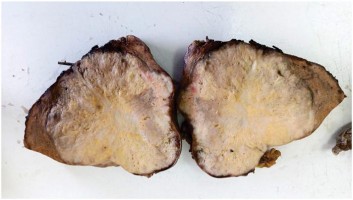
Image: Macroscopic findings: Segment V hepatectomy specimen showing a well-circumscribed subcapsular tumour. Credit: Copyright: © 2026 Limaiem et al.
The World Cancer Declaration recognises that to make major reductions in premature deaths, innovative education and training opportunities for healthcare workers in all disciplines of cancer control need to improve significantly.
ecancer plays a critical part in improving access to education for medical professionals.
Every day we help doctors, nurses, patients and their advocates to further their knowledge and improve the quality of care. Please make a donation to support our ongoing work.
Thank you for your support.