
Supporting oncology professionals through education
The content on this site is intended for healthcare professionals only
The content on this site is intended for healthcare professionals only
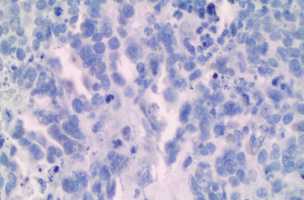
Michigan State University researchers have identified how ovarian cancer cells become resistant to chemotherapy and discovered a protein, that, when blocked, can restore the drug’s effectiveness.
The findings, published in Cell Reports, centre on cisplatin, a widely used chemotherapy drug first discovered at MSU in 1965 and still considered among the gold standard for treating ovarian and other cancers.
It's been long understood that cisplatin works by damaging cancer cells' DNA, but this study shows that it also disrupts microtubules, which are the internal scaffolding cells rely on to survive.
“We have learned how cancer cells adapt to chemotherapy by altering their internal structure,” said Sachi Horibata, assistant professor in the Precision Health Programme and Department of Pharmacology and Toxicology at the MSU College of Human Medicine and one of the lead researchers on the study.
“This enables them to survive and ultimately resist treatment.” At the centre of that process is a protein called tubulin polymerization promoting protein 3, or TPPP3.
The researchers found that cancer cells with higher levels of TPPP3 were better able to stabilise their internal scaffolding and withstand the effects of cisplatin or carboplatin that tries to destroy that internal scaffold.
In contrast, patients with lower levels of TPPP3 lived longer and responded better to treatment.
In laboratory models, removing the protein significantly restored cancer cells’ sensitivity to cisplatin, suggesting a new approach to overcoming resistance.
“TPPP3 acts like a protective shield for cancer cells,” Horibata said. “When we remove it, we weaken the cell’s defences and allow chemotherapy to work more effectively.”
The discovery also helps explain why some patients are told they are cancer-free, only to see the disease return.
After her grandmother was diagnosed with ovarian cancer, Horibata made it her life’s work to understand that pattern — why tumours initially respond to treatment but later come back stronger.
This research shows progress in her quest. Rather than simply repairing DNA damage, cancer cells can reprogram what scientists call the “tubulin code” — a set of structural changes that help stabilise microtubules and support survival under stress.
By shifting focus beyond DNA to the physical structure of cancer cells, researchers say the findings could open the door to improving existing treatments rather than replacing them.
Researchers are now working to translate these findings into new treatment strategies, including developing drugs that target TPPP3 and testing whether the protein can be used as a biomarker to identify patients at risk of developing resistance.
Future studies will also examine how this mechanism affects current chemotherapy combinations and whether it plays a role in fighting other cancer types. “This is about staying one step ahead of cancer,” Horibata said.
“If scientists can understand how tumours adapt to survive treatment, we can start to block that process — making existing therapies more effective, more durable and ultimately more personalised for each patient.”
The findings may also have broader implications. Because microtubules are essential in many healthy cells, this research could help scientists better understand some of chemotherapy’s most common side effects, including nerve damage, hair loss and hearing loss.
Source: Michigan State University
The World Cancer Declaration recognises that to make major reductions in premature deaths, innovative education and training opportunities for healthcare workers in all disciplines of cancer control need to improve significantly.
ecancer plays a critical part in improving access to education for medical professionals.
Every day we help doctors, nurses, patients and their advocates to further their knowledge and improve the quality of care. Please make a donation to support our ongoing work.
Thank you for your support.