
Supporting oncology professionals through education
The content on this site is intended for healthcare professionals only
The content on this site is intended for healthcare professionals only
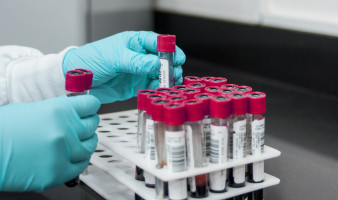
Results from the first randomized controlled trial of a multi-cancer early detection (MCED) test suggest that yearly screening of a blood sample may be able to change when cancer is found.
Although the NHS-Galleri trial did not reach its primary endpoint (reducing the number of cancers found at a late stage) the results show that 3 years of Galleri screening cut the number of cancers found at stage IV.
The Galleri group also had fewer cancers found clinically because of symptoms and in emergency settings, which tend to be more advanced and harder to treat than those found by screening.
The research was presented at the 2026 American Society of Clinical Oncology (ASCO) Annual Meeting, which took place May 29 to June 2 in Chicago.
“This is the first randomized controlled trial of a multi-cancer early detection test to report results, and it represents a landmark achievement for participants and the UK’s National Health Service.
The trial demonstrates that annual multi-cancer early detection testing is feasible at scale within a national health system and can increase the number of cancers detected through screening, including many for which no organized program currently exists,” said lead study author Charles Swanton, MD, PhD, The Francis Crick Institute and University College London Cancer Institute, London, United Kingdom.
The Galleri test analyzes DNA fragments circulating in the blood, called cell-free DNA (cfDNA), looking for patterns of DNA alterations that indicate the presence of cancerous cells.
The NHS-Galleri trial aimed to see if 3 years of Galleri testing, when added to standard-of-care screening, could shift the stage at which a set of 12 prespecified cancers is found, reducing the number of cancers diagnosed at stages III and IV and increasing the number diagnosed at stages I and II.
The trial included 142,924 people in the United Kingdom who did not have symptoms of cancer. Their ages ranged from 50 to 77 years, and half were female. About 93% identified their race as White, 3% as Asian, and about 1% each as Black, mixed, or other. About 23% were ranked in the most socioeconomically disadvantaged group, and about 16% were in the least disadvantaged group.
Every participant had blood drawn once per year for 3 years and received the recommended cancer screening tests. The participants were randomized into 2 groups:
Participants who had a positive result from Galleri testing followed up with a doctor for diagnostic workup, as did participants in either group who developed symptoms related to cancer.
Key findings
Across all cancer types, 3,637 cancers were diagnosed in the Galleri group, and 3,400 were diagnosed in the control group. In the Galleri group, 4 times more cancers were found by screening than in the group that got only the recommended screening: 1,173 cases vs. 290 cases.
The reduction of stage III or IV diagnoses among the 12 pre-specified cancers was not significant. However, there was a shift in diagnoses of these cancers over the testing period in the Galleri group compared to the control group:
No participants had serious adverse events from the blood draw, although some had minor issues, such as bruising. Other impacts included short-term anxiety about a positive test result and the burden of follow-up testing.
"While the Galleri-NHS study results show some encouraging trends toward tumour downstaging, it is important to recognize that the trial did not statistically reduce late-stage cancers by its predefined primary endpoint.
Nevertheless, these findings still offer genuine hope for deadly malignancies that currently lack screening options, such as ovarian and pancreatic cancer.
Longer-term follow-up and the eagerly awaited results of the US REACH trial will provide the critical additional information we need to fully evaluate the population-level benefits versus the risks of MCEDs,” said Julie R. Gralow, MD, FACP, FASCO, ASCO Chief Medical Officer and Executive Vice President.
The trial will continue with additional time for follow-up to see if the reduction in stage IV diagnoses further improves over time and if Galleri testing extends lifespan.
Studies will also be done to weigh the costs and benefits of regular MCED testing for cancer detection.
Source: ASCO
The World Cancer Declaration recognises that to make major reductions in premature deaths, innovative education and training opportunities for healthcare workers in all disciplines of cancer control need to improve significantly.
ecancer plays a critical part in improving access to education for medical professionals.
Every day we help doctors, nurses, patients and their advocates to further their knowledge and improve the quality of care. Please make a donation to support our ongoing work.
Thank you for your support.