
Supporting oncology professionals through education
The content on this site is intended for healthcare professionals only
The content on this site is intended for healthcare professionals only
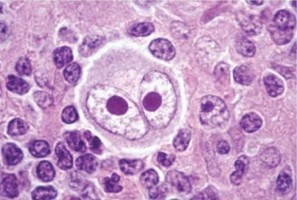
For the first time, Weill Cornell Medicine researchers have demonstrated that Hodgkin lymphoma cancer cells from patient samples are immune cells stuck in an “identity crisis.” Normally, a B cell matures into a plasma cell that produces antibodies to fight infection, but in this case, the cells are trapped partway through the transition.
They switch off key B cell features but never fully mature into functional plasma cells, instead surviving as malignant Hodgkin lymphoma cells, also called Reed-Sternberg cells.
Hodgkin lymphoma is the most common cancer in adolescents aged 15–19 and affects people over 55 years old as well.
It typically causes swelling of lymph nodes in the neck, chest, armpits or groyne, requiring chemotherapy and radiation treatment for advanced cases.
The findings, published in Blood Cancer Journal, reframe Hodgkin lymphoma as a cancer of failed cell development, rather than simply uncontrolled growth, and suggest new diagnostic biomarkers to distinguish it from other related non-Hodgkin lymphomas.
“Hodgkin lymphoma cells were assumed to originate from B cells that are in the process of developing the ability to produce immunoglobulins in the germinal centre,” said Dr. Ethel Cesarman, professor of pathology and laboratory medicine and a member of the Sandra and Edward Meyer Cancer Centre at Weill Cornell, who co-led this research.
“In this study, we now see that they were on the pathway to differentiating into plasma cells and that process has been aborted because they cannot produce immunoglobulins, as normal plasma cells do.”
Dr. Lisa Giulino-Roth, director of the Division of Paediatric Haematology–Oncology at New York University Langonne, previously at Weill Cornell, co-led the research.
Dr. Mikhail Roshal, pathologist at Memorial Sloan Kettering Cancer Centre, and Dr. Isabella Kong, postdoctoral associate in Paediatrics at Weill Cornell, are first authors on the paper.
Evading the immune system
To understand the origins of Hodgkin lymphoma cells, the team analysed gene expression profiles of 18 primary tumours and four cell lines.
They compared data from Hodgkin lymphoma and a rare lymphoma called primary mediastinal B cell lymphoma (PMBL), which have a connection to B cells and develop in the same location in the body.
The team noticed that the two lymphomas express different sets of genes with Hodgkin lymphoma cells more closely resembling multiple myeloma, a plasma cell cancer, than other lymphomas.
“Hodgkin lymphoma cells downregulate some proteins, so they are no longer like B cells,” Dr. Kong said.
“In addition, they upregulate other proteins to make them more like plasma cells but not completely functioning as such.” For instance, the team discovered that genes for the unfolded protein response (UPR) pathway were unusually active in the Hodgkin lymphoma cells.
The UPR helps plasma cells handle the stress of churning out many immunoglobulins to fight infections.
Since Hodgkin lymphoma cells cannot produce these antibodies, they are under constant internal strain and may be using this stress response as a survival mechanism.
The study also showed a novel way that Hodgkin lymphoma cells evade immune detection.
Normally, natural killer (NK) cells, part of the innate immune system, are rapid-response sentinels, scanning cells for specific surface “markers” that signal them to attack.
Hodgkin lymphoma cells downregulate a set of markers called SLAM-family ligands, including CD48, so NK cells fail to recognise the tumour as a threat and do not mount an effective attack.
The researchers also found that the tumour itself had fewer NK cells, suggesting the cancer cells may actively exclude or repel them from the tumour site.
These cancer cells also evade T cells, part of the adaptive immune response, through other mechanisms, so the tumour can escape both major arms of immune surveillance.
The findings could lead to new diagnostic markers that would help physicians differentiate between Hodgkin lymphoma and other cancers with similar symptoms.
For example, the presence of the PDIA6 protein may indicate Hodgkin lymphoma since it is involved in the UPR and specifically upregulated in these cells.
“Ultimately, we need better targeted treatments than chemotherapy, which has long-term side effects,” said Dr. Cesarman, who is also a pathologist at NewYork-Presbyterian/Weill Cornell Medical Centre.
“There may be ways to target the UPR selectively to help patients.”
Source: Weill Cornell Medicine
Image: National Cancer Institute