
Supporting oncology professionals through education
The content on this site is intended for healthcare professionals only
The content on this site is intended for healthcare professionals only
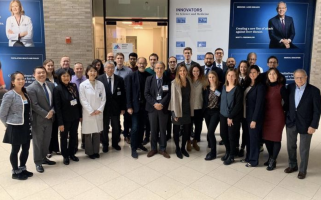
A new review from the Icahn School of Medicine at Mount Sinai and the Hospital Clínic de Barcelona provides one of the clearest roadmaps to date for understanding and treating liver cancer, one of the deadliest cancers worldwide.
Published in Cell, the study applies the widely used “Hallmarks of Cancer” framework to liver tumours, linking the biology of the disease to treatment strategies, including immunotherapy and precision medicine approaches, particularly in the approximately 45 percent of bile duct cancers that harbour targetable mutations.
The study was led by Josep M. Llovet, MD, PhD, Professor of Medicine at the Icahn School of Medicine (Liver Diseases) at Mount Sinai and Director of the Liver Cancer Programme at the Mount Sinai Tisch Cancer Centre; and Daniela Sia, PhD, Associate Professor of Medicine (Liver Diseases) at the Icahn School of Medicine.
Marking the 25th anniversary of the groundbreaking “Hallmarks of Cancer” framework introduced by Douglas Hanahan, PhD (Swiss Institute for Experimental Cancer Research), and Robert A. Weinberg, PhD (Massachusetts Institute of Technology), the Mount Sinai-led team applies this influential model specifically to primary liver cancer, offering new insights into disease biology and treatment strategies.
Primary liver cancer, which includes hepatocellular carcinoma (HCC) and intrahepatic cholangiocarcinoma (iCCA), is the third-leading cause of cancer-related death globally, with approximately 830,000 deaths each year and nearly 1 million new cases annually.
Despite recent advances, many patients are diagnosed at advanced stages and face limited treatment options.
“This work brings together decades of research to better understand what drives liver cancer and how we can treat it more effectively,” said Dr. Llovet.
“By applying the Hallmarks of Cancer framework, we connect the biology of these tumours with real therapeutic opportunities, helping guide more precise and personalised care.”
The review highlights key biological processes (known as “hallmarks”) that enable liver tumours to grow and spread.
In HCC, the most common form of liver cancer, tumours are driven by processes such as sustained growth signalling, new blood vessel formation, and immune evasion.
In contrast, iCCA, a biologically distinct cancer, often shows altered metabolism and is far more likely to harbour targetable genetic alterations.
Over the past two decades, treatment for advanced liver cancer has improved significantly, from limited options and median survival under a year to modern immunotherapy combinations that can extend survival beyond two to three years for some patients.
“This framework helps clinicians better match patients with the therapies most likely to benefit them,” said Dr. Sia.
“It also provides a roadmap for developing new treatments by identifying the key vulnerabilities of each tumour.”
Importantly, the researchers note that approximately 45 percent of iCCA tumours contain genetic alterations (such as FGFR2 fusions, IDH1 mutations, ERBB2 alterations, and BRAF mutations) that can be targeted with existing or emerging therapies, highlighting the growing role of precision oncology in liver cancer care.
For clinicians, the study offers a practical framework to guide treatment decisions, including the use of targeted therapies and immunotherapies.
For patients, it represents progress toward more personalised approaches that may improve outcomes and quality of life.
“This review is designed to bridge the gap between laboratory discoveries and patient care,” Dr. Llovet added.
“Our goal is to accelerate the development of more effective therapies and ultimately improve survival for patients with liver cancer.”
The Mount Sinai Liver Cancer Programme is one of the nation’s leading centres for the care and study of liver cancer.
Established in 2005 as a Centre of Excellence within the Mount Sinai Tisch Cancer Centre, the programme brings together a multidisciplinary team of hepatologists, oncologists, surgeons, radiologists, and scientists to advance care from early detection through state-of-the-art treatment.
Mount Sinai is the leading centre in the United States in the number of new hepatocellular carcinoma patients evaluated annually and has played a pivotal role in shaping global standards of care, including landmark clinical trials and advances in precision medicine and immunotherapy.
With more than 40 active members, robust National Institutes of Health funding, and leadership in international research collaborations, the programme continues to drive innovation aimed at improving outcomes for patients with liver cancer worldwide.
This study was led by the Mount Sinai Liver Cancer Programme, with contributions from collaborators at IDIBAPS-Hospital Clínic de Barcelona, The Johns Hopkins University, Mayo Clinic, University of California San Francisco, Memorial Sloan Kettering Cancer Centre, Howard Hughes Medical Institute, and NYU Grossman School of Medicine.
Funding for the study was provided by the National Institutes of Health, the Samuel Waxman Cancer Research Foundation, the U.S. Department of Defence, the American Cancer Society, the Cholangiocarcinoma Foundation, and other supporting organisations.
Source: The Mount Sinai Hospital / Mount Sinai School of Medicine
Image: Mount Sinai Health System